

Featured Post

A Fox, A Hound, and a Friendship

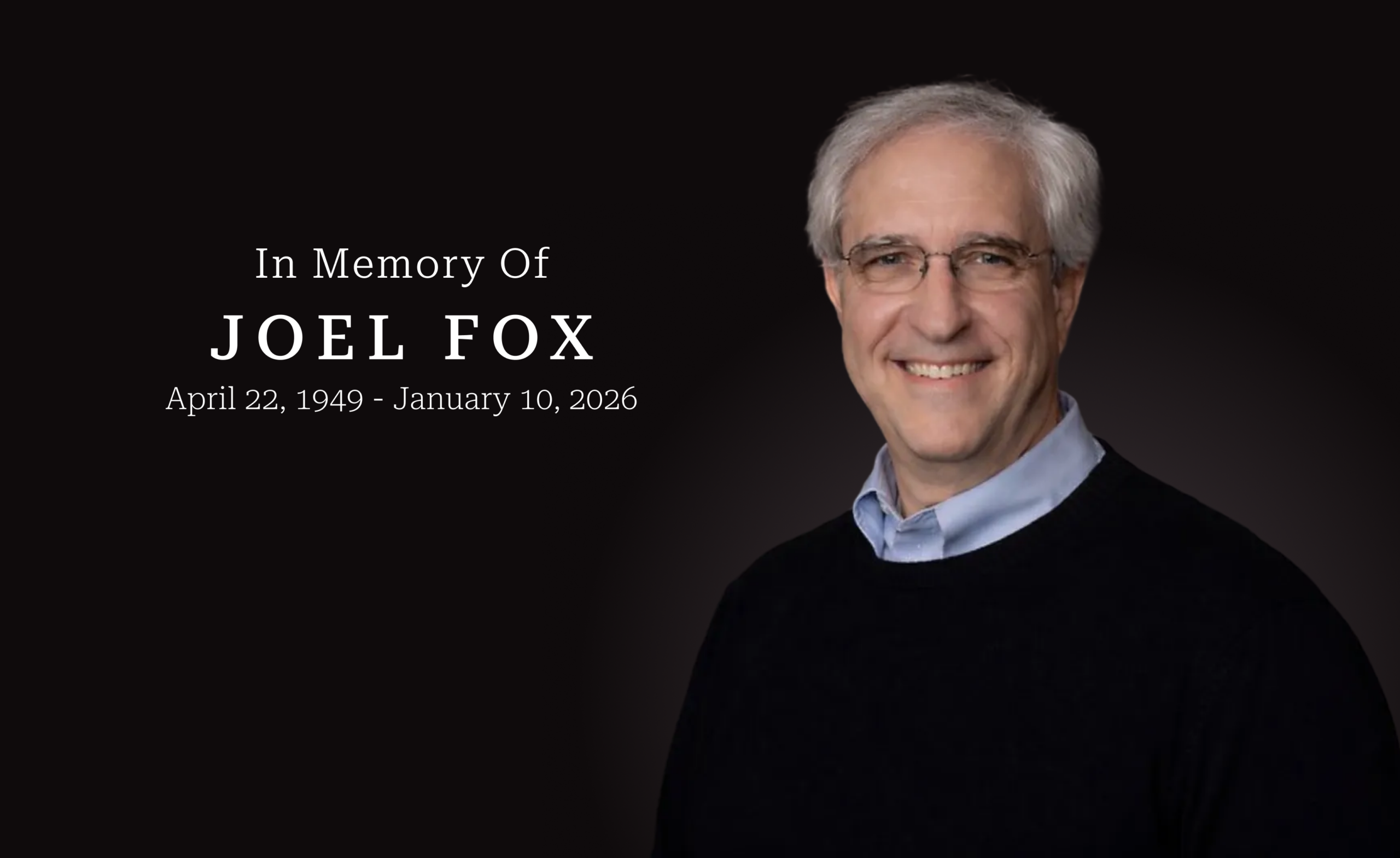
If political differences are destined to leave us divided and friendless, how do you explain the life of Joel Fox?

Fox died on January 10 after more than a decade of living with cancer. He was California’s most prominent taxpayer advocate since Howard Jarvis, for whom he worked, and whose anti-tax organization he led from 1986 to 1998. Fox, a Republican, advanced conservative ideas on TV and op-ed pages. He advised the campaigns of Gov. Arnold Schwarzenegger, Mayor Richard Riordan, and U.S. Sen. John McCain.

That profile, in our polarized times, might make you think Fox was one of those political ideologues who are driving the country apart. But the opposite is true.

Fox, more than any person in California politics, built deep relationships with people across the political spectrum. And he did not do this through consensus or compromise. Instead, Fox built friendships on disagreement itself—a warm, open, and curious style of disagreement.

Read More »

Historic Travel Promotion Act to Help Boost Economy

After many months of getting Washington to understand the value and vulnerability of the travel industry in today’s struggling economy, I am elated that the bipartisan Travel Promotion Act passed in the Senate and was just signed by the President.

As chair of the U.S. Travel Association, which led the industry charge to pass this critical bill, I want to applaud the President and Senate for taking this major step toward strengthening the American economy. This new law, which we anticipate will be signed this week by President Obama, creates a multi-million-dollar public-private partnership to promote the United States as a premier international travel destination and better clarify U.S. security and entry policies to potential foreign travelers.

According to independent analysis by Oxford Economics, the program could attract 1.6 million additional visitors from other countries and create more than $4 billion in consumer spending annually, as well as generate $321 million in new federal tax revenue each year. As mentioned in previous posts, this landmark legislation was sorely needed, as America’s travel industry was the only major country without a national tourism promotion budget. Not keeping pace with global competitors cost us 68 million visitors to the U.S. and more than $500 billion in total spending over the last decade.

Read More »

Reality Check: Low Carbon Fuel Standard a Misplaced Priority

David Crane’s article about the low carbon fuel standard, fuel prices and market forces truly represents “misplaced priorities” on behalf of the author. Somehow he connects the dots between high oil prices and the need for a low carbon fuel standard. If the oil market was being truly driven by market forces, their may be an inkling of a connection here. However oil markets are now driven by Wall Street investment decisions and the switching of investment bundles into different classes of products, including oil commodities. Oil prices have very little to do with market forces and very much to do with currently-legalized gambling.

Right now there is a huge abundance of oil and fuel in the global economy – a glut. But oil prices hover in the high seventies/low eighties for no other reason than investment firms deciding to abandon the poker table in favor of the dice table.

Read More »

5 Better Places to Protest Than a College Campus

There are few better ways to make your point than with a well-conceived protest. As a journalist, they are fun to cover. I’ve seen clashes between cops and anarchists, watched hotel workers shut down Century Boulevard, and listened as New Yorkers, defending rent control against their then-governor, chanted, “George Pataki! Landlord Lackey!” (Try chanting it yourself—you won’t be able to stop).

So I’m delighted to see California’s college students out protesting program cuts and fee increases this week. Their cause is righteous. Unfortunately, their aim stinks.

They’re protesting in two places—college campuses and outside the Capitol in Sacramento – where they are unlikely to make much impact. College campuses are a waste of time because the protestors can’t make any converts there. Everyone on campus already agrees with them.

The Capitol is a tempting target, but it’s also a waste of time. California’s governing system, combined with partisan polarization, has tied the legislature (and the governor, for that matter) in knots. The main role of legislators, in putting together a budget, is to clean up the mess left them by the broken system. Protesting at the Capitol these days is like protesting outside your janitor’s office.

Read More »

Energy Sector Has Few Alternatives

Los Angeles fancies itself the capital of the alternative-energy world. Electric car companies are clustering here along with the startups to create the new-age batteries for them. Wind farms are popping up outside the city and solar electricity is hot.

On the one hand, all that’s promising. Alternative energy is, after all, the future. But on the other hand, it’s risky. Virtually every form of alternative energy today is either unproven, expensive, limited in capacity or dangerous in its own right.

We got a good reminder of that last week in a special section in the Wall Street Journal headlined “The Long Road to an Alternative-Energy Future.” It took a look at several alternative-energy initiatives and pointed out the significant challenges of each.

Read More »

“May the Best Car Win”

Pressed to the brink of oblivion, General Motors has chosen a smart strategy as it seeks to restore its image and business. The fact that GM chose this course is unique given that the company is a quasi-public agency run by a de-facto appointee of President Barack Obama.

I’m sure you’ve seen the commercials; they’ve been everywhere. “May the best car win,” advertisements proclaim followed by comparisons with competing brands. “Our car is better than the competition and it costs less,” is the message GM is sending.

While I applaud GM for its willingness to compete, it is also a bit surprising given the fact that the Company is a proud union shop. Their willingness to compete and be judged on a level playing field is surprising, especially when one considers how unions in California operate.

Read More »

With Job Creation, Action Speaks Louder Than Words

Every elected official is talking about job creation, but few have actually done anything to create or save private sector jobs. Actions taken over the last week highlight the marked difference between action and inaction.

Yesterday, the L.A. City Council’s Budget & Finance Committee voted unanimously to recommend the creation of a new internet business tax category. If approved by the full Council this Friday, this will send the clear message that Los Angeles is willing to compete for well-paying, high-tech jobs. This new category, established at the lowest tax rate available, will provide fiscal certainty for dozens of L.A.-based internet businesses that pay an average salary of well over $75,000 per year.

The Budget & Finance Committee made the right decision. If this proposal is passed by the full Council, there will be a short-term loss in tax revenue for the City but a long-term opportunity to create jobs and dramatically increase the tax revenue that these growing companies (and their employees) will contribute to the City of Los Angeles. I especially applaud Council President Eric Garcetti for his leadership on pushing forward this action and we encourage a unanimous vote on Friday.

Read More »

Is it 1978 Again?

Does it feel like 1978 to you, too?

Consider.

In 1978, Jerry Brown was running for governor. In 2010, he’s running for governor again.

In 1978, Proposition 13 shook the political world beyond the borders of California and garnered many news reports. In 2010, numerous headlines and news stories attest to the continuing influence of Prop 13, such as the L.A. Times’ recent Sunday headline: “Prop 13 flexes its Political Muscle.”

In 1978, Roman Polanski skipped the country to avoid sentencing by a Los Angeles court on charges he had sex with an under-aged girl. In 2010, Polanski is fighting the L.A. authorities’ attempt to carry out a sentence in that case.

Read More »

Jerry Brown’s In

Meg Whitman welcomed Jerry Brown to the governor’s race Tuesday with a no-holds-barred challenge to the attorney general and a trio of ready-to-go e-mail hit pieces proving that, yes indeed, she has spent plenty of cash on opposition research.

Of course, just because your guys dig something up out of the newspaper archives doesn’t mean you actually have to use it. And it always pays to think like your opponent before you fire your guns.

Take, for example, the first in what’s likely to be a series of slams with the standing headline “Yep, Jerry Brown Said It …” In this initial offering, the Whitman campaign excitedly reports that “In 1974, Brown Said Being in Politics Only a Few Years is a ‘Big Advantage.’”

Sure enough, the L.A. Times piece has Brown saying that having spent only a few years in Sacramento is an advantage. But you might want to think twice about using that quote when you’re a candidate with zero years of political experience, in Sacramento or anywhere else.

Read More »

Getting California back in the game

As the Governor and Legislature jockey over a “jobs agenda,” a bipartisan state commission has delivered a key building block for what could be the foundation of a new state economic development effort.

The Little Hoover Commission last week recommended the state re-create a high level economic development effort that can market the state, assist businesses wishing to locate or expand in California, and coordinate a statewide strategy of economic development strongly influenced by successful local economic development efforts. (The report can be found here. And a further disclaimer: I am a member of the Commission.)

After an exhaustive investigation and several public hearings, the Commission found the State is juggling a diffused collection of economic development activities, generally without authority. This has created numerous problems, including a void in leadership and accountability that diminishes California’s ability to coordinate activity and shepherd resources, a lack of capacity to promote, guide or align delivery of services, and a absence of an obvious point of contact in Sacramento for businesses, local economic development organizations or even other state-level actors to learn about and access state economic development programs, or find help to resolve permitting issues or navigating regulations.

Read More »