

The work-based reality shows, including Cake Boss, Pickers, Pimp My Ride, and America’s Next Top Model
have much to teach us about craft, calling and California’s economy. The
workers in these shows are not the "knowledge workers" we hear so much about.
They are the bakery workers, car shop workers, restaurant workers and small
businesspeople who will be prevalent in California’s employment future. They
bring innovation, care for detail, and a
service ethos to their jobs.
Buddy Velasco
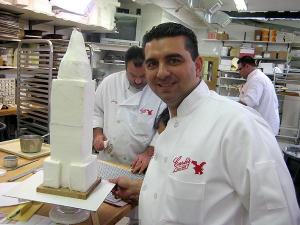
is the Cake Boss. As viewers of his reality show on TLC network know,
Buddy runs a bakery in Hoboken New Jersey. The bakery, Carlo’s Bake Shop has a baking and sales crew of nearly 30,
including Buddy’s mother, four sisters and three brothers-in-law
On the surface, Cake Boss episodes are standard sit-com
fare. On Christmas Eve, the crew must pull together to meet a rush of customers,
which allows Buddy to reflect on the importance of family. A drag queen, Miss
Richfield 1981, orders a Happy Holidays pop-up cake, which the crew must
deliver to her New York City show. The Shop’s two delivery guys, Anthony and
Stretch, dress up as elves to deliver a cake to a women’s fashion business.
What is original,
compelling and important about the show are its themes about work. Buddy and
his crew do not come to baking as low skilled, production work. Instead, they
are craftsmen; operating with creativity, care for detail, and willingness to
put in time to get the product just right. Buddy and crew approach the pop-up
cake and the women’s fashion cake as works of art, just as they approach the
other theme cakes they create (robot cake, roller stake cake, billiards table
cake and life-size race cake). Even with the non-theme items, the regular cupcakes,
cookies and pies, Buddy and crew continually are looking for ways to innovate,
improve, be creative.
Though Buddy calculates
how to make money, he also approaches the bakery as a calling. Through the bakery,
he is serving others. He is providing his customers, mainly Hoboken residents,
with quality cakes and cookies that they value and derive pleasure from.
Further, through his response to customer demand, he creates a job not only for
himself but also employment for others.
Craft, business as
calling, service and entrepreneurship: these values are not limited to Cake
Boss. They are present in a range of other work-based reality shows that have
arisen over the past five years, including two other reality shows linked to
cakes (Ace of Cakes and Amazing Wedding Cakes), and shows
featuring workers in an auto customizing shop (Pimp My Ride), workers in a pawn shop (Pawn Stars),
entrepreneurs who purchase, restore and recycle "stuff" (Pickers), and, of course, workers in the fashion industry (Project Runway, America’s Next Top Model).
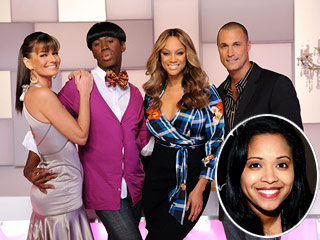
America’s Next Top Model (ANTM) has been criticized as
over-emphasizing female physical appearance. Yet, the main message of ANTM is
exactly the opposite. Listen each week to host Tyra Banks and technical
advisors Jay Manuel and J. Alexander: modeling
is far more than looking good, modeling is a craft. A model cannot simply show
up. She must study the rules and norms of modeling, must understand photo-shoot
directions, must master the runway walk.
For the Pickers, Mike and Frank, their business
is craft and calling. They are looking to make a profit in their antique
restorations. At the same time, they will purchase antiques that may not be
profitable, but are objects of beauty or importance that should not be lost.
California will soon be
entering the post Great Recession job world. There is much we do not know. For
example, in past recessions since World War II, technology destroyed jobs, but
also came to help create a greater number of jobs. Will this job creation
abundance again be the case?
One thing we do know is that most workers in the
future economy will be workers like those in the reality shows. They will not be
the celebrated "knowledge workers"–the analysts, lawyers, accountants, green
energy consultants. The state Employment Development Department projects job
growth in California by occupations. The occupations projected with the most
job openings in the next ten years are personal/home aides, retail salespersons,
cashiers, waiters/waitresses, food preparation workers, and customer service
workers.
How these workers regard
themselves and their jobs, and how these jobs are regarded by others, will influence
significantly the strength of our California economy and society. These jobs
cannot be dismissed as "throwaway jobs" if we are to have any semblance of a
coherent economic and social structure in the state.
Celebrating craft is not
to ignore the low pay of many of these jobs. Bakery/specialty cake workers or
car shop workers, who are not on reality shows, are often struggling to get by,
as are non-reality show pickers and pawn shop workers. Wage inequality remains
a major issue in California, as underscored by a series of papers over the past
decade by the Public Policy Institute of California and other researchers. Yet,
wage inequality has numerous dimensions. The recognition of craft, and the
attendant organization of work in companies to encourage craft, alone will not
build our middle class in California. But it is one of the dimensions for improving wages
in low-wage jobs.
The Cake Boss has more to teach us than about making cakes.
This posting is a slightly modified version of an essay that appeared in the San Francisco Chronicle Sunday Insight section this previous Sunday