

Attacks on the People’s “Precious” Right of Initiative and Referendum Continue
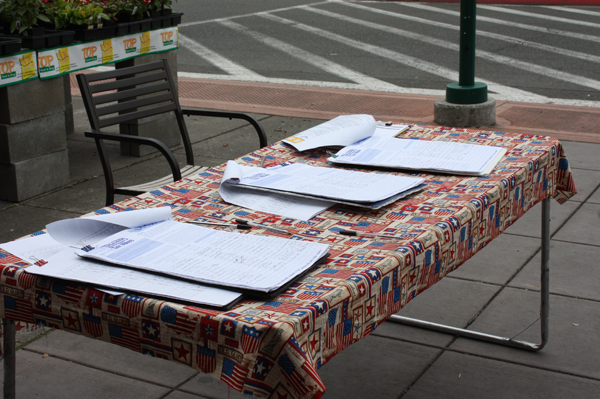
On the top of a legislative effort by Democrats in the legislature to undermine the people’s referendum power, which I wrote about Friday, more skullduggery is rumored that could alter the outcome of specific initiative and referendum proposals by changing the ballot on which the measures would appear before voters.
Given the recent effort to pass a new tax bill on Internet retailers so as to thwart a referendum on a similar tax measure, it is not hard to believe the story circulating in Sacramento that altering election laws could force two measures to a different ballot for political gain. Besides the Internet tax referendum (if the first scheme to undermine it doesn’t get the necessary two-thirds vote to pass a new urgent Internet tax measure), an initiative to limit public employee union and corporation political donations could be pushed to the November 2012 general election ballot instead of the June primary ballot.
The latter measure would require that union committees and other employers obtain authorization in writing from employees who wish to contribute to the organization’s political campaign spending. It also bans unions and corporations from giving to candidates and candidate-controlled committees.
California: A Season of Reform?
Cross-posted on Hoover Institution’s Advancing a Free Society.
Until the California economy (and tax revenues) begins to recover, a window of opportunity remains open for fiscal and governance reforms in the state. Slow, quietly, such reforms have begun, first with the enactment of redistricting reform and then the open primary. This week the California Assembly has before it SB 14, which calls for performance-based budgeting, and SB 15, which requires a multi-year budget.
This summer, several California organizations joined together to set the stage for additional reforms by convening the first statewide California Deliberative Poll. We brought together a scientific random sample of 412 Californians to spend a weekend deliberating over additional reforms that might help get the state moving again. The results of these deliberations were announced this week: www.nextca.org.
All Vital Projects Deserve Relief From Restrictive Regulation, Not Just A Stadium
State legislation providing legal protections for a proposed football stadium in downtown Los Angeles should be opposed unless provisions are made to provide similar protection for critical public and non-profit facilities.
State legislators should put vital projects like hospitals, libraries, schools and transportation projects on equal footing with football stadiums giving them the same protection from legal exposure. The argument that a stadium needs special treatment because it will create jobs and spur local economic growth applies equally to other projects crucial for the public and funded by their tax dollars.
California’s Water Wars
Cross-posted at CityJournal.
California’s water wars aren’t about scarcity. Even with 37 million people and the nation’s most irrigation-intensive agriculture, the state usually has enough water for both people and crops, thanks to the brilliant hydrological engineering of past generations of Californians. But now there is a new element in the century-old water calculus: a demand that the state’s inland waters flow as pristinely as they supposedly did before the age of dams, reservoirs, and canals. Only that way can California’s rivers, descending from their mountain origins, reach the Sacramento–San Joaquin River Delta year-round. Only that way, environmentalists say, can a three-inch delta fish be saved and salmon runs from the Pacific to the interior restored.
Such green dreams are not new to California politics. But their consequences, in this case, have been particularly dire: rich farmland idled, workers laid off, and massive tax revenues forfeited. Worse still, they coincide with a $25 billion annual state deficit, an overtaxed and fleeing elite populace, unsustainable pension obligations for public employees, a growing population of illegal aliens—and a world food shortage. This insolvent state is in far too much trouble to predicate its agricultural future on fish.