

Featured Post

A Fox, A Hound, and a Friendship

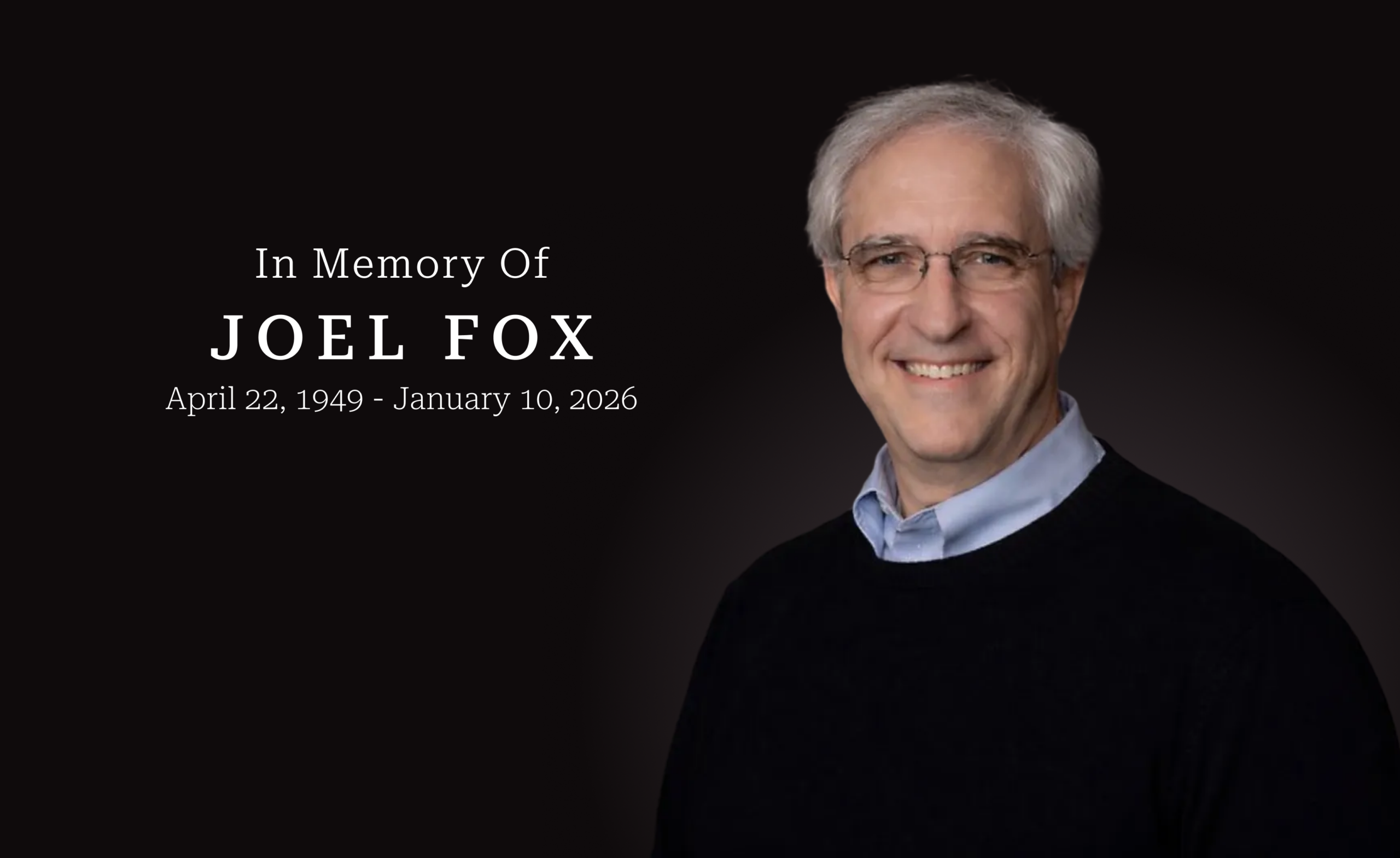
If political differences are destined to leave us divided and friendless, how do you explain the life of Joel Fox?

Fox died on January 10 after more than a decade of living with cancer. He was California’s most prominent taxpayer advocate since Howard Jarvis, for whom he worked, and whose anti-tax organization he led from 1986 to 1998. Fox, a Republican, advanced conservative ideas on TV and op-ed pages. He advised the campaigns of Gov. Arnold Schwarzenegger, Mayor Richard Riordan, and U.S. Sen. John McCain.

That profile, in our polarized times, might make you think Fox was one of those political ideologues who are driving the country apart. But the opposite is true.

Fox, more than any person in California politics, built deep relationships with people across the political spectrum. And he did not do this through consensus or compromise. Instead, Fox built friendships on disagreement itself—a warm, open, and curious style of disagreement.

Read More »

Déjà Vu: A Late Hit in a Gubernatorial Race

A late campaign hit with Gloria Allred as part of it … I’ve lived through this before during the Schwarzenegger 2003 gubernatorial campaign. As in that instance, it will take a few days to play out and see what is behind the revelation. But like the 2003 media circus over Schwarzenegger’s interaction with some women during his movie career, the late hit raises many questions.

The one thing that is unclear in housekeeper Nicandra Diaz-Santillan’s story is her statement that she revealed to Meg Whitman and her husband in 2009 that she was not here legally while at the same time Diaz-Santillan’s lawyer, Allred, charges that Whitman and her husband knew all along of her status. That doesn’t compute.

If Whitman and the hiring agency checked all Diaz-Santillan’s papers and they appeared in order there was nothing else Whitman need do.

Read More »

Blow Up This Box Before It’s Built

You
can tell when the substantive arguments run out of gas – the name-calling
begins.

That’s
happening now
in the debate over the California Health Benefit Exchange,
proposed by SB
900
and AB
1602
, which would create a brand new bureaucracy with extraordinary powers
to implement a new entitlement program.

Far
from spreading "fear-mongering falsehoods," the California Chamber of
Commerce and former state Director of Finance Michael Genest are flagging
legitimate concerns
about how this Exchange will function: its
accountability to the Legislature and the Governor, and its ability to obligate
new state spending without any recourse by elected officials.

Read More »

Green Chemistry Regulations Focused on Chemicals & Products of Highest Concern

In his Fox & Hounds Daily blog post Sept. 22, Jim Conran, president of Consumers Union, asks a critical and important question about California’s emerging Safer Consumer Products initiative.  Will consumers and businesses actually be better off as a result of this groundbreaking new approach?

He couldn’t be more right in his reasoning that California is taking a significant step forward in the way consumer products are designed and manufactured. And we agree fully with his case for a common-sense regulatory approach as it unfolds in coming years. The fundamental goal of our initiative is to reduce or eliminate harmful chemical ingredients in consumer products where there is the greatest exposure and harm.

In his concerns, however, about the state’s proposed regulatory process to bring about a shift to safer products, Mr. Conran overlooks one thing: The state’s regulation is designed to accomplish precisely the pinpoint approach that he seeks.

Read More »

Stuck in the Weed – No on Prop. 19

Many Californians agree that the decades-long "war on drugs" has been a
failure. We’ve spent billions of dollars to incarcerate thousands of
inmates for drug offenses. And public opinion about marijuana use is
shifting. Wouldn’t California be better served by regulating and taxing
marijuana? No, not if Proposition 19 is the answer because it creates many more serious problems than it portends to solve.

Prop 19. is titled the "Regulate, Control & Tax Cannabis Act of 2010,"
yet the initiative fails to do any of those three things. Prop. 19 does
not set forth a statewide regulatory framework for legalization.
Instead, it leaves it up to the local governments to set their own
standards. The result will be a patchwork of conflicting laws that will
create a whole new set of legal nightmares for law enforcement
officials and our courts.

Among the many other concerns about Prop. 19 are:

Read More »

Good Reasons for Capital Gains Tax Cuts and Other Thoughts on the Debate

Jerry Brown pounded Meg Whitman on her capital gains tax cut plan in their first debate last night. Whitman didn’t defend or explain her reasons for the tax, as she should. There are good reasons to cut the capital gains tax.

The tax cuts are not simply a giveaway to the rich, as Brown contended. The capital gains tax cuts are part of her targeted tax plan to bring back jobs. Capital gains tax cuts can quickly bring money into the treasury by freeing up money that taxpayers are holding and are more likely to spend because of the cuts. Capital gains tax cuts provide the revenue necessary for entrepreneurs to succeed. Small businesses and entrepreneurs need resources to create jobs and spark the California economy, which these cuts can provide. Whitman has good reasons for supporting the capital gains tax cut and she should have explained her reasons to the voters.

Whitman offered more solutions for the state’s problems. She put Brown on the defensive about his close ties to public employee unions.

Read More »

The Debate: Who Would You Prefer to Manage Your Decline?

"Who would you rather have a beer with?" might have been the deciding question in previous political races. The California governor’s race is different. The state is a mess, and getting messier. Neither of the two leading contenders has a real plan – or any intention – of doing much more than managing the state’s decline.

So the question in this race might be: Which candidate would you prefer to drive your ship on a one-way trip to the bottom of the ocean?

That’s probably the best way to judge Tuesday night’s debate. Neither Jerry Brown nor Meg Whitman offered a clear vision of the future. And both were self-aware enough that they didn’t bother to inspire us. These two aren’t inspirational. They each know they are enaged in a classic lesser-of-two-evils contest.

Read More »

One Man’s Tale Of Beating The Odds To Improve Green Tech In California

The treatment of José Radzinsky
by California’s unions is conflicting to the foundation of America, but
his success story of triumphing through adversity is proof that the
country’s ideals are still valued.

Radzinsky moved from
Uruguay to California in 1981 in pursuit of a free market economy.
Instead, he’s been stuck battling organized labor, which has stifled
his innovation, dedication and hard work.

Here’s the abridged version of his story:

Read More »

Restoring Trust in the Highway Trust Fund

Federal surface transportation policy is at a fateful crossroads. Since the completion of the Interstate system, the federal program has lost its focus and its sense of purpose. And the users-pay/users-benefit funding mechanism which built that system (dedicated fuel taxes) has gradually been transformed into a public works tax for Congress to spend on its own-rather than highway users’-priorities. Most proposals to reformulate the federal transportation program would further break faith with highway customers.

While appearing to advocate simplification and program consolidation, they would add costly new non-highway programs, increasing highway use taxes but diverting much of the proceeds to still more non-highway programs, from passenger trains to energy subsidies to federalized land-use planning. Yet it is thanks to these very trends that American taxpayers no longer have trust in the Highway Trust Fund. Instead of welcoming an expanded federal program, most oppose increases in fuel taxes as unlikely to improve their own transportation situations.

The federal transportation program needs to be rethought. It is notoriously politicized, failing to make the best use of existing funds and failing to focus on the most important national transportation goals. Every serious study in recent years has concluded that America is under-investing in highway infrastructure; major improvements to the system are few and far between. But rather than simply putting larger sums of money into a seriously flawed process, the better course is to rethink and refocus the federal role, in order to spend more on core federal purposes and less on peripheral concerns. Some reauthorizations have brought big changes to the federal transportation program. This one should as well, not by moving further away from a user-fee funded system designed to improve mobility, but by moving back toward it.

Read More »

Problems With The L.A. Times/USC Poll

There
appear to be serious methodology problems with the Los Angeles Times/USC
poll released over the weekend that show Jerry Brown beating Meg
Whitman 49 to 44 percent.  This is a much larger Brown lead than other
contemporary polls, such as Field that shows the race tied, and Survey
USA that gives Brown a three point lead.

The major problem seems to be in the way the L. A. Times/USC
measures likely voters and party preference.  For one thing, the poll
shows Brown doing better among likely voters than the total electorate.
If we know one thing about this election it is that the turnout will
have a higher Republican tilt than the overall electorate.  In the
primary, with 33 percent overall turnout, 44 percent of Republicans
went to the polls while only 32 percent of Democrats.  The upshot was
that in actual votes cast, the Republican turnout was practically equal
to the Democratic turnout.  This is partially explained by hot contests
on the GOP side, nevertheless it is dramatic turnaround from 2008 when
Democratic turnout far exceeded GOP turnout.

The 2008 general election is a good place to start.
According to the California Exit Poll conducted by Edison Media
Research and Mitofsky International, the 2008 electorate self
identified as 42 percent Democratic, 30 percent Republican and 28
percent independent/other.  That turnout model produced a landslide
victory for President Obama in California in 2008.

Read More »