

Featured Post

A Fox, A Hound, and a Friendship

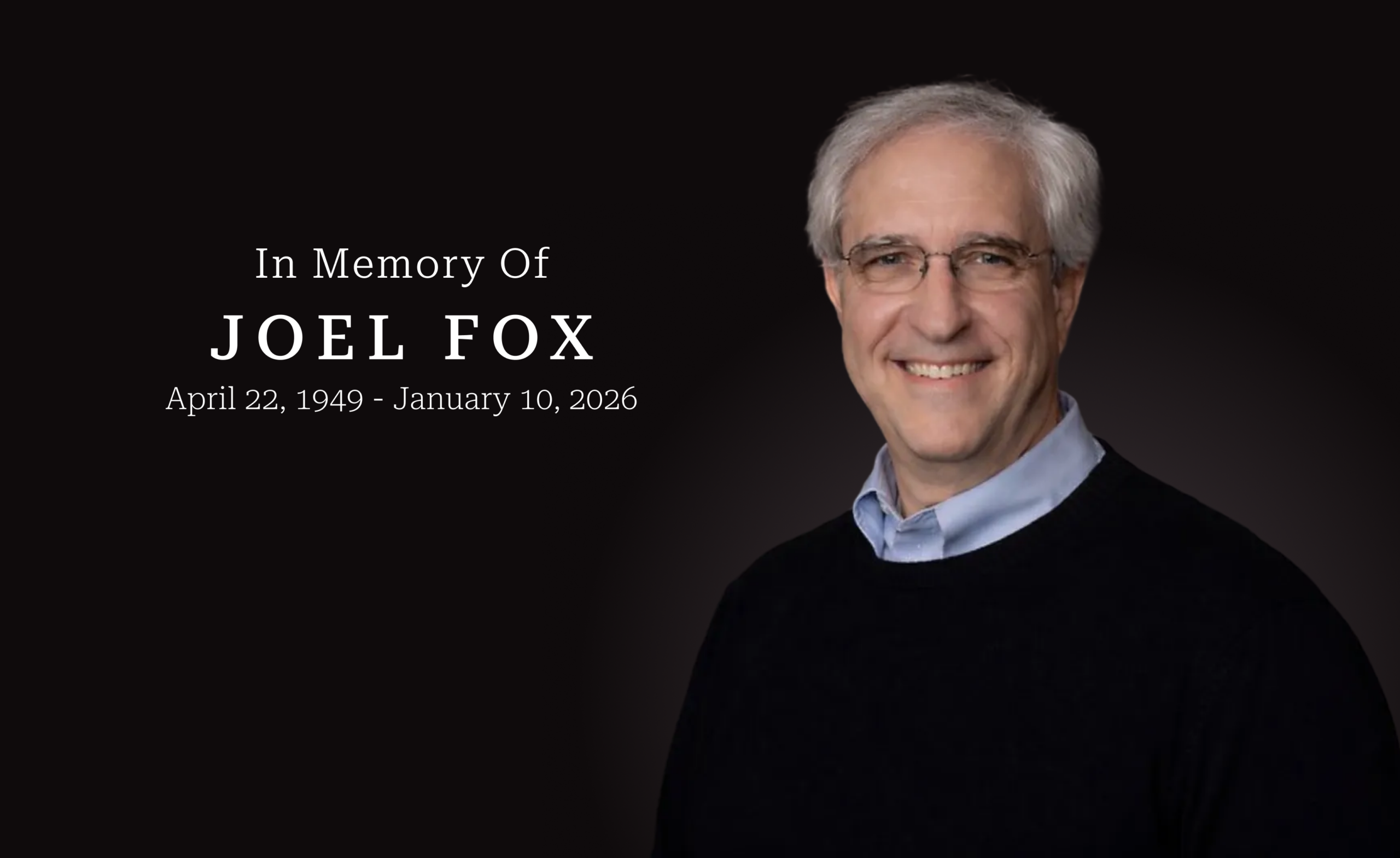
If political differences are destined to leave us divided and friendless, how do you explain the life of Joel Fox?

Fox died on January 10 after more than a decade of living with cancer. He was California’s most prominent taxpayer advocate since Howard Jarvis, for whom he worked, and whose anti-tax organization he led from 1986 to 1998. Fox, a Republican, advanced conservative ideas on TV and op-ed pages. He advised the campaigns of Gov. Arnold Schwarzenegger, Mayor Richard Riordan, and U.S. Sen. John McCain.

That profile, in our polarized times, might make you think Fox was one of those political ideologues who are driving the country apart. But the opposite is true.

Fox, more than any person in California politics, built deep relationships with people across the political spectrum. And he did not do this through consensus or compromise. Instead, Fox built friendships on disagreement itself—a warm, open, and curious style of disagreement.

Read More »

SOAR laws are a two-edged sword

Cross-posted at the Ventura County Star

Years ago, voters throughout Ventura County approved the SOAR (Save
Open-space and Agricultural Resources) initiative. The ostensible
purpose of the initiative was to stave off the conversion of
agriculture-zoned properties to other uses unless the electorate
approved the conversion.

So, farmers and ranchers face a daunting challenge if they want to
convert their farmland to urban uses, but did they get anything in
return? That is to say, while SOAR protected farm fields from being
converted, did it also offer any protections to the farmers that would
enable them to stay in farming?

The apparent answer to this question is yes, as farmers and ranchers discovered at a recent

Board of Supervisors meeting.

Read More »

The Fed Has Spoken

Like something caught between being the Great Oracle and the Wizard of Oz (ignore the man behind the curtain), on Tuesday, the Fed met and has now spoken about the lousy economic numbers of late last week and the general morass in which we find ourselves.  The Fed announced Tuesday morning, that it will use the proceeds from the Fed’s own gigantic (and getting bigger all the time) mortgage-bond portfolio to buy long-term Treasury securities.

So what, you ask?

The dismal economic performance of late (can you spell DoubleDipRecession) has, in the Fed’s inscrutable judgment, required it to now continue, as it has done since 2007, pumping vast amounts of US Dollars into our gasping economy, to prop up the housing and financial markets.

Read More »

Searching for the One-Handed Economist

As Carla Marinucci reports in the San Francisco Chronicle, a debate has flared among economists on the effects of Meg Whitman’s plan to revive the California economy. A liberal think tank produced a document written by liberal professors calling Whitman’s plan flawed. A conservative economist responded that the plan would jump start the economy.

This back and forth of different economic views reminds me of the famous quote by President Harry Truman who wanted to consult with a one-armed economist. The president was tired of economists advising him, "On the one hand this could happen… On the other hand that …."

The report by UC Berkeley economist Michael Reich that started the brouhaha argued that Whitman’s plan to cut capitol gains taxes would deprive the state of billions of dollars in revenue. In addition, Reich claimed that California is not the unfriendly business climate that Whitman talks about.

Read More »

The Golden State’s War on Itself (Part 2 of 2)

Cross-posted on NewGeography.com. Read Part 1 here.


The second engine that could supposedly keep California humming was
the so-called green economy. Michael Grunwald recently wrote in Time,
for example, that venture capital, high tech, and, above all, "green"
technology were already laying the foundation of a miraculous economic
turnaround in California.

Though there are certainly opportunities in
new energy-saving technologies, this is an enthusiasm that requires
some serious curbing. One recent study hailing the new industry found
that California was creating some 10,000 green jobs annually before the
recession. But that won’t heal a state that has lost 700,000 jobs since
then.

Read More »

The Story Of How The Bell Scandal Broke: An Account From LA Times Reporter Jeff Gottlieb

Cross-posted on PublicCEO.com

The world of local government shook on July 15.

It was the day that two Los Angeles Times journalists, Jeff Gottlieb and Ruben Vives, broke the shocking story of corruption in the small city of Bell.

"Bell,
one of the poorest cities in Los Angeles County, pays its top officials
some of the highest salaries in the nation, including nearly $800,000
annually for its city manager, according to documents reviewed by The
Times."

Read More »

Still waiting for reasonable policies to launch long-term job creation

In the closing weeks (or months) of California’s 2010 legislative
session, there are some easy decisions to make in a morass of tough
budgetary ones.  Lawmakers can get control of the state’s spiraling
regulatory environment and reconsider simple concepts on economic
analysis on new and existing regulations.

Dozens of bills died in the last few months that would demonstrate the
state’s commitment to improve government decision making and signal
that California welcomes long-term job creation and economic growth. 
What can possibly be wrong with arming a jobs-sensitive legislature
with job-impact information so they can make informed decisions?

A flyer — titled Still Waiting — and a copy of a previous letter
— supported by more than 350 companies — were distributed this week
to the Legislature to reinforce that the employer community is still
waiting for these very simple and obvious measures.

Read More »

Judging Jerry’s Judges (Part 2 of 2)

Read Part 1 here

Three strikes and you’re out should apply to the Jerry
Brown Supreme Court, and in fact did.  In 1986, an angry electorate
defeated three of the Brown judges up for retention election, and
fundamentally changed the Supreme Court. These three strikes are the
legacy of Brown’s court.

Strike One: Destroying of the court’s reputation for excellence and impartiality.  

"The court’s national statue has waned under Bird" headlined the California Journal
in 1986 analyzing the reputation of the court in the year of Bird’s
second retention election. The court was very liberal under Brown and
Bird, but that was nothing new.  It became a liberal court under former
Chief Justices Phil Gibson (1940-1964) and Roger Traynor (1964-1970).
But the court was then considered a trendsetter; that court was
liberal but not ideological.  "There dwelt one giant (Traynor) and many
tall trees on the California Supreme Court of the 1950s and 1960s,"
wrote the director of the Earl Warren Legal Institute in 1986.

Read More »

Appellate Court Reverses Ruling on Prop 25

The court giveth and the court taketh away.

On Friday, I wrote about a Superior Court decision that removed a phrase from the ballot title of Proposition 25 that said while lowering the two-thirds vote to majority to pass the budget, the measure: "Retains Two-Thirds Vote Requirement for Taxes."

Yesterday, an Appellate Court overruled the lower court and put the phrase back into the title, arguing that the voters would not be confused, as the Superior Court judge asserted, that they must vote YES to retain the two-thirds vote.

Read More »

The Golden States War on Itself (Part 1 of 2)

Cross-posted on NewGeography.com

California has long been a destination for those seeking a better place to live. For most of its history, the state enacted sensible policies that created one of the wealthiest and most innovative economies in human history. California realized the American dream but better, fostering a huge middle class that, for the most part, owned their homes, sent their kids to public schools, and found meaningful work connected to the state’s amazingly diverse, innovative economy.

Recently, though, the dream has been evaporating. Between 2003 and 2007, California state and local government spending grew 31 percent, even as the state’s population grew just 5 percent. The overall tax burden as a percentage of state income, once middling among the states, has risen to the sixth-highest in the nation, says the Tax Foundation. Since 1990, according to an analysis by California Lutheran University, the state’s share of overall U.S. employment has dropped a remarkable 10 percent.

When the state economy has done well, it has usually been the result of asset inflation-first during the dot-com bubble of the late 1990s, and then during the housing boom, which was responsible for nearly half of all jobs created earlier in this decade.

Read More »