If L.A. won’t raises taxes for schools, will Californians vote to overhaul Proposition 13?
Most of us learned the dangers of making political predictions about 31 months ago. But it’s still pretty hard to resist. So with the prospect


Most of us learned the dangers of making political predictions about 31 months ago. But it’s still pretty hard to resist. So with the prospect
I knew a man, who over the course of a remarkable career and an even more remarkable life, patiently and persistently taught me the type
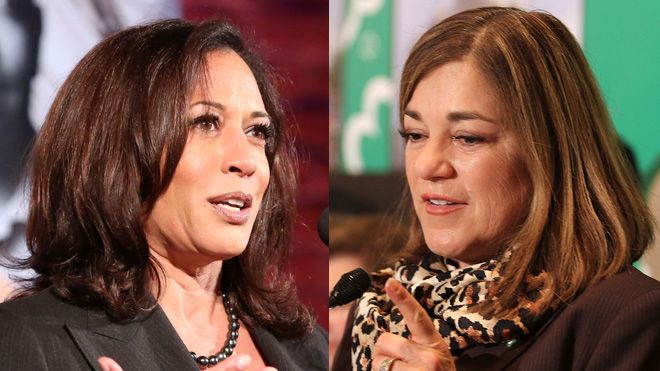
Kamala Harris might not be the luckiest politician in America. But it’s starting to seem that way. After Barbara Boxer announced her retirement earlier this
I have taught for many years at the University of Southern California, so it is rare that I will go out of my way to
After almost 15 years as an elected officeholder, Senator Alex Padilla decided this week that politicians shouldn’t be raising campaign money and making laws at
When I was asked by the Sacramento Press Club to debate on behalf of redistricting reform and the top-two primary, it seemed like a fairly
Anyone who’s reading this knows about Kam Kuwata, either by reputation or if you were lucky, by personal interaction and friendship. We know what an effective political operative he was, of course, and what a good and kind person he was as well. But one side of Kam you may not have seen was his willingness to be so helpful and encouraging to young people, and how devoted he was toward supporting them as they decided whether and how to involve themselves in public service.
He not only participated in our events at USC, but he would stay afterwards to talk individually with students who were considering careers in politics or government. He demonstrated to them that you could respect an opponent while still holding firm to your own principles and beliefs, and that you could fight fiercely on behalf of those beliefs without demonizing those with whom you disagreed.
As those of us who’ve known Kam for so many years begin to consider our own lives after politics, I can think of no greater tribute to him than to provide that same guidance and support to our next generation of political leaders. We at the USC Dornsife College of Letters, Arts and Sciences and at the Unruh Institute are committed to carrying on his name, his memory and his legacy. We hope you’ll join us.
Within the space of a few hours, judicial tidal waves rolled across the country from opposite coasts last Tuesday morning. President Barack Obama secured the day’s first headlines, announcing Judge Sonia Sotomayor as his nominee to the U.S. Supreme Court.
But California grabbed its share of the spotlight shortly thereafter, when the state Supreme Court voted 6-1 to uphold Proposition 8’s ban on same sex marriage.
Aside from the relative rarity of court-generated news making the front page, let alone forcing urgent breaking news updates over the course of the day, the two announcements seemed to have little in common. But as Washington insiders debated whether Obama’s announced criteria of a justice’s “empathy” was a valid basis on which to base a judicial appointment, California’s Supreme Court was providing a real-world, real-time example of the relevance of such thinking.