
Super PACs – A California Specialty Goes National
California has come to Iowa, and maybe the nation. The most striking result in Iowa was the collapse of Newt Gingrich. As recently as December


California has come to Iowa, and maybe the nation. The most striking result in Iowa was the collapse of Newt Gingrich. As recently as December
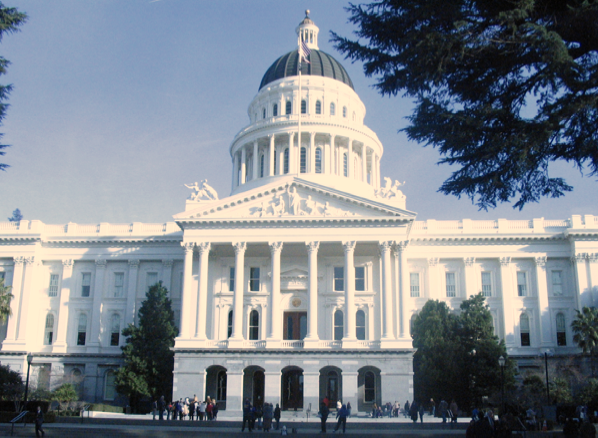
The issue of the part time legislature is back in the news. Assemblywoman Shannon Grove (R-Bakersfield) and People’s Advocate head Ted Costa have introduced a
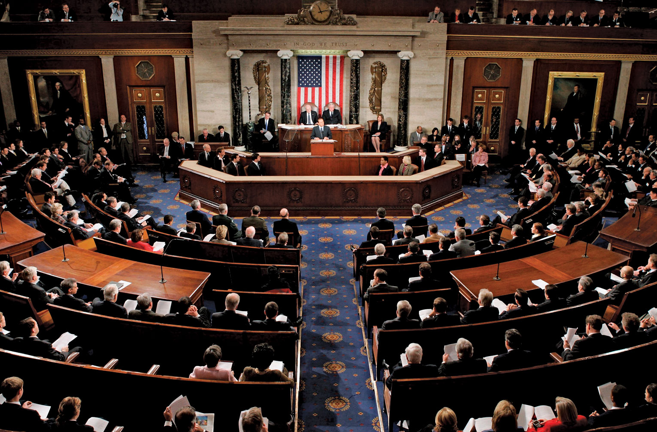
December’s Field Poll on the 2012 presidential contest, which shows President Obama leading Mitt Romney by 10 points and Newt Gingrich by 20 points, also

An unlikely couple doomed the Republican campaigns in 2010. One was Gloria Allred. You knew Meg Whitman might as well take her $150 million dollars
This piece originally appeared in the Capitol Morning Report. Democratic legislators, at the request of their union allies, have passed SB 202, shifting all ballot
The Redistricting Commission is now history. It has certified its final maps and all that’s left is the counting: who gets how many seats under the new maps.
In the Assembly, the consensus is that there is not much change. Few seats will be in play next year; most incumbents are reasonably safe. The two party breakdown in the Assembly is not likely to change very much.
The State Senate is a much different story. Here the consensus is that the commission handed the Democrats a two thirds majority in the Senate. That will lead to dramatic changes in how California is governed. Certainly Gov. Brown will not need to go hat in hand to Republicans looking for votes to raise taxes; a two thirds Senate will be able to raise taxes pretty much at will, and there is every reason to assume that future budgets will be balanced with tax increases rather than additional cuts.
The Redistricting Commission has now completed it work and certified its final maps. A referendum has been filed against the Senate plan. As of now, the legal action appears aimed at the Senate plan.
Latino groups have threatened a lawsuit, likely in federal court, against the Senate plan for regressing Latino opportunities. Republicans may file suit in state court against the map plan for violating state constitutional criteria.
Propositions 11 and 20 vest original jurisdiction over legal challenges to the redistricting plans in the State Supreme Court, and the court has issued guidelines for anyone wishing to file an action. A plaintiff has 45 days to file a suit, meaning any lawsuit must be filed before the end of September. The Secretary of State in the past has said she will need final maps by February 1, so October 1 to February 1 is the window for the court to make any changes to the maps.
Act One is over: The Redistricting Commission has adopted
its plans; all that remains is final certification August 15. Act Two now awaits: court action against the
plans.
The
constitution gives the California Supreme Court "original and exclusive
jurisdiction in all proceedings in which a certified final map is challenged,"
and the Commission has "sole legal standing to defend any action regarding a
certified final map." Additionally, the
maps must be submitted to the United States Department of Justice for
pre-clearance to show they do not regress minority voting opportunities in four
counties that fall under Section 5 of the Voting Rights Act. Further, the maps could be challenged in
federal court for violating Section 2 of the Voting Rights Act by providing
insufficient opportunities for minorities to win elections. Communities could sue under the state
constitution over how their areas are divided up.
While
there are many opportunities for legal challenge, as practical matter only one
of the four maps is likely to be seriously challenged, and even that is
uncertain. The Assembly map is very
incumbent friendly, both parties are satisfied, and the current political
balance is pretty much retained. Take
Assembly off the table. The same is true
of the congressional map; a number of incumbents in both parties are given bad
districts, but that does not rise to a constitutional challenge, so take
Congress off the table. The Board of
Equalization map pretty much retains the current Board structure; no challenge
there.
Dante condemned those who betray a public trust to the hottest place in hell. My candidate for Dante’ inferno this week is State Auditor Elaine Howle, who created the poll of candidates that formed the Citizens Redistricting Commission, now thankfully in its final weeks of existence.
Howle’s primary criterion was “racial diversity” in the pool, and not surprisingly the commissioners who emerged from her process made racial districting their primary goal. And now we have the final plans developed by this commission, and the product further Balkanizes California into racial enclaves. These lines will contribute to continued political polarization of this state, and will give us a legislature in the next decade less able to craft compromises and function as a deliberative body than the one we have now.
Race and ethnicity are difficult in California, a state with no racial/ethnic majority – far from it. And Latinos, who suffered from the 2001 gerrymander that denied them fair representation, deserved additional seats as this commission has created. But over the last month the commission has made race and ethnicity almost the only factors in its line drawing, and the final product can be accurately called a racial gerrymander.