

Featured Post

A Fox, A Hound, and a Friendship

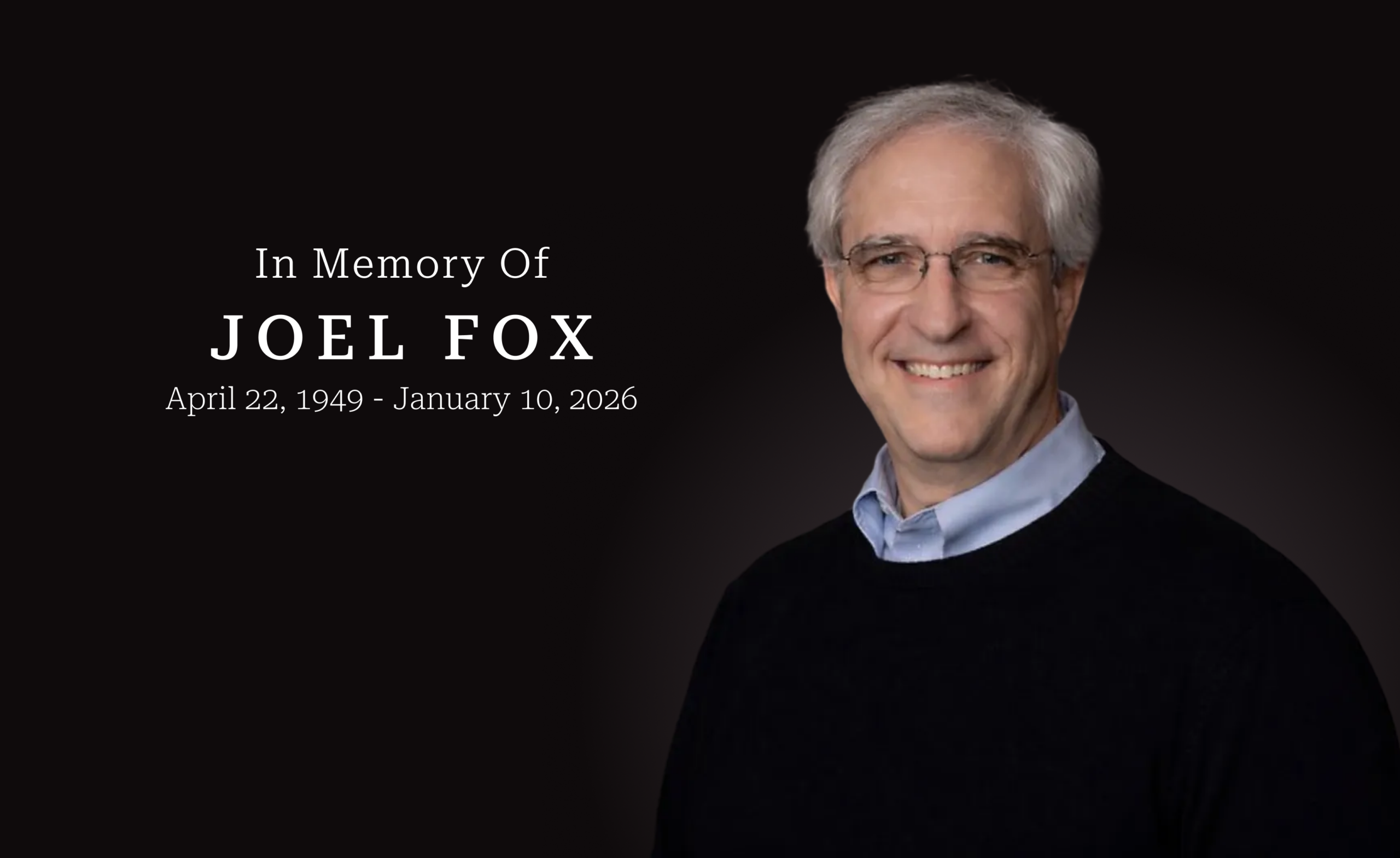
If political differences are destined to leave us divided and friendless, how do you explain the life of Joel Fox?

Fox died on January 10 after more than a decade of living with cancer. He was California’s most prominent taxpayer advocate since Howard Jarvis, for whom he worked, and whose anti-tax organization he led from 1986 to 1998. Fox, a Republican, advanced conservative ideas on TV and op-ed pages. He advised the campaigns of Gov. Arnold Schwarzenegger, Mayor Richard Riordan, and U.S. Sen. John McCain.

That profile, in our polarized times, might make you think Fox was one of those political ideologues who are driving the country apart. But the opposite is true.

Fox, more than any person in California politics, built deep relationships with people across the political spectrum. And he did not do this through consensus or compromise. Instead, Fox built friendships on disagreement itself—a warm, open, and curious style of disagreement.


Read More »

Amend AB 1215 and put California consumers and safety first

California has the seventh largest economy in the world. And what drives this economy is the willingness of consumers to take risks and buy products. To guard against risk, consumers often rely on commercial data to tell them the history of a product. So, for example, when someone is buying a house, he or she can see the history of the house: its property tax values, its renovations and what it sold for in the past. Shouldn’t the same process apply when buying a car? It should but it doesn’t.

A new piece of legislation, AB 1215, aims to protect consumers in the market for a used car by giving them information on the car’s history. The bill asks the right question: how can we protect consumers? Unfortunately, it provides the wrong answer: it relies on the National Motor Vehicle Titling Information System. Essentially, the NMVTIS is a program developed by the Justice Department to help keep track of car titles. But if you are looking for information on how many wrecks a car has had or how much work has been done to it over the years, the NMVTIS isn’t much use.

Read More »

About Presidents: Those Who Want to Be; One Who Wanted to Be; One Who Was

The Iowa Debate

For Californians who watched the Republican presidential
debate in Iowa yesterday, they probably had a sense that former House Speaker
Newt Gingrich’s reality check on Congress’s super committee on debt reduction
struck a note of truth. 

Gingrich argued the Select Committee on Debt Reduction
should not substitute for an open, legislative process and said members of
Congress should not sit around while the committee does its work and then
presents a terrible choice such as, "We can either cut off your right leg or we
can shoot you, which one do you prefer?"

The reason Gingrich’s rant may feel right to Californians is
because he described the super committee in terms familiar to the Big 5 process
that produced a state budget for so many years here. The discussions occurred
behind closed doors then the final surprise package was presented to the
legislature for a pretty much up and down vote.

Read More »

AT&T Merger Is the Right Thing for Sacramento & California

The California Public Utilities Commission recently held a series of public hearings and workshops to discuss the pending merger between AT&T and T-Mobile, up and down the state this past month. I understand that during the hearings, an overwhelming majority of citizens from all walks of life testified in support of the merger and believe the benefits are in the best interest for California.

As a former Sacramento City Unified School District Board President – and the father of two children – I know that giving my children the ability to use the Internet as a learning tool has been vital to their success and continued education, supplementing not only their studies but how they communicate with others as well. I heard also that many of those who spoke at the hearings discussed how better access to broadband Internet is necessary for their children to succeed in school and keep up with how we access information. Access to broadband is no longer a luxury, but a necessity, and making sure this is affordable and available to everyone is a priority for our state.

Read More »

July Sales Tax Revenue Surpassed Budget Projections by Half a Billion Dollars

Tax revenues received by the State Board of Equalization last month exceeded projections.


Although I continue to remain deeply concerned about California’s economic recovery, I’m pleased to report that our state’s budget picture—at least when it comes to sales tax—isn’t quite as bleak as it might seem.


On Tuesday, the State Controller reported that sales and use tax general fund revenues for the month of July were $977.6 million, 12.5% below the Department of Finance projection of $1.12 billion.


However, BOE actually received $1.64 billion in July, more than half a billion dollars above the budget projection.


It’s really comparing apples and oranges to talk about the state’s budget picture without acknowledging every dollar we received last month.

Read More »

Green dot to take over Vernon?

A MODERN FABLE

Reliable but unnamed sources at the state capital insist that AB 46,
Assembly Speaker John Perez’ Vernon disincorporation bill, contains a
secret clause. According to a highly placed aide in the Speaker’s
office, interviewed under an assurance of anonymity, the final version
of the bill will turn Vernon over to Green Dot, the charter school operator, giving a whole new
meaning to "charter city."

Rather than disincorporate Vernon, the city will maintain its legal
identity but will technically be managed by Green Dot. Applying to
cities the Green Dot principle that any one can run a school, a short
list of candidates for Green Dot’s city manager include former LAUSD
Superintendents David Brewer and Ray Cortines.

But former Green Dot executive Steve Barr is favored to be tapped for
city manager. He disappeared from public view following what was
mistakenly thought to be his ouster from Green Dot. In fact, he
secretly entered Eli Broad’s Institute for City Government, a newly
organized training facility to mold municipal administrators with the
proper outlook on city management. The Institute is an offshoot of
Broad’s successful counterpart that indoctrinates "school choice"
superintendents.

Read More »

November 2012 Targets – Part Two: The Congress

In my last post, I made my early picks as to where the
action will be in November 2012. Now, let’s look at the new congressional
districts that may be in play in November 2012.

3rd
Congressional District:
JOHN GARAMENDI (D). Garamendi resides in the
southern portion of this new district and only 22% of the voters reside in his
old district. The district stretches north to encompass large areas that are
currently represented by Reps. Wally Herger (R) and Mike Thompson (D). Jerry Brown
outpolled Meg Whitman 50% – 43%, while Carly Fiorina narrowly outpolled Barbara
Boxer 46% – 45%. This is not a safe Democratic district, so let’s see if
Republicans can recruit a top tier candidate to challenge him.

7th
Congressional District
: DAN LUNGREN (R). Lungren will again face his 2010
opponent, Ami Bera. But Asm. Alyson Huber (D), who was not treated
well in the Assembly redistricting, has made noises of possibly entering this
race. Brown outpolled Whitman 50% – 45%, while Fiorina outpolled Boxer 49% –
43%. This will be a top TARGET.

Read More »

Failed Card Check Measure Posed Threat to Small Farms & Field Workers

There has been a fair amount of post-mortem analysis of the
Governor’s decision to veto legislation that would have given the United Farm
Workers (UFW) the power to eliminate secret ballots for farmworkers voting on
whether to unionize. 

State and national newspaper editorials and commentary have
rightly concluded that Governor Brown realized the measure would have blown up
the very labor reforms he constructed in 1975. Furthermore, it went too far in
allowing unions to intimidate and bully workers.

The central issue is basic democracy. Over the years, both Cesar Chavez and Gov.
Brown have underscored that there is nothing more sacred than the right to vote
privately and free from threats.

But these commentaries, while accurate, too often pitted the
California card check legislation as a David-and-Goliath battle between huge
agricultural interests and a union.

Read More »

Football Deal for LA Could Hit Other CA Cities

The Memorandum of Understanding approved by the Los Angeles
City Council with the Anschutz Entertainment Group moves professional football a
step closer to Los Angeles
after a 16-year absence. But it might mean
another California city could lose their NFL franchise.

The negotiated deal still has some yards to gain before it
scores the big touchdown of returning an NFL team to the City of the Angels. The
$1.2 billion deal for a stadium and remodeling of the convention center seems
to be sensitive to taxpayer concerns. The stadium and team would bring both
construction jobs as well as permanent jobs related to the stadium.

However, if the team that occupies Farmer’s Field comes from
another California city, jobs will be lost there.

After the MOU was approved by the City Council, sports talk
pundits started speculating which team might move to L.A., since it is assumed
by all that the NFL will not add a new franchise at this time. The stadium will
not be built without a team confirmed for the new stadium.

Read More »

A National Jobs Emergency & The Transportation Solution

In the backdrop to the recent political fireworks on
the federal debt limit is a sobering reality: America is in the midst of a
national jobs emergency.  California,
struggling with 12% percent unemployment, is a perfect example of what’s
happening nationally. 

The August U.S. Labor Department
employment report showed anemic job growth. 
In July, the U.S. Chamber of Commerce released what it called the
"brutal findings" in its "Small Business Outlook Survey" of more than 1,400
small business owners.  Nearly 65 percent
said they have no plans to hire in the next year.  "Economic uncertainty" was the primary
obstacle cited.

"Hard times" stories reverberate throughout the U.S.
construction industry, currently reeling with a 15.6 percent national unemployment
rate, 6.4 points higher than the national average.  In California, construction industry
unemployment hovers between 20 and 25%.  A
July national survey of transportation contractors by the American Road &
Transportation Builders Association found more than half of the respondents
operating below 75 percent capacity. 
Some reported the highway and bridge construction market is the worst
they’ve experienced in their lifetimes. 

Read More »