

Featured Post

A Fox, A Hound, and a Friendship

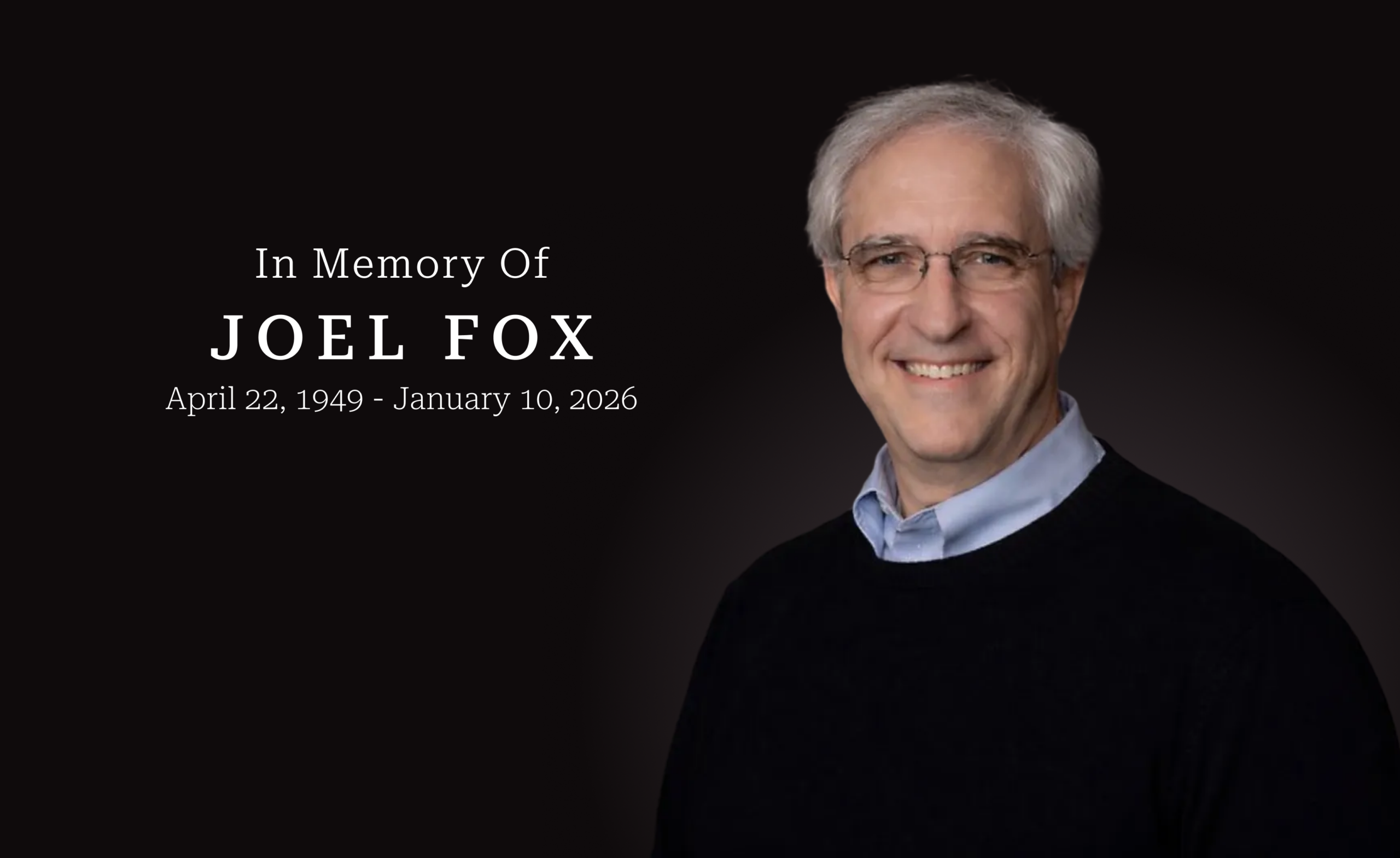
If political differences are destined to leave us divided and friendless, how do you explain the life of Joel Fox?

Fox died on January 10 after more than a decade of living with cancer. He was California’s most prominent taxpayer advocate since Howard Jarvis, for whom he worked, and whose anti-tax organization he led from 1986 to 1998. Fox, a Republican, advanced conservative ideas on TV and op-ed pages. He advised the campaigns of Gov. Arnold Schwarzenegger, Mayor Richard Riordan, and U.S. Sen. John McCain.

That profile, in our polarized times, might make you think Fox was one of those political ideologues who are driving the country apart. But the opposite is true.

Fox, more than any person in California politics, built deep relationships with people across the political spectrum. And he did not do this through consensus or compromise. Instead, Fox built friendships on disagreement itself—a warm, open, and curious style of disagreement.

Read More »

Parole system’s fatal flaws exposed again by a double murder

Originally published at LAPD.com.

Computers are a
marvelous thing. They store information, churn data and generally make
us all more productive. Often, though, there’s a need for human judgment
and common sense to interpret a computer’s output.

A case in point is the California Department of Corrections and Rehabilitation’s computer program, Parole Violation Decision Making Instrument
(PVDMI). It’s a blatant cost-cutting measure touted as a reliable way
to predict which inmates are "low risk" and "non-violent," and thus
eligible for early release from prison with no parole supervision and no
notification to local law enforcement.

PVDMI determined that Zachariah Timothy Lehnen fit that category despite
a history of arrests for robbery, domestic violence and drugs. As a
result, he was released from prison long before his sentence was to end
in November 2013. Back on the streets with no parole supervision, Lehnen
is accused of murdering Lucien Bergez, 89, and Erica Evelyn Escobar, 27, on May 3, 2011 in Culver City.

Read More »

The Redistricting Commission: Now To The Courts

Act One is over: The Redistricting Commission has adopted
its plans; all that remains is final certification August 15.  Act Two now awaits: court action against the
plans.

The
constitution gives the California Supreme Court "original and exclusive
jurisdiction in all proceedings in which a certified final map is challenged,"
and the Commission has "sole legal standing to defend any action regarding a
certified final map."  Additionally, the
maps must be submitted to the United States Department of Justice for
pre-clearance to show they do not regress minority voting opportunities in four
counties that fall under Section 5 of the Voting Rights Act.  Further, the maps could be challenged in
federal court for violating Section 2 of the Voting Rights Act by providing
insufficient opportunities for minorities to win elections.  Communities could sue under the state
constitution over how their areas are divided up.

While
there are many opportunities for legal challenge, as practical matter only one
of the four maps is likely to be seriously challenged, and even that is
uncertain.  The Assembly map is very
incumbent friendly, both parties are satisfied, and the current political
balance is pretty much retained.  Take
Assembly off the table.  The same is true
of the congressional map; a number of incumbents in both parties are given bad
districts, but that does not rise to a constitutional challenge, so take
Congress off the table.  The Board of
Equalization map pretty much retains the current Board structure; no challenge
there.

Read More »

OMG! Ted Costa Is Right On Pensions!

You want proof positive that the debate over how to fix
pensions for California public workers is stale and dumb?

How about
this? Ted Costa has the smartest proposal for pension reform out there.

Costa’s
newly filed initiative is long and complicated and, in a few places, crazy. But
Costa, the original proponent of the recall of Gray Davis and frequent filer of
initiatives, has – more than anyone else with a pension proposal – gotten the
big stuff right.

Costa does not propose, as so many
do, to replace the current pensions system with a two-tiered system, with no
pensions for new employees. His initiative would keep the pensions and impose
all sorts of new caps and rules to limit pensions. But the retirement security
of a defined benefit plan is preserved for all.  

Read More »

Lessons Learned from California: An Effort to Scuttle Parent Trigger

An interesting email arrived yesterday from Parent Revolution, the group that
has pushed the Parent Trigger concept in California. Since Parent Trigger has
gained a foothold here, a teachers’ union, using "lessons learned from
California" devised a scheme to stop it elsewhere.

Parent Trigger is a new California law that allows parents
to transform their children’s failing school if 51% of the parents sign a
petition to force the school district to make changes.

The American Federation of Teachers plan came to light when
a 19 page powerpoint
presentation
from the Connecticut branch of the AFT found itself onto the
website Drop
Out Nation
.

Three times in the presentation California’s success in
implementing the Parent Trigger is mentioned. An additional reference is made
to former California state senator Gloria Romero, an advocate for Parent
Trigger. The theme related to California: We
learned from the mistakes made in California that resulted in Parent Trigger
becoming a reality. Here’s how to stop it spreading further.

Read More »

How Long Will You Enjoy Flying The Friendly Skies With An All-Volunteer, De-Funded FAA?

UPDATE: Senate Majority Leader Harry Reid announces deal to end FAA shutdown. The Washington Post article

Following the Debt Ceiling Bloodbath, Congress went home for the Summer recess, leaving the Federal Aviation Administration ("FAA") unfunded and its employees working on a volunteer basis, without pay. 4,000 FAA employees are out of work (indefinitely furloughed), and those who are working, like critical airport safety inspectors (who are constantly checking airport runways, lighting and the many things that assure our safety in the air), are still working, but not drawing any paychecks. This will not change until after Labor Day, when Congress comes back.

Airport safety inspectors must travel to various airports as part of their employment responsibilities. From now until after Labor Day, these FAA employees who keep our skies safe for some 5,000+ commercial flights in the air over the US at any one time daily, have been asked to put their travel expenses on their own personal credit cards. You know, the same credit cards where major banks line up at the Fed Reserve window to get their money nearly free (actually, not free, at taxpayer expense), then lend it back to you via your pocket plastic, at rates which can approach and even exceed 30% per annum. Nice.

Read More »

Committee Focuses on Jobs for New Economy

Our
economy and job market are the keys to a successful future for California.  We have long been the home of innovators,
entrepreneurs and risk-takers who have revolutionized our world. Technology
born in California has changed the way we do everything from listening to music
and communicating with each other to running our businesses and keeping
ourselves healthy. In order to accelerate our state’s recovery and position us
as a competitive market in this complex globalized economy, we must ensure our
state has an environment that will attract and retain these innovative new-economy
jobs.

The
new economy is critical to California’s long-term success. Studies consistently
show green and technology sector growth outpacing the rest of our industries.
Embracing these sectors will create good-paying local jobs for Californians,
strengthen our economy and allow us to retain our place as a global leader for
innovation.

Read More »

What he said: “Do no harm!”

"State government must adopt a "do no harm" approach
to statewide policy." Not my words – they were written by Lieutenant Governor
Gavin Newsom in his just-released "Economic
Growth and Competitiveness Agenda
"

Shorter Gavin: "Yo, lawmakers, think before you
vote."

"Do no harm" must become the watchwords for state
policy as we struggle through the halting steps of the

economic recovery – or face up to the possibility of
a double dip recession, as some observers fear.

Read More »

Poll Numbers Show Why Debt Debate Took so Much Time and Energy

What drove the debt ceiling debate? Clearly the “Tea Party” had a great deal of influence on the direction this debate took. Statistics in these charts come from the NBC News /Wall Street Journal Poll, the CNN/ORC International Survey, and from a Pew Research Center/Washington Post Survey, and we feel it gives you a vivid picture of where the different political sub groups were at the end of the day on this very volatile issue.

When looking at these numbers, one can clearly understand why the debate took as much time and energy as it did. At the end of the day, the mood of the public toward ALL facets of Congress and the President over this debate was definitely not favorable.

Read More »

Finding a Middle Ground When Our Nation Needs It

The business community applauds the bi-partisan efforts of President Barack Obama, Vice President Joe Biden, Senate Majority Leader Harry Reid, Senate Minority Leader Mitch McConnell, Speaker of the House John Boehner and House Minority Leader Nancy Pelosi for the passage of legislation to raise the national debt ceiling and reduce the federal deficit. These leaders persevered to find the middle ground in a very contentious debate that had the nation wondering if it was still possible to compromise on any issue in Washington, D.C. 

During the past two weeks, the Los Angeles Area Chamber of Commerce has been part of a national business coalition — headed up by the U.S. Chamber of Commerce — that has been urging Congress to find a solution to raise the debt ceiling and begin the process of reducing the national debt. We joined that coalition because the risk of not raising the debt ceiling and the long-term danger of not reducing the deficit were both too great to ignore.

Read More »