

Featured Post

A Fox, A Hound, and a Friendship

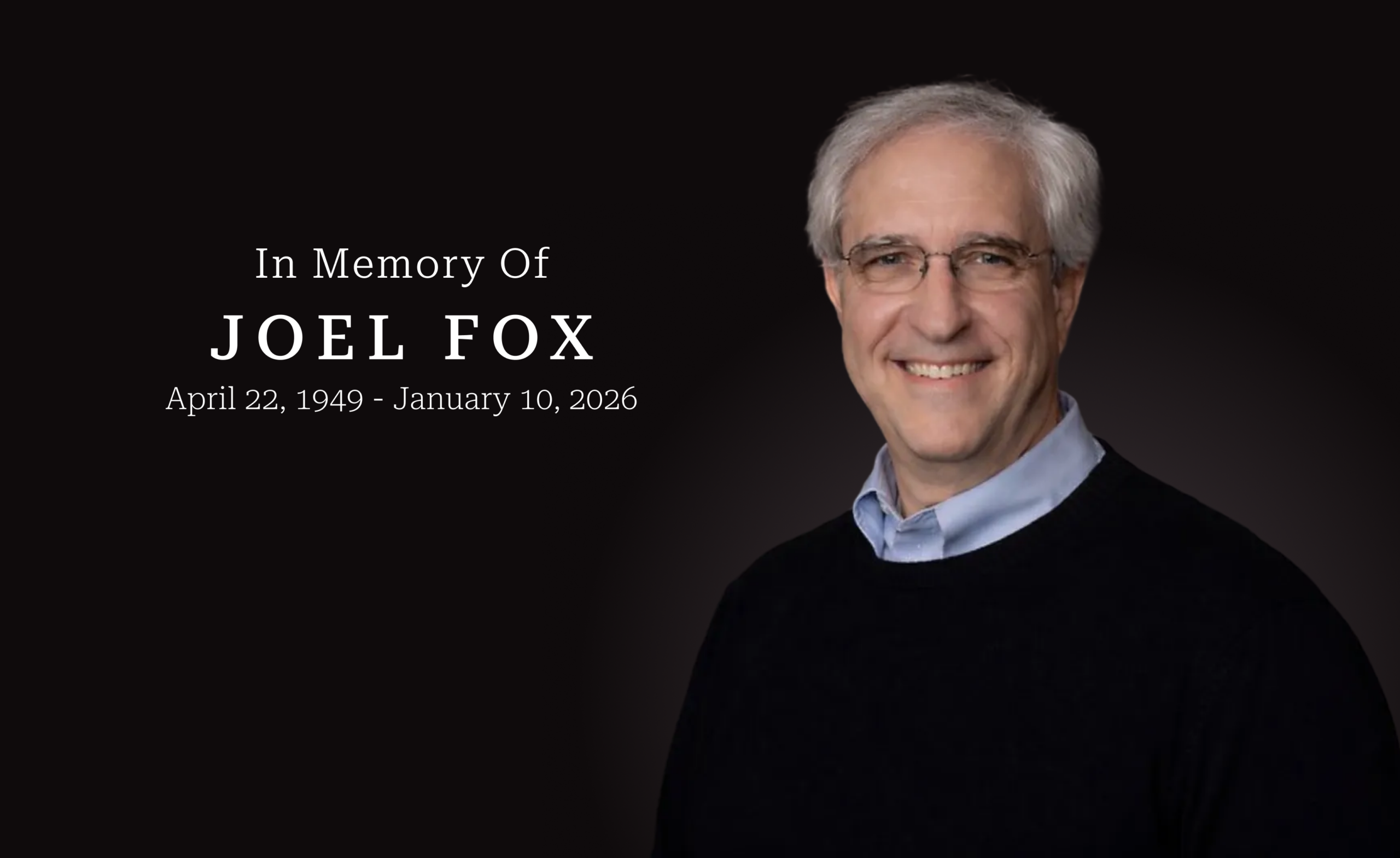
If political differences are destined to leave us divided and friendless, how do you explain the life of Joel Fox?

Fox died on January 10 after more than a decade of living with cancer. He was California’s most prominent taxpayer advocate since Howard Jarvis, for whom he worked, and whose anti-tax organization he led from 1986 to 1998. Fox, a Republican, advanced conservative ideas on TV and op-ed pages. He advised the campaigns of Gov. Arnold Schwarzenegger, Mayor Richard Riordan, and U.S. Sen. John McCain.

That profile, in our polarized times, might make you think Fox was one of those political ideologues who are driving the country apart. But the opposite is true.

Fox, more than any person in California politics, built deep relationships with people across the political spectrum. And he did not do this through consensus or compromise. Instead, Fox built friendships on disagreement itself—a warm, open, and curious style of disagreement.

Read More »

A Temporary Tax That Never Went Away

California taxpayers are celebrating a rare victory. Despite Democrat efforts to extend them, the sweeping “temporary” tax increases of 2009 have gone away. This is an uncommon treat, as many prior tax hikes sold as “temporary” are still with us today.

As Californians enjoy the benefits of this victory, this month also marks the 20th anniversary of a prior sales tax increase that is still with us. On July 15, 1991 Californians were impaled with a "temporary" sales tax increase of 1.25%. This measure was enacted by the Legislature to address the state budget shortfall during the early 1990s economic downturn.

Fast forward to June of this year. A 2009 sales tax rate increase of 1% was set to expire on July 1, 2011. Despite a vote of the people against extending this and other temporary tax increases, Governor Jerry Brown and Democrat legislators unsuccessfully sought a five year extension of these taxes.

Read More »

Death Penalty Foes’ Self-Fulfilling Prophecies

Originally published in the San Francisco Chronicle

State Sen. Loni Hancock, D-Berkeley, is pushing legislation to end California’s death penalty. "Capital punishment is an expensive failure and an example of the dysfunction of our prisons," she explained in a statement. "California’s Death Row is the largest and most costly in the United States. It is not helping to protect our state; it is helping to bankrupt us."

You have to hand this to death-penalty opponents: For decades, capital punishment opponents have tried to thwart California’s 1978 death-penalty law with frivolous appeals that clog courts, delay punishment and burn through taxpayers’ dollars. They now have been so successful that they can argue that California’s death penalty doesn’t work and costs too much.

Hancock is right about the dysfunction. Since 1978, California has executed 13 inmates, even though juries have sent close to 800 to Death Row. California’s lethal-injection protocol has been on hold since February 2006 when U.S. District Judge Jeremy Fogel stayed the execution of convicted rapist/murderer Michael Morales lest Morales suffer any pain.

Read More »

Responding to Mr. Mathews’ Bargain

Yesterday, Joe Mathews challenged me on this site to accept
a bargain that would eliminate the two-thirds vote on taxes and fees for a
guaranteed referendum by the people on all tax measures. He asked the question:
"Should a majority of voters in one election be able to overturn the votes of
2/3 of their elected representatives?"

My answer is: Yes, voters should have the power to make the
final decision on taxes if they choose.

As I made clear in the piece
that prompted this debate
, just because voters choose legislators who lean
toward supporting taxes does not mean the voters themselves support such an
action. I offered numerous examples when this was so: Proposition 13’s property
tax reform (1978), Proposition 218’s right to vote on taxes (1996); and
Proposition 26’s two-thirds vote on fees (2010).

Read More »

Storming the Bastille

Yesterday was Bastille Day. The legendary French holiday that commemorates citizens rising up against their oppressive leaders. In fact, it was just before the height of this French revolution in 1789 that Marie Antoinette uttered that famous phrase heard ‘round the world, “Let them eat cake!” A phrase which resembles the attitude in Sacramento all too often.

And so, as the California Legislature winds down its legislative session this week before summer break, this day forces me to reflect back on the storming of our own Bastille that has led us to this day.

One cannot ignore that impact that the last two years of ‘rousing Tea Party activity and Taxpayer activism has had on our state capitol building. Beginning in the Spring of 2009 and continuing through this day in 2011, the citizenry of California made it loud and clear what they wanted: no new taxes.

Prior to our own storming of the Bastille in 2009, we had witnessed Tax increases and members of both parties selling out on Taxes. Mistrust abounded. We even witnessed a Republican Governor back a ballot initiative for a $16 billion tax increase. The world couldn’t have been more upside-down.

Read More »

Protecting the ‘Golden’ Egg

If I were a panhandler in Los Angeles, most days I’d hop on the subway and exit at the station that’s the closest to Wilshire Boulevard and Rodeo Drive.

The wealthier people in Beverly Hills, as well as the tourists who visit there, would be my best targets, I’d figure. After all, there’s a reason they call it the Golden Triangle.

I wouldn’t be alone. There’d be hundreds, maybe thousands, like me. And it wouldn’t take us long to figure that at the end of the day, we may as well sleep in a nice doorway or a park nearby and save the commute time.

Of course, all of that’s assuming that a subway stop is built at the Golden Triangle. So it’s little surprise that some business owners in that area met recently and decided to start pushing back on the prospect that a subway stop will be located near them. They don’t object to the planned subway, they just don’t want the station. They don’t want the Subway to the Sea to send them a gusher of folks from Skid Row.

They have other concerns as well. The merchants don’t want three years of construction. And they worry that shops near any subway station inevitably will cater to subway riders instead of the limo passengers who now frequent their pricey neighborhood.

Read More »

Are We Really Ready For “Carmaggedon?” – Desperate Musings On Closing The 405

Jean-Luc Godard’s French Film
Classic "The Week End" (1967):
Plot Summary (if you have not had the pleasure of seeing this film): "A
supposedly idyllic weekend trip to the countryside turns into a never-ending
nightmare of traffic jams, revolution, cannibalism and murder as French
bourgeois society starts to collapse under the weight of its own consumer
preoccupations."

Angelinos, and those soon destined to visit the fair city of
Lost Angeles, are in for a rare experience this coming weekend.  The 405 will be closing Friday
night, July 15 to take down one bridge that crosses over the freeway and put up
another. Then, after one of the most insane traffic weekends ever anticipated
for the West Side of LA, it will magically re-open ‘early’ Monday morning, July
18 – in theory, anyway, if all goes well. 
If it does not re-open Monday morning July 18, as scheduled, well . . .
.  all hell will surely break loose here
in the City of Angels, and all bets for a happy ending will be off.

Even the famous Hitler rant from the movie Downfall was used effectively to express
the concern and frustration about this potentially cataclysmic event. (Warning:
Strong language ahead.) 

Read More »

Redistricting Panel Still an Improvement

If you want some chuckles, watch the various pundits reel in
horror from the news that the state’s new citizens’ redistricting commission
won’t be releasing a second draft set of maps for California’s legislative and
congressional districts.

A group of black activists is calling
it
an "egregious decision to perform their public charge without public
scrutiny."

The Sacramento Bee’s Dan Walters warns
darkly
of the problem of expecting amateurs — i.e., real California voters
– to deal with something as complicated as redistricting and suggests the state
would be better off if the state Supreme Court picked up the pieces of the
commission’s likely failed effort.

And Tony Quinn, one of my cohorts on this blog, declared
Monday
that "the Citizens Redistricting Commission has decided to exclude
citizens from the process."

Read More »

CalPERS’ Sophomoric Economic Study Can’t Hide Debts, Losses and Costs

Seeking
to divert attention from its billion dollar losses and huge unfunded
liabilities, this week CalPERS released its own study of the fund’s economic
impact seeking credit for the $26 billion in economic activity generated by its
expensive and generous retirement benefits. 
Of course the economic impact
would be exactly the same if General Motors, Boeing or IBM sent the same $12
billion in payments out of a $230 billion pension fund, so there is no credit
to be earned for merely sending out government checks.

Indeed, the
downstream recipients do not care if the money their customers use came from a
public pension fund, a child’s lemonade stand or a jar buried in the back yard.  Not surprisingly, the CalPERS sponsored study
glosses over the fact that most of the money they distribute actually comes
from taxpayers, either as employer contributions to the program or as
additional payments imposed to cover staggering pension debts.

These
days across California, employee contributions to public pension costs range
from commonly nothing, up to occasionally 35%, making most of the money in the state
and local government funds the returns on taxpayer contributions.  In addition, CalPERS imposes a surcharge on
government agencies to pay for its stock market losses, spectacularly failed
real estate investments and reports on its corrupt former board members and
executives.  Taxpayers will be paying
these surcharges for more than 30 years, spreading those costs and huge losses
over two generations of taxpayers.

Read More »

Bargaining with Mr. Fox

Joel Fox,
proprietor of this web site, has a suggestion for a constitutional amendment
that’s at least half-right. The power of referendum should be extended to cover
tax increases.

What’s so good about it? First off,
the referendum is the one direct democratic power that should be used more.
Referendums have been filed fewer than 80 times in the history of California –
because the short time period (90 days) and high number of signatures make it
far too costly and onerous. (If you want to reverse a law, you’re better off
just doing an initiative – since you have to collect the same number of
signatures and get more time – 150 days). And California has limited the kinds
of laws that can be subject to referendum.

Fox is right – we should end that.
California should reorient its ballot system around referendums – or votes on
the product of the legislature. Not just taxes but other kinds of legislation –
perhaps even budgets – should be subject to referendum.

Read More »