

Featured Post

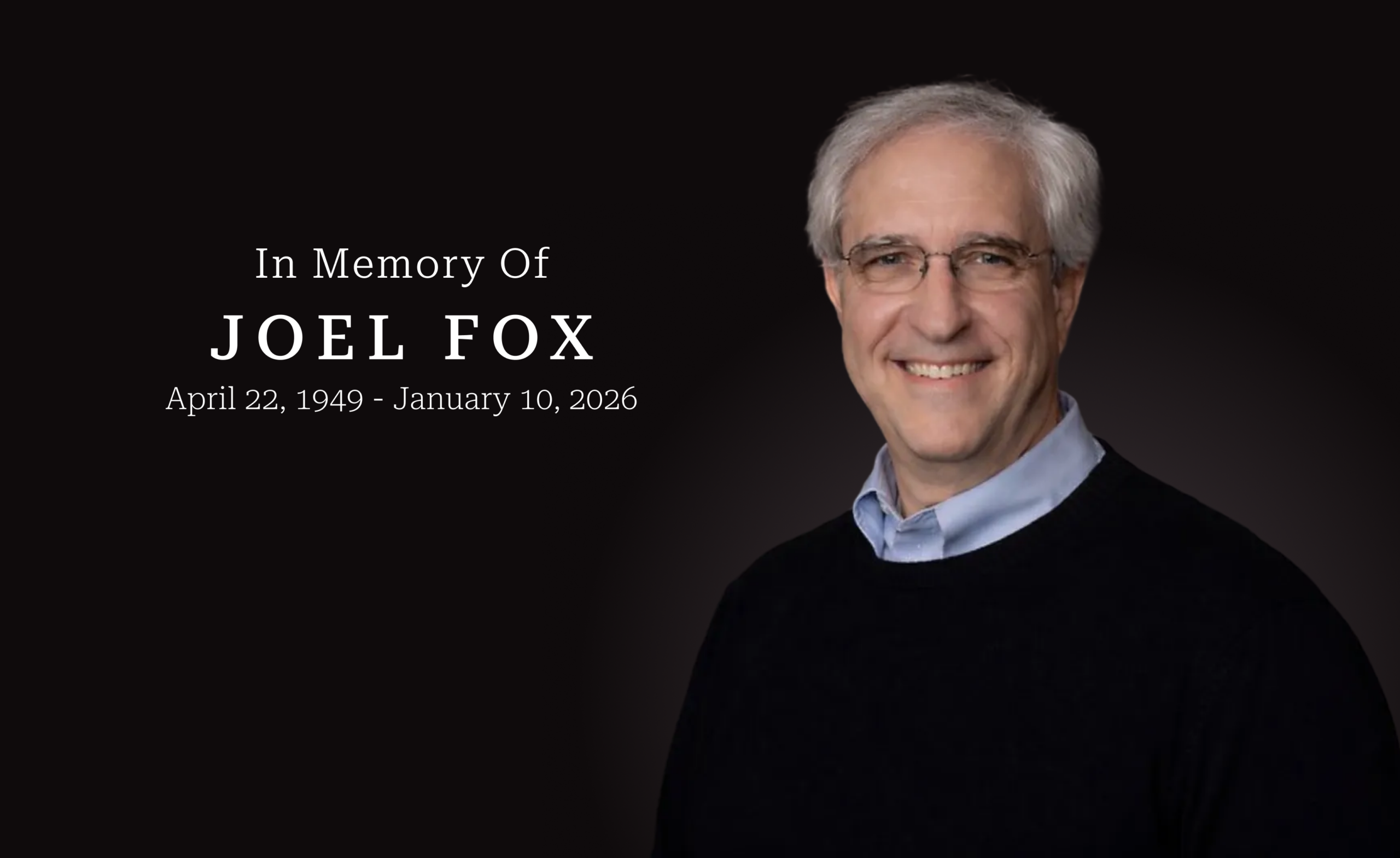
A Fox, A Hound, and a Friendship

If political differences are destined to leave us divided and friendless, how do you explain the life of Joel Fox?

Fox died on January 10 after more than a decade of living with cancer. He was California’s most prominent taxpayer advocate since Howard Jarvis, for whom he worked, and whose anti-tax organization he led from 1986 to 1998. Fox, a Republican, advanced conservative ideas on TV and op-ed pages. He advised the campaigns of Gov. Arnold Schwarzenegger, Mayor Richard Riordan, and U.S. Sen. John McCain.

That profile, in our polarized times, might make you think Fox was one of those political ideologues who are driving the country apart. But the opposite is true.

Fox, more than any person in California politics, built deep relationships with people across the political spectrum. And he did not do this through consensus or compromise. Instead, Fox built friendships on disagreement itself—a warm, open, and curious style of disagreement.


Read More »

The New UI Debit Card and the Role of Technology in California Government

This past week, the Employment Development Department (EDD)
announced the replacement of the Unemployment Insurance (UI) check system with
a system utilizing debit cards. The replacement is noteworthy in itself, in improved
service delivery for  California workers
and employers. It is also noteworthy for what it reveals about technology’s
role in California government.

Currently, EDD provides unemployment checks to 1.2 million
unemployed Californians. The 1.2 million number represents around 57% of the
2.1 million Californians counted as unemployed-adding "discouraged workers" and
workers involuntarily working part-time the number climbs to 2.6 million.

For some years, EDD has paid unemployment , which ranges up
to $450 per week, through a series of checks. The check system is subject to
the vagaries of the postal system: checks are delayed or delivered to the wrong
address or stolen. The new debit system requires the claimant to go through the
same processes of eligibility and regular certification. It transfers UI
payments electronically, enables claimants to monitor the balances, and  provides an option of direct deposit.

Read More »

Excluding The Public: The Redistricting Commission Goes Dark

Running out of time, beset by rebellious consultants, and manipulated by partisans, the Citizens Redistricting Commission has decided to exclude citizens from the process. The Commission is going dark.

On Saturday, the Commission voted not to release a second set of draft redistricting maps to the press or the public on July 14 as promised. They also voted not to post maps of the districts they are drawing on their own redistricting website. Despite a $3 million budget and hundreds of thousands of dollars paid to their consultants, the consultants told them they had no time for public maps. Outside groups are being recruited for that task.

Their line drawing staff also has announced that the Commission must be done with its directions by July 20; they will accept no more directions on districts after that — despite the fact it is three and a half weeks until the Commission is supposed to adopt its final maps. This will allow for no public input on the final maps since their staff will have stopped working. California will get whatever districts their consultants concoct over the next nine days — like it or not.

Since the release of their first sets of maps on June 10, and resultant uproar from communities that felt ill treated, the Commission has tied itself in knots over racial districting, redrawing the Los Angeles and Bay Area urban cores over and over, while giving the back of its hand to the rest of the state. For much of suburban and rural California, their new districts are far worse than anything the legislature ever drew.

Read More »

FIRST, They Want to Go After Business Property Taxes

Here’s the word and the sentence that stood out to me in
Steve Lopez’s Los Angeles Times weekend
column
on Proposition 13: It would
make the most sense to go after commercial property taxes first, Villaraigosa said, since business has gotten the biggest
break.

Underline and circle the word FIRST in that statement by the
Los Angeles mayor. Seems to me the intent is to change the property tax system
for all property owners. They just want to do it in pieces and begin with
business property.

And, don’t fall for the idea that business got a bigger
break than homeowners under Proposition 13. A study from
a couple of years ago
by former state Legislative Analyst Bill Hamm and
economist Jose Alberro stated:

Read More »

Don’t look now, the Legislature is increasing your taxes

Just because state taxes weren’t extended by the
Legislature (or the voters) to close the state budget gap doesn’t mean the
Legislature is not planning to raise your taxes.

And when I write "Legislature," I’m including
Republicans.

Even as negotiations to temporarily extend sales,
income and vehicle taxes came a cropper, both the Assembly and Senate approved
legislation – by supermajority votes – moving tax increase proposals to the
opposite house.

These tax increases would not support trivial
programs like colleges and universities, trial courts or state parks. They go
to a core function of state government: subsidizing renewable energy and energy
efficiency programs and research.

Read More »

Left, Right and Wrong on ‘Reform’ of Initiative Process

The good news: reform of the initiative process is finally
on the table in California. The bad news: the left and the right are getting
reform wrong.

There’s a
whiff of hypocrisy on both sides.          

The left, which rails against the rich in most contexts,
loves the rich when it comes to the initiative process. It’s pushing bills that
add regulations and restrictions on signature gatherers that will make a
process that’s the province of very rich people and institutions the even more
exclusive province of super-rich people and institutions.

The right,
which claims to be worried about budget deficits and runaway spending, thinks
busting the budget is fine if it’s done by initiative. In particular, conservatives
are attacking common-sense changes that would force initiatives to live within
the budget, by requiring spending cuts when a measure mandates spending.

Read More »

Vernon’s Texas Campaign

With
Speaker John Perez’s success in getting his bills on Vernon’s disincorporation
to the Senate floor, the question is: Will Vernon’s "Texas campaign" intensify
or is it just a negotiating ploy? Looking at the situation, it appears real.

Competition
between states for businesses and jobs was ratcheted up a notch when Texas
Governor Rick Perry took the unusual step about a month ago of writing to some
disaffected Vernon businesses frustrated with the Speaker’s effort to fold the
industrial city into Los Angeles County. Perez proposes to make Vernon a Community
Services District in an effort to end government corruption there.

Vernon
businesses and labor argue jobs will be lost if the Perez bills become law and
the city’s business friendly advantages are threatened.

Read More »

California Doesn’t Need a Lieutenant Governor

It’s time to put Gavin Newsom out of his misery and
eliminate, once and for all, the lieutenant governor’s job.

Eliminate as in abolish, eradicate, dump, erase, wipe out,
vote away, strike from the Constitution. The voters don’t care about it, the
state doesn’t need it, and it’s nothing but a source of frustration to
ambitious politicians like Newsom, people who got into government with the idea
of doing something to make California a better place.

That’s not something anyone can do from the lieutenant
governor’s office.

Recent press releases from Newsom’s office have marked the
celebration of International Olympic Day at the state capitol, congratulated
Butte College on its "grid positive" energy status, thanked the New York state
Legislature for legalizing same-sex marriage and backed legal efforts to
restore same-sex marriage in California.

Read More »

Why L.A. May Get More Seoul

The fact that Los Angeles is a capital of the Pacific Rim is old news. After all, America’s business relationship with Japan has peaked and the one with China is pretty mature.

But wait. L.A.’s status in the Pacific Rim may get a jolt soon.

That’s because a U.S.-South Korea Free Trade Agreement, long and dull though the process has been, finally appears to be nearing a successful conclusion. If approved, the treaty will result in a higher level of business between the United States and Korea because it will eliminate 95 percent of tariffs in five years.

This could be a big deal. And Los Angeles stands to be the prime beneficiary.

That’s partly because Los Angeles is where Koreans land when they enter the United States. There are about 450,000 ethnic Koreans here, more than anywhere outside of Korea, and there’s a thriving business community in the Koreatown area west of downtown Los Angeles. So any increase in business between the two countries will at least partly be done in and through Koreatown.

Read More »

Banning Junk Food At The State

Another ridiculous bill is traveling through the Legislature which would kill more small businesses in California because Big Brother wants you to lose weight.

AB 727 authored by Assemblywoman Holly Mitchell, D-Los Angeles, would require 50 percent of the food sold in vending machines in state buildings to meet federal nutritional standards, and by 2016, 100 percent.

California is crumbling under the weight of an ever expanding government, irresponsible and condescending legislators, and not because of the waistlines of state employees and school children.

Mitchell’s website states “As part of the First Lady’s Let’s Move Initiative…California plans to help lead the effort in creating healthier environments by adopting a similar food procurement strategy for its cafeterias, office buildings, and vending machines.”

California is leading the effort in whacky laws and infringements on individual rights and liberties.

The current requirement for healthy food in vending machines in the state is already a whopping 35 percent.

Read More »