

Featured Post

A Fox, A Hound, and a Friendship

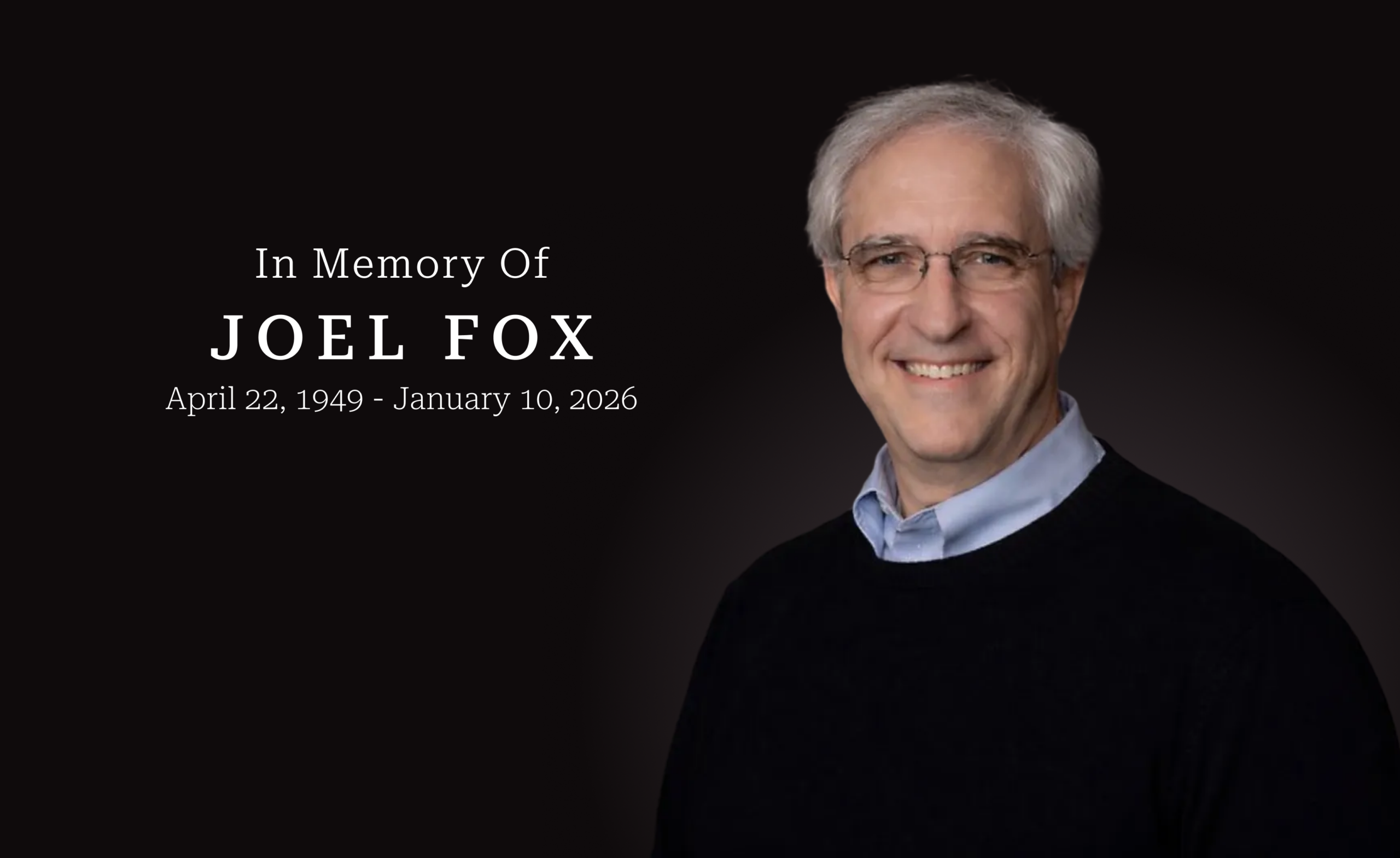
If political differences are destined to leave us divided and friendless, how do you explain the life of Joel Fox?

Fox died on January 10 after more than a decade of living with cancer. He was California’s most prominent taxpayer advocate since Howard Jarvis, for whom he worked, and whose anti-tax organization he led from 1986 to 1998. Fox, a Republican, advanced conservative ideas on TV and op-ed pages. He advised the campaigns of Gov. Arnold Schwarzenegger, Mayor Richard Riordan, and U.S. Sen. John McCain.

That profile, in our polarized times, might make you think Fox was one of those political ideologues who are driving the country apart. But the opposite is true.

Fox, more than any person in California politics, built deep relationships with people across the political spectrum. And he did not do this through consensus or compromise. Instead, Fox built friendships on disagreement itself—a warm, open, and curious style of disagreement.


Read More »

Do elections matter?

Those involved in the political world often repeat the
refrain that elections have consequences. Who wins or what measures pass will
determine the direction of government until the next election.

However, a number of people involved in the 2010 November
election might wonder about that statement. Putting aside the beef some might
have with elected officials who acted differently than some voters anticipated
once in office, let’s concentrate on ballot measures, which do not have the human
quality to change a mind.

According
to the League of Cities
, Proposition 22 on the November 2010 ballot explicitly
prohibited the governor and legislature from abolishing redevelopment
districts, but the governor signed the bill. See you in court says the League
of Cities.

Proposition 26 set a new standard requiring a two-thirds
vote for fees. Yet, the budget contains majority vote fees on property owners
in certain fire districts and a new Department of Motor Vehicles fee. Are these
really fees for service or are they disguised taxes that require a two-thirds
vote? The Howard
Jarvis Taxpayers Association
says they are making that determination and
may go to court.

Read More »

Parents Enact Trigger Laws Nationwide

It’s been seven months since the brave parents at McKinley Elementary School approached Compton Unified and handed in the petitions that sounded off a revolution that has the entire country talking. Today, they know that, starting this fall, they will get the quality education they fought so hard to get for their children and only a couple of blocks from McKinley Elementary and that this movement is growing rapidly.

Since that historic day, the world has watched the story unfold as Compton Unified employed an endless series of illegal and unconstitutional maneuvers to fight their own parents — mounting an illegal “rescission” campaign, harassing and lying to parents, and engaging in a signature “verification” process that was so unconstitutional that L.A. Superior Court judges had to issue both a Temporary Restraining Order and a Preliminary Injunction against Compton Unified. The entire country has watched for the last seven months as Compton Unified used every ounce of their energy to put the interests of adults before that of the children they are supposed to serve.

Read More »

Siriusly, Another Class Action Lawsuit?

Let me first of all state that there are few joys in life that equal Sirius XM Satellite radio. Being able to drive around town or long distance and listen to Seriously Sinatra cannot be matched. My wife may not agree since she has to deal with the fact whenever I drive that is all I listen too. But hey, it is my vehicle. I am more than happy to listen to NPR if I am invited to be the passenger in her car.

Sorry, back to the blog. Anyways, the other day a lone email arrives announcing a class action settlement regarding Sirius, XM, or Sirius XM Satellite Radio. This announced a lawsuit finding that the merger between Sirius and XM violated federal anti-trust laws and that as a result of the merger Sirius XM raised its prices. Sirius XM denies it did anything wrong.

So as part of the settlement, Sirius XM has agreed not to raise the prices of its base subscriptions throughout 2011 and others can restart their plans at new lower subscription rates. The estimated value of the class action is $180 million. But I really do not get anything and quite frankly did not want anything. And while I am not an anti-trust lawyer, I did not think Sirius XM violated anti-trust laws.

Read More »

Change is Slow, but We Are Making Progress

Anyone with a basic understanding of economics knew long ago where the unsustainable public employee pension system was headed. And last year, City of Los Angeles Chief Administrative Officer Miguel Santana painted a frightening picture of the severe financial crisis facing the City as the cost of pensions and health care for retirees continue to rise. Despite that, public officials, who were too afraid of public employee union backlash, stuck their heads in the sand.

We all know the problem isn’t exclusive to Los Angeles — the State of California is in the same mess, and across the country cities and states have made headlines on drastic measures aimed at bringing some sanity back to the bargaining table.

No one begrudges public employees’ good health care and retirement benefits, but the crux of this problem lies in fairness. Working families struggle to fund their own retirements and pay their own health care costs, yet they are providing public employees and retirees with full pensions and almost 100 percent of their health benefits. Public employees are suffering as well, losing salary and jobs due to furloughs and layoffs. When government has to lay off employees, municipal services for the public also take a hit.

Read More »

The Commission’s First Draft Maps: Doing worse than the Legislature did

The results are in and the first draft maps released by the Citizens Redistricting Commission on June 10 have bombed.  Over the past two weeks, Commission members have had to sit through hours of testimony on the maps while more than 1,000 of their fellow citizens told them what a lousy job they did.

The first maps achieved remarkable results.  First, they managed to violate the Federal Voting Rights Act by actually reducing the number of majority-minority districts in a state where Latinos accounted for 90 percent of net growth over the past decade.  The Commission now realizes this; they threw out their staff’s entire congressional work product for Los Angeles County and the commissioners themselves are now redrawing the districts.

Second, in place after place they managed to gerrymander the state even more than the legislature did in 2001 with a series of truly bonehead districts. Now that is a real trick, and here are just six examples of where they did a worse job than the politicians did ten years ago.

Read More »

Victory for Taxpayers in San Diego

The names of San Diego County public employees retiring with six-figure pensions are a matter public record, according to a court ruling in a case brought by the Howard Jarvis Taxpayers Association with amicus briefs filed by the Small Business Action Committee and a number of newspapers.

The 4th District Court of Appeal held, in a published decision that applies statewide, that public employee retirement systems must disclose the names and pension amounts of retired public employees.

This is a significant victory, and a vindication. Even when we have won lawsuits, retirement agencies across the state of California have refused to release their data unless under the threat of lawsuit. Today’s published appellate precedent settles this issue once and for all.

The decision is significant because it requires for the first time that the worksheet of how their pension amounts was calculated must be made public. The worksheet reveals details that explain how some public employees are able to retire with pensions significantly higher than the salaries they earned while employed.

Read More »

The Unpredictable Mr. Brown

Jerry Brown had his chance at political revenge last night
but to his credit he sidestepped that opportunity. On the day the Democrats
passed an alternative budget to Brown’s original plan with no cooperation from
Republicans, Brown vetoed the controversial union supported ‘card-check’ bill
that had reached his desk on partisan votes, Democrats for, Republicans
against.

Rumors flew around the capitol that Brown was using the
card-check bill as a bargaining chip in his budget negotiations. If some farm
area Republican legislators would vote to put tax extensions on the ballot,
Brown would veto the bill, the rumors implied. No Republican openly supported
the tax extensions and the tax extensions were not part of the final budget.
Yet, Brown vetoed the card-check bill, anyway.

So much for capitol rumors.

Read More »

Good News on the Sheet Beat

The state of California is swirling around the drain. Unemployment is the second-highest in the nation. Businesses are seeping away. The state budget deficit is intractable.

In times of crisis like these, we yearn for a true leader to step forward with clear thinking and bold plans. Someone who can get us on the path out of this morass.

Thank goodness Kevin de León has emerged. He’s a Democratic state senator who represents downtown Los Angeles. And he’s got a plan. De León has declared war on those dastardly flat sheets in hotels. He wants fitted sheets, and he’s introduced a bill to mandate them in all hotels in the state. The bill passed the Senate a few weeks ago, and if it passes the Assembly, it’ll be a misdemeanor for a hotel to use flat sheets.

No, no, no. This is not a waste of the Legislature’s brain power in a time of crisis. This is really important. You see, hotel housekeepers could get hurt lifting mattress corners to tuck in flat sheets.

Read More »

The Distance Running Subculture of Southern California in the 1960s

(Few readers know that our publisher, Mr. Joel  Fox, was a distance runner in the 1960s, and ran
the Boston Marathon in 1969, 1970 and 1971. So I knew he wouldn’t object if I
slipped in as this week’s "California Employment" posting a note on the
distance running subculture of Southern California. A version of this posting
first appeared last week in
Zocalo Public
Square.)

Before
distance running entered the mainstream culture in the 1970s, before marathons and
road races attracted thousands of runners, before Nike and Reebok, there was a
distance running subculture in Southern California.

You
wouldn’t have known it existed from the Los
Angeles Times
or local television and radio. But a vibrant distance running
community was out there in the 1960s, under the radar. The community was linked
by a network of  all-comers races, weekly
road races and the recently-established marathon races. Most consequential,
among this community new ways of thinking were emerging  about long distance running as a lifestyle,
as well as about workout regimens, diet, lifelong training, and the inclusion
of women.  

My
older brother Jim, then a senior at Fairfax High, introduced me to long
distance running in the summer of 1967, a few months before I was to enter the
school. My first run was from our house in the Fairfax district to the top of
Mt. Olympus in the Hollywood Hills. Though I ran only the first two miles and
walked the rest, I was soon hooked.

Read More »