

Featured Post

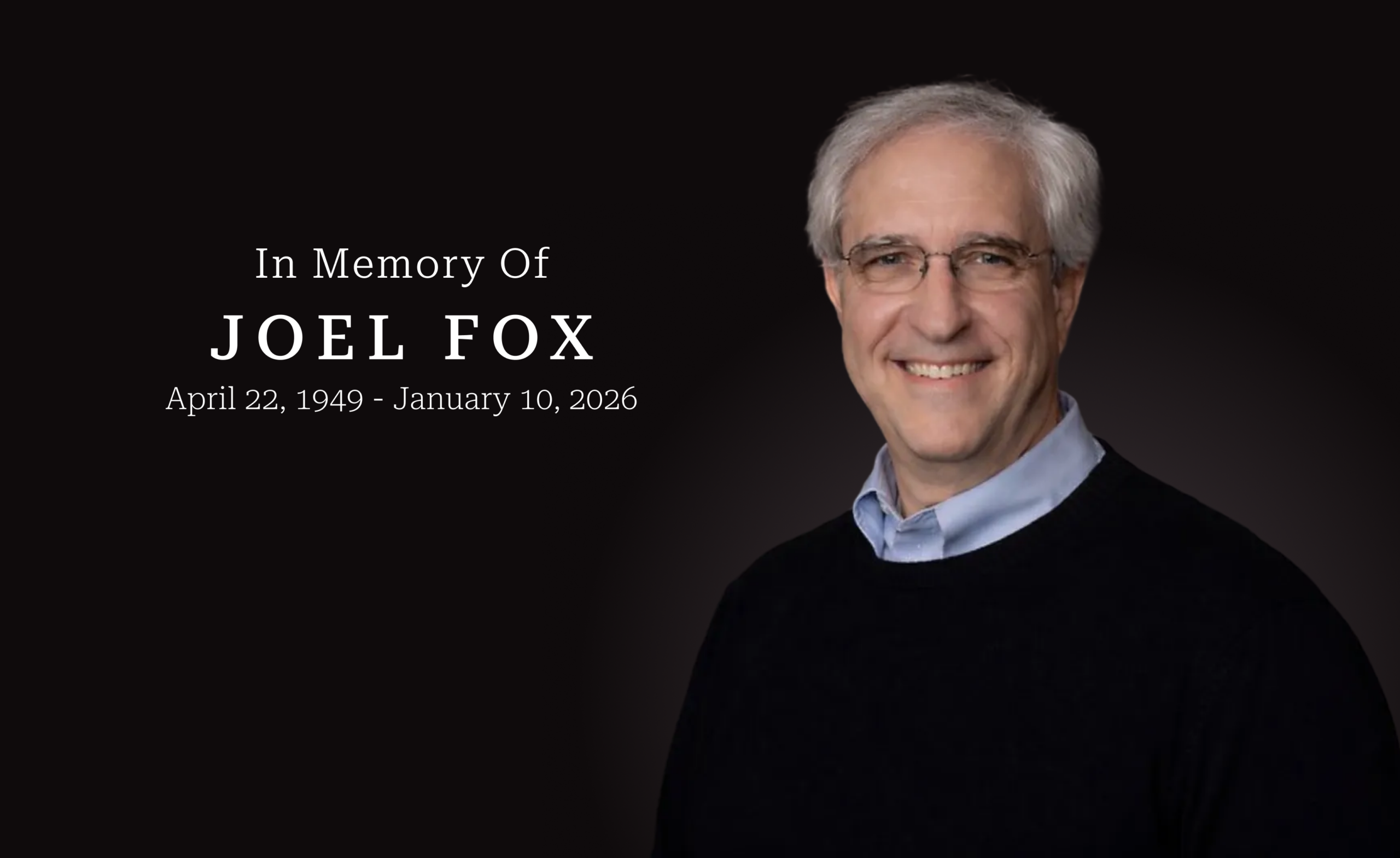
A Fox, A Hound, and a Friendship

If political differences are destined to leave us divided and friendless, how do you explain the life of Joel Fox?

Fox died on January 10 after more than a decade of living with cancer. He was California’s most prominent taxpayer advocate since Howard Jarvis, for whom he worked, and whose anti-tax organization he led from 1986 to 1998. Fox, a Republican, advanced conservative ideas on TV and op-ed pages. He advised the campaigns of Gov. Arnold Schwarzenegger, Mayor Richard Riordan, and U.S. Sen. John McCain.

That profile, in our polarized times, might make you think Fox was one of those political ideologues who are driving the country apart. But the opposite is true.

Fox, more than any person in California politics, built deep relationships with people across the political spectrum. And he did not do this through consensus or compromise. Instead, Fox built friendships on disagreement itself—a warm, open, and curious style of disagreement.

Read More »

One Way to Help Signature Gathering and Ourselves

The state legislature is full of proposals to make the
onerous and expensive process of signature gathering more onerous and
expensive. One bill would mandate special badges for gatherers. Another would
change how they are paid – from per signature to hourly – in a way that would
add to costs and reduce the number of measures.

Such
proposals are divorced from the realities of signature gathering. And that
central reality is that it’s getting more difficult to gather signatures.
Because there are fewer places to gather.

That’s
because private companies and public agencies alike have worked to restrict the
use of public space. Signature gatherers now find it harder than ever to
circulate petitions outside of grocery stores and big chains. The post office,
which should be a place for signature gathering, has fought for years to limit
petition circulators. And while old court decisions protect the right to gather
at traditional malls, those traditional malls are dying, and their
replacements, town square-style places like the Grove, bar signature gathering.
So do big-box stores like Costco (except, of course, when Costco is behind an
initiative, like Gov. Schwarzenegger’s 2004 workers compensation reform.
Hypocrisy, it seems, also comes in family-size packages).

Read More »

California’s cover story

The
following op-ed appeared in the
San Francisco Examiner on May
15, 2011:

Last month The Economist, prestigious British journal, ran a cover story: "Where
it all went wrong: A special report on California’s dysfunctional democracy."
The report blames "direct democracy," the initiative process, for the state’s
woes. The ruling class loves the report, but Californians have good reason to
be wary.

The initiative process lets ordinary
Californians become policymakers. For example, in 1996, the first time they had
any say in the matter, Californians passed Proposition 209, which ended racial,
ethnic and gender preferences in state government, employment and contracting.
That policy of institutional discrimination had been imposed by legislators and
unelected bureaucrats.

Read More »

Card Check Bill Boosts Union Punch

Cross-posted at CalWatchdog.

California’s agriculture workers can expect to be unionized very soon. A bill that would allow labor unions to organize farm workers passed the Assembly Monday.

SB 104 is authored by Senate President Pro Tem Darrell Steinberg, D-Sacramento, and is sponsored by the United Farm Workers union. It has been sold as a bill that would “allow” farm workers to decide on unionization, and as an option to the secret ballot, the current system of determining whether a workplace is unionized.

Steinberg is a Sacramento Democrat and a former union lawyer for the California State Employees Association. SB 104 is his third attempt at legalizing card-check elections for agriculture workers.

I recently described how card check works:

In card check elections, workers can be intimidated and coerced into signing a card saying that they want union representation. The election is not held using the secret ballot — workers must sign the cards publicly. After a majority of the cards are signed and the employee’s vote has been made known to the union, if more than 50 percent of the cards are signed, employees are then required to join the union.

Read More »

If Republicans wouldn’t vote for an election on taxes, why would they vote for the taxes themselves?

The revised budget Gov. Jerry Brown released Monday does not
seem any more likely to win Republican votes than the governor’s original plan.

Brown is still pushing to extend billions of dollars in
expiring taxes, except now he wants the Legislature to vote directly on the
taxes rather than simply scheduling an election. 

The election would come later, and voters would be asked to
ratify the Legislature’s decision.

But if Republicans wouldn’t vote for an election on taxes,
why would they vote for the taxes themselves?

That’s a tough sell for Brown. Making it even tougher,
ironically, is the $6.6 billion increase in the state’s revenue projection for
this year and next.

Read More »

Wall of Debt

Governor Brown unveiled a new theme on Monday to sell his budget solution: the Wall of Debt.

This approach targets Republicans and other voters skeptical of the need for tax extensions.

  • The Governor specifically calls out the nearly $35 billion in borrowing and gimmicks devised by previous Administrations and Legislatures to paper over earlier deficits. The subliminal message: “Never again.”
  • The debt retirement theme provides a landing zone for Republican legislators who might agree to tax extensions in return for a spending cap, where any revenues above the cap could be used to retire budgetary borrowing. The Governor expressed his support yesterday for an undefined spending cap.
  • Raising the debt issue also provides a platform from which the Governor could insist on aggressive reforms in state and local pension obligations. Actuaries peg the unfunded liabilities of the two big state pension systems north of $150 billion. This off-budget debt was recently noted by Standard and Poor’s as a further threat to California’s anemic credit rating.
  • Finally, the overall capacity of the government to take on debt will be front and center as the Congress debates whether and how to raise the federal government’s debt ceiling.
Read More »

Long Beach City Council Should Oppose Bag Tax

It
seems like we can’t turn on the news without hearing about skyrocketing gas
prices, California’s persistent double-digit unemployment rate, and families
struggling to make ends meet.

The
cost of groceries continues to climb everyday as items such as dish soap,
produce, and dairy are marked up because of rising commodity prices.

In
this climate of uncertainty, every nickel counts. Yet efforts to raise taxes
middle and lower income families continue. 
One of them is coming before the Long Beach City Council in just a
matter of days.

At
their meeting on tonight, the Council will vote on a proposal to ban recyclable
plastic grocery bags and impose a ten-cent tax on paper bags at the checkout
stand.  Put simply, a yes vote on this
proposal is a vote to increase taxes that brings with it little promise of
benefit to Long Beach residents, puts hundreds of manufacturing jobs at risk,
and does nothing to strengthen our recycling infrastructure.

Read More »

Prop. 14 is likely to leave voters with little choice

Today is election day for voters in the 36th Congressional District on the West end of Los Angeles County. This District’s partisan voter registration gives a big edge to Democrats, and whether one or two Dems make the runoff, it is very unlikely that the successor to Jane Harman will not come from her same political party.

But my intention with this post is not to provide in-depth political analysis of the CD 36 Special Election — I’m happy to leave that kind of cut-up to Allan Hoffenblum or Tony Quinn. I actually wanted to use today, election day, to bitterly complain about the new rules of engagement with passage of Proposition 14. Specifically, I want to lament the passing of the spirited primary process where candidates of each party were able to wage strong campaigns against one another, assured that when the dust settled, each party would put forward it’s top vote-getter against the nominees of other parties.

Read More »

Brown Boxes In Own Party

For all the headlines about how Gov. Jerry Brown’s budget
gave a funding boost to schools, the real news of his May revise press
conference was his full-throated, unqualified endorsement of a spending cap.

Brown
didn’t get into any details, but he said clearly that a cap was needed to give
voters reassurance that if they were to raise taxes, the extra money would be
spent prudently. "We need a spending limit. We definitely should put a cap in,"
he said, adding: "That would give voters assurance."

This
statement puts Democrats in a box. They’ve pushed for temporary tax extensions
that are clean, without a spending limit attached. In 2009, when presented with
a rainy day fund that might limit spending in combination with temporary tax
extensions, many Democrats and unions voted against the whole package. They
hated spending restriction more than they liked the taxes.

Read More »

Steinberg’s SB 653 Local Tax Measure Runs afoul of Serrano Court Decisions

Senator Steinberg has
lots of ideas.  Previously, he announced his desire to withhold state
services in districts represented by Republican legislators, to punish them for
holding out against the higher taxes he supports.  Now Senator Steinberg
is threatening to grant local governments and school districts broad new taxing
authority.  Under SB 653 a school district would be empowered (with voter
approval) to levy income taxes, excise taxes (e.g. a tax on tobacco, alcohol,
soda), even an oil severance tax in districts lucky enough to have oil
reserves.  

As
noted previously
, Senator Steinberg’s plans violate the equal protection
clause of our state and federal Constitutions.  Way back in the 70’s our
State Supreme Court put an end to the disparity between school funding based
primarily on property tax in a line of cases called "Serrano v. Priest."
Our Supreme Court stated:

For the reasons we have explained in detail, this
system conditions the full entitlement to such interest on wealth, classifies
its recipients on the basis of their collective affluence and makes the quality
of a child’s education depend upon the resources of his school district and
ultimately upon the pocketbook of his parents. We find that such financing
system as presently constituted is not necessary to the attainment of any
compelling state interest. Since it does not withstand the requisite ‘strict
scrutiny,’ it denies to the plaintiffs and others similarly situated the equal
protection of the laws.

Read More »