

Featured Post

A Fox, A Hound, and a Friendship

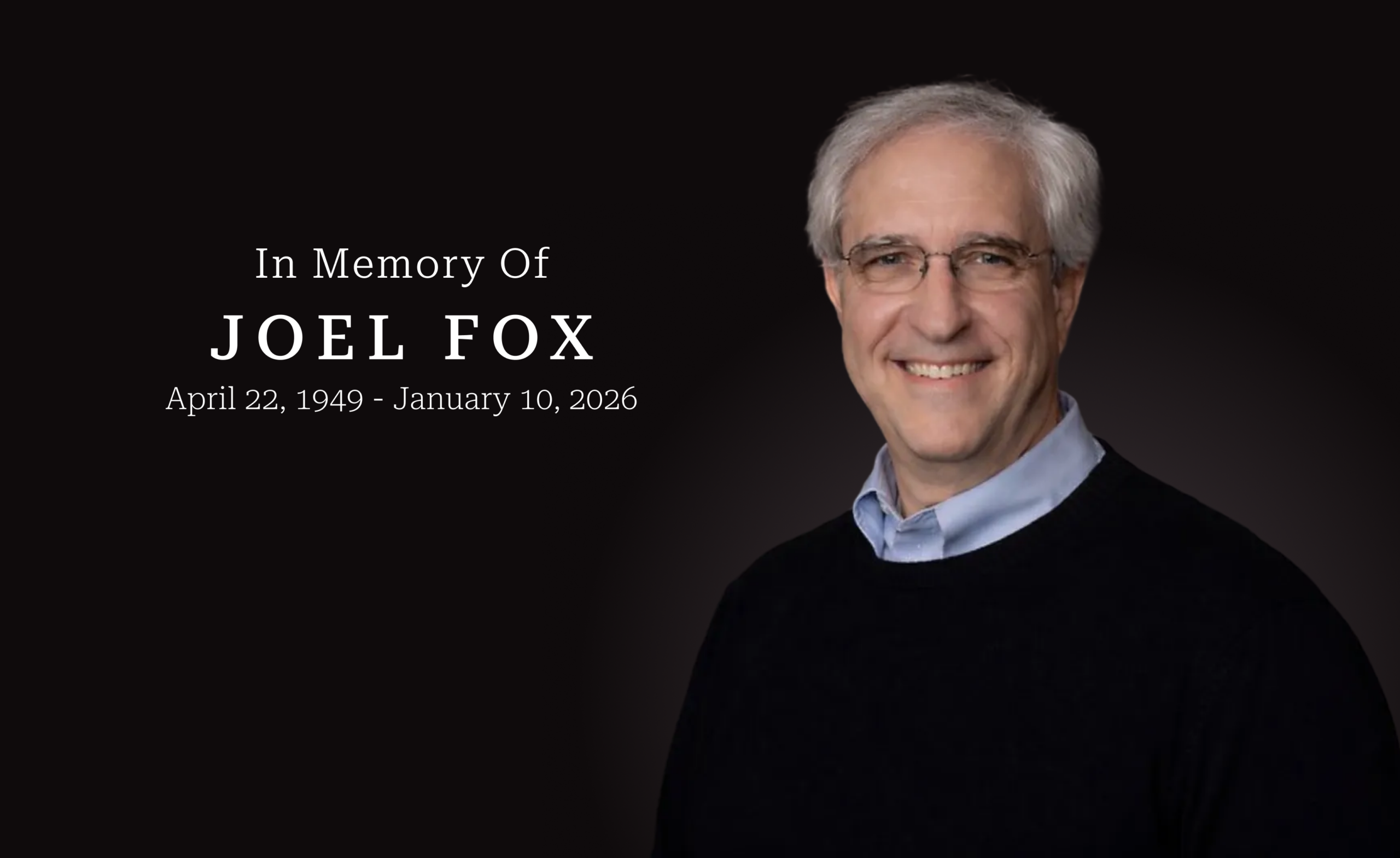
If political differences are destined to leave us divided and friendless, how do you explain the life of Joel Fox?

Fox died on January 10 after more than a decade of living with cancer. He was California’s most prominent taxpayer advocate since Howard Jarvis, for whom he worked, and whose anti-tax organization he led from 1986 to 1998. Fox, a Republican, advanced conservative ideas on TV and op-ed pages. He advised the campaigns of Gov. Arnold Schwarzenegger, Mayor Richard Riordan, and U.S. Sen. John McCain.

That profile, in our polarized times, might make you think Fox was one of those political ideologues who are driving the country apart. But the opposite is true.

Fox, more than any person in California politics, built deep relationships with people across the political spectrum. And he did not do this through consensus or compromise. Instead, Fox built friendships on disagreement itself—a warm, open, and curious style of disagreement.

Read More »

California Forward’s Framework for Restructuring

California may be struggling with a budget crisis and a sluggish economy – but we can fix it. Our state can have a prosperous and environmentally sustainable economy that provides equal opportunities for all. To get there, governments at the state and local levels must work together to provide cost-effective services and better results, something that doesn’t happen today as much as it should.

In the latest draft of the Framework for Restructuring, CA Fwd outlines a course of action to restructure the relationship between state and local governments to produce better results for both taxpayers and people who rely on government services. These proposals are built around a simple idea: California’s three most significant areas of state general fund spending – education, health and human services, and public safety – are fundamentally interrelated.

The Framework introduces five new priorities for the state: Better education leads to better jobs, which leads to a healthier population, less poverty, less crime, and ultimately less pressure on government budgets. Structural and fiscal reforms should focus on these Big Five Outcomes, not just to balance the budget or close a shortfall – but to realign public programs at all levels to deliver results.

Read More »

Damned Lies, Statistics, and LA Times’ Headlines

In
the history of misleading newspaper headlines, it’s not exactly "Dewey Defeats Truman", but this weekend the Los Angeles Times put itself on the
medal stand. "Voters want tax plan to go on the ballot", blares the Times’ front page headline, supposedly describing the
results of the newspaper’s poll, co-sponsored by USC’s Dornsife College. The
headline of the story’s follow-through page proclaims, "State voters favor
taxes." Catching only these declarations at your Starbuck’s newsstand, or
casually flipping through the paper looking for news on Andrew Bynum’s knee
troubles, you may conclude that those radical partisans (usually those who hew
right-of-center) in Sacramento are preventing a moderate path through the
state’s fiscal disaster.

But
is this what the survey results actually shows?

The
headlines seem to rely on responses to a trio of survey questions. The first –
"To close the remaining $14 billion of the budget deficit, which approach do
you favor?" – reveals that while 33% of respondents supported "cutting spending"
only, a full 53% back a "combination of both" cuts and tax increases.  A paltry 9% of respondents supported a "taxes
only" plan to balance the budget. The first response has indeed diminished by
11 percentage points from the answers Californians gave last November.

Read More »

CA Legislators Hustle More Tax Bills

Cross-posted at CalWatchdog.

With another poll out today saying that voters want to vote on Gov. Jerry Brown’s tax extension increases, the media are mum about the many other tax bills slithering through the Legislature which would greatly increase every taxpayer’s total tax bill.

Highlights of the new Times/USC Dornsife poll include:

  • * 70 percent of respondents said they supported a cap on pensions for current and future public employees.
  • * 68 percent approved of raising the amount of money government workers should be required to contribute to their retirement. Increasing the age at which government employees may collect pensions was favored by 52 percent.
  • * Among Democratic respondents, 71 percent supported increasing retirement contributions for future hires.
  • * 66 percent backed a pension cap for both current and future workers.
  • * However, fewer than half of the Democrats surveyed favored cutting benefits and raising the retirement age for current employees.
  • * 60 percent of those surveyed, including majorities of both Democrats and Republicans, said they backed such an election.
  • * 71 percent want reforms included on the ballot.
Read More »

Let ‘em Vote … on Everything

According to the USC Dornsife/Los Angeles Times poll released over the weekend, voters want to
vote on taxes. The poll says they also like the idea of spending limits (80%
support), and pension reform (70% in favor.) The poll did not ask respondents
if they wanted to vote on spending limits and pension reforms, but I’ll bet
they are just itching to do so. So here’s what we do: let them vote on all of
them.

Some argue that if the voters think they can solve the
current budget situation with tax increases and long-term structural budget
problems with spending limits and pension reform they may be a step ahead of
their elected representatives in Sacramento.  

Of course, just because the poll cites voters’ positions
today, campaigns on all these issues could change their minds before the voters
actually mark their ballots.

Read More »

San Francisco Business Tax 2.0

San Francisco took one step forward in creating a more business-friendly city this week with the passage of the Mid-Market Payroll Tax Exclusion. The Chamber-supported incentive will help bring growing businesses to one of the city’s most blighted areas by providing a six-year payroll tax exemption for new hires at companies locating in Mid-Market and targeted areas of the Tenderloin. While the incentive will surely help revitalize a long-neglected area of the city, it is just one step in a much boarder effort that is needed to retain and attract businesses – and jobs – in San Francisco.

Re-examining the city’s business tax should be a top priority. San Francisco is the only California city that taxes payroll and the only city in America that taxes employee stock options once exercised. The 1.5 percent tax is levied on employment activity in the city for a business with a total San Francisco payroll in excess of $250,000. The tax applies to salaries, wages, bonuses, stock options, commissions and all other forms of compensation issued in exchange for services.

Critics have long cautioned that San Francisco’s tax structure is inequitable and a disincentive to job creation. There is some truth to both arguments. Under the current system, only about 10 percent of the city’s businesses pay the tax. And for some businesses, adding the tax can make or break a hiring decision, particularly in the current economic climate.

Read More »

The L.A. Times Push Poll – A Trial Lawyer’s Dream

A good lawyer will tell you that how you frame the question
often determines the response.  Knowing that, trial lawyers often ask a
series of leading questions before they push a witness to the conclusion they
want…and after reading the L.A. Times poll on taxes today, I think they must
have a degree in law.  Fortunately, Californians don’t fall for those
types of questions on election days and that’s why they have turned every
statewide tax increase over the last decade.

To start, the headline screams, "Californians
support tax hikes to help close budget gap."  Really?  Reading
the article, it’s very hard to find the actual number that does — and then it
turns out only to be 52%.  Objective election watchers will tell you that
number is far too low to hold up in a true election.  It would need to be
much higher at this point, and that’s before you take into consideration the essential
nature of this push poll.

Why do I say it’s a push poll? Two reasons: the
sampling and the nature of the questions.

Read More »

Money and Power in LA — It’s All in the Family

Cross-posted at RonKayeLA.

Dick Riordan
is there for his pal Austin Beutner to help launch of his dark horse mayoral
campaign.

"The
basic thing is jobs, jobs, jobs," says the former two-term mayor and
long-time civic leader.

Well, not
exactly. The basic thing is leadership and managing the operations of a $6 billion
government and its airport, harbor and DWP. But I get it. Friends stand up for
friends and Beutner is a good guy.

When
Baseball Commissioner Bud Selig finally comes down on Frank McCourt, the only
person who comes to the defense of the Dodgers owner is Steve Soboroff who had
just stepped in as the team’s vice chairman in an effort to save his pal.

Read More »

Los Angeles State Senator pleads for competitive regulatory environment

Why does a man in Compton, with an oil rig in his backyard and a refinery down the street, pay more for oil than a man in Honolulu?

A large part of that answer is California regulations that come without economic impact analysis.

Democrat State Senator Rod Wright recently posed that question and testified at the State Water Resources Control Board regarding their attempts to finalize very costly California-only stormwater permitting regulations.

“California is continually leading with our chin,” said Sen. Wright. “I would suggest that we look at these standards and see where everyone else is going. I would like to see us take this regulation and slow down.  Let’s look at what Arizona, Nevada, and Oregon are doing.  We can’t [compete] if our regulations are so stringent.”

Read More »

AB 638: A Recipe for More Pain at the Pump

High gas prices have been in the news a lot lately, and consumers all over the country have been demanding that the government do something about it.   In California it’s even worse since prices
here are among the highest in the United States.

So it makes absolutely no sense that there’s a bill under
consideration by the Legislature that would drive gasoline and diesel costs in
California even higher. But AB 638 (Skinner) would do just that.  If passed, this new law would require the
adoption of measures to achieve a dramatic decrease in the use of petroleum
fuels and force significantly higher usage of alternatives.

Studies have concluded that in order to do that the
government would have to impose taxes and fees that would discourage
consumption of the fuels we use every day. 
Suggestions by the California Energy Commission and California Air
Resources Board for these include a 50-cents-per-gallon direct tax on gasoline
and diesel fuel at the pump, pay-at-the-pump auto insurance, a vehicle miles
traveled tax and a fee of thousands of dollars added to the cost of purchasing some
conventionally-fueled vehicles.  The
price tag to consumers?  An estimated
$195 billion over ten years.

Read More »