

Featured Post

A Fox, A Hound, and a Friendship

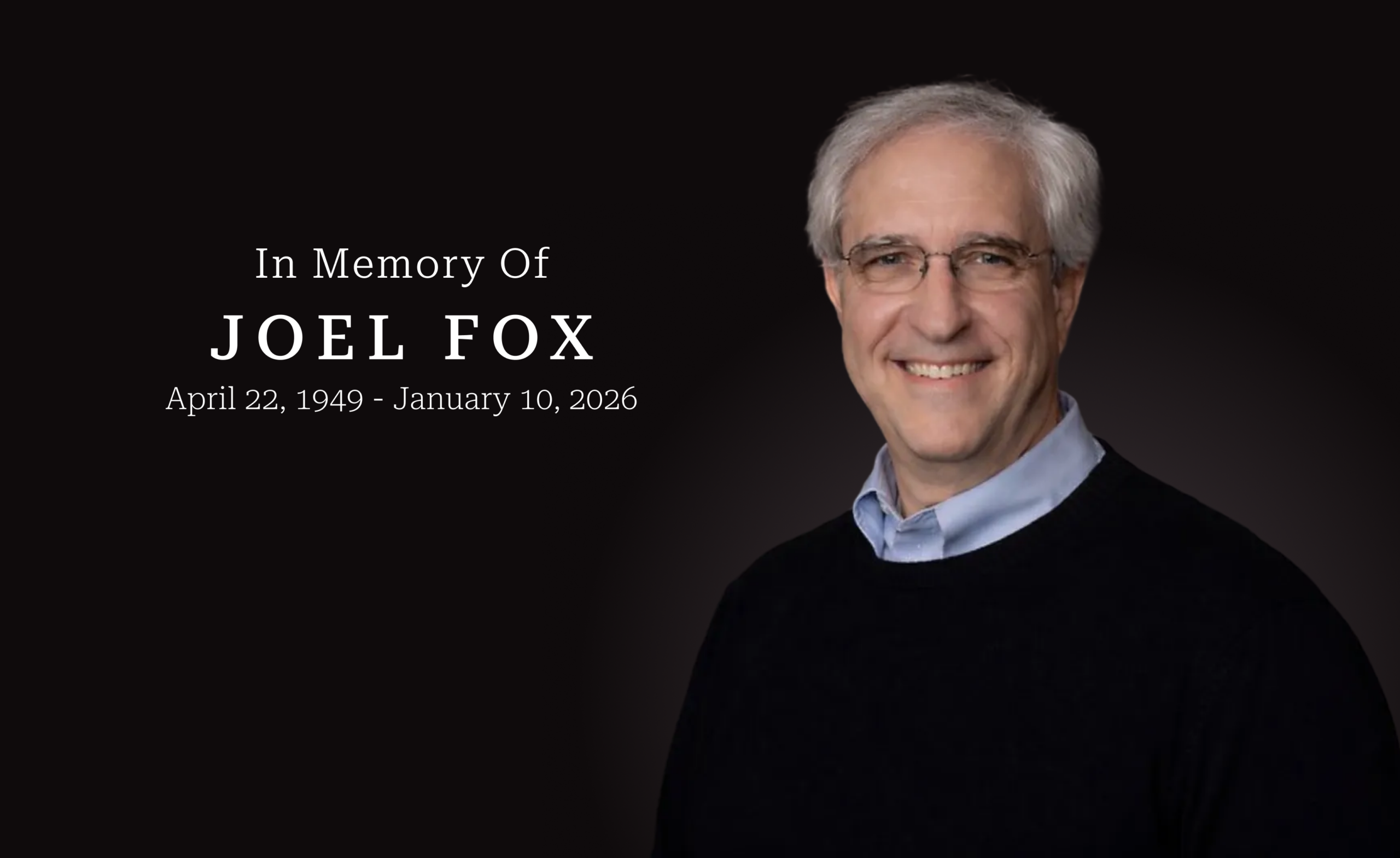
If political differences are destined to leave us divided and friendless, how do you explain the life of Joel Fox?

Fox died on January 10 after more than a decade of living with cancer. He was California’s most prominent taxpayer advocate since Howard Jarvis, for whom he worked, and whose anti-tax organization he led from 1986 to 1998. Fox, a Republican, advanced conservative ideas on TV and op-ed pages. He advised the campaigns of Gov. Arnold Schwarzenegger, Mayor Richard Riordan, and U.S. Sen. John McCain.

That profile, in our polarized times, might make you think Fox was one of those political ideologues who are driving the country apart. But the opposite is true.

Fox, more than any person in California politics, built deep relationships with people across the political spectrum. And he did not do this through consensus or compromise. Instead, Fox built friendships on disagreement itself—a warm, open, and curious style of disagreement.

Read More »

Newsom Struggles for Visibility

When Gavin Newsom announced last week that he’s joining with
MC Hammer in an April 17 "Hands Across California" event to support community
colleges, it raised a question.

"There’s MC Hammer and Gavin Newsom. I wonder what Newsom’s
doing these days?"

Then there’s the two guys a San Francisco Chronicle reporter
overheard
last week
on a brief flight Newsom was taking with Richard Branson, founder
of Virgin America airlines, to join Mayor Ed Lee in dedicating a new terminal
at San Francisco International:

"San
Francisco Mayor Ed Lee?" asked one Virgin America employee as former Mayor
Gavin Newsom sat three rows ahead.

Read More »

Will a “no” vote extend the taxes?

Governor Brown and Speaker Perez are floating the notion of legislative
approval of tax extensions, to be "ratified" by the people at a later election.
This raises an interesting question – how would you present the question?

Remember, this is not a plebiscite, it’s a proposed
constitutional amendment.

The most straightforward approach would be to propose
to continue the extension of the taxes for however many years is agreed upon.
In that case, a "yes" vote continues the taxes while a "no" vote brings them to
an end. As a bonus, any related constitutional changes, such as a spending cap,
could be included in the measure. The disadvantage, as any political consultant
would attest, is that it is more difficult to obtain a "yes" vote from voters
than a "no" vote.

Read More »

The Prospect of Two Californias and the Civil War

Imagine if there were two Californias. There have been 27
attempts to break up the state by one accounting, and in one instance the
people actually voted to create two states out of California. I bring this up
as the 150th anniversary of the attack on Fort Sumter occurred
yesterday because the Civil War is probably the reason there is only one
California today.

Of course, Governor Brown has
been saying of late
that California and the country is as divided today as
it was during the Civil War, but that’s an issue for another column.

Read More »

Sacramento’s Ongoing War Against Regular Californians

If you can afford a 19 percent increase in your electric bill, and are reading this column in a newspaper, you can move on to the sports section. The following will not be of interest to you.

However, if you are a low income, fixed income or even a middle class Californian, you are under assault from Sacramento. Sen. Joe Simitian, D-Palo Alto, has persuaded his colleagues to approve his bill to make energy even more expensive. The current mandate that energy companies get 20 percent of their power from “renewable” sources, will be raised to a third over the next eight years. This will result in an average utility rate increase of 19 percent, according the California Air Resources Board. This is on top of the existing mandate so that the total increased cost to Pacific Gas and Electric customers will be 44 percent, to Southern California Edison customers 34 percent and to those served by the Los Angeles Department of Water a Power it will be 74 percent.

Read More »

More fun with Prop 25 loopholes

Last week I recounted how legislators could still get paid
even if there is no budget in place by the beginning of the fiscal year in
July, in apparent contravention of the spirit of Proposition 25.

Today comes the story of how the Legislature has
passed with a majority vote and the Governor has signed substantive laws that
take effect immediately to implement the budget – but without a budget having
been presented to the Governor for his signature. This is probably legal, but
in this case again violates the spirit of Proposition 25.

All of this is permitted by a loophole in the "On-Time
Budget Act." The measure lowered the legislative vote requirement to pass a
budget from a two-thirds to simple majority. It also reduced the vote threshold
for "other bills providing for appropriations related to the budget bill."
These are commonly understood to mean substantive changes in the law necessary
to implement the state budget, but are not by its terms legally limited to
that. The only limitation in Prop 25 is that these bills must be "identified as
related to the budget in the budget bill passed by the Legislature."

Read More »

Remembering Kam Kuwata

Kam Kuwata was a genuinely nice man. The Democratic political consultant was a great strategist who had a passion for the political arts. He and I were on the opposite sides in campaigns a number of times including the high-speed rail bond and the San Fernando Valley secession effort, to name a couple. As with all the campaigns he worked on, he loved the politics and the strategy.

Kam spoke to my Pepperdine public policy class last fall and I had him on my list to invite back when I heard the terrible news of his sudden passing.

Over dinner after the class, he spoke of the exhausting grind of running then-U.S. Senator Barack Obama’s 2008 Democratic Convention in Denver. But he was up to the hard task, not surprising for a guy who would wake as early as three in the morning to begin catching up with overnight political stories.

Read More »

SCA 11 Allows State Agencies to Contract Out for Services

I have introduced new
legislation that will allow government agencies to contract out for supplies
and services with private business. Senate Constitutional Amendment (SCA) 11
will make government operations more affordable and efficient by encouraging
competition among private market service and equipment providers.

If you can find a
product or service in the Yellow Pages, the State of California should be using
those services rather than creating new bureaucracies at taxpayer expense. It’s
no secret that the private sector can do anything government does and usually
more efficiently, and at less cost.

Read More »

Jobs for Autistics in California: A Call for Strategies

This week’s F&H employment posting is a call for ideas
from California’s workforce  and
employment community. It arises from a long-running discussion with  Dr. Lou Vismara.

Dr. Lou is described by more than a few Sacramento
residents, following the well-known Dos Equis beer ad,  as the most interesting man in Sacramento,
due to his wide range of scientific, business and social endeavors  (see "Stay
thirsty my friends
").  A prominent
cardiologist, graduate of Stanford with an MD from Baylor College of Medicine, Dr.
Lou changed careers in 2000, a few years after his son Mark was diagnosed with
autism. Dr. Lou retired from interventional cardiology to work full-time on
child development and autism issues with the Office of the President of the
California Senate, where he continues today.

Read More »

Any Lessons from the Washington Deal for the CA Budget?

Preventing a
shutdown of the federal government, Republicans and Democrats in Congress and
the White House managed to reach agreement on the budget against seemingly
insurmountable odds. Are there any clues in the budget deal that could lead to
California’s politicians reaching agreement on a stalled budget plan?

The
particulars of a budget deal in Washington and Sacramento are different, of
course. California’s budget debate centers on taxes and the governor’s promise
to allow the people to vote on those taxes. Just as important is the question
of major budgetary reforms and the willingness of special interests, lead by
the public employee unions, to give the green light to friendly Democrats to allow
votes on those reforms.

The unions
have said no to putting reforms on the ballot. Republican legislators have felt
pressure from certain sections of their party not to even put tax measures
before the people.

Read More »