

Featured Post

A Fox, A Hound, and a Friendship

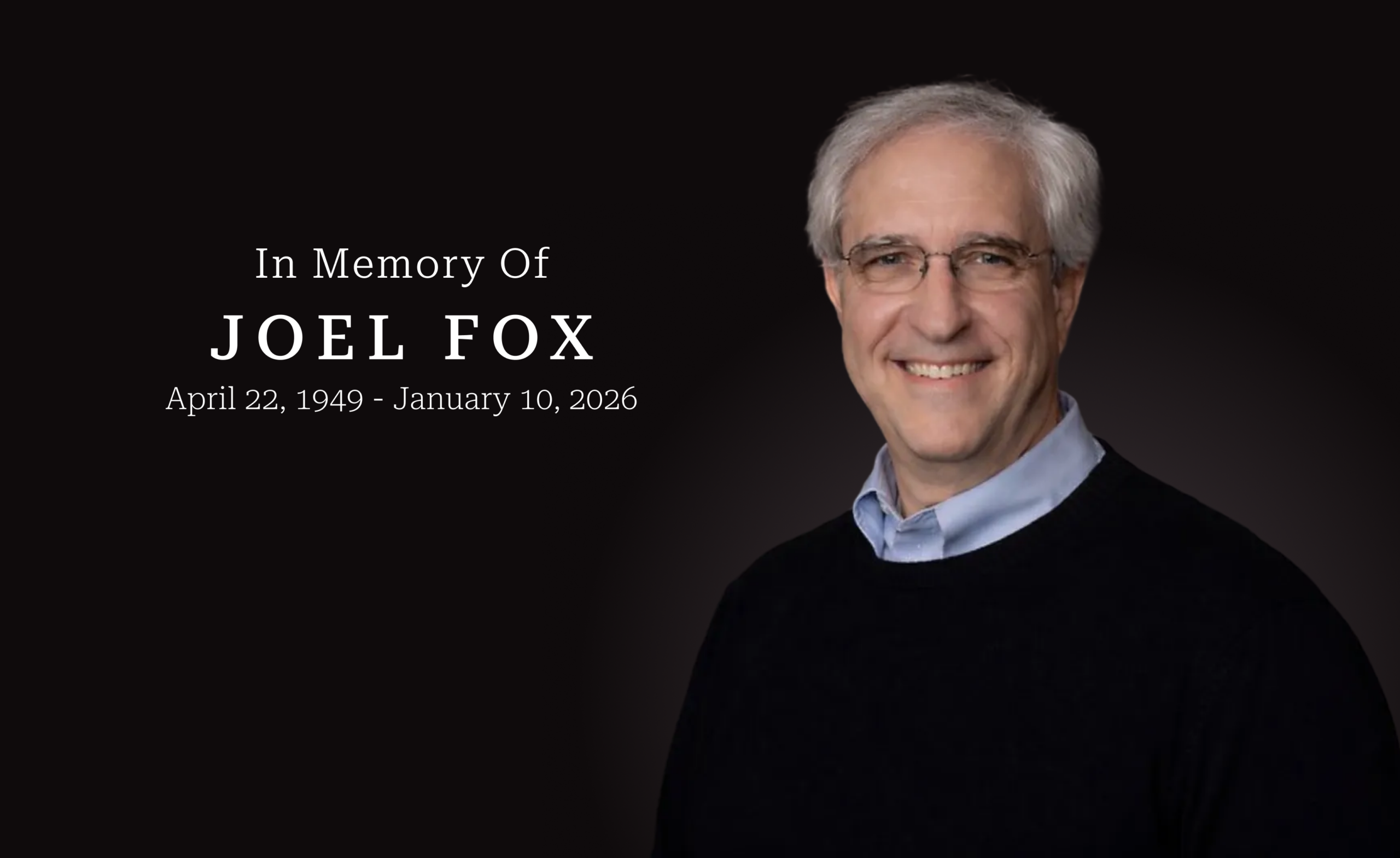
If political differences are destined to leave us divided and friendless, how do you explain the life of Joel Fox?

Fox died on January 10 after more than a decade of living with cancer. He was California’s most prominent taxpayer advocate since Howard Jarvis, for whom he worked, and whose anti-tax organization he led from 1986 to 1998. Fox, a Republican, advanced conservative ideas on TV and op-ed pages. He advised the campaigns of Gov. Arnold Schwarzenegger, Mayor Richard Riordan, and U.S. Sen. John McCain.

That profile, in our polarized times, might make you think Fox was one of those political ideologues who are driving the country apart. But the opposite is true.

Fox, more than any person in California politics, built deep relationships with people across the political spectrum. And he did not do this through consensus or compromise. Instead, Fox built friendships on disagreement itself—a warm, open, and curious style of disagreement.

Read More »

The Truth about Swipe Fees

Richard Kennedy, in his one-sided
article, "Protecting the Durbin Amendment is Critical to America’s
Small Businesses
," completely missed the boat about the
real impact of so-called "swipe" or interchange fees, the small fee that
consumers pay when they use a credit or debit card.

To quickly summarize the issue, at the behest
of large national retailers, Senator Durbin (D-IL) included an amendment in the
Dodd-Frank Act last year that allowed the Fed to fix prices on what banks and
other financial institutions charge merchants each time they swipe a
transaction.  By reducing fees, consumers
would "supposedly" benefit.  Majorities
in both the House and Senate jumped on board and passed this legislation.

Ultimately, the idealism of the Durbin Amendment
is giving way to the practicality of implementing it…and the law of
unintended has come into play.  In
Congress’ zeal to reign-in large banks, they will likely end up hurting
consumers and punishing credit unions and smaller community-owned banks.  Large retailers, with Senator Durbin as their
mouthpiece, argued that the consumer would see an immediate benefit in price
reductions should the Durbin Amendment be enacted.  Unfortunately, nothing in the Dodd-Frank bill
prohibits retailers from simply pocketing the difference – a windfall for
large, national retailers but no consumer benefit.  Or, framed the other way, retailers aren’t
required to return any profit to consumers. 

Read More »

Our Media Cup Truly Doth Runneth Over

BREAKING NEWS: 

I am an unabashed ‘Media Junkie,’
but the last months have been incredible, over-the-top excitement, even for
me!   Big Screen TV’s must now, and
hereafter, be sold with an accompanying, never-emptying, box of Kleenex
attached.

After watching 24/7 on our big
screens and on our computers, the governments of almost the entire Arab world
begin to topple, one by one like dominoes, beginning in mid-January (yes, my
son is finally home safe from his two-month work stint in Dubai), the
unbelievably tragic Biblical Trifecta of Horror befell Japan, and we all sat in
awe of Mother Nature and her non-stop, real-time fury.   The heartbreaking Japan story pushed the
Mess in Libya off the Media’s front stoop for only a few days, however.  Last week, incredibly, the UN, US, and our
newly cobbled-together Coalition of Allies (including 2 jets from Quatar!)
combined for a show that we watched something unprecedented (since the year I
was born) happen, with jaws dropped .

Read More »

Younger Californians more positive about immigration than older generations

Attitudes toward immigration have traditionally swung with the economy. When times are good, people feel good about pretty much everything, and less threatened by immigration and its potential effect on them. When times turn bad, folks tend to look for scapegoats, and they either blame immigrants for the economy’s problems or express fears that immigrants will be bad for the country and the state.

California saw this in 1994, when voters approved a measure that sought to end public benefits for undocumented immigrants, and again in 2003, when then-Gov. Gray Davis signed legislation allowing undocumented immigrants to obtain a drivers license, and the backlash against that law helped drive him from office in a recall election.

But the connection between the economy and public attitudes toward immigration may be moderating. Two recent polls suggest that Californians remain fairly sanguine about immigrants and immigration, despite high unemployment and a big and persistent budget deficit.

A Field Poll last week found that nearly half – 47 percent – of registered voters said that recent immigration was having no effect on California’s quality of life. Thirty-nine percent said immigration was making things worse, and 10 percent said it was improving the state’s quality of life.

Read More »

One Does Not Buy An Ox From an Ox’: Why It’s Time to Cut Out the Budget Middlemen

Gov. Merriam "remarked
rather proudly to your correspondent that in all his years in various offices
nobody ever had made an attempt to bribe him and he took this as a mark of
deference to his high honor. It did not occur to him that when anyone wished to
buy him that person would not go to him but to those whom George Creel
described as his medieval owners. One does not buy an ox from an ox."

            -The journalist Westbrook Pegler,
describing Gov. Frank Merriam in 1934

I found the above quote while re-reading The Campaign of the
Century, Greg Mitchell’s spectacular book about the 1934 California
gubernatorial campaign. It reminded me of today’s budget negotiations,
particularly the fact that our elected officials are not the most powerful or
consequential people in making decisions. In some ways, they are Merriamite
oxen.

Read More »

Comments on the Counterpunch; Prop 13 Still Favored 2-1

The Public Policy Institute poll released Wednesday showed the
anti-tax attitude is still strong in this state.  The poll indicates that Gov. Brown’s tax
extension proposal is in for a dogfight. Support for the measure is dropping
with only 46 percent approval, a terrible place to start if you’re seeking a
Yes vote in an election.

While the poll indicates a positive attitude toward local
governments, voters are not about to ease the requirement of a two-thirds vote
to raise certain local taxes. By a 59-percent to 37-percent margin, likely
voters in the PPIC poll say they favor this two -thirds vote provision.

The two-thirds vote requirement for local special taxes was, of
course, part of Proposition 13, the 1978 tax reform initiative.

Stop me if you’ve heard this before, but according to the poll,
Proposition 13 is supported 2 to 1, the same margin it passed by nearly 33
years ago. That two to one edge has been fairly consistent with the voters over
the years.

Read More »

The Professionalization of California’s Low Wage Workforces

In January I did a posting on the latest jobs projections by
EDD, indicating that the great majority of jobs in California’s future will not
be the heralded "knowledge jobs". As is the case today in California’s job
structure, the majority of job openings in the next decade are projected to be
the personal and home care aides, retail salespersons, cashiers, food
preparation and serving workers, registered nurses, customer service repress,
office clerks and laborers, With the exception of registered nurses, all of
these occupational categories have 2010 median wages below $30,000.

The posting brought several inquiries concerning the
relationship of California’s workforce system to this projected job structure.
What if any policies might improve the wages and mobility of workers in these
jobs? What is the role of the local Workforce Investment Boards (WIBs) in trying
to influence the structure of jobs in California as well as the skills of
workers?

Read More »

Why I Voted No on the Governor’s Realignment Proposal

I cast the lone vote against Governor Brown’s proposal to shift state responsibilities to the counties and increase taxes at the Los Angeles Board of Supervisors meeting. Shifting the state’s budget problems to local government and then offering to take them back through contracting is an illusion from a magician’s bag of tricks. Clearly, shifting these programs is not cost-neutral — otherwise why shift them at all? If contracting with the state means it would cost local governments more money out of their own general funds, then we ought to be concerned about what the state is proposing both fiscally and operationally.

There is no constitutional guarantee that the state won’t back out funding from existing programs to fund new programs. This is the same state that wants us to take more of their responsibilities with the promise to pay it back when it already owes the county over a half a billion dollars. The state’s track record is full of empty promises and hollow reform.

With regard to shifting certain prisoners to county jails, at one point, the state was talking about shifting only those offenders sentenced up to two years in prison — but now, it has grown to three years.

Read More »

Nervous Brown Looking for Budget Alternatives

If, as Emerson said, "a foolish consistency is the hobgoblin
of little minds," Gov. Jerry Brown won’t have to worry about hobgoblins.

After weeks of insisting that no way, no how was he ever
going to put a tax extension on the ballot without some support – i.e., votes –
from GOP legislators, the governor said at a Sacramento labor dinner Monday
night that "one way or another" Californians will have a chance to vote on his
proposal for some $14 billion in tax and revenue extensions to balance next
year’s budget.

When reporters
corralled the governor at the dinner
and asked him if that meant he was
willing to go it alone on the ballot measure, Brown gave a classic non-denial
denial, answering instead that he was "not prepared to cease negotiating in
good faith" with Republicans and that while he remains hopeful, "I do recognize
that time is running out."

Pop quiz: Find the word "no" anywhere in that statement.

Read More »

Mr. Fox’s Misreading

It’s hard to respond when someone misreads you as thoroughly
as Joel
Fox did
in attacking a piece
my California Crackup co-author Mark Paul and I wrote
for the Sacramento
Bee. You’re forced to restate all your points one-by-one. So you might be
better off saying – read my piece. Or better yet, read my book.

So I’ll say those things. But I’ll also say this: Fox’s
attack proved our overarching point: that everyone in California – across the
political spectrum – has become myopic and obsessed with defending their little
piece of the governing system, even though the governing system works against
the things they say they care most about.

Let’s look at some of the biggest howlers in Fox’s piece:

-Fox says our piece
described "Proposition 13 as the cause for all the ills that befall
California."

Read More »