

Featured Post

A Fox, A Hound, and a Friendship

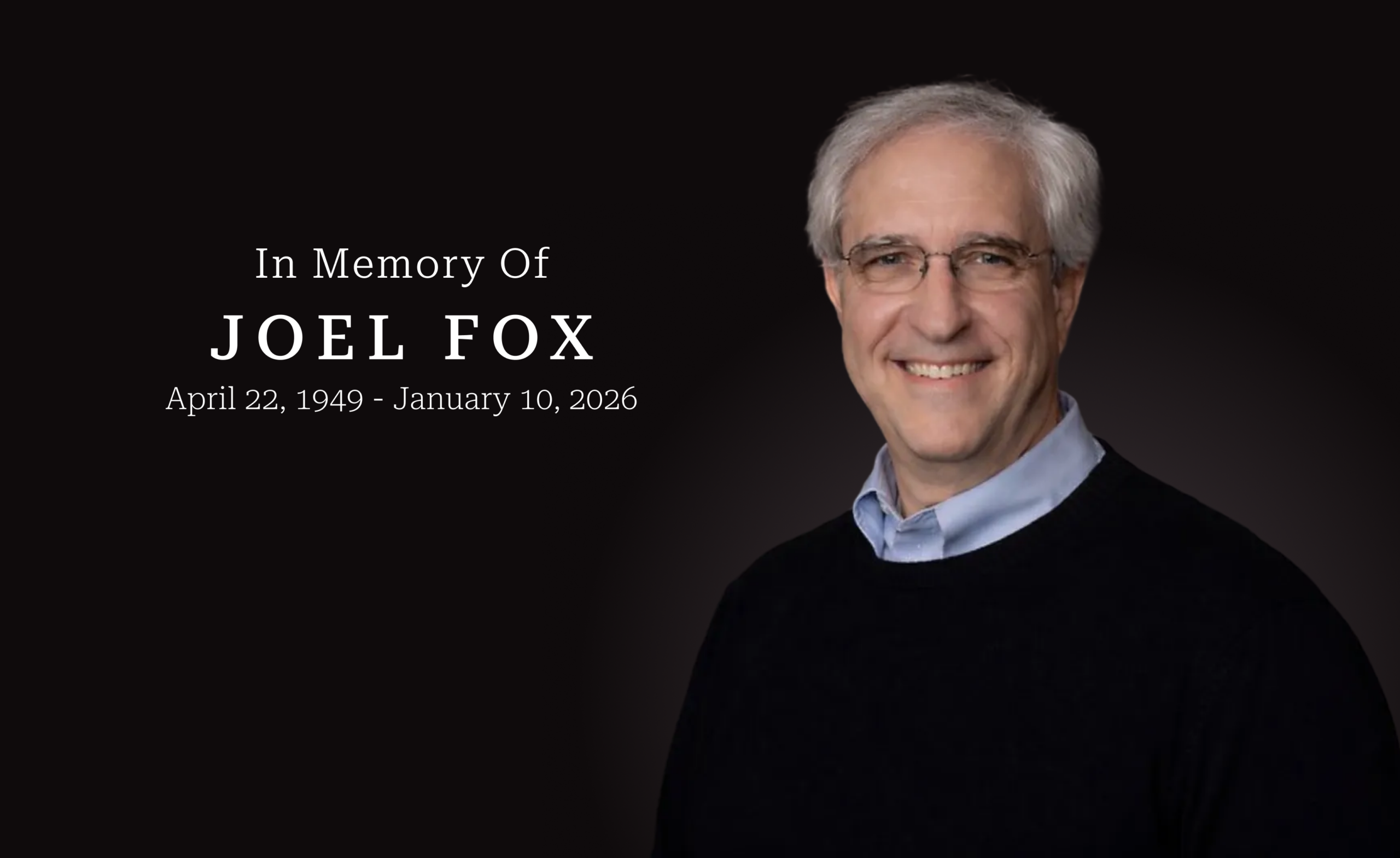
If political differences are destined to leave us divided and friendless, how do you explain the life of Joel Fox?

Fox died on January 10 after more than a decade of living with cancer. He was California’s most prominent taxpayer advocate since Howard Jarvis, for whom he worked, and whose anti-tax organization he led from 1986 to 1998. Fox, a Republican, advanced conservative ideas on TV and op-ed pages. He advised the campaigns of Gov. Arnold Schwarzenegger, Mayor Richard Riordan, and U.S. Sen. John McCain.

That profile, in our polarized times, might make you think Fox was one of those political ideologues who are driving the country apart. But the opposite is true.

Fox, more than any person in California politics, built deep relationships with people across the political spectrum. And he did not do this through consensus or compromise. Instead, Fox built friendships on disagreement itself—a warm, open, and curious style of disagreement.

Read More »

Can Republicans hold one-third of the legislature?

My friend, colleague and former boss Doug Jeffe opines in the Friday Fox and Hounds that the Republicans should be reasonable on the tax vote because this may be the last time they have one third in the legislature, and thus the ability to affect policy. Doug seems to think the Democrats are pretty much guaranteed to increase their numbers through redistricting.

While it is certainly possible that the Republicans could blow their one third of the legislature (they might, for example, hire Mike Murphy, late of the Whitman campaign, as their chief strategist), Doug would do well to remember Lincoln’s sage advice: the hen is the wisest of all creatures for it does not cackle until the egg is laid.

Now that we have the final redistricting population figures, and in fact this egg might not be laid at all. Given that the Citizens Redistricting Commission will draw the lines and they will have to follow strict criteria, here’s what we know for sure:

Read More »

Defending Prop 13

In the long-standing tradition of pointing at Proposition 13 as the cause for all the ills that befall California, Joe Mathews and Mark Paul penned an opinion piece in yesterday’s Sacramento Bee declaring that Proposition 13 and its aftermath “robs us of our ability to govern ourselves democratically and condemns our children to a shabbier life.”

I imagine the folks at the Howard Jarvis Taxpayers Association will add that line to the list of the “Top Ten Ridiculous Things Blamed on Proposition 13.” The measure has been held responsible for a freeway collapse during an earthquake, child obesity, the lack of choir singers, and even O.J. Simpson’s not-guilty verdict in the 1995 criminal trial, to name a few examples.

But let’s look at the charges by Mathews and Paul.

I actually have sympathy for their charge that some power was centralized in Sacramento after Proposition 13 passed. Legislators took the advantage of wording in the measure that allowed property taxes to be “apportioned according to law.”

Read More »

Best Candidate for State-Local Re-alignment: Transportation

In his proposed state budget Governor
Jerry Brown called for shifting state revenue and state authority for a number
of major programs from the state to local governments.  Without a doubt transportation should be at
the top of the list. 

In transportation local governments
already have experienced personnel, established organizational structures and a
proven track record of delivering quality projects on time and on budget.

Specifically, over the past 27 plus years
California’s nineteen Self-Help Counties (SHCs) have done an excellent job
improving our state’s transportation system. 
Time and again these county authorities have gone to their local voters
and told them that if they approve a local sales tax increase for a limited
number of years, the county will deliver a specified list of local
transportation projects within a specified time.  The county authorities know that if they do
not deliver on their promises, they will lose the trust of their local voters
and will find it very difficult to pass future local sales tax measures.

Read More »

Addressing the Soaring Cost of Medical Care

Insured Californians usually see the bill for their monthly healthcare premium or the amount deducted from their paycheck to pay for medical insurance. However, they rarely see the $6,500 bill for just the cost of the hospital room where they stayed, or the $2,500 for the colonoscopy or even the $150 a month for their allergy medication.

Yet, these are the numbers that really matter in determining the price for medical insurance premiums because the costs of health care – the hospital, doctors, prescription drugs and other medical bills – on average make up 87 percent of the premium price. And those costs are rising faster than inflation.

For instance, the price of a colonoscopy – a test physicians say we should have after age 50 – has tripled in price in the last three years. The average price of hospital care in California increased nearly 40 percent in five years. And national spending on prescription drugs has more than doubled in the past decade.

Read More »

“New Majority” Says Budget Reforms Must Happen Now

The influential, deep-pocketed Republican organization New Majority has engaged in the budget debate, sending a letter to Republican leaders Bob Dutton and Connie Conway declaring that the only way Republican legislators should vote to put taxes on the ballot is if meaningful reforms are put on the ballot as well.

The letter specified meaningful reforms as a spending cap that limits the growth of government and uses excess revenue to pay down debt, as well as pension reform modeled after the Little Hoover Commission’s recommendations.

Significantly, the letter rebuked groups that endorsed placing the tax extensions on the ballot with a promise that reforms will follow. The letter, signed by the chairmen of the four New Majority chapters, stated, “…our experience has shown little follow-through on behalf of the Legislature to address meaningful reform.”

Read More »

Will This Be GOP’s Last Hand in Budget Poker Game?

It is true that Republican legislators have some valuable cards in the high stakes negotiation over adopting a spending plan and putting tax extensions on the ballot in June. Also true is that reality that the GOP leverage is fleeting and the Republican Caucuses could end up squandering their last and best chance to get some of the reforms that they and the business community covet.

Legendary Ohio State football coach Woody Hayes was famous for saying his teams stuck to the ground game because three things can happen when you throw a forward pass and two of them are bad. The GOP should be careful about throwing the long bomb, because they could end up scoreless.

What should be sobering to Republicans and the business community is the likelihood that Republicans will fall short of the one-third mark in both houses of the Legislature after the next election. The last reapportionment probably squeezed out every district possible for Republicans and the new lines drawn by the Commission or the courts are unlikely to do that. Some incumbent Democrats may find themselves displaced or challenged by Latino candidates, but the number of safe Democratic seats is probably going to be pretty stable. With the open primary and reconfigured districts, however, there may very well be many fewer safe GOP seats and several other that are up for grabs. This may be the last year to exact a price for allowing tax increases.

Read More »

California’s Demographic Dilemma: A Class And Culture Clash

Cross-posted at NewGeography.

The newly released Census reports reveal that California faces a profound gap between the cities where people are moving to and the cities that hold all the political power. It is a tale that divides the state between its coastal metropolitan regions that dominate the state’s politics — particularly the San Francisco Bay Area, but also Los Angeles — and its still-growing, largely powerless interior regions.

Indeed, the “progressives” of the coast are fundamentally anti-growth, less concerned with promoting broad-based economic growth — despite 12.5% statewide unemployment — than in preserving the privileges of their sponsors among public sector unions and generally affluent environmentalists. This could breed a big conflict between the coastal idealists and the working class and increasingly Latino residents in the more hardscrabble interior, whose economic realities are largely ignored by the state’s government.

The Census shows that the Bay Area and Los Angeles are growing at their slowest rate in over 160 years under American rule. Between 2000 and 2010 Los Angeles gained less population than in any decade since the 1890s. Its growth rate was slower than metropolitan Chicago, St. Louis and virtually every region that has reported to date, with the exception of New Orleans.

Read More »

Pot Calls the Kettle ‘Shady’

Assembly Speaker John Perez was quoted in a New York Times story last week saying this about a California city: “How shady its practices have been. And the more I looked at it, the more I realized this was really the center of tremendous corruption.”

He’s talking about Sacramento, right? Or maybe Los Angeles?

Nope. He’s referring to Vernon. A town comprising 5.2 square miles and 80-some residents. In Perez’s mind, tiny Vernon is the source of most of the depravity here in California.

That’s why Perez wrote a bill to disincorporate the town, and he took the time to tour Vernon with a New York Times reporter. And it’s why the Los Angeles City Council last week voted unanimously to support Perez’s bill.

Read More »

Grover, Show Us Your Budget

I have a deep, dark confession to make: I like Grover
Norquist.

My good feeling is personal and
professional. As a reporter, I’ve talked to him several times over the years
about California politics. He always returned my phone calls promptly and
answered my questions in interesting, quotable ways. Last year, he agreed to
speak at an event on initiative and referendum that I helped organize in San
Francisco, holding up the right flank of a gathering that included people across
the political spectrum, from a host of libertarians to Tom Hayden, Mike Gravel
and some real, live European socialists. In that role, he was the perfect guest
– he showed up on time, spoke for his allotted time, said interesting and
provocative things, and made no demands of the overtaxed organizers.

Now that
said, let me be clear: I don’t agree with Grover politically. I’m quite sure he
votes for different people than I do most of the time. And I’m not a fan of how
he practices politics. I’m also not sure he’s doing anyone any favors,
including himself, by inserting himself into California’s ongoing fiscal and
governance nightmare.

Read More »