

Featured Post

A Fox, A Hound, and a Friendship

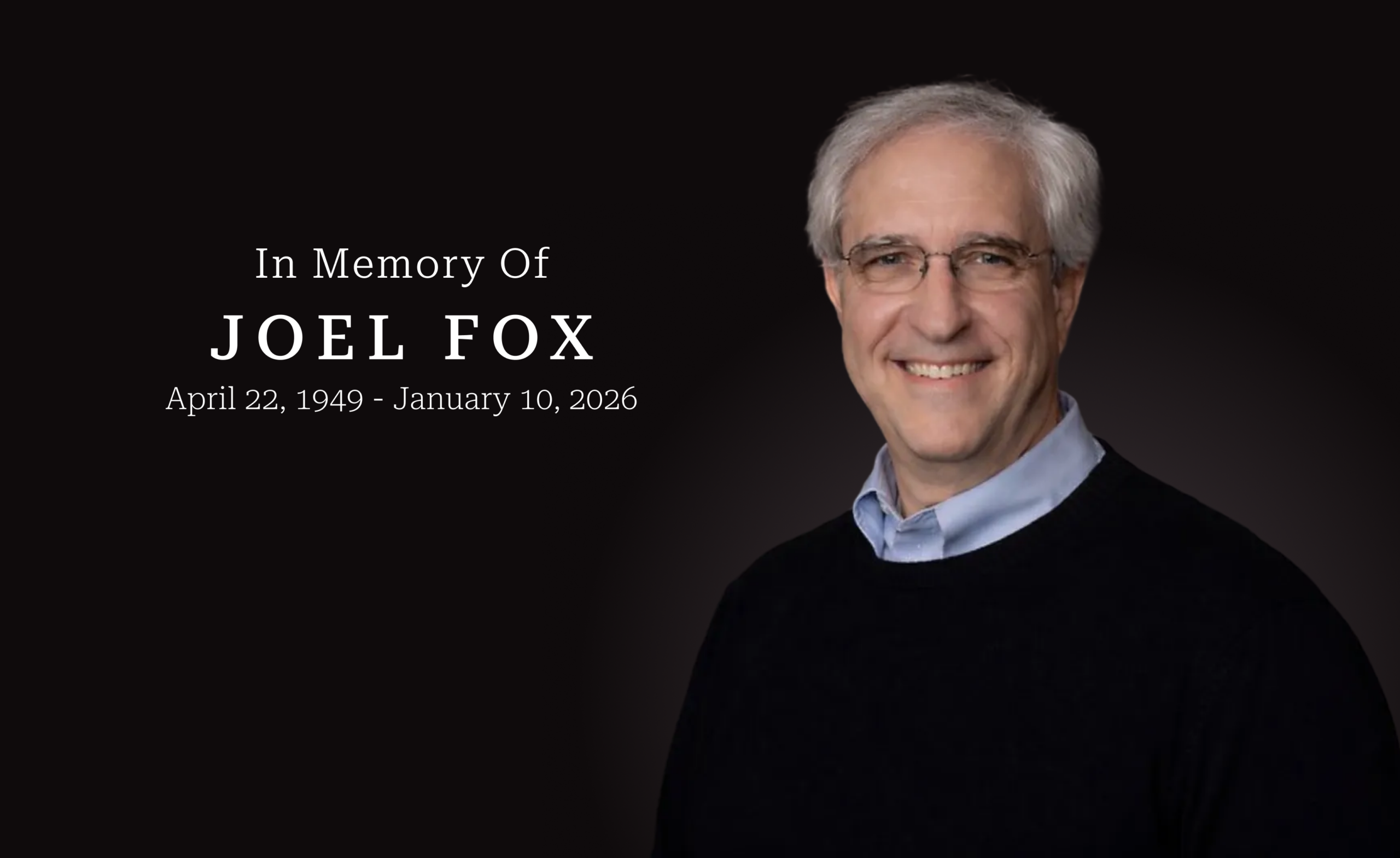
If political differences are destined to leave us divided and friendless, how do you explain the life of Joel Fox?

Fox died on January 10 after more than a decade of living with cancer. He was California’s most prominent taxpayer advocate since Howard Jarvis, for whom he worked, and whose anti-tax organization he led from 1986 to 1998. Fox, a Republican, advanced conservative ideas on TV and op-ed pages. He advised the campaigns of Gov. Arnold Schwarzenegger, Mayor Richard Riordan, and U.S. Sen. John McCain.

That profile, in our polarized times, might make you think Fox was one of those political ideologues who are driving the country apart. But the opposite is true.

Fox, more than any person in California politics, built deep relationships with people across the political spectrum. And he did not do this through consensus or compromise. Instead, Fox built friendships on disagreement itself—a warm, open, and curious style of disagreement.

Read More »

Low Voter Turnouts Mar Elections to Fill Vacant Seats

At the request of Governor Jerry Brown, Congresswoman Jane
Harman has postponed her resignation from the House of Representatives for two
weeks to allow the governor to consolidate the election for her replacement with
the statewide special election Brown hopes to call. The move makes sense given
the low turnouts in special elections.

On Tuesday, two special elections occurred in the state with
Republican Sharon Runner winning the 17th State Senate seat and Democrat
Ted Lieu capturing the 28th State Senate seat. But the turnout in
both elections was miserable.

Quick calculations based on the reported vote counts (so
far) and the number of registered voters in each district shows about an
11-percent turnout in the Lieu race to fill the seat of the late Senator Jenny
Oropeza; and close to a 13-percent turnout in the Runner election in which she
took over the seat previously held by her husband, George, who moved on to the
State Board of Equalization.

Read More »

Stop Blaming the Republicans

The emerging media and political narrative around the Brown
budget plan puts the blame on legislative Republicans. Why won’t they play
ball? Why won’t they fall in line? Why don’t they support tax hikes – or at
least putting tax extensions on the ballot?

The answer
is: they don’t have any reason to do so.

Republicans, in opposing taxes in
any form, are doing what they were elected to do.

Yes,
Republicans represent regions with broad interests. But the people who show up,
vote and determine the results of legislative elections in Republican districts
abhor taxes above all else. These people may be irresponsible or even insane.
They may be relatively small in number. But they are well represented by
Republican lawmakers.

Read More »

A Message to the City of Los Angeles: Pension and Health Benefit Reform Now or Bust

Last week, the City of Los Angeles received $50 million in bad news. No bidders are interested in leasing and operating nine city-owned parking garages. That lost revenue is in addition to an already $350-plus million dollar deficit in next year’s budget. Despite two years of budget wrangling (with good progress in some areas) the fiscal elephant in the room remains — the unsustainable pension and health care benefits for municipal workers.

Most residents and business taxpayers are surprised to find out that the City of Los Angeles offers 100 percent paid basic health care premiums for nearly all municipal workers, dependents, retirees and spouses or partners. For retirees alone, the cost to provide free, lifetime health insurance is $292 million a year and rising.

The issue is about employee benefits versus basic municipal services. It’s also about fairness. Many city residents struggle to fund their own retirements and pay their own family’s health care costs, yet they are providing city employees and retirees with a nearly 100 percent paid health insurance package. These benefits are fiscally unsustainable and blatantly unfair to millions of Angelenos.

Read More »

The Threat of Oil Severance Tax and Split Roll Ignores Reality

Threats to major businesses are becoming a key strategy for those who support Jerry Brown’s budget solution. Businesses have been warned quietly that if a June special election does not occur, or if it comes off but the tax extensions fail, there will be renewed efforts to pass an oil severance tax and/or a split roll property tax on commercial property. As reported on the website Educated Guess, under the headline “Watch out, biz, if taxes lose in June,” Senator Joe Simitian more publically suggested oil severance tax or split roll initiatives if the June taxes fail.

Frankly, certain spending interests may proceed with an oil severance tax or split roll whether taxes are passed in June or not. Putting aside the merits of Brown’s tax extension policy for a moment, however, let’s question this strategy of pursuing an oil severance tax or split roll.

What makes the supporters of such taxes so confident that voters will rally around these tax increases?

Read More »

The Punishment Consensus: Can Budget Torture Save Us?

Who says Democrats and Republicans are divided over how to fix California and its state budget? The recent rhetoric from right and left suggests we have a consensus on a way forward:

The people of California need to be punished more.

That is, the public needs to feel much more budget pain, firsthand, before they’re willing to make and accept the tough choices necessary for budget balance.

On the left, Treasurer Bill Lockyer leads the pain caucus, having suggested all manner of ways to inflict pain (from the psychic pain of offering provisional cuts in the event of the failure of Gov. Brown’s plan, to the targeted pain of cuts in Republican districts) so that the public makes the hard choices of cuts and tax extensions. On the right, Steven Greenhut is suggesting that Californians need to be hurt more by government cuts before they come to understand the price they’re paying for the power of public employee unions – and agree to back reductions in labor power.

The theory is that difficult decisions will come only through pain. But is that true?

Read More »

Don’t Kill California’s Recovery

With jobless numbers still at record highs, it wouldn’t be right to declare California’s economic downturn over anytime soon. Even so, glimmers of hope are beginning to emerge that the Golden State is inching its way toward economic recovery.

Let’s hope the politicians don’t mess it up.

In his recent State of the State address, Governor Jerry Brown said “we will not create the jobs we need unless we get our financial house in order.”

Unfortunately the Governor’s proposals to put California’s financial house in order are starting to look more like a wrecking ball than a rescue plan. His budget proposes billions of dollars in taxes on the private sector—the very folks he wants to create more jobs.

It may seem like a distant memory, but merely two years ago, a different Governor and Legislature tried taxing their way out of a similar budget mess. Since then California has lost more than half a million jobs and our state’s unemployment rate has grown by 20%.

Read More »

California Budget: Think You Can Do Better?

Newly
elected Governor Jerry Brown took office on January 3, 2011 and inherited a
$25.4 billion budget deficit. He quickly went to work proposing a budget that
balances revenues and cuts with a combination of tax extensions and cuts to
health and human services programs and higher education.

Californians
are aware that there are some big issues at stake including a proposal to
realign certain services from the state to counties and a proposal to eliminate
redevelopment agencies, but few understand the complicated specifics that may
have a very real impact on their lives.

Read More »

For Brown, Symbols Have Real Value

Here’s a quiz for California voters: What’s cheaper, $126 or free?

If we’re talking arithmetic, the answer’s easy. But if we’re talking politics, things aren’t so simple.

When Arnold Schwarzenegger was governor, he often flew across the state in his private jet, paying the tab from his own very deep pockets. Cost to the taxpayers: zero.

When Gov. Jerry Brown flew from Sacramento to Burbank last week to push his budget plan before the Los Angeles Area Chamber of Commerce, he flew by himself on Southwest Airlines. The bill for the state: $126 for the roundtrip fare (it’s normally $160, but Brown gets a senior discount).

In this case, it’s not the reality of the money but the symbolism of the plane ride that counts and there’s no politician better at using symbols than Jerry Brown.

Read More »

Dragging California’s Government into the 21st Century

As California and states across the nation struggle with gaping budget deficits, it’s probably a good time to return to basics and ask some essential questions. One I’ve been contemplating: How much does it cost us to maintain a creaking, outmoded mid-twentieth century Industrial Age governmental structure well into the second decade of the twenty-first century Information Age?

The eight-hundred pound gorilla of this question is civil service, an antique way of paying government professionals that, like our pension system, is completely out of alignment with the rest of our economy. If we want our government to perform economically, then we need to pay its employees for how well they perform—like we do in the rest of our highly competitive global economy.

That is grist for a longer discussion; today I want to consider a more modest idea that I heard suggested that will be linked to setting performance standards and pay: internet government services ratings.

Read More »