

Featured Post

A Fox, A Hound, and a Friendship

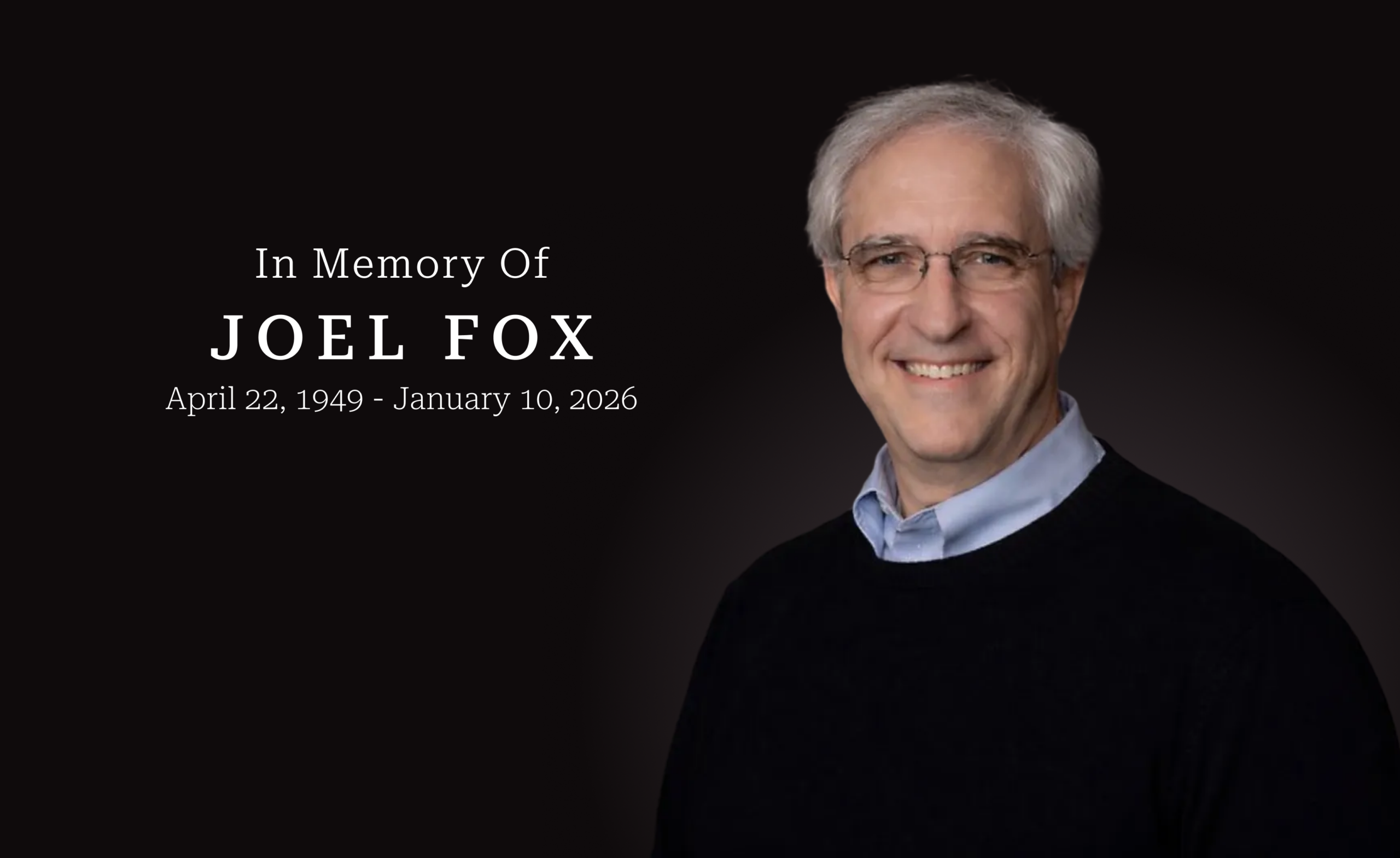
If political differences are destined to leave us divided and friendless, how do you explain the life of Joel Fox?

Fox died on January 10 after more than a decade of living with cancer. He was California’s most prominent taxpayer advocate since Howard Jarvis, for whom he worked, and whose anti-tax organization he led from 1986 to 1998. Fox, a Republican, advanced conservative ideas on TV and op-ed pages. He advised the campaigns of Gov. Arnold Schwarzenegger, Mayor Richard Riordan, and U.S. Sen. John McCain.

That profile, in our polarized times, might make you think Fox was one of those political ideologues who are driving the country apart. But the opposite is true.

Fox, more than any person in California politics, built deep relationships with people across the political spectrum. And he did not do this through consensus or compromise. Instead, Fox built friendships on disagreement itself—a warm, open, and curious style of disagreement.


Read More »

Good Move Cutting State Cell Phones and Cars, but could it Backfire on Gov?

Governor Jerry Brown’s executive orders to have 48,000 state cell phones turned in and to cut in half the number of state owned vehicles were smart ways to illustrate the governor is cutting down on waste. Cars and cell phones are items the public can relate to. They have their own phones and cars, which, for the most part, are not subsidized by their companies or anyone else.

By cutting these items, Brown has left his mark that the new sheriff in town is trying to clean up the mess.

As most reporting on Brown’s executive orders note, the savings from the cuts range in the millions of dollars and make only a small dent in the multi-billion dollar shortfall the state faces.

And, there in may lay a problem for the governor and his plans in the long run.

Read More »

Dipping his toe in the waters of reform

Nine-tenths of the way through his eighth state-of-the-state address, Gov. Brown lightly touched on two issues that may have as much to do with settling this year’s budget debate as the election he dwelled on for the first 1,600 words. In what seemed to be a grudgingly obligatory nod to structural government reform, Brown said,

We must also face the long term challenge of ensuring that our public pensions are fair to both taxpayers and workers alike. Finally, at a time when more than two million Californians are out of work, we must search out and strip away any accumulated burdens or unreasonable regulations that stand in the way of investment and job creation.

Media reports and commentary have appropriately focused on Brown’s insistence on a statewide special election on his tax proposals and the generally negative Republican response. But was this deeply-buried shout-out to issues that embody government failure and inefficiency the start of a productive message to Republicans, and ultimately to voters?

Read More »

Meeting With Governor Brown: A Mayor’s Account

Cross-posted at PublicCEO.

California’s economy is broken. The day of reckoning for the great State of California has finally come. There is a perfect storm brewing in Sacramento that is sending budgetary tsunamis through every city in the state. After many years of financial smoke and mirrors, shifting costs and revenues from one side to another in a monstrous shell game, California faces a $25-billion deficit that cannot be explained, delayed or smiled away.

Recently I, along with members of our City Council and staff, had the opportunity to sit down with our Governor to discuss how this crisis will affect our City – specifically, how the Governor’s proposal to do away with the financial tool of redevelopment will wound our economic recovery efforts. It was not an entirely new discussion, as previous State takeaways from Atascadero’s redevelopment funds have cost us more than a million dollars. This time, however, we weren’t talking about a program where the State would "borrow" our funds. Governor Brown is talking about the end of redevelopment itself within the State of California.

Read More »

The Right to Vote Applies to More than Taxes

Listening to Jerry Brown quote the California Constitution in his State of the State speech — "All political power is inherent in the people" — gave me a bizarre case of déjà vu. Howard Jarvis, Brown’s nemesis three decades ago, used to cite that same phrase from the constitution all the time.

However, the goals of Brown and Jarvis are at cross-purposes.

Jarvis wanted to encourage a vote of the people through the initiative process to cut taxes. Brown wants the people to vote to raise, or extend taxes.

Perhaps that is the beauty of this constitutional provision — it is a general rule that applies to different points of view.

Republican response to Brown’s State of the State speech criticized what Brown did not say. Some Republicans said Brown should have offered up thoughts on pension reform. Others were looking for reductions in regulations, or an emphasis on job creation.

Read More »

I Got Your Budget Alternatives Right Here

Why was Gov. Jerry Brown’s state of the state speech so
short? I don’t know. Perhaps he didn’t feel California deserved anything more.
The address felt like a slap in the face. Republicans got the open hand for refusing
to consider tax increases (or even give the public a chance to vote on tax
increases).  Democrats and interest
groups got hit for refusing to identify alternatives to cuts they oppose.

Those shots were plenty fair.
Brown’s targets are guilty as charged. But Brown might consider finding a lower
horse to ride, for he is not without sin in this budget business himself. 

Brown’s
budget is more honest than recent documents, but it’s not a panacea. Its tax
increases are temporary, not permanent. There’s plenty of one-time money and
even a few gimmicks. And with California’s dysfunctional system constantly
working to reduce revenues and add new spending mandates, Brown’s plan
certainly won’t fix the budget problem once and for all. It kicks the can down the
road, albeit further down the road than recent budgets.

Read More »

Preserving the CA Enterprise Program

Working for a leading California economic development organization, I am
often asked about the state of our economy and my thoughts on how we can
get it back on track. Clearly this is a top concern to citizens here in
California and across the country.

We’ve seen a lot of posturing on how to improve the economy and create
much-needed jobs from elected officials in Washington, DC as well as from
those campaigning for elected office last November. No question that with
sluggish job growth, a still-stressed economy and structural deficits as
far as the eye can see, our federally-elected officials must support
policies that spur business growth, stimulate the U.S. economy and
encourage private sector hiring.

Like their federal counterparts, our state officials need to enact
policies that support economic development and job growth. Similarly,
state leaders must also safeguard successful programs that have been
shown to generate jobs, reduce poverty levels and support local economies
– this must be part of any rational economic recovery program.

Read More »

Time to Chase Community Redevelopment Agencies Out of Town

Los Angeles city officials are wailing that civilization as we know it may be imperiled if Gov. Jerry Brown has his way and kills community redevelopment agencies.

Maybe I’m just a postredevelopment Pollyanna, but I think our way of life would survive just fine. In fact, we’d be better off without them.

Why? Because CRAs are one of those well-intentioned initiatives that sounded great and started off well enough decades ago and have some accomplishments they can point to, such as the Hollywood & Highland Center. But over the years, they have devolved into corrupt little political fiefdoms that muck up the works and don’t do much good.

Sure, CRAs may encourage project construction in some supposedly blighted areas, but those developments mostly are just shifted over from another area. At least, that’s what the nonpartisan state Legislative Analyst’s Office reported a few weeks ago. It went on to say: “There is no reliable evidence that redevelopment projects attract businesses to the state or increase overall economic development in California.”

Read More »

New Study Finds Increased K-12 Funding, but Smaller Percentage Gets into the Classroom

The past several months, we have been expanding our analysis of K-12 expenditures to cover all the districts for which complete data are available in the state. Our analysis of K-12 public school district expenditures in California has four major findings. The first major finding is that, statewide, K-12 public school district expenditures per student in California increased more rapidly than per capita personal income (PCPI) from FY 2003-04 through FY 2008-09. Per student expenditures (excluding capital expenditures) increased from $7,734 in FY 2003-04 to $9,673 in FY 2008-09, an increase of 24.9 percent. This 24.9 percent increase in per student expenditures was substantially greater than the 15 percent increase in California PCPI during this period. Notably, average daily attendance statewide decreased 2.4 percent during this same timeframe.

The second major finding is that from FY 2003-04 through FY 2008-09 per student expenditures for administrative personnel salaries increased more rapidly than per student expenditures for teacher salaries. Per student expenditures for teacher salaries increased about 20 percent during this period, while per student expenditures for classified (non credentialed) administrator and supervisor salaries increased about 43 percent, and per student expenditures for certificated administrator and supervisor salaries increased 27 percent.

Read More »

Enterprise Zones Key to California Job Creation

An article in Forbes shortly after the November
election charted California’s fall from role model to cautionary tale, aptly
noting that the decline of our economy was largely self-inflicted.  We
have over-taxed and over-regulated businesses to the point that it no longer
makes financial sense for them to stay here, let alone move or expand
here.  At a time when we should be doing everything in our power to
stimulate economic growth, Governor Brown has proposed extending tax increases
and eliminating tax credits.  Rather than figuring out how to attract
businesses to California, these actions will do everything short of packing the
moving vans for them. 

While cuts and tax extensions remain the most
controversial centerpieces of Governor Brown’s proposed budget, his call to
eliminate redevelopment agencies and Enterprise Zones has many local government
advocates, including myself, concerned.  Enterprise Zones are an important
tool for local governments looking to spark job creation and economic
development.  The impact of the Governor’s proposal on communities in my
district and around California would be devastating.

Read More »