

Featured Post

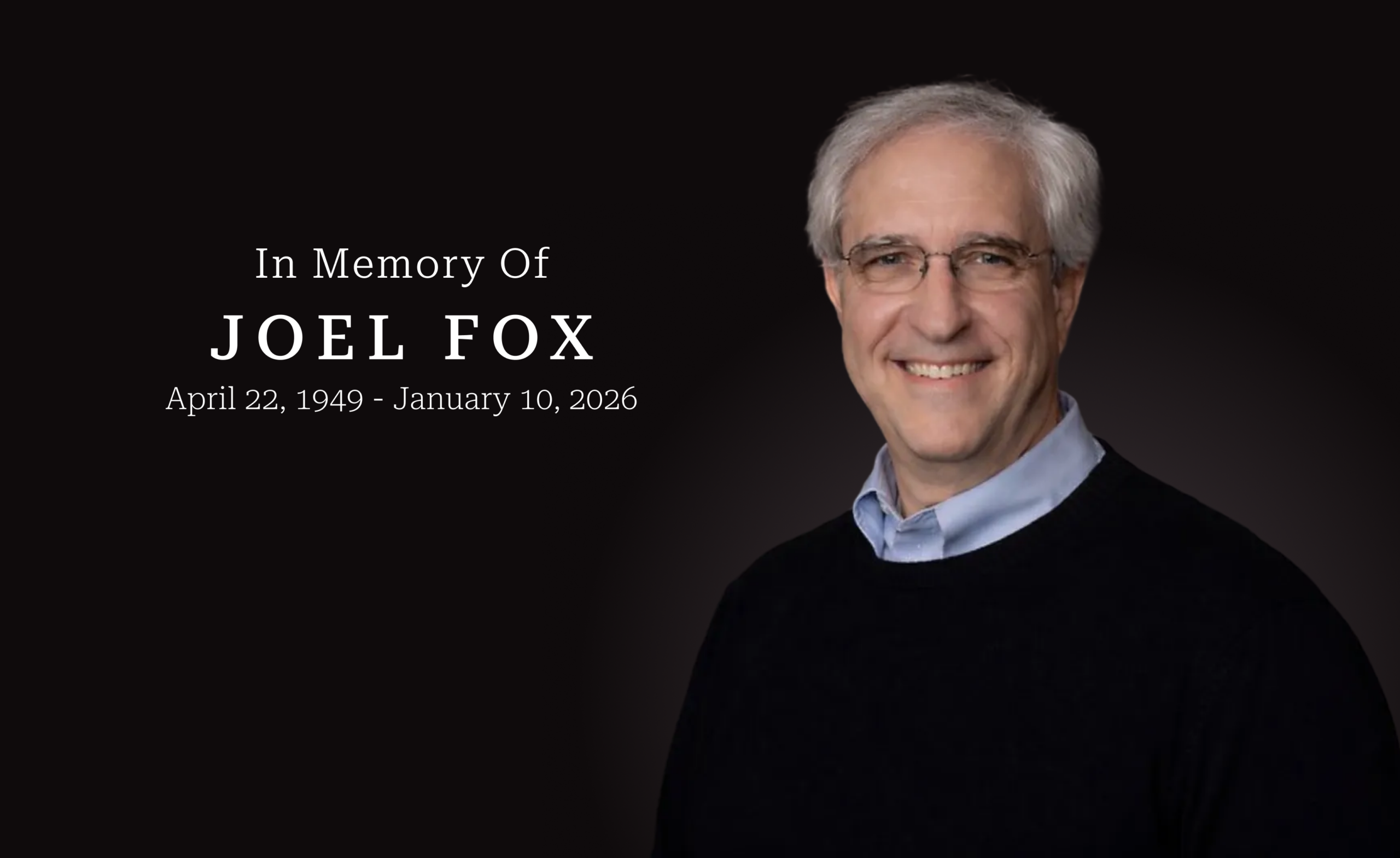
A Fox, A Hound, and a Friendship

If political differences are destined to leave us divided and friendless, how do you explain the life of Joel Fox?

Fox died on January 10 after more than a decade of living with cancer. He was California’s most prominent taxpayer advocate since Howard Jarvis, for whom he worked, and whose anti-tax organization he led from 1986 to 1998. Fox, a Republican, advanced conservative ideas on TV and op-ed pages. He advised the campaigns of Gov. Arnold Schwarzenegger, Mayor Richard Riordan, and U.S. Sen. John McCain.

That profile, in our polarized times, might make you think Fox was one of those political ideologues who are driving the country apart. But the opposite is true.

Fox, more than any person in California politics, built deep relationships with people across the political spectrum. And he did not do this through consensus or compromise. Instead, Fox built friendships on disagreement itself—a warm, open, and curious style of disagreement.

Read More »

Is There a Deal to be Made on the Special Election?

If tax extensions make it onto a special election ballot, they will probably have lots of company from reform proposals. At least that’s a scenario that is suggested by a varied cross section of state political observers.

At the beginning of last week, I wrote the governor and legislature put it “all on the ballot,” meaning besides taxes, the voters should decide on spending limits and pension reform.

A few days later, Los Angeles Times columnist George Skelton said a way to get taxes on the ballot is to address what Republicans want to see: “Offer a spending cap, regulatory streamlining and relaxation of workplace rules, along with Brown’s deep budget cuts. Toss in more public pension reform.”

On the same day, conservative commentator Andy Caldwell wrote, “I would offer to swap Gov. Jerry Brown five years of temporary tax hikes he is asking for — not because I believe they are necessary but because he and his fellow Democrats are holding all the cards — in exchange for pension reform and five years of serious regulatory relief from the laws….”

Read More »

Reading Jerry’s Mind

The folks at DC headquarters have
been hogging the think tank’s mind-reading machine (for use on Bill Daley and
John Boehner), but I finally got a little time with the contraption.
Previously, I’d used it on Gov. Schwarzenegger,
but decided this time to probe the mind of new Gov. Jerry Brown, for a change.

Or at least I thought it was a
change.

Here’s what the machine spit out
when it was aimed at Brown’s mind.

"It’s amazing that no one has
figured this out yet. The ‘Gov. Brown’ in the governor’s office is peddling all
the same stuff from the last 7 years, about bringing the two parties together.
I mean, who does that sound like?

"Yes, it’s Arnold in here."

Read More »

Memo to the Governor: “All politics are still local”

Governor Brown stepped into one heckuva political firestorm with his proposal to eliminate redevelopment in California. Days before being sworn in, the Governor’s office floated a trial balloon to check the temperature of local city council members and mayors on taking their communities job creating money to solve the states ongoing financial mess.

He found their temperature boiling.

Duh.

The Governors office made a tactical error on two fronts: first he pushed cities to obligate redevelopment monies immediately – which effectively took them off the table for the state to grab and balance his budget, but second and even more importantly he may have alienated the most important constituency he needs to get the state back on track as well as the cornerstone of his budget fix done – mayors and council members.

Read More »

A Train to Nowhere: Not A Train Through Nowhere

Cross-posted at NewGeography.

In expressing its opposition to the California High Speed Rail line, Washington Post editorialists noted that critics of the now approved Borden to Corcoran segment have called the line a “train to nowhere” (“Hitting the breaks on California’s high speed rail experiment“). The Post call this:

…a bit unfair, since some of the towns along the way have expensively redeveloped downtowns that may now suffer from the frequent noise and vibration of trains roaring through them.

What the Post missed, however, is that a “train to nowhere” is not a “train through nowhere.” There is no doubt that the high viaducts and the noisy trains have potential to do great harm to the livability of the communities through which it passes. This is one of the reasons that the French have largely avoided operating their high speed rail trains through urban areas, except at relatively low speeds. Stations, except for in the largest urban areas, are generally beyond the urban fringe and towns are bypassed. Yet, one of the decisions not yet made in California, for example, is whether the town of Corcoran will be cut in half by the intrusive, noisy line.

Read More »

Follow the Obama Example: Review Business Regs in CA

Bravo, President Barack Obama, for issuing an executive order to review and remove burdensome regulations on business.

We should follow the president’s example in California.

In a Wall Street Journal editorial this week, the president stated that he signed an executive order for regulation review because outdated regulations stifle job creation and make our economy less competitive. The president wrote, “we are also making it our mission to root out regulations that conflict, that are not worth the cost, or that are just plain dumb.”

The order requires government agencies to consider benefits and costs of regulations and to seek expert advice about regulations, including input from the business community.

The president’s order comes on the back of California congressman Darrell Issa’s letter sent to business leaders asking for a list of onerous regulations on their businesses. Issa is acting in his new role as Chairman of the Oversight and Government Reform Committee. Like the president, Issa is concerned with regulations hampering job creation.

Read More »

A Governor Without Leverage?

Here’s a question, a real question, not a rhetorical question: does Jerry Brown have a hammer?

If he does, I don’t see it. As the governor pushes for his budget of cuts and tax increases and a June special election, what leverage does he have over the legislature to get what he wants?

More specifically, what can he really do to legislative Republicans who – to listen to them – are so devoted to the freedom of Californians that they dare not let Californians vote on tax increases?

Read More »

The Next Urban Challenge — And Opportunity

Cross-posted at NewGeography.

In the next two years, America’s large cities will face the greatest existential crisis in a generation. Municipal bonds are in the tank, having just suffered the worst quarterly performance in more than 16 years, a sign of flagging interest in urban debt.

Things may get worse. The website Business Insider calculates that as many as 16 major cities — including New York, Los Angeles, Chicago and San Francisco — could face bankruptcy in the next year without major revenue increases or drastic budget cuts. JPMorgan Chase’s Jamie Dimon notes that there have already been six municipal bankruptcies and predicts that we “will see more.”

Big cities face particularly steep challenges. Many, notes the Manhattan Institute’s Steve Malanga, have extraordinarily generous compensation systems for their public employees. New York City, for example, owes nearly $65 billion in municipal debt, as well as a remarkable $122 billion for unfunded pension obligations.  President Barack Obama’s hometown of Chicago has it even worse: Its total public pension liability adds up to roughly $42,000 per household.

Read More »

A Better Place to Live

Michael Connelly’s 21st novel, The Reversal, was released by Little
Brown a few months ago.  Publisher’s
Weekly, the industry’s trade publication, gave it a starred review which
concludes, "Reading this book is like watching a master
craftsman, slowly and carefully, brick by brick, build something that holds
together exquisitely, form and function in perfect alignment."

The Reversal brings together Connelly’s
best-known detective hero, Harry Bosch, and his newer hero, defense attorney
Mickey Haller, who is not only starring in his third Connelly novel but will be
played Matthew McConaughey in the soon-to-be
released movie The Lincoln Lawyer, based on the novel of the
same name in which Haller was introduced.

The Reversal is also set in Los Angeles,
the primary setting for all of Connelly’s work.

Read More »

The Fly in the Realignment Soup

A prominent piece of Governor Jerry Brown’s proposed budget
is to realign services so that governments closer to the people have more say
over services and more revenue to deal with those services. The Governor’s
argument assumes local governments can do a more efficient job with the
people’s money.

The fly in this realignment soup is headlines that have run
in California newspapers for well over a year dealing with local government
corruption and mismanagement.

Read More »