

Featured Post

A Fox, A Hound, and a Friendship

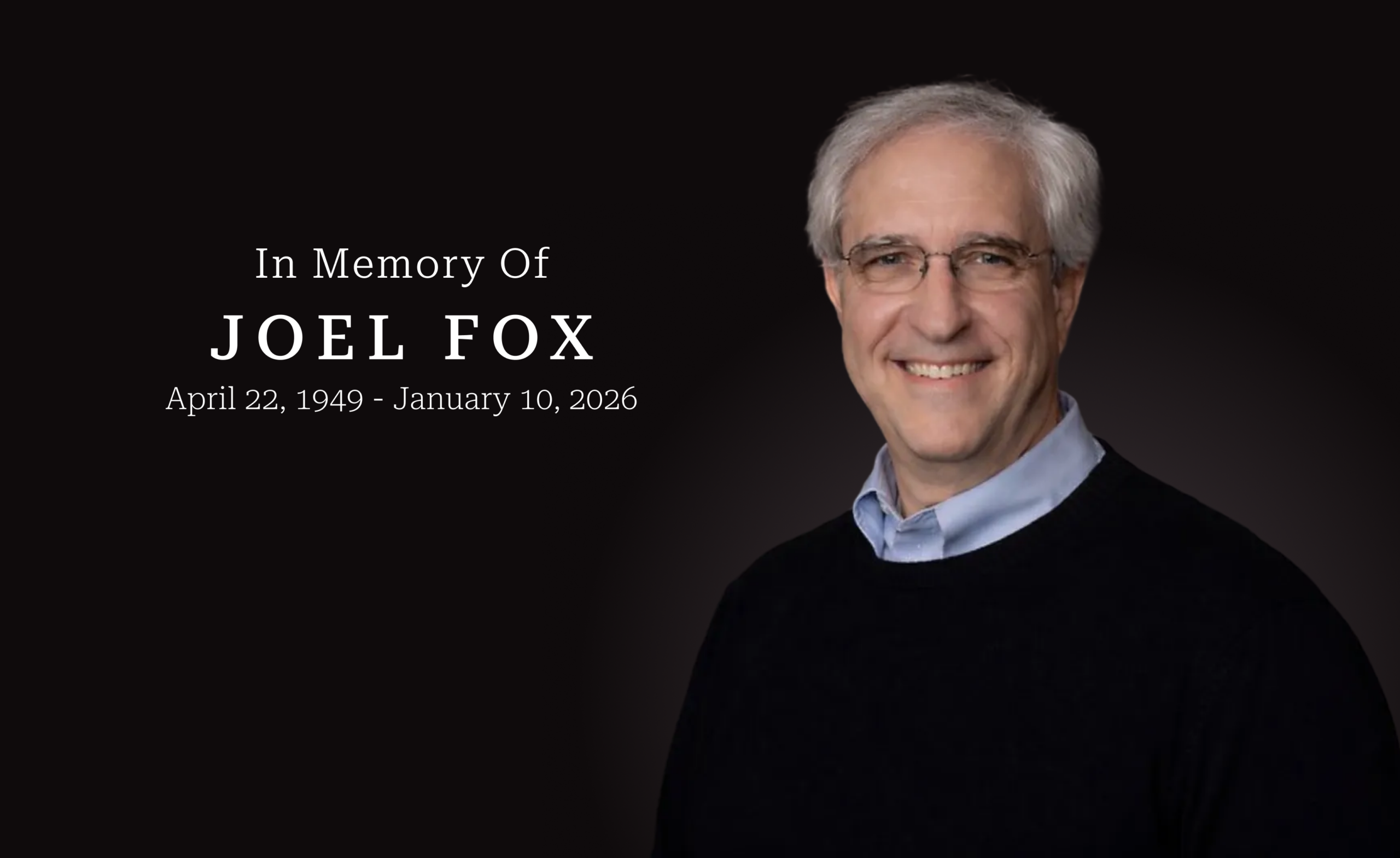
If political differences are destined to leave us divided and friendless, how do you explain the life of Joel Fox?

Fox died on January 10 after more than a decade of living with cancer. He was California’s most prominent taxpayer advocate since Howard Jarvis, for whom he worked, and whose anti-tax organization he led from 1986 to 1998. Fox, a Republican, advanced conservative ideas on TV and op-ed pages. He advised the campaigns of Gov. Arnold Schwarzenegger, Mayor Richard Riordan, and U.S. Sen. John McCain.

That profile, in our polarized times, might make you think Fox was one of those political ideologues who are driving the country apart. But the opposite is true.

Fox, more than any person in California politics, built deep relationships with people across the political spectrum. And he did not do this through consensus or compromise. Instead, Fox built friendships on disagreement itself—a warm, open, and curious style of disagreement.

Read More »

Californian of the Year

If you’re sick and getting sicker, you look for a top doctor. If you get pulled over by the cops and blow a .15 on the Breathalyzer, you call the best lawyer you can find. When a pipe breaks and water is filling the basement, it’s no time for the guy with the “Plumbing for Dummies” book.

When times are tough, people want a professional in charge and times don’t get any tougher than they are in California right now. That’s a huge part of the reason the voters in November picked Jerry Brown to run the state for the next four years and why the once and future governor is my choice for Californian of the Year.

These days, it’s no compliment to call someone a “professional politician.” On any recent list of America’s most respected professions, you’d find politicians in the basement, rambling around with the used car salesmen, infomercial hosts and oil company CEOs.

But while the country is run by the people, the country’s government is run by politicians elected by those people. And as California has discovered, rookie officeholders aren’t necessarily the reincarnation of Hiram Johnson, Earl Warren, Pat Brown or Ronald Reagan.

Read More »

Finally, A Common Sense Initiative Reform

California has the most inflexible
initiative process in the world – which is to say, our process is totally
divorced from the legislative process. This state makes it harder than most
states and countries to fix errors and negotiate compromises on initiatives
before an election. And California is the only place on the planet that does
not permit the legislative body to amend or change an initiative statute once
it’s passed, except by another vote of the people.

Nearly every legislative session
brings proposals to reform the initiative process. But these almost always are
really efforts to stop the process, or make it more even more costly than it
already is. And usually, the proposals are one-offs, a single change that may
make very little difference at all.

This month, Assemblyman Mike Gatto
of Los Angeles offered the most thoughtful approach to initiative reform I’ve
seen. Gatto, who seems to understand that changing something like this requires
a package of reforms, has introduced five constitutional amendments that fit
well together.

Read More »

Why Pull the Trigger in Compton?

Heard about the new "parent trigger" allowing parents to
petition to reconstitute a failing school? Promising idea.

Did you hear that supporters of the
trigger organized to make the first use of the "parent trigger" in Compton?

A very bad idea.

I spent three years reporting in
and around Compton for the LA Times. In many ways, the town is better than its
reputation – it’s more prosperous and less violent than you know. The city’s
real problem is a political and civic culture is as nasty and brutish as you’ll
ever find.

I spent many hours listening to
Compton citizens spin out long, involved and just plain conspiracy theories
about politics, government and, yes, schools. And those conspiracy-minded
Compton citizens were the officials in charge!

Read More »

12 Wishes for 2011 and Beyond

A new legislature has been sworn in and we are now in the process of shaping our state’s future, which is faced with serious unemployment and deficits and a very unclear future. Even the Chairman of the Federal Reserve, Ben Bernanke has said this economy might take 4-5 years to straighten out. So what better to do than to put California on a positive legal reform course, which would help economic recovery? If I had 12 wishes for legal reform in California it would probably go something like this:

1. A Governor and legislature who worked to make California a places businesses want to grow and can thrive.

2. For all California residents to serve when called for jury duty.

3. An end to class action lawsuits, at least as the system is designed now. They keep on coming and the consumers lose every time.

4. Leave the Medical Injury Compensation Reform Act of 1975 alone. It has worked.

Read More »

Rescinding Collective Bargaining?

As Jerry Brown returns to the governor’s office after a nearly 30 year absence, the man who approved collective bargaining for public employees might be facing the question of rescinding the right of government unions to collectively bargain.

Would he make such a move? Highly, highly unlikely. However, as the Wall Street Journal editorialized, a few states have rescinded or are considering rescinding collective bargaining. Indiana and Missouri did it by executive order in 2005. Wisconsin’s newly elected governor has it on his to-do list.

The Journal editorial argues that public sector collective bargaining has “proven to be a catastrophe for taxpayers, as public unions have used their political clout to negotiate rich deals on wages, pensions and health care.”

The editorial goes on to say that Jerry Brown, himself, “greased the wheels” of California’s fiscal decline when he allowed collective bargaining during his first stint as governor.

Read More »

Hasta La Vista, Failure

Cross-posted at NewGeography.

In his headier and hunkier days, Arnold Schwarzenegger spoke boldly about how “failure is not an option.” This kind of bravado worked well in the gym–and in a remarkable career that saw an inarticulate Austrian body-builder rise to the apex of Hollywood and California politics.

But Schwarzenegger’s soon-to-be-ended seven-year reign as California’s governor can be best described in just that one simple world: failure.  It has been so bad that one even looks forward to having a pro, the eccentric Machiavellian master, Jerry Brown, replace him.

Schwarzenegger never grew beyond the role of a clueless political narcissist. As the state sank into an ever deeper fiscal crisis, he continued to expend his energy on the grandiose and beyond the point: establishing a Californian policy for combating climate change, boosting an unaffordable High-Speed Rail system, and even eliminating plastic bags. These may be great issues of import, but they are far less pressing than a state’s descent into insolvency.

Read More »

Putting California in Play in Presidential Elections

Ted Costa is at it again trying to shake up California politics. Costa, head of People’s Advocate, filed the recall petition against Governor Gray Davis that lead to the successful campaign to remove Davis from office replaced by soon-to-retire Governor Arnold Schwarzenegger.

Now, Costa wants to change the landscape for presidential politics in California by requiring that electors in the Electoral College vote for the candidate who wins each congressional district. Costa filed an initiative this week as the first step to change the law.

California has a winner-take-all Electoral College system. As the most populous state, the current whopping total of 55 electoral votes puts the winner of the California election a huge step closer to the White House. Since the 1992 election, the winner has always been a Democrat.

With California almost a sure thing in presidential politics, candidates from the two major parties, for the most part, ignore the state and it millions of people during the campaign. The candidates spend much more time in smaller states that may carry only a handful of Electoral College votes. However, those few votes in contested states may be crucial to a victory.

Read More »

Californians keep moving out of state

Californians continue to flee the state.

That’s the message to be drawn from data on the
state’s population growth, newly released by the state Department of Finance.

The state
overall saw a net increase of about 350,000 residents over 2009, reaching an
estimated population of 38.8 million residents this year. But in a continuation
of a recent trend, more Californians left the Golden State for elsewhere in the
country than moved here from other states. Since 1991, the net loss of
Californians has totaled nearly 1.3 million.

Read More »

High Speed Rail, the Central Valley and the Growth of a Region’s Economy

The California High Speed Rail Authority this past week approved moving forward on the first segment of final design and construction, a $4.15 billion 65 mile segment from the Central Valley town of Corcoran to Madera, with stations to be built in Fresno and Hanford.

Despite the criticisms of building a Train to Nowhere, this was the only segment that made sense in terms of the requirements accompanying the federal funds and in terms of the community support and community investment in the Central Valley. Further, there is no question that the Valley should be focus of the next funds: completing the Merced to Fresno segment and Fresno to Bakersfield segment.

Read More »