

Featured Post

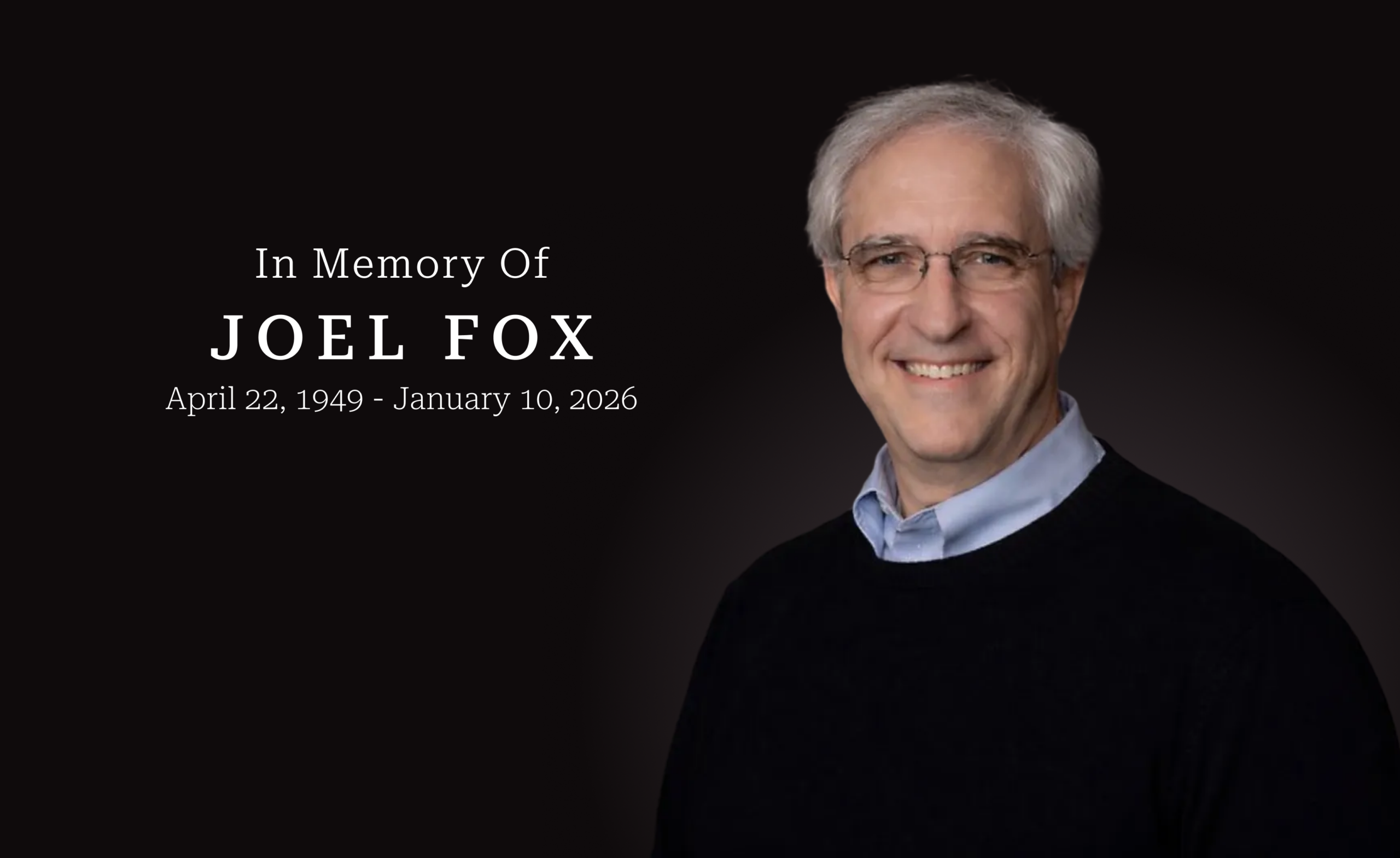
A Fox, A Hound, and a Friendship

If political differences are destined to leave us divided and friendless, how do you explain the life of Joel Fox?

Fox died on January 10 after more than a decade of living with cancer. He was California’s most prominent taxpayer advocate since Howard Jarvis, for whom he worked, and whose anti-tax organization he led from 1986 to 1998. Fox, a Republican, advanced conservative ideas on TV and op-ed pages. He advised the campaigns of Gov. Arnold Schwarzenegger, Mayor Richard Riordan, and U.S. Sen. John McCain.

That profile, in our polarized times, might make you think Fox was one of those political ideologues who are driving the country apart. But the opposite is true.

Fox, more than any person in California politics, built deep relationships with people across the political spectrum. And he did not do this through consensus or compromise. Instead, Fox built friendships on disagreement itself—a warm, open, and curious style of disagreement.

Read More »

Selling Assets the Wrong Way

Suppose a grinning real estate agent knocks on your door with a proposal. He will buy your home (which you own free and clear) for a fair price if, in return, you promise to spend all the proceeds within one year and agree to rent back your property over the next 20 years for an amount that exceeds what you were paid. At the end of 20 years you will have to arrange a new rental agreement or become homeless.

At this point most property owners would recognize a scam and some might even summon the family pit bull to make sure that the slick salesman beats a hasty retreat.

However, what is an obvious scam to average taxpayers is called sound public policy by Sacramento politicians.

Read More »

Call for Split Roll Property Tax Ignores Consequences

Former State Board of Equalization chairman Conway Collis’s article arguing for higher taxes on commercial property in the San Jose Mercury News last week didn’t tell the full story. He did not cover the negative consequences of such a move.

Collis was trying to sell splitting the property tax roll between business and residential property as the panacea to dig California out of its deficit problem. He claimed increasing taxes on business property would raise $6 to $ 8 billion in new revenue for government.

In reality, raising business property taxes will prolong our fiscal mess because it will act as a disincentive to job creation and business growth, which is the only way to pull California out of the deficit hole. If billions were raised in taxes they would not be available for job creation. In fact, former Legislative Analyst Bill Hamm noted in a study last year that for every one percent increase in business property taxes, 43,000 jobs would be lost.

Read More »

Why WeHo Businesses Should Howl

Do you dream of having your own little business? Being your own boss? Well, here’s a message for you: Don’t do any of that dreaming in West Hollywood.

Why? Because the West Hollywood City Council may crush your little business. And be proud of itself for doing so.

That’s the message from that city’s decision to ban puppy and kitten sales there. The town council is all puffed up and proud of itself for taking a principled stand against some distant puppy mills. But apparently it’s deaf to the whimpers of its own pet stores, which are being euthanized by the city.

As you can see in an article in the current issue of the Los Angeles Business Journal, pet shops in West Hollywood are hurting now that the city’s ban on puppy and kitten sales has gone into effect. One shop apparently is open only sporadically.

Read More »

CARB Set To Boost CA Gas Prices

Cross-posted at Cal-Watchdog.

Buoyed by the repudiation of Prop. 23, the California Air Resources Board (CARB) is moving forward with cap-and-trade regulations designed to reduce the carbon level in fuel, but which will also drive up gas prices, further damaging California’s weak economy.

Beginning in January the $183 billion fuel industry in California will need to begin adhering to CARB’s Low Carbon Fuel Standard (LCFS), which has a goal of reducing the carbon level in transportation fuel by 10 percent by 2020. Fuel producers can do so by blending in bio-fuels such as ethanol or by purchasing emission credits, perhaps from electric or natural gas utilities, to offset their high-carbon fuel supply.

Several studies on the impact of a nation-wide LCFS, as proposed in the cap-and-trade legislation passed by the House (but stalled in the Senate), predict that just about everyone will suffer as a result.

Read More »

The New Republican Cause: Attacking Birthright Citizenship

If any evidence is needed that California Republicans remain brain dead about their problems with the growing non-white vote in this state, there is the move by far right GOPers to repeal the 14th Amendment and deny citizenship to American-born children of illegal immigrants.

Republicans have now lost all statewide offices, with the apparent defeat of attorney general nominee Steve Cooley, for only the second time since 1882. The exit polls also show that 2010 Latino turnout exceeded 2008 turnout by at least four points, and that Latinos voted Democratic by 65 to 85 percent, depending upon which exit poll you believe.

Republicans now have virtually no chance to ever elect anyone to statewide office again in California but they have not hit bottom yet. That will come in 2012 when the new Citizens Redistricting Commission redraws legislative and congressional district lines. Many of the safe, gerrymandered lily white districts Republicans drew for themselves in the 2001 redistricting will go, and in their place with be districts filled with newly enfranchised middle class Latino voters. Look for GOP legislative seats to flip to the Democrats in northern Los Angeles County and the Inland Empire where the Latino vote is growing rapidly.

Read More »

Who Made The $6 Billion Hole in the Budget? Me

I’d like to apologize for the $6 billion hole that’s already opened up in this year’s state budget.

I made the hole.

But I didn’t do it alone. I had help from a few friends. You may know them as the voters of California.

We made this hole together last year. Remember it? The hole was created back in May 2009, so long ago that Meg Whitman and Nicky Diaz Santillan were still family.

That month, the voters of California faced six ballot measures as part of a special election. The election had to be called to bless five pieces of a February 2009 budget deal that involved either constitutional changes or changes to programs like the lottery that were established by ballot initiative. (In California, when you change a voter-approved measure, you gotta ask the voters permission). Those pieces involved tweaks worth $6 billion in budget savings.

Read More »

Ending Homelessness in Los Angeles for Good

Every night more than 48,000 people in Los Angeles County sleep on the streets because they do not have a place to call home. Los Angeles has the unfortunate distinction of being the epicenter of the nation’s homelessness crisis. That’s why the Chamber partnered with the United Way of Greater Los Angeles and last week launched Home For Good – a five-year strategic plan to end chronic and veteran homelessness in Los Angeles.

Home For Good is aimed at the 12,000 chronically homeless Angelenos who have been homeless for more than a year and have serious mental or physical health problems. This includes approximately 1,400 veterans – an increasing number of whom are soldiers returning from Iraq and Afghanistan. By implementing a new strategy, we can provide life-saving opportunities for the chronically homeless and at the same time free up resources for those in need of transitional services.

Read More »

California’s Gold and California’s Governance

There’s always a bit of a hangover
after an election.  You never get exactly
the results you want, but culminating events like elections also beget
introspection and reflection.  As the
sound and fury of campaign season dies down, we have the opportunity to look at
the broader historical context that has led to California’s dysfunctional
government and what this election really means.  

We need to remember that California
is more than a state.  It is a state of
mind defined by possibility.  California
took America’s Dream of a better life and imbued it with the sense that not
just material opportunity – a good home, a good job, and the ability to provide
a better life for your kids – but really anything was possible on California’s
Golden shore.

Read More »

A Special Session on the Wrong Subject

Gov. Arnold Schwarzenegger was right to call a special session in the waning days of his governorship. But in dedicating the session to the budget deficit, he chose the wrong subject.

Put simply, the last thing this state needs is another debate over how to cut the budget. Anyone paying attention to the California budget crisis figured out long ago that there’s no politically feasible way to balance the state budget. Schwarzenegger’s proposals for cuts are almost certain to be dead on arrival with legislative Democrats, who would prefer to deal with the Democratic governor-elect. Schwarzenegger’s decision to spend the last few weeks of his governorship banging his head against that wall is pointless.

A better approach would be to spend that time looking at constitutional changes that would reshape the budget system itself. Certainly, with a new governor coming in, such a session is unlikely to produce more reforms. But the special session Schwarzenegger has called isn’t any more likely to produce a balanced budget.

Read More »