Featured Post

A Fox, A Hound, and a Friendship

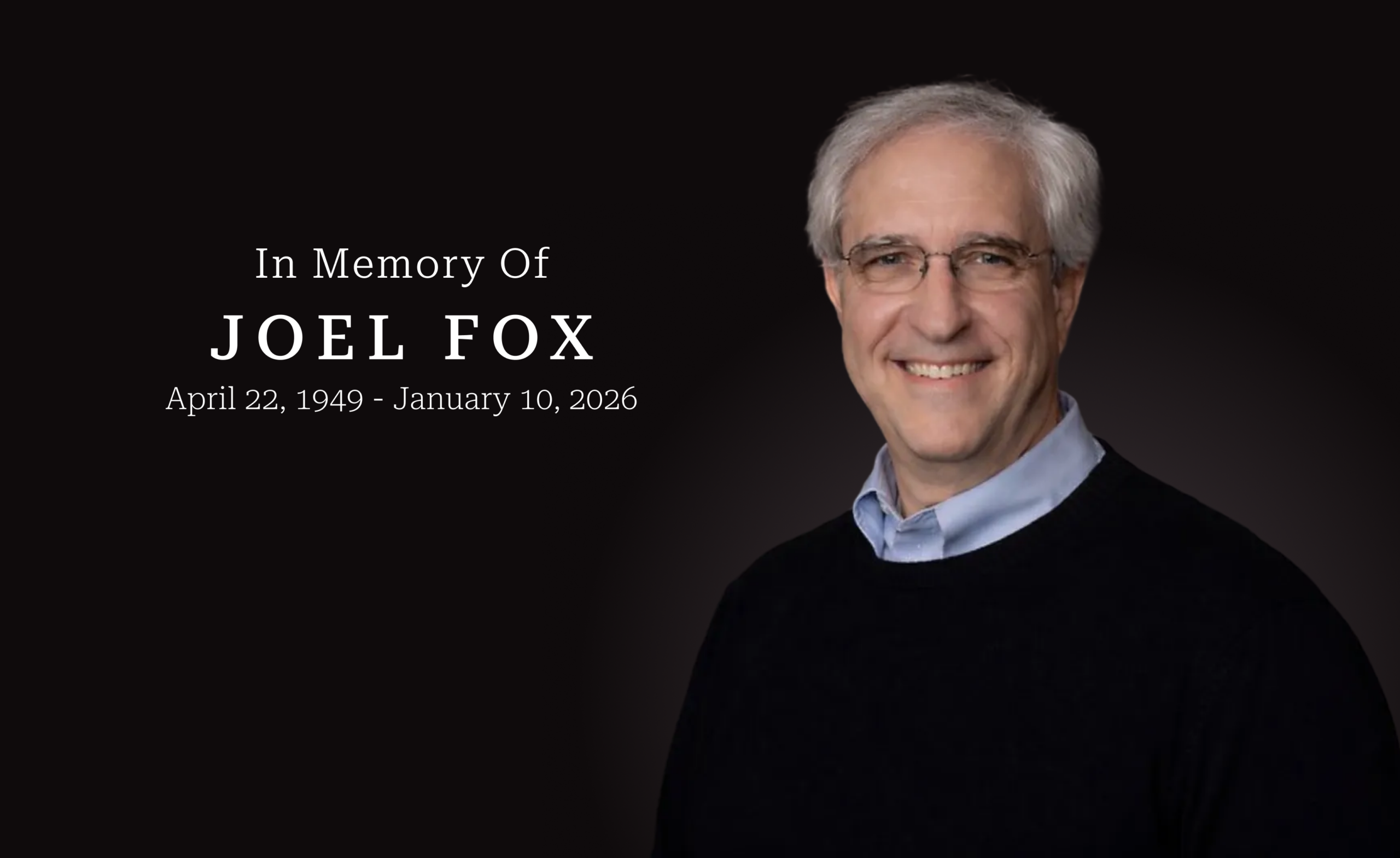
If political differences are destined to leave us divided and friendless, how do you explain the life of Joel Fox?

Fox died on January 10 after more than a decade of living with cancer. He was California’s most prominent taxpayer advocate since Howard Jarvis, for whom he worked, and whose anti-tax organization he led from 1986 to 1998. Fox, a Republican, advanced conservative ideas on TV and op-ed pages. He advised the campaigns of Gov. Arnold Schwarzenegger, Mayor Richard Riordan, and U.S. Sen. John McCain.

That profile, in our polarized times, might make you think Fox was one of those political ideologues who are driving the country apart. But the opposite is true.

Fox, more than any person in California politics, built deep relationships with people across the political spectrum. And he did not do this through consensus or compromise. Instead, Fox built friendships on disagreement itself—a warm, open, and curious style of disagreement.

Read More »

The Benefits of Bilingual Polling

Pardon me while I trumpet our poll’s accuracy.

According to the secretary of state’s office, the semi-official results of the races for governor and the U.S. Senate give Jerry Brown a 12-point victory over Meg Whitman and Sen. Barbara Boxer a 9-point edge over Carly Fiorina in the Nov. 2 elections.

As has been reported, of the 14 pre-election polls released within 10 days of the vote, the two that came closest to predicting the actual outcomes were the USC College/Los Angeles Times and Field polls. The most accurate poll on the top two races was the USC/L.A. Times October poll, which had Brown 13 points ahead and Boxer up by 8 points.

Read More »

First Evidence that “Green Jobs” were a White Lie

Didn’t the opponents of California’s Proposition 23 promise there would be a Green jobs revolution if they got their way?

Just one day after environmental advocates achieved victory in protecting their $140-billion Energy Tax at the ballot box, one of California’s prominent solar companies announced plans to close its solar panel factory and lay off workers in California. According to Todd Woody at the New York Times, that’s not all. The Silicon Valley solar company also declared they will cancel plans for further expansion to a second, new facility in California.

Wait, weren’t we supposed to become the perfect market for Green jobs?

Read More »

Mostly Good News On California Pensions

Cross posted CalWatchdog.com

Those of us who applauded the national backlash against the Obama administration’s big-government overreach have been straining to find good news in California, which defied the national trends by electing a slate of liberal Democrats and approving an initiative that makes it easier for the state’s Democrats to raise taxes and pass budgets without Republican help.

To make matters more depressing, a much-celebrated city initiative in San Francisco to rein in the crushing costs of pensions was handily defeated on Tuesday. The city’s progressive Democratic public defender, Jeff Adachi, sponsored Proposition B because public employee pensions were sapping the life out of other programs. I saw a grand opportunity to build a coalition between conservatives/libertarians and old-fashioned liberals who understand that lush and underfunded pensions threaten their values, too.

Read More »

Will the 2011 Budget include tax increases?

The election of Jerry Brown brings to the policy mix his commitment to submit tax increases to a public vote. The passage of Proposition 25 gives to the Democratic majority in the Legislature, and Governor Brown, the ability to shape the next state budget to meet their vision and priorities, without the need to seek votes from the Republican minority.

If the Governor or his legislative allies want to achieve their budget goals in part with new taxes, how could they do it?

First, voter approval could only be obtained by calling a statewide special election, which itself is certainly not unusual. California voters have participated in three special elections between 2003 and 2009. Some observers believe that the most likely date would be May 17, which coincides with the Los Angeles mayoral election. This date is convenient because it lands just shy of a month before the beginning of the fiscal year, by which time the Legislature must approve a budget or forfeit their pay.

Read More »

Did Whitman’s Bad Campaign Really Matter?

Tony Quinn was right on target in his criticism of the Meg Whitman campaign, which will go down in history as one of the laziest and most arrogant of all time. With all that money, you would think they would come up with messages that amounted to more than content-free pabulum about better schools, leaner government and balanced budgets. They managed to use Governor Schwarzenegger’s rhetoric without the substance of his proposals to address these challenges. Why, with all there was to say about Jerry Brown’s first two terms as Governor, did they put up such smarmy, unconvincing attack ads that lacked a kernel of truth? I guess the consultants are crying all the way to the bank, but the most creative thing to come out of the Whitman camp were Mike Murphy’s protestations that the race was a dead heat at the end.

Murphy’s boom fog was rivaled only by Garry South’s non-stop criticism of the Brown campaign for months on end at full volume. South kept predicting gloom and doom because the Brown campaign didn’t fight back with TV in May and June and waged a barely visible campaign during the summer doldrums. According to South, Brown was digging a hole he couldn’t climb out of. Never mind that Jerry Brown had spent 40 years being conspicuous to California voters, often to his detriment. No introduction was necessary and when you are facing an unlimited war chest, it makes sense to hold your fire until you can see the whites of their eyes.

Read More »

The Smackdown Of The Creative Class

Cross posted at NewGeography.com.

Two years ago I hailed Barack Obama’s election as “the triumph of the creative class.” On election day everything reversed, as middle-class Americans smacked down their putative new ruling class of highly educated urbanistas and college town denizens.

More than anything, this election marked a shift in American class dynamics. In 2008 President Obama managed to win enough middle-class, suburban voters to win an impressive victory. This year, those same voters deserted, rejecting policies more geared to the “creative class” than mainstream America.

A term coined by urban guru Richard Florida, “the creative class” also covers what David Brooks more cunningly calls “bourgeois bohemians”–socially liberal, well-educated, predominately white, upper middle-class voters. They are clustered largely in expensive urban centers, along the coasts, around universities and high-tech regions. To this base, Obama can add the welfare dependents, virtually all African-Americans, and the well-organized legions of public employees.

Read More »

L.A. Homes In on Businesses

The unemployment rate in the city of Los Angeles is 13.7 percent. If you’re jobless in a job-scarce era, there is a classic way to escape your predicament: start your own business. Even if you sell ice cream from a cart or take in sewing, you can make it in America.

But maybe not if you’re in Los Angeles. That was the message from a study released last week from the Institute for Justice. It laid bare a city that discourages small-business startups and chokes its entrepreneurs in red tape so absurd you’d think the rules and regulations were written by Samuel Beckett.

For example, a video that accompanies the report said if you want to start a simple shop that sells used books, “You’ll need a permit from the police to operate. You’ll have to be fingerprinted. Anyone who sells you books may need to be fingerprinted, too. For every book you buy, you’ll have to stamp it with an individualized number that corresponds to the bill of sale that identifies the book and who it came from. Police get to inspect those bills of sale and – hold on – you’ll also have to hold books for at least 30 days before you sell them. Just in case the police have any questions.”

Read More »

A “No Tax” Message From Voters

For Republicans and smaller government types who celebrated national victories there was little joy in California because their candidates struck out. However, buried amongst the wreckage of a long election night, the message of no new taxes came through pretty clearly.

The only actual tax increase on the ballot, Proposition 21, a vehicle tax dedicated to parks, was crushed with a 58% NO vote. Proposition 24, which would have wiped out legislation from last year that promised a tax cut for businesses was also defeated by the voters allowing the tax cut to go through.

Proposition 26 passed requiring a two-thirds vote to raise fees that, in essence, were disguised taxes. Even Proposition 25, which lowered the two-thirds vote requirement to pass a budget to a majority vote, emphasized in its commercials that the two-thirds vote for tax increases was preserved.

Read More »

The Hand-off Begins: The Transition from Schwarzenegger to Brown 2.0

The smoke signals were being sent as long as 10 days
ago:  Candidate Jerry Brown began
postulating what he’d do in office, while Meg Whitman fought off media reports
of unfavorable polling.  The transition
from the Schwarzenegger Administration to the Second Brown Administration had
begun.

I served as policy director for the Schwarzenegger 2003
recall campaign and as the point person in the transition on the economic
recovery portfolio, including energy, workers compensation insurance reform,
and the overall business climate.  And
about 10 days before voters went to the polls, I had already switched my focus
to preparing for the hand-off from Governor Davis.  

The first step was to prepare the official record of
Schwarzenegger’s agenda – as reflected in our policy papers, in the candidate’s
answers to questionnaires, and in his debates and prepared remarks.  It may seem obvious, but someone has to come
up with an objective checklist of promises to guard against revisionist
history, and to help educate the swarm of new players who descend on a new
Governor-elect with their ideas for what needs to be done.  That task should be high on the list of items
to be addressed by the Brown 2.0 transition staff.

Read More »