


Featured Post

A Fox, A Hound, and a Friendship

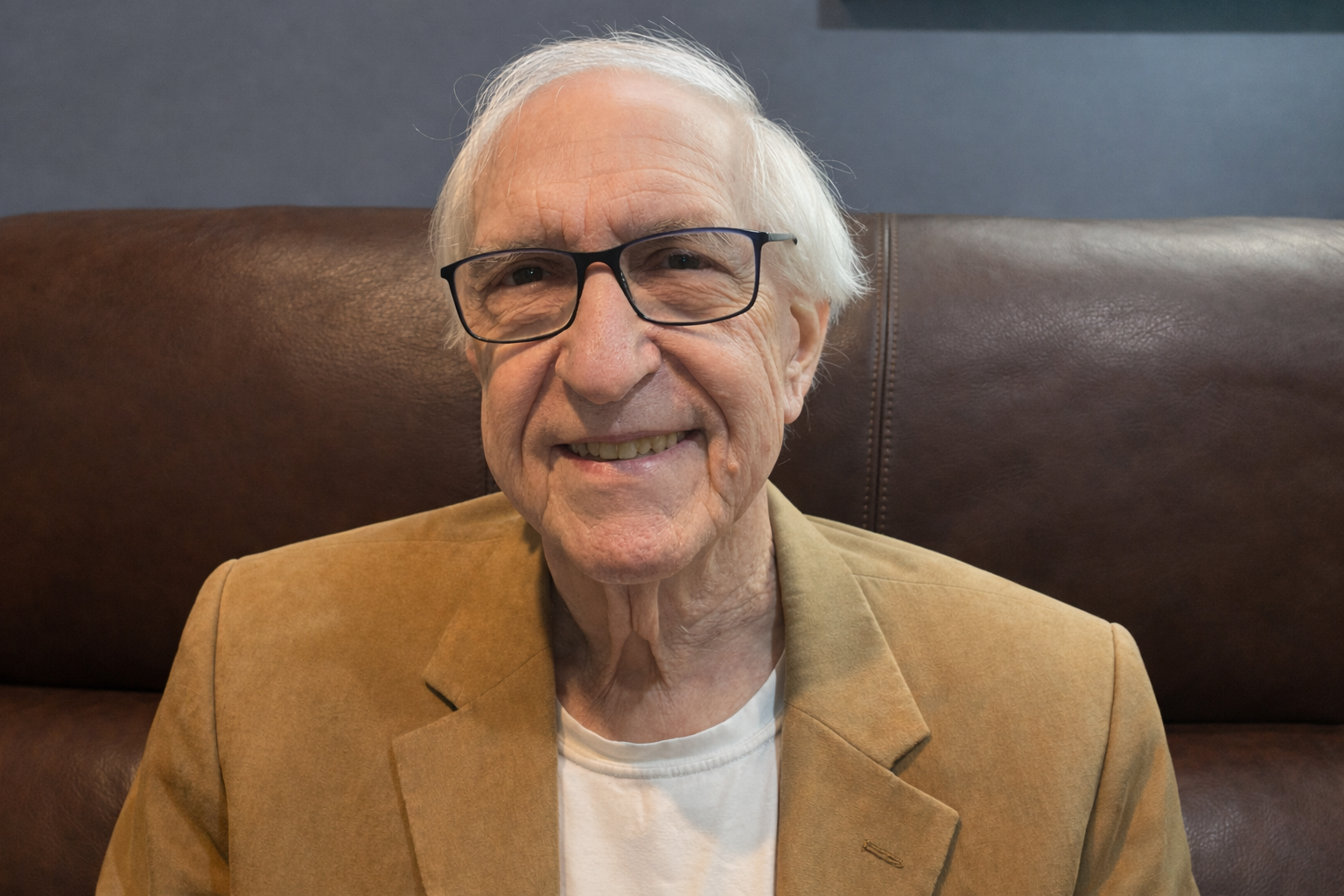
If political differences are destined to leave us divided and friendless, how do you explain the life of Joel Fox?

Fox died on January 10 after more than a decade of living with cancer. He was California’s most prominent taxpayer advocate since Howard Jarvis, for whom he worked, and whose anti-tax organization he led from 1986 to 1998. Fox, a Republican, advanced conservative ideas on TV and op-ed pages. He advised the campaigns of Gov. Arnold Schwarzenegger, Mayor Richard Riordan, and U.S. Sen. John McCain.

That profile, in our polarized times, might make you think Fox was one of those political ideologues who are driving the country apart. But the opposite is true.

Fox, more than any person in California politics, built deep relationships with people across the political spectrum. And he did not do this through consensus or compromise. Instead, Fox built friendships on disagreement itself—a warm, open, and curious style of disagreement.

Read More »

Governors and Jobs

Over the past year, I’ve been engaged in a research project on the transformation of employment in California since World War II. The project has involved research on the shifting employment relations in California (particularly the breakdown of the employer-employee relation and rise of contingent employment) as well the ebbs and flows of job creation and employment.

The chart below shows the growth and decline of total payroll jobs in California during the five recent governors, beginning with Jerry Brown.

Read More »

Sails Pitch

I agree with the Planning and Conservation League.
But first, a little background.

San Francisco Mayor Gavin Newsom is considering asking the Legislature
for an exemption from the California Environmental Quality
Act (CEQA) so his city won’t have to prepare an environmental impact
report to host the America’s Cup yacht race in San Francisco Bay in
2014.

That’s right. An EIR for a yacht race.

Read More »

A Shovel Ready Paradigm for What is Broken in Washington

Congresswoman Jackie Speier, US 12th Congressional representative (representing south SF, SSF, Daley City and south through San Carlos), recently proposed new legislation to restore San Francisco bay tidal marshes, reduce bay contaminants and improve the health of the San Francisco Bay.

On the surface, not many bay area residents can criticize a billion dollar ‘feel good’ hand out from the federal government to clean up our bay.

Unfortunately it is not so simple.  The bay is important, of course.  But we don’t use the bay for drinking water; we haven’t dumped raw sewage into the bay for 30 years; there have been no large fish kills from pollution, disease or suffocating algae blooms.

Read More »

A Path To Pension Reform

A
recent report
that the Governor is considering borrowing $2 billion from
the giant state pension system may seem incongruous with his earlier statements
advocating full funding of pension obligations – not to mention sound
fiscal management. But if these reports are true, then the Governor may have
found a way to thread the pension reform needle to the long-term benefit of the
state.

I
should know – I was Governor Wilson’s Cabinet Secretary in 1991
during California’s last Great Recession. Then – as now – the
state’s contribution to the CalPERS system was seen as a legitimate
source of temporary revenues to balance the budget. Then – as now –
the Governor sought to make structural reforms to the state’s retirement
system to control spiraling pension costs yet maintain a fair and adequate
benefit to retirees.

The
difference today is we’ve had hard-knocks experience with what happens
when the path to reform is not taken: a $650 million estimated
obligation turns out to cost taxpayers $3.5 billion – and counting.

Read More »

Workers Comp Redux

The campaign for workers comp reform was only six-plus years ago, yet, as Yogi Berra might say, it looks like déjà vu all over again. Workers comp is an important issue for business again with the threat of workers comp insurance premium increases possibly hitting 30-percent.

The Small Business Action Committee’s first important policy activity after it came into existence was to promote a change in the workers comp system that was crushing businesses. We amassed support from over 20,000 small businesses and a few large ones, as well, in our effort to reduce the burden on business.

Dan Walters gave an excellent recap of the once and future workers comp crisis in his column yesterday.

Read More »

Why Carly Fiorina is the Only Choice for Small Business

The National Federation of Independent Business Save America’s Free Enterprise Trust endorses Carly Fiorina for U.S. Senate.  On behalf of nearly 20,000 NFIB members in California, and even more small business employees and supporters across the state, this is a significant endorsement in an important election year.  Never have the stakes been so high for our job creators – small business owners.

The differences in this race could not be clearer. Carly Fiorina is a business leader who advocates for reasonable regulations, lower taxes, and more incentives and opportunities for Main Street. Senator Barbara Boxer is an advocate for higher taxes and more government intrusion into the lives of small business owners with a decades-long record of anti-small business votes.

Carly has signed the front of a paycheck and understands the day-to-day struggles of small business owners. Sen. Boxer has spent the last four decades as a professional politician with a record that shows she fails to understand the challenges of Main Street businesses.

Read More »

American Apparel CEO a Good Fit

The
calls intensified last week for Dov Charney to step aside as chief executive of
American Apparel.

That’s
nothing new. Even I opined in late 2008 that Charney should become chief
creative officer or some such, and turn over the CEO duties to an experienced
hand. What’s new is that virtually every analyst and stockholder now is
screaming it.

On
the face of it, such calls make sense. Charney’s stewardship of the
clothing company in recent years could be characterized as dismal. American
Apparel has been criticized for its provocative ads and Charney is forever
branded as a one-man generator of sexual harassment lawsuits. The
company’s financials have long been shaky.

Read More »

Questions For Mr. Fox

Editor’s Note: Joel Fox’s response to this piece can be found here

Dear Mr. Fox,

Your defense of the Small Business Action Committee’s ad attacking Jerry Brown raises more questions than it answers. Its comparisons of the ad, and the decision to not identify the financial backers that provided SBAC with the money to broadcast, begs other questions. Among them:

1. You compare SBAC’s ads to the American tradition of protest against the powerful, citing the Boston Tea Party. The tea party after all was a public act of civil disobedience against a distant tyrant. Your ad is a private act by somebody or some businesses who won’t identify themselves or their intentions to influence public opinion in a free election – and to curry favor with a Republican candidate for governor who has more than enough money to spread her own messages already.

Isn’t that comparison an insult to the patriots who took real risks to found this country?

Read More »

My Boston Tea Party Analogy Strikes a Chord

My comparison of participants in the Boston Tea Party to those who supported a California political advertisement struck home considering the reaction I received from Joe Mathews in Fox and Hounds today, Jerry Brown’s spokesman Clifford Sterling at Calitics, and the guys over at Calbuzz, last week.

The three articles generally complained that the use of the Boston Tea Party analogy does not fit because the action by patriots in 1773 is not akin to funding a political advertisement in 2010. However, they focus on the act. The analogy is about consequences to the actors who speak up to "official" power and can be punished. In that framework, the analogy is extremely apt.

Notice in the responses, everyone ignores a central argument of the ad—the threatening of lawsuits — the menacing use of official power. It is understandable that donors fear exposure when such power is threatened.

Read More »