

Featured Post

A Fox, A Hound, and a Friendship

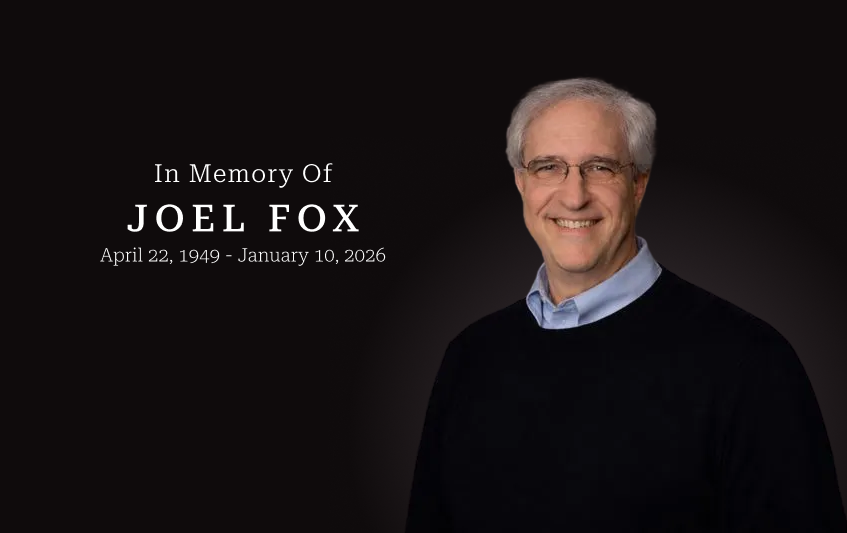
If political differences are destined to leave us divided and friendless, how do you explain the life of Joel Fox?

Fox died on January 10 after more than a decade of living with cancer. He was California’s most prominent taxpayer advocate since Howard Jarvis, for whom he worked, and whose anti-tax organization he led from 1986 to 1998. Fox, a Republican, advanced conservative ideas on TV and op-ed pages. He advised the campaigns of Gov. Arnold Schwarzenegger, Mayor Richard Riordan, and U.S. Sen. John McCain.

That profile, in our polarized times, might make you think Fox was one of those political ideologues who are driving the country apart. But the opposite is true.

Fox, more than any person in California politics, built deep relationships with people across the political spectrum. And he did not do this through consensus or compromise. Instead, Fox built friendships on disagreement itself—a warm, open, and curious style of disagreement.

Read More »

The Golden States War on Itself (Part 1 of 2)

Cross-posted on NewGeography.com

California has long been a destination for those seeking a better place to live. For most of its history, the state enacted sensible policies that created one of the wealthiest and most innovative economies in human history. California realized the American dream but better, fostering a huge middle class that, for the most part, owned their homes, sent their kids to public schools, and found meaningful work connected to the state’s amazingly diverse, innovative economy.

Recently, though, the dream has been evaporating. Between 2003 and 2007, California state and local government spending grew 31 percent, even as the state’s population grew just 5 percent. The overall tax burden as a percentage of state income, once middling among the states, has risen to the sixth-highest in the nation, says the Tax Foundation. Since 1990, according to an analysis by California Lutheran University, the state’s share of overall U.S. employment has dropped a remarkable 10 percent.

When the state economy has done well, it has usually been the result of asset inflation-first during the dot-com bubble of the late 1990s, and then during the housing boom, which was responsible for nearly half of all jobs created earlier in this decade.

Read More »

The Coming Impacts of Social Media on Modern Direct Democracy

The Coming Impacts of Social Media on Modern Direct Democracy

Last week our company, ActivateDirect.com, was proud to sponsor the "Technology Symposium on the Rise of Digital Direct Democracy" at the 2010 Global Forum on Modern Direct Democracy held at U.C. Hastings in San Francisco. As part of the Tech Symposium, I served on a really exciting panel of political technology experts from around the world discussing the impacts of the Internet, and particularly social media, on direct democracy.

The key question posed to the panel was: "What impact will social media have on direct democracy in the next three years and beyond?"

Read More »

Judging Jerry’s Judges

Part One of Two

Are Jerry Brown’s judges a legitimate issue in this governor’s race?  Some argue that no one remembers them; they were tossed of the Supreme Court 24 years ago; it is all ancient history.  But Brown is running for re-election to the office he held for two terms.  His record then is rightly an issue now, especially his record on judges.

Brown appointed seven Supreme Court justices between 1977 and 1982, and for most of his term his appointees formed a majority on the court.  His most controversial appointee was Chief Justice Rose Bird, appointed in 1977 and removed from the court by the voters in 1986.  Bird came to symbolize "Jerry’s Judges," and for good reason; she epitomized the Jerry Brown court: highly ideological, contemptuous of legal precedent, and openly partisan.

Right from the start Bird proved herself a terrible choice.  Immediately upon taking office she picked fights with the court’s professional staff.  This may not seem like much, but the Chief Justice is also chief administrator, and is responsible for assuring fair and impartial administration of the law.  Bird ignored this.  She forced out the court’s top lawyer, Donald Barnett, who had served four chief justices, even refusing to attend his retirement dinner.  "She treated the staff of her predecessor as if they were agents of a foreign country," one former law clerk wrote.

Read More »

Meg’s Sister Souljah Moments

Tom McClintock, the talk show hosts John and Ken, and Meg Whitman’s critics on the right may not realize it, but they are doing her a huge favor with their blasts at her candidacy.

They are providing Whitman with a series of Sister Souljah moments.

Remember Sister Souljah? She was the hip-hop artist who infamously said after the LA riots: "If black people kill black people every day, why not have a week and kill white people?" She was part of the Rev. Jesse Jackson’s Rainbow Coalition. Then presidential candidate Bill Clinton showed his independence from Jackson and the Democratic left by criticizing Souljah. Clinton was condemned by Jackson and others for doing so – which helped serve Clinton’s goals.

Read More »

Struck Speechless by Bell

Outrageous. Unbelievable. Cries of rage and astonishment were heard throughout California and on network news when the Los Angeles Times revealed the salary of Bell city manager Robert Rizzo a few weeks ago.

This weekend the Times continued its focus on the Bell scandal with a new report that Rizzo’s compensation package topped $1.5 million when all benefits were calculated.

This news is so beyond the pale. From screaming indignation, the reaction changes to stunned silence. I am struck speechless.

Read More »

Court Decision Casts More Doubt on Prop 25

Opponents of Proposition 25 have attacked the assertion by proponents that the initiative would only require a majority vote to pass the budget, while tax increases would still require a two-thirds vote. (Full disclosure: I am on the committee opposed to Prop 25 and signed one of the ballot arguments.)

The Attorney General’s title and summary of the measure gave comfort to proponents, declaring the initiative "retains the two-thirds vote requirement for taxes." However, when that phrase was challenged in Superior Court yesterday, Judge Patrick Marlette ordered it removed.

Opponents of the phrase argued that it was false and misleading and the judge agreed. The judge ruled that the title and summary would make voters believe that they would have to vote Yes on Prop 25 to protect the two-thirds vote.

Read More »

Lessons for Campaigns from Pepsi and Google

This November’s election looks like another record setting cycle, perhaps being the most expensive midterm election in U.S. history.  According to the Center for Responsive Politics, campaign spending has already surpassed $1 billion for U.S. Senate and House campaigns nationwide, with forecasts that it will top out somewhere around a whopping $3.7 billion for those races alone.

Of course, California is leading the way in reaching new heights at the state level. With more records set in the June primary, highlighting the fact that the California elections are keeping pace with these broader national trends.  It seems that the name of the game continues to be how much money can be raised and spent, with little regard to how effectively these funds are be used.  

If recent campaigns can be counted on as providing reliable clues for how campaign dollars will be spent, then it is almost a foregone conclusion that the vast majority of spending will once again be on traditional media, especially television.  Major evolutions in technology, however, call into question the wisdom of spending advertising dollars predominately, if not exclusively, on traditional media. And, this year should be the year when those who invest their dollars in political campaigns demand more for their investment.

Read More »

The San Francisco Declaration on Direct Democracy

Greetings from San Francisco and the 2010 Global Forum on Modern Direct Democracy.

We are from all corners of the world and from all walks of life. Among us are scholars, journalists, activists, petitioners, philanthropists, artists, elected officials, election administrators, non-profit managers, lawyers, businesspeople, and farmers. We are members of dozens of political parties – a truly transpartisan group.

We have met for five nights and five days to discuss direct democracy at a forum that was free and open to anyone in the world who wished to attend.

Read More »

Kindle and the Business of Self-Publishing Today

On a busy New York street a young man stops an older passer-by.  "How do you get to Carnegie Hall?"

The older man puts a hand on his shoulder.  "Practice, my boy.  Practice."

Old joke; just as true today.

More titles are available than ever before, thanks to affordable self-publishing, and print on demand ("POD"), among other technologies.  This is a great blessing for both those who read and those who write: there are no longer just a handful of gatekeepers at the entrance to bestseller Heaven.  That doesn’t mean, though, that You Can Become a Rich and Famous Novelist without Really Trying.

Read More »