

Featured Post

A Fox, A Hound, and a Friendship

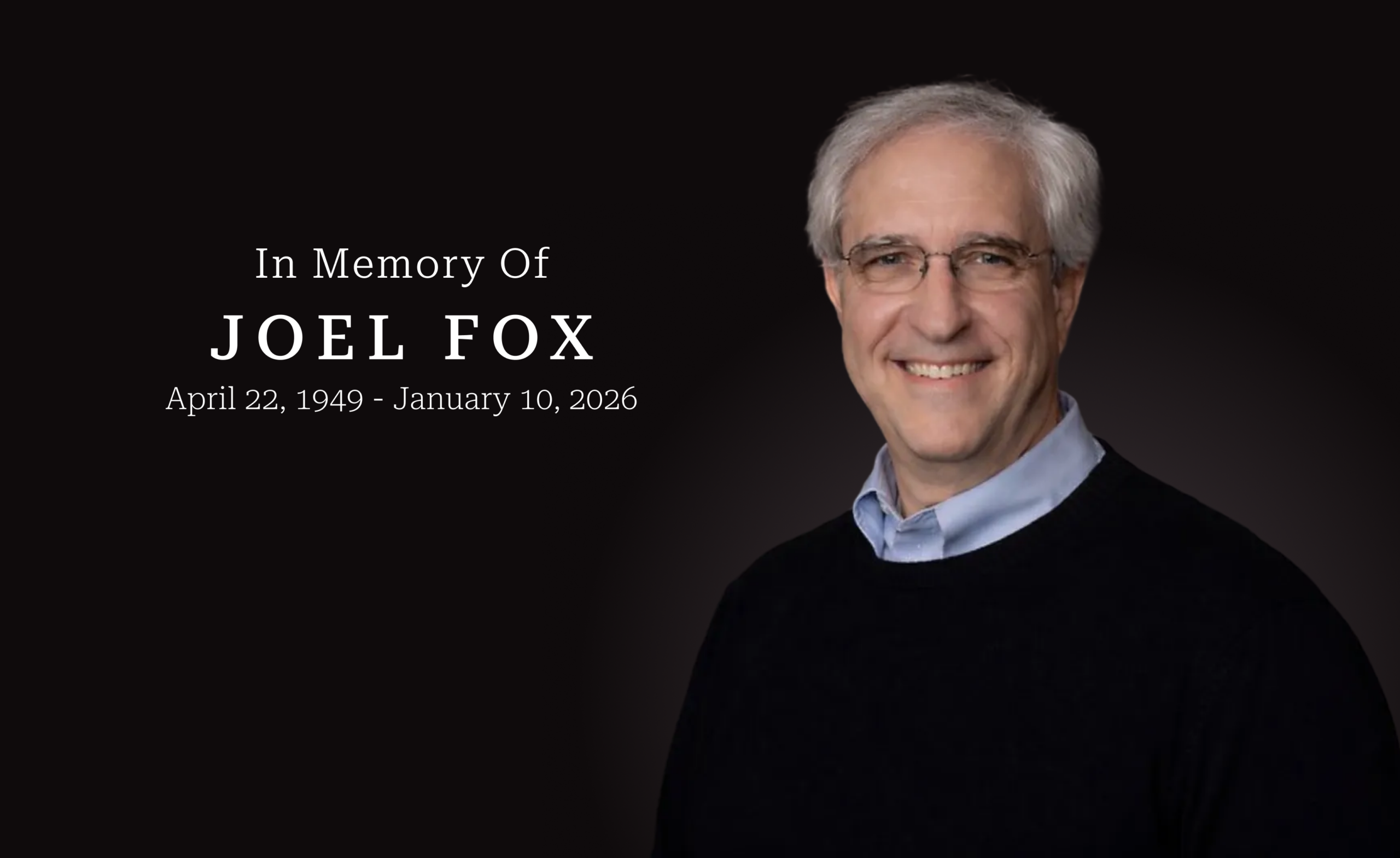
If political differences are destined to leave us divided and friendless, how do you explain the life of Joel Fox?

Fox died on January 10 after more than a decade of living with cancer. He was California’s most prominent taxpayer advocate since Howard Jarvis, for whom he worked, and whose anti-tax organization he led from 1986 to 1998. Fox, a Republican, advanced conservative ideas on TV and op-ed pages. He advised the campaigns of Gov. Arnold Schwarzenegger, Mayor Richard Riordan, and U.S. Sen. John McCain.

That profile, in our polarized times, might make you think Fox was one of those political ideologues who are driving the country apart. But the opposite is true.

Fox, more than any person in California politics, built deep relationships with people across the political spectrum. And he did not do this through consensus or compromise. Instead, Fox built friendships on disagreement itself—a warm, open, and curious style of disagreement.

Read More »

Main Street Menace of the Week: SB 933 (Oropeza) – Putting Small Business Between the Rock and the Hard Place

While the legislature is in session, the National Federation of Independent Business/California will be profiling anti-small business bills and the adverse effect they would have on California’s job creators.  This is the second column of the 2010 series.

That spot between the rock and the hard place is a bad place to be.

In fact, it’s a very tight fit.

And the California Legislature is about to make it a bit tighter.

THE ROCK

When you visit your local bookstore, restaurant or dry cleaner, you may have noticed the kindly-worded sign letting you know that the business charges a small fee for you to use a debit card. Well, the debit card surcharge imposed by the mom-and-pop store is not there to squeeze you for a little more profit; a small business charges this fee to cover the ever-increasing cost imposed by the big electronic payment networks such as VISA, Mastercard and Interlink, and those mandatory fees may be 2.5 percent of the purchase price or higher.

Read More »

For Want of A Nail

For want of a nail the shoe was lost,
for want of a shoe the horse was lost;
and for want of a horse the rider was lost;
being overtaken and slain by the enemy,
all for want of care about a horse-shoe nail.

-Benjamin Franklin
The Way to Wealth (1758)

A volcano in Iceland with an absolutely unpronounceable name erupts and air travel in, about, and through Northern Europe is thrown into total, unmitigated chaos. The ash and smoke from the erupting Eyjafjallajokull volcano could, if sucked into modern commercial jet engines, shut them all down, leaving winged, painted steel and aluminum tubes and hundreds huddled inside in cramped seats at the cruel mercy of gravity.  In London, more than a thousand miles away, thousands of flights were grounded with perhaps hundreds of thousands of passengers stranded for days that must have seemed endless for one trying to just get home.  Strangely, it was all about the direction the wind blew. 

Read More »

Blowing Up Boxes With a Purpose: the New Green Economy

When Governor Arnold Schwarzenegger first sought the Horseshoe in 2003, he famously announced his intention "blow up the boxes" in  Sacramento. That goal appealed to a voting public tired of unbalanced budgets, confusing mazes of bureaucracy in Sacramento, and a seemingly endless number of state agencies with unintelligible acronyms for names and equally confusing mandates and authorities.  Yet when it came time to actually trigger the explosions, the fuses apparently wouldn’t light.

The Governor called his state reorganization plan the "California Performance Review." Its stated mission was to "…restructure, reorganize and reform state government to make it more responsive to the needs of its citizens and business community."  However, in the five years since its launch, any performance review of the California Performance Review would not be favorable.  

Of the 88 Boards and Commissions targeted for elimination, most remain today.  Of the Boards and Commissions that were eliminated, the bureaucracies that supported them were left behind to do their work with less public scrutiny.

Read More »

A Fresh Start for Term Limits and California

Yesterday, the Los Angeles Area Chamber of Commerce, in concert with the Los Angeles County Federation of Labor/AFL-CIO turned in more than one million signatures for a term limit reform ballot measure. In order to qualify for the November 2010 ballot, 694,354 valid signatures are required. This initiative, if certified by county registrars this June and approved by voters this coming November, would fundamentally change the tone and temperament in Sacramento.

The term limit reform initiative we filed is simple and straightforward. Beginning in 2012, it reduces the time a politician can spend in the State Legislature from 14 to 12 years. Time can be served entirely in the Assembly, the Senate or a combination of the two. After 12-years of public service, a lawmaker is termed out of state Legislative office permanently. No exceptions! Equally important, this term limit change does not benefit any current or former lawmakers or anyone on the ballot this fall.

Voters passed the current 14-year term limit law in 1990 and it fundamentally changed Sacramento. The unintended consequence has been an electoral merry-go-round in which legislators are focused on winning the next office instead of developing the expertise and independence needed to tackle the State’s complex issues. An objective look at the political climate and lack of results in Sacramento shows that the current system is broken and not working.

Read More »

Rush to Implement ObamaCare Could Weaken California’s Fiscal Health

California faces a 12.6% unemployment rate, and a $20 billion budget deficit. Assembly Democrats seem to believe that the solution to these problems is to rush to implement ObamaCare.

Assembly Speaker John A. Pérez introduced a bill this week to conform parts of state law to ObamaCare and set up a massive new state health care bureaucracy. Given that even the federal government is still figuring out exactly how they are going to implement this sweeping new law, there is no need for California to push a bill prematurely through the Legislature right now.

ObamaCare is facing Constitutional challenges and the threat of repeal at the moment, not to mention a tide of negative public opinion. However, if we are to ultimately implement this enormous new government-run healthcare scheme at some point in the future, we need to make sure that we are doing it the right way. The Governor’s Administration, the Legislature, stakeholders and the experts should convene a working group on all of the steps that California would need to take to most effectively implement this extremely complex new law, not just hurry to pass a piecemeal approach.

Read More »

Politicians’ Ongoing Quest to Avoid Accountability

In their ongoing quest to avoid accountability, many California politicians have thrown their support behind a measure that will gut the 2008 Proposition 11 redistricting reforms which took the job of drawing legislative districts out of the control of legislators and gave it to an independent Citizens Redistricting Commission. And if they have their way, their measure will derail a November congressional redistricting reform ballot measure, the Voters FIRST Act for Congress that transfers the drawing of congressional districts to the citizens’ commission and away from self-serving, career politicians, as well. Although these politicians try to frame their effort as being in the interest of voters, one only need take a look at the history of this issue to understand their true motives: self-interest.

During the 2001 redistricting, California congressional representatives from both parties cut deals to protect the seats of incumbents. In the process, several members of Congress gave $20,000 to a consultant to help ensure their seats were safe. They got what they paid for; only one congressional seat has changed parties in the last decade. That wiz of a redistricting consultant, Michael Berman, also happens to be the brother of Rep. Howard Berman, whose seat was spared from what many agree should have been a challenge from a Latino candidate – considering the changing demographics of his district.

Read More »

Risky business – going it alone with AB 32

The effort to regulate greenhouse gas emissions in California has evolved from grand statements of global leadership to the nitty-gritty chores of program design, regulation writing, and selection of economic winners and losers.

In 2006 the authors of AB 32 could confidently write, in the bill’s findings and declarations, “(A)ction taken by California to reduce emissions of greenhouse gases will have far-reaching effects by encouraging other states, the federal government, and other countries to act.”

But it hasn’t quite worked out that way, and California now faces a crossroads: should the state implement far-reaching, costly regulations to reduce GHGs ahead of other efforts by neighboring states, Canadian provinces, and the national government? Four years ago it seemed the world – or at least America – was moving inevitably toward a unified regulatory scheme for carbon emissions, and just needed a nudge from California. Today, even after the election of a President and Congress who declaim the urgent need for these policies, California is still alone in its legislative commitment to action.

A just-released study emphasizes the risk to California from going it alone.

Read More »

California leads “Redistricting In America”

California’s new Citizens Redistricting Commission
represents the only redistricting system in the nation that entirely separates
redistricting from legislative influence. California’s unique status is
detailed in "Redistricting in America," a new report I co-authored
with Ian Johnson and David Meyer for the Rose Institute of State and Local
Government at Claremont McKenna College. The report details the congressional
and legislative redistricting processes in all fifty states.

The problem of gerrymandering is not a new one. In fact, it
predates the infamous 1812 partisan redistricting overseen by Massachusetts
Governor Elbridge Gerry that gave the practice its name. Our research uncovered
the story of then-Virginia Governor Patrick Henry’s 1788 congressional
districting plan that unsuccessfully attempted to deny James Madison a seat in
Congress. More recently, Californians will recall the 1981 plan that linked
Vallejo to a San Francisco congressional district using nothing but the waters
of the San Francisco Bay (the voters rejected that plan in a 1982 referendum).

Read More »

The Real Story Behind the Attempt to Kill Redistricting Reform

Sacramento Bee columnist Dan Morain let the cat out of the bag last Sunday.  In his Bee column, he discussed the sudden passion of billionaire entertainment mogul Haim Saban for getting rid of the Citizens Redistricting Commission that is supposed to draw new legislative district lines in 2011.   The Commission was established by Proposition 11, passed in 2008, but a number of congressional Democrats are pushing a ballot measure for this November to repeal the commission and return line drawing to the legislature.

This dubious measure, fronted by UCLA law professor Dan Lowenstein, comes at a time when approval for the legislature is hovering at about 10 percent.  So it seems unlikely the people will vote to restore to indolent incumbents the right to draw their own district lines.  But that’s not really what’s at stake here; this is about a reach for raw political power, and thanks to the $2 million contribution from Saban, the power grab initiative will make the fall ballot.

Why would Saban, who actually supported Proposition 11 in 2008, want to kill it in 2010?  Morain provides the answer: “Saban makes no secret of his passion and it is not reapportionment.  ‘I’m a one issue guy and my issue is Israel,’ Saban told the New York Times in 2004.

Read More »