

Featured Post

A Fox, A Hound, and a Friendship

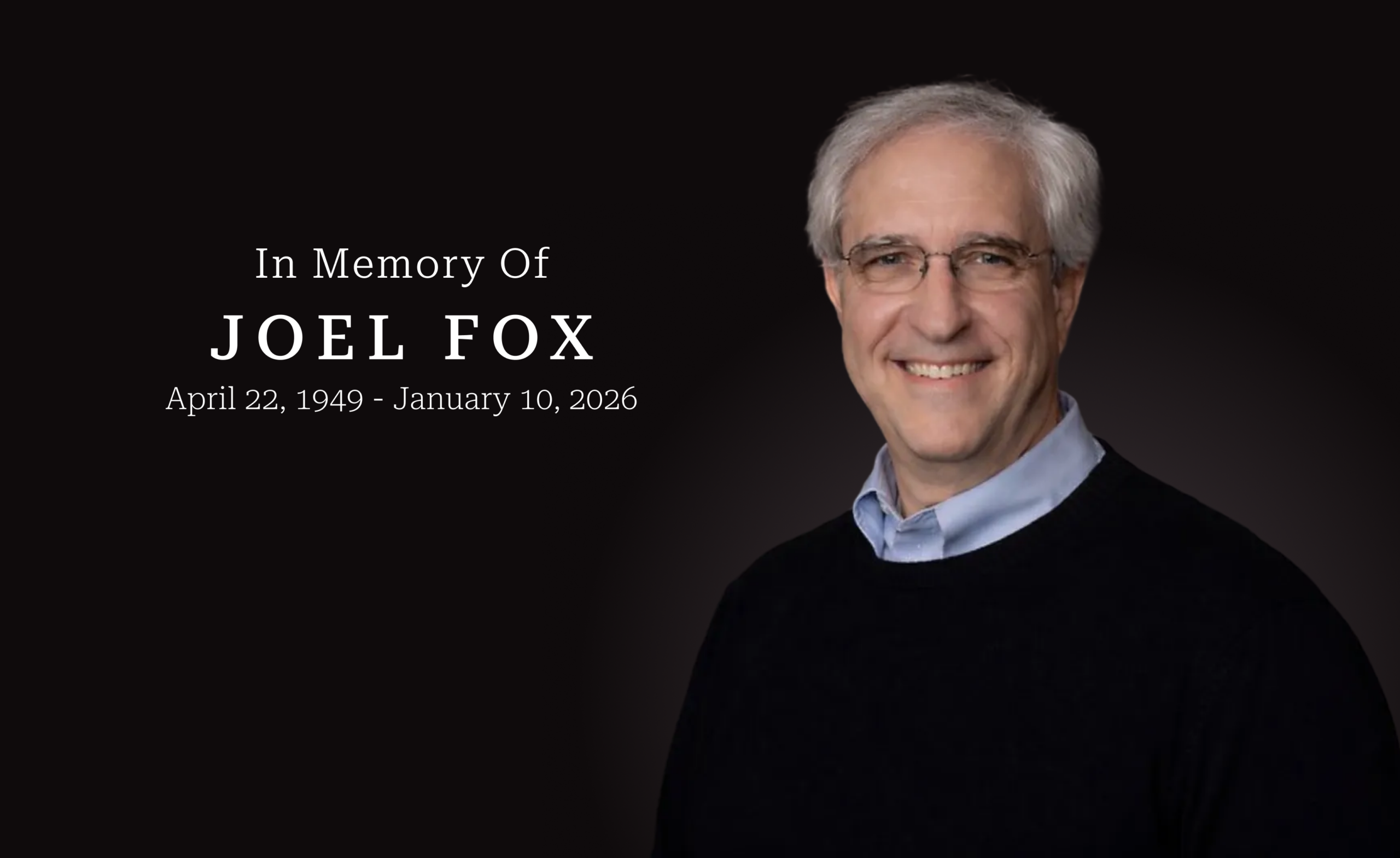
If political differences are destined to leave us divided and friendless, how do you explain the life of Joel Fox?

Fox died on January 10 after more than a decade of living with cancer. He was California’s most prominent taxpayer advocate since Howard Jarvis, for whom he worked, and whose anti-tax organization he led from 1986 to 1998. Fox, a Republican, advanced conservative ideas on TV and op-ed pages. He advised the campaigns of Gov. Arnold Schwarzenegger, Mayor Richard Riordan, and U.S. Sen. John McCain.

That profile, in our polarized times, might make you think Fox was one of those political ideologues who are driving the country apart. But the opposite is true.

Fox, more than any person in California politics, built deep relationships with people across the political spectrum. And he did not do this through consensus or compromise. Instead, Fox built friendships on disagreement itself—a warm, open, and curious style of disagreement.

Read More »

An Attempt to Stymie Pension Reform

One major battle to reform the public pension system is being played out over an assembly bill that would restrict the power of local governments to declare bankruptcy. Assembly Bill 155 by Tony Mendoza, D-Artesia, came out of the Senate Local Government Committee this week after Senate Pro Tem Darrell Steinberg dumped an opponent of the bill from the committee allowing the union backed bill to move along its way.

The bill is a power play by the public employee unions to stymie the use of bankruptcy as a device to reconsider public employee contracts. The bill surfaced after the City of Vallejo declared bankruptcy and used the bankruptcy laws to reconfigure pension provisions for new city employees and demand higher contributions in the retirement fund from current employees.

In an environment in which city and state officials are looking for ways to maneuver past fiscal crises, public employee pensions and benefits have become a hot issue. Suggestions on revamping pensions and benefits have popped up from the governor’s office to non-profit foundations. Much attention has been focused on Steven Malanga’s essay in the City Journal laying California’s deficit problem at the feet of public employee unions.

Read More »

Why Brown Should Drop the Debate Demand

If you read the newspapers or the state’s political bloggers, you might think that Jerry Brown’s demand for a debate with the two GOP gubernatorial contenders was a strategic masterstroke.

The verdict was nearly unanimous. The LA Times and Contra Costa Times gave Brown’s demand, made during a high-profile speech last weekend to the California Democratic Party convention, favorable coverage. Carla Marinucci of the San Francisco Chronicle gave Brown an award for “Best headline-grab,” arguing that the once and perhaps future governor “tossed off a savvy political punch and dominated the news cycle, while delighting his base.” And the journalistic wise men at Calbuzz scored it “a shrewd tactical win-win” for Brown.

This was an honest-to-goodness consensus: Brown had fired up Democrats at the convention, won the news cycle, and helped buck up underdog Steve Poizner, who could do more damage to Brown’s likely general election opponent, Meg Whitman. Brown himself seems to agree. His campaign has spent the week reviving the demand, and trying to make an issue of Meg Whitman’s quick refusal to accept the challenge.
Just for fun, let’s lob a contrarian grenade into the journalist-Brown love nest.

Brown’s debate demand is a significant mistake, in two ways.

Read More »

Truck rule based on flawed data, ARB staff admits

A computer model that the Air Resources Board used to justify historic restrictions on diesel emissions from off-road construction equipment may have attributed twice as much pollution to those heavy trucks as they actually produce, according to interviews with ARB staff.

That error, coupled with the effects of the recession on the construction industry, means that the excavators, backhoes and graders that operate in California are producing only a fraction of the pollutants that the board believed was the case when it adopted the regulations in 2007.

The industry has been pushing the air board to repeal or at least suspend implementation of the rule, which requires contractors to get rid of old, heavily polluting engines and retrofit others with filters to capture the diesel particulate matter before it reaches the ambient air.

From the beginning, construction contractors have contended that the rule was misguided, would force some contractors out of business and had costs that exceeded its benefits.

Read More »

Happy Earth Day

Today is the 40th anniversary of Earth Day. In 1970 the public’s primary environmental concerns (although that word was hardly common usage) were pollution from smokestacks and tailpipes, oil spills, and misuse of pesticides. Forty years later, the public would be astonished at how much cleaner are industrial and automobile emissions, how rare are reports of oil spills, and not only the prevalence of organic produce and meat, but how safely pesticides are applied and how quickly they disperse from our foods.

But maybe most surprising to Californians in 1970 would be that the leading environmental issue of 2010 is … CO2 emissions. Credit lots of things, but not least is the amazing progress we have made elsewhere: reducing air and water pollution, toxic waste in the ground, and land and habitat acquisition – all while accommodating enormous population and economic growth.

Read More »

When $2000 Is Cheaper Than $200

The Assembly recently passed legislation that, over a six year period, would raise the current $200 fee for filing ballot initiatives at the attorney general’s office up to $2000.

The legislation addresses two real and related problems, but in a way that reinforces the worst features of the state’s initiative process.

Those two problems? The first is administrative cost. The current $200 fee doesn’t begin to cover the administrative time and effort necessary to review such measures and give them an official title and summary. Effectively, the low fee is a state subsidy to initiative sponsors. Establishing a higher fee is an attempt to cover more of the administrative costs.

The second is the proliferation of ballot initiatives. More than 100 initiatives were filed with the AG’s office last year, but only a handful of those have qualified for the ballot. What’s driving all that filing? For one thing, the low fee represents a very cheap way for a Californian to get attention for an idea however wacky (Consider the initiative filed on Christmas music last year). The other is that initiative sponsors, because of strict California rules that make it nearly impossible to amend measures once they have been filed, are filing multiple versions of the same measure to cover their bases.

Read More »

California’s Prosperity: Suffering and In Need of Repair

The state’s ongoing budget crisis will soon hit full steam
as legislative negotiations intensify. If they are to craft effective
solutions, legislators must understand the nature of our ailing economy.

The headline unemployment
rate
for March was 12.6 percent, which ranks California third-highest in
the nation, behind only Michigan and Nevada. The average length of unemployment
in 2009 was the fifth-highest in the country at 26.5 weeks. The state coffers
are running dry and the bond market is worried about the state’s ability to pay
its bills as witnessed by repeated downgrades to California’s bond ratings.

Too many politicos in Sacramento assume the state’s problems
are part of the larger national recession and/or that California is plagued by
a regional problem affecting other southwest and Pacific states. Both arguments
are incorrect.

Pre-recession data shows California’s economy struggled
compared to the nation as a whole, as well as to our own potential. A 2009 study
examining the most recent five years of economic performance prior to the recession
across a wide range of economic variables ranked California 38th out of the 50
states. Clearly, our economic problems pre-date the recession, are not entirely
cyclical in nature, and remain worse than those of neighboring states during
the same period.

Read More »

Ron Kaye’s State of the City: The Sun Will Always Shine

(L.A. Mayor Antonio Villaraigosa gave his State of the City Speech this week. Ron Kaye satirizes the speech on www.ronkayela.com)

My Fellow Angelenos:

Let me tell you about my Grampa Hymen who worked as a tailor in sweatshops so my mother could get a high school education and I could grow up to be a spoiled brat with a degree from a great university.

I’ve lived my whole life believing everyone deserves the same opportunities to enjoy decent wines from BevMo during the 5 cents for the second bottle sales and to dine occasionally at Pocket Pita and Fab Dogs whether or not they are actually willing to go to school, get jobs and obey the laws.

In recent years, I have done everything humanly possible to hire more city workers and raise taxes, fees and rates to balance the city budget but it has become obvious that Goldman Sachs and those other Wall Street thieves have brought our nation and our city to its financial knees despite my best efforts.

Read More »

Legislature: Heal Thyself

With an approval rating of nine percent, the California Legislature is more unpopular than Richard Nixon during the depths of the Watergate scandal. Yet there is no scandal in Sacramento prompting such low numbers – rather it is a function of an ongoing political malaise that has settled upon the Capitol.

The institution’s dysfunction is well documented and acknowledged by all – including by the members of the Legislature itself. Frustration is found throughout the Capitol – yet this frustration is outweighed by the ongoing failure to implement any type of minor, but important, committee process changes that potentially could make both Legislative houses more deliberative, encourage more debate, and increase the focus on addressing some of the fundamental problems facing the state.

In years past, the Legislature successfully grappled with complex issues and problems – it was an institution that fostered opportunities for California residents. The work of the Legislature in crafting legislation involved a mixture of politics and policy. It was part art, science and process. It wasn’t always pretty, but the State was able to create the basic foundations for our society to function and flourish.

Read More »

Strategy in Gov Race Could Assist Campbell in Senate Race

President Barack Obama’s visit to Los Angeles yesterday in support of Senator Barbara Boxer’s re-election bid is another sign that Boxer is in trouble – or that Obama has learned a lesson not to take an election for granted. His last minute attempt to rescue Martha Coakley in the Massachusetts senate race to replace Ted Kennedy was too little, too late.

Will California be a replay of the Massachusetts election?

California politics has come to resemble Massachusetts politics over the years. The two states are not exactly mirror images of one another, granted; yet the similarities are noticeable. Both states have overwhelming Democratic legislatures and solid Democratic voter majorities. Both find themselves with growing independent voting blocks that often determine elections. California Republicans, as a whole, tend to be more conservative that Massachusetts Republicans.

However, let’s also note that the Proposition 13 tax revolt, which spread across the country, was almost immediately adopted in Massachusetts. The Bay State version, Proposition 2 ½, also limited property taxes. Like Proposition 13, despite constant attacks, the public in the blue state of Massachusetts holds the property tax limitation favorably even after three decades.

Read More »