

Featured Post

A Fox, A Hound, and a Friendship

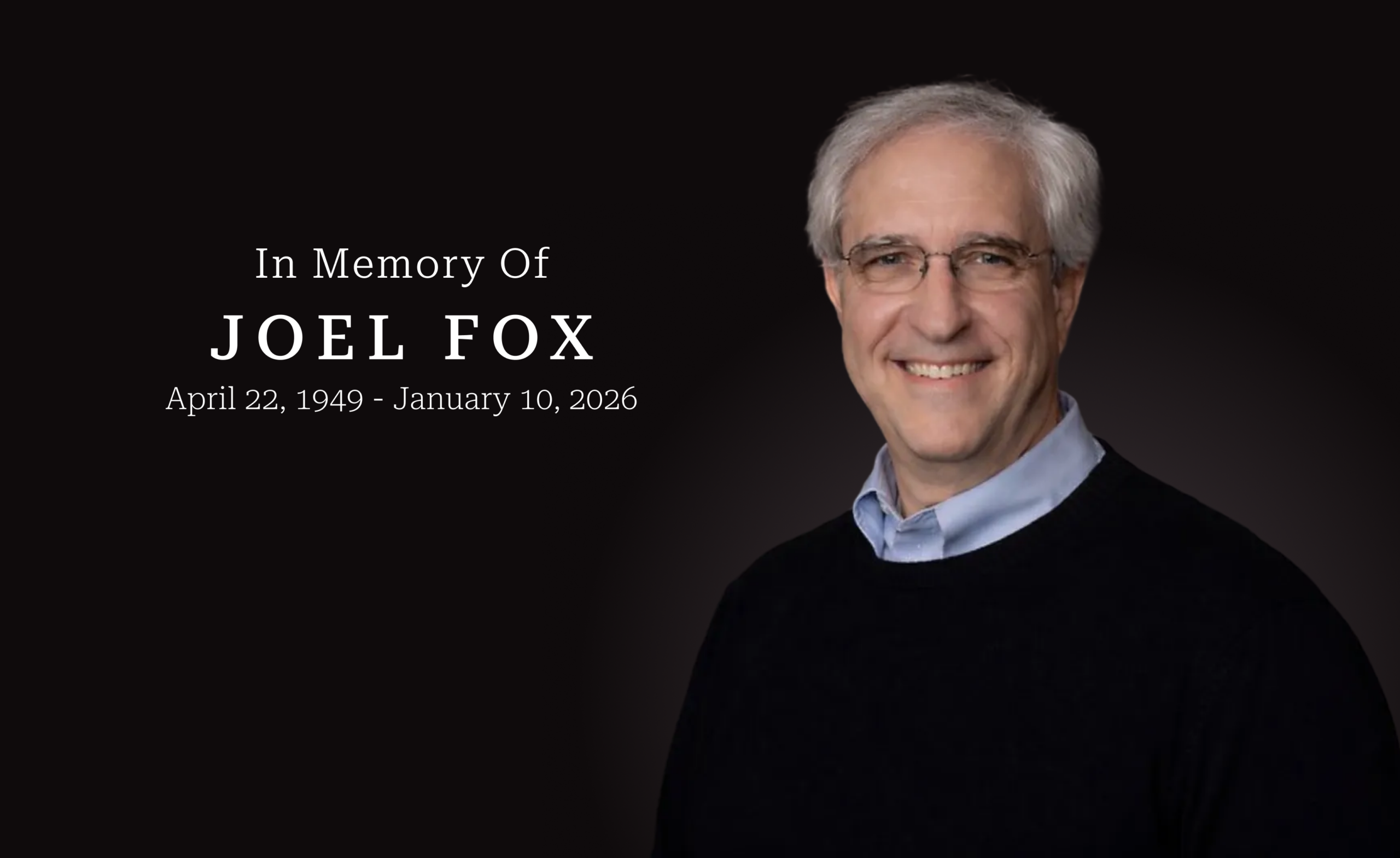
If political differences are destined to leave us divided and friendless, how do you explain the life of Joel Fox?

Fox died on January 10 after more than a decade of living with cancer. He was California’s most prominent taxpayer advocate since Howard Jarvis, for whom he worked, and whose anti-tax organization he led from 1986 to 1998. Fox, a Republican, advanced conservative ideas on TV and op-ed pages. He advised the campaigns of Gov. Arnold Schwarzenegger, Mayor Richard Riordan, and U.S. Sen. John McCain.

That profile, in our polarized times, might make you think Fox was one of those political ideologues who are driving the country apart. But the opposite is true.

Fox, more than any person in California politics, built deep relationships with people across the political spectrum. And he did not do this through consensus or compromise. Instead, Fox built friendships on disagreement itself—a warm, open, and curious style of disagreement.

Read More »

One Employment Sector That is Growing in California

One of the most significant but least-recognized parts of California employment is the workforce in California’s skilled nursing facilities. There are around 1300 licensed skilled nursing facilities in the state, employing more than 130,000 workers at the end of 2009. This skilled nursing facility workforce is one of the few sectors in California that has been growing in recent years and is projected for continued employment growth.

Nobody knows more about this workforce and how it has developed since the 1970s than Ken Merchant. For several years, Ken was the director of education and training for the California Association of Health Facilities (CAHF) , the main association representing long term care employers. Since 2005, Ken has been working with local Workforce Investment Boards, employers and unions to train new Certified Nurse Assistants (CNAs) and assist incumbent CNAs to higher-paying positions in the industry. Recently, I was able to sit down in Sacramento with Ken and get his thoughts on the present skilled nursing facility workforce, the growth in number of employees and wages, and the opportunities for career mobility within the industry.

Read More »

Whitman has Overwhelming Lead over Poizner in new Statewide Poll

Former eBay CEO Meg Whitman has a commanding lead over Insurance Commissioner Steve Poizner in the race for the Republican Gubernatorial nomination according to a new poll conducted by M4 Strategies and released by the Small Business Action Committee today.

Republican voters, indicating a preference, supported Whitman over Poizner 60% to 12%.

In separate questions testing the candidates’ favorable and unfavorable ratings, Whitman scored a favorable to unfavorable advantage of 53% to 9%. Poizner’s scored 20% favorable, 9% unfavorable.

Poizner’s absence from the airwaves seems to be taking a toll on his campaign. Nearly 50% of the poll’s respondents said they have not heard of the Insurance Commissioner. Only 22% had not heard of Whitman.

Poizner intends to become more well known through a blitz of radio and TV ads he plans to launch soon. Referring to his campaign kitty, Poizner told the Associated Press: "We’re going to spend it all" … "I mean, it’s not like I’m trying to keep my resources for the general (election) or something. We’re going to spend what it takes."

Read More »

Dunn and Done: Squirrel!

Have you seen Disney’s animated movie, UP? It’s a great story about Carl, a 78 year old retired salesman who ties balloons to his house and flies away with Russell, an 8 year old stowaway, and his faithful dog, Dug. It’s a wonderful story, very touching.

The dog, however, really caught my attention. Dug has a special collar that allows him to speak! He helps Carl and Russell on his adventures throughout the film, but does have one tragic flaw: Dug gets distracted by squirrels. He may be on the most important mission of his life, but when he sees a squirrel out of the corner of his eye, his attention is completely diverted and—“SQUIRREL!”—he says. Off he runs to chase it.

Doesn’t this remind you of some of our state leaders? The mission is jobs creation–private sector jobs creation–pure and simple. It’s about getting folks employed who can pay taxes, and businesses that hire, grow and pay taxes, that will help Sacramento get its house in order. How can a state leader help create jobs? In one of three ways: reduce taxes and fees; reduce the glut of regulations business faces every day; and reduce opportunities for frivolous lawsuits.

Read More »

‘Cool Cars’ embodies Sacramento’s ‘bumbling, well-intentioned, paternalistic nonsense’

The California Air Resources Board (CARB) is looking to finalize its “Cool Cars” policy this Thursday (** this was corrected from original blog that said “Wednesday”**), once again putting regulation before reason and imposing knee jerk command-and-control mandates with no regard for economic impacts and, in this case, public safety.

Here’s the nickel tour:

CARB’s  “Cool Cars” policy was set up in 2009 as an AB 32 early action item to reduce the state’s greenhouse gas emissions by reflecting heat away from cars, thereby requiring less air conditioning and less fuel.

Read More »

Regional Cooperation Key to California Recovery

The future of the Golden State and the well-being of every Californian depend on a thriving economy. A robust state economy means well-paying jobs for workers, increased business development opportunities and sufficient funding for essential state services.

With an increasing number of businesses closing their doors and more workers losing their jobs, we have seen a precipitous decline in state revenues that has led to steep and abrupt cuts in everything from health care and education to prisons and infrastructure investment. With some of the highest state business and personal income tax rates, an overly burdensome regulatory environment, and a structurally dysfunctional state government that has recently been in budgetary gridlock, California is increasingly viewed as a place with an environment that is hostile to businesses, and as a consequence, the jobs – and tax revenue – businesses create.

With the state’s unemployment rate exceeding 12 percent, sustainable economic growth and job creation clearly must be our policymakers’ highest priorities. California has enormous economic capacity and potential, but we need to develop consensus around a statewide strategic plan for economic development that gets all the state’s economic regions to come together, invest and behave according to a shared vision for growing the economic pie and creating jobs.

Read More »

Silly Season in Governor’s Race

Do you know that Meg Whitman wore a designer coat to a NASCAR race?

Or that Pete Wilson is a hypocrite on the question of tax returns?

What about the fact that Jerry Brown has worked to stymie job growth in California for 40 years?

Welcome to the political silly season, where no charge is too dumb to throw out and hope somebody writes about it.

This isn’t about the big stuff, the stories and charges that show up in the multi-million-dollar TV and radio ad campaigns. That stuff is vetted, focus-grouped and studied to a fare-thee-well before it ever makes the airwaves. Those are the hoped-for game-changers, stuff that can turn a campaign around, so they’re not taken lightly.

Read More »

Fuel Price Reality Leads to Low Carbon Fuel Standard

In his February 8, 2010 column, Joel Fox wrote, “we have to be realistic about pricing [of alternative fuels].” Is that because we’re so realistic about the pricing of incumbent fuels?

On the day Joel wrote that column, oil was trading at $71 per barrel. One year before, it was at $40. Today it hovers near $80, more than 10% higher than it was when he wrote that column less than three weeks ago.

On America’s so-called “Independence Day” in 2008, oil hit $145, double what it was just the year before and nearly five times its price five years before. In response, our country showed its utter lack of independence by moving deeper into a recession. Indeed, forgotten in the current discussion about the current recession is the role played by volatile oil prices. With that commodity providing 97% of our transportation fuels and the state dependent on transportation for economic growth, a doubling in price in twelve months and a near quintupling in five years was catastrophic.

Read More »

California Ranks Poorly in State-by-State Fiscal Report Card

Economist Arthur Laffer annually compares the economic and revenue conditions in the states, noting, “With people, products and capital free to move from state to state, state governments are competitors.” Given California’s budget difficulties it is no surprise that the Golden State ranks poorly in the new Laffer analysis.

California is not the only state that is suffering in these difficult times. The Laffer account reports that state revenues declined 8.09% from Fiscal Year (FY) 2008 to FY 2009. Heading into this Fiscal Year, 48 states faced budget shortfalls. While many states implemented measures to close their funding gaps, 41 states have come up short.

Laffer and co-author Mark A. Wise argue that, “The evidence suggests that pro-growth policies result in higher after-tax returns, increased economic activity, and an eventual improvement in overall state fiscal health; anti-growth policies result in the opposite effects.” Comparing the nine states that have no broad base income tax with the nine states that have the highest marginal income tax rate (California ranks fourth at 10.55%), the report says that, generally, states that tax less on “productive activities such as working and investing, experience higher growth rates (GSP) than states which tax more.”

Read More »

Voters Undecided On Solutions To California’s Economic Problems

Datamar Surveys questioned California voters on a variety of issues regarding the state of the economy and political sentiments. The findings reveal an embittered and weary electorate and one that is looking for alternative ways to reform the state’s political process and turn the economy around.

The economy is the number one issue of concern for the voters topping budget cuts by a two to one margin. Responsibility for California’s problems was evenly divided by the 794 respondents to the poll. 30.9% gave responsibility to Democrats in the Legislature; 25.7% to Special Interests; 18.4% to Governor Schwarzenegger; and 17% to Republican in the Legislature.

Trust in the state government is at 10.5%.

Read More »