

Featured Post

A Fox, A Hound, and a Friendship

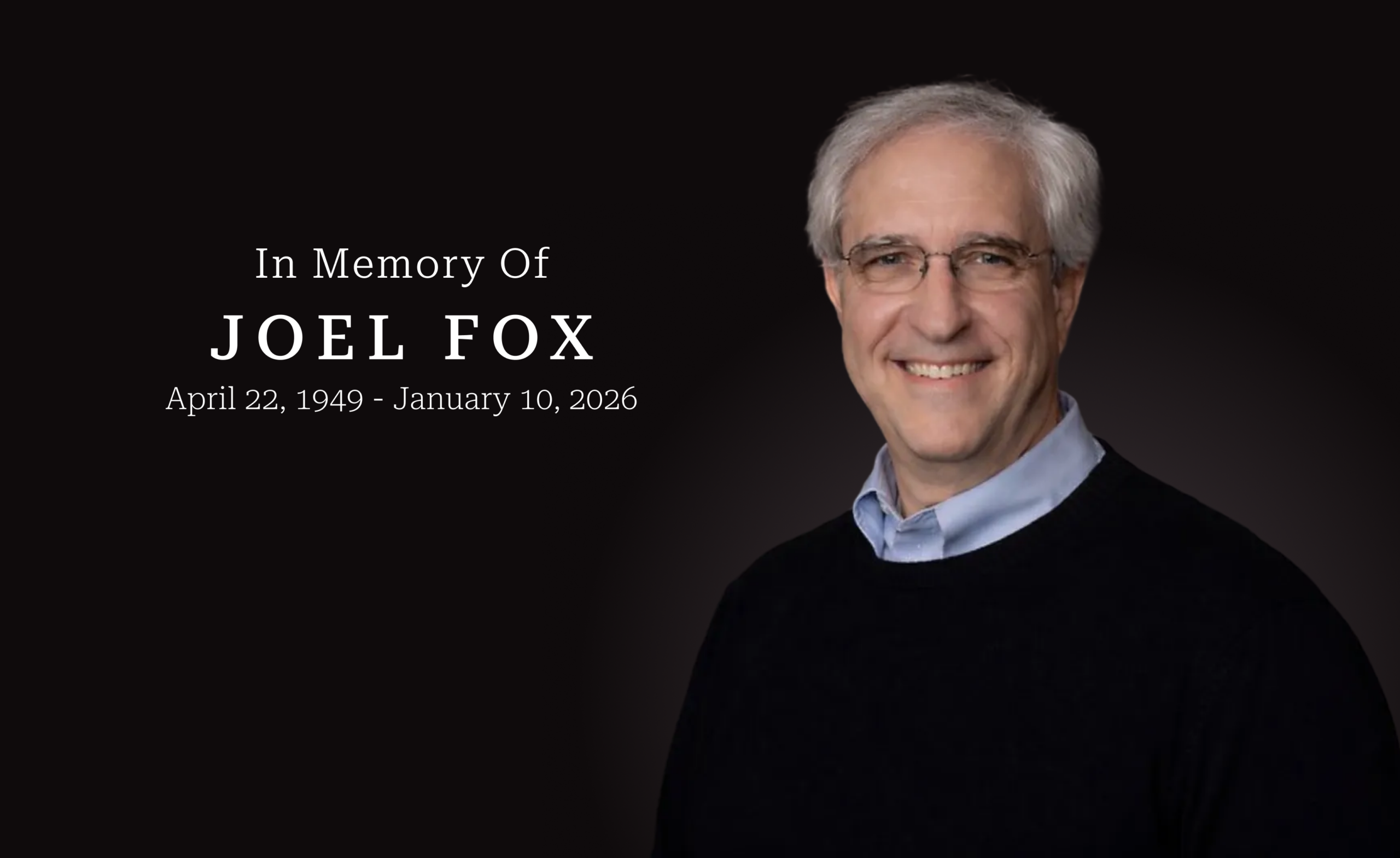
If political differences are destined to leave us divided and friendless, how do you explain the life of Joel Fox?

Fox died on January 10 after more than a decade of living with cancer. He was California’s most prominent taxpayer advocate since Howard Jarvis, for whom he worked, and whose anti-tax organization he led from 1986 to 1998. Fox, a Republican, advanced conservative ideas on TV and op-ed pages. He advised the campaigns of Gov. Arnold Schwarzenegger, Mayor Richard Riordan, and U.S. Sen. John McCain.

That profile, in our polarized times, might make you think Fox was one of those political ideologues who are driving the country apart. But the opposite is true.

Fox, more than any person in California politics, built deep relationships with people across the political spectrum. And he did not do this through consensus or compromise. Instead, Fox built friendships on disagreement itself—a warm, open, and curious style of disagreement.

Read More »

Paper or Plastic? Choose Wisely, the Green Police are Watching.

Like many of you, I spent the better part of Sunday shuffling between my BBQ, my fridge, and the television, taking in the spectacle of the Super Bowl. And like most who watch, I was looking forward to seeing which ads would make me laugh this year. Hands down, Betty White saying “that’s not what your girl friend said” in the Snickers ad was my favorite as far as funny goes. But it was another ad that really stood out for the message it conveyed.

Audi’s ad for their new A3 TDI clean diesel “green car” was both funny and scary. Funny in that it skewered the stereotype of the fanatical “eco-agency” stormtroopers citing and apprehending offenders of seemingly outlandish environmental laws and regulations. Funny in that they used a clever remix of the Cheap Trick classic song “Dream Police” (and even funnier that my 10-year-old daughter knew the words – thanks Guitar Hero). But then I remembered this, the AB 32 Scoping Plan.

Read More »

Railing Against This Costly Track

When the federal government announced less than two weeks ago that California would get $2.25 billion to help develop a high-speed rail system, it made me wonder if the time has finally come for this good idea.

If built, California’s high-speed train, or HST, would be of great interest to the state’s business and political leaders. After all, you could board a train in Los Angeles, speed along at up to 220 miles an hour, and arrive in San Francisco a little more than two hours later. Spurs would go to other cities, such as Anaheim, San Diego and Sacramento.

Alas, the more I read up on it, the more I felt like I had boarded the blue train that Johnny Cash crooned about. There’s a real funding question and a seriously optimistic view of the ridership.

But let’s start with this basic question: If the HST existed and you were planning a trip from Los Angeles to San Francisco, why would you consider boarding it?

Read More »

Whitman’s Contributors Boost Her Chances

The $39 million in personal money Meg Whitman has poured into her campaign for governor gets the headlines, but the cash that didn’t come from her own checkbook may be even more important in the 2010 campaign.

Take all the personal money out of the various gubernatorial campaigns and Whitman still leads the money race. The $10.4 million the former eBay CEO raised from contributors in 2009 is more than the $8.5 million Democrat Jerry Brown took in last year and far more than the $2.1 million fellow Republican Steve Poizner collected from donors.

You might want to put an asterisk by Brown’s number, since he’s got another $4 million in the bank that he raised before 2009, when he was stockpiling cash for his re-election as attorney general.

To get an idea of how tough it is to raise the type of money Whitman’s taken in, San Francisco Mayor Gavin Newsom had collected $2.3 million in 2009 when he decided to bail out of the Democratic primary because the fund-raising wasn’t there to challenge Brown. And on the GOP side, Tom Campbell shifted his flag to the Senate race when he realized that less than $1 million in contributions wasn’t going to cut it in the Republican race for governor.

Read More »

Jerry, Meg and Confucius: A Quiz

I recently finished reading Meg Whitman’s new book “The Power of Many.” This is on top of my reading last fall of Jerry Brown’s “Dialogues” and seven other books about his first governorship. Why did I do this? Pulling out toenails wasn’t enough fun.

There is much talk about the differences between Whitman and Brown. I found, however, similarities. Each has a tendency to speak in aphorisms that can leave listeners scratching their heads.

This put me in mind of that master of aphorisms, Confucius. So, for your spiritual enlightment, I offer the following quiz—a list of quotes. Each of these little pearls was offered to the world by one of three people: Jerry Brown, Meg Whitman or Confucius.

1. “He who will not economize will have to agonize.”

2. “Inaction may be the biggest form of action.”

3. “I really hate waste.”

Read More »

The CARB Debate Continues

In my piece last week discussing concerns with the Low Carbon Fuel Standard, I did not dismiss alternative fuels. Yet, David Crane’s response to my article seems to indicate that I was promoting the exclusive use of oil for transportation fuel into the distant future. I was focused on the present. I argued that the LCSF standards would add to the cost of fuel prices in the here and now, especially when alternative fuels are not ready to meet demands.

David argued that my position banks on the scenario that oil prices would not go up. Oil prices will undoubtedly rise with more demand, new taxation, and with limits put on exploration. Altering the attitude against exploration and preventing tax increases on oil production would lessen the pressure to increase costs.

However, there is also no question oil prices will be raised immediately if the CARB regulations take effect. Limiting the importation of oil by affixing a “carbon intensity” measure to the fuel transported to the California market has to affect the cost of the fuel.

Read More »

Local Governments’ “New Normal”

Do my eyes deceive me? Did I just read the Los Angeles Times proclaiming not only that the era of big government is over in the City of Angels, but also that non-government organizations – from the business community to civic organizations – must take a stronger role in service delivery and public policy?

Yes, I think I did.

In a startling editorial, entitled “A lean, not mean, City Hall”, the Old Tan Lady concludes, “Even in the best of times, it makes sense to move some city services away from the restrictions of the City Hall payroll and instead tap into the city’s underutilized business and nonprofit resources.” So, where exactly were these calls for department consolidation and civil society empowerment during the “best of times”? I don’t remember, but one is left to wonder whether George Will took over the Times’ editorial board, when it recommends, “A successful Los Angeles will have to turn, increasingly, to that model for providing quality-of-life programs while focusing the budget on core functions such as public safety, street services and sanitation.”

Read More »

Port of Deadwood

The Port of Los Angeles is not only swimming against the tide with regard to depressed cargo volumes and port revenues, it is also about to be penalized by the City of Los Angeles for its inability to balance its budget.

The Port dutifully followed the Mayor’s “Shared Sacrifice” initiative by leaving multiple staff positions unfilled and encouraging early retirement by dozens of employees – all in an effort to reduce costs. In return, the Port is about to become the dumping ground for dozens upon dozens of city employees, adding millions of unanticipated costs because of the LA City Council’s unwillingness to cut back 1,500 positions as part of an effort to reduce the City’s half a billion dollar budget deficit.

All of the Port’s good faith efforts over the past year to reduce its staffing levels and payroll expenses are for naught. The shifting of unwanted and surplus employees by the City to the Port increases the Port’s operating costs at a time when its revenue continues to decline. It penalizes the Port for exercising due diligence in following the Mayor’s policy directives to reduce costs, and it sacrifices the Port’s tideland trust responsibilities to the State because of the lack of political courage by the LA City Council.

Read More »

The Man Responsible for Carly’s Sheep and Steve’s FBI Referral

I have investigated the situation, and I believe I have found the man responsible for Carly Fiorina’s strange sheep ad and Steve Poizner’s bizarre demand for federal law enforcement investigation of his rival Meg Whitman’s attempts to get him to abandon the race.

The man responsible for this madness is, I am sad to report, me.

Well, not just me, but me and people like me. Journalists with short attention spans, who are bored by most of what goes on in the U.S. Senate and gubernatorial races, and have trouble finding editors who want to hear about the relatively routine policy and political debates in both contests. As a result, we rarely write about what’s happening in these races.

That leaves candidates desperate for media attention. And so, quite rationally, they realize that the only way to rouse me from my slumber is to do something a bit bizarre.

Read More »

Republican Voters’ Choice of Nominees Will Set the Stage for Victory

A wave is building in American politics. Whether that wave produces a second Republican Revolution, or a more mild course correction for the nation’s politics, remains to be seen. In any case, victory for the GOP in November hinges on the Republican Party’s success in convincing the American people it is a viable, preferred alternative to the leadership and direction offered by Barack Obama’s Democratic Party.

History is clearly on the side of the GOP. In the last 12 mid-term elections, the party not holding the White House has enjoyed a net gain in Congress and state legislatures in 10 of them. The magnitude of the net gain has historically been in inverse proportion to the President’s approval rating, and President Obama’s is in the tank and likely to remain there. Historically Presidents enjoy little improvement in their public approval during the second year of their term.

How best to maximize the party’s opportunity for victory and build on the party’s recent successes in Virginia, New Jersey, and Massachusetts was a major focus of last week’s meeting of the Republican National Committee in Hawaii.

Read More »