

Featured Post

A Fox, A Hound, and a Friendship

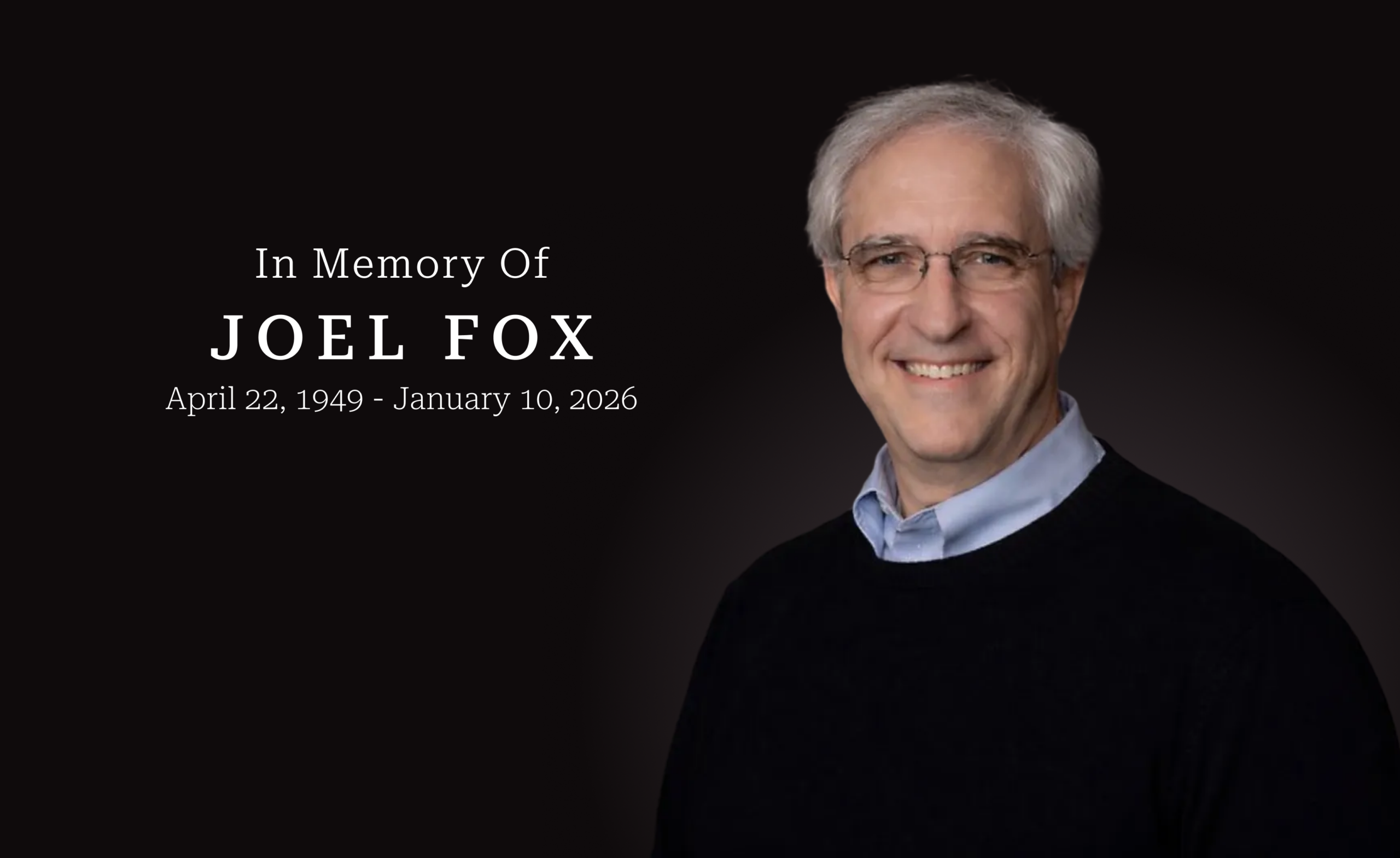
If political differences are destined to leave us divided and friendless, how do you explain the life of Joel Fox?

Fox died on January 10 after more than a decade of living with cancer. He was California’s most prominent taxpayer advocate since Howard Jarvis, for whom he worked, and whose anti-tax organization he led from 1986 to 1998. Fox, a Republican, advanced conservative ideas on TV and op-ed pages. He advised the campaigns of Gov. Arnold Schwarzenegger, Mayor Richard Riordan, and U.S. Sen. John McCain.

That profile, in our polarized times, might make you think Fox was one of those political ideologues who are driving the country apart. But the opposite is true.

Fox, more than any person in California politics, built deep relationships with people across the political spectrum. And he did not do this through consensus or compromise. Instead, Fox built friendships on disagreement itself—a warm, open, and curious style of disagreement.

Read More »

Term Limits Founder Blasts ‘Queen Meg’ On Initiatives

Paul Jacob, in his Townhall column, goes after California Republican gubernatorial frontrunner Meg Whitman for multiple statements criticizing the initiative process. "Obviously, Whitman very much wants Californians to cast a vote for her this year," Jacob writes. "And then, apparently, she wants to stop Californians from casting a vote on much of anything else in the future.

Jacob’s name carries great weight in part because he was the founder and organizer of the successful term limits movement in the U.S. Today he runs the Citizens in Charge Foundation, which is organizing nationwide to protect and expand direct democracy. (Full disclosure: Jacob and Citizens in Charge are leading participants in the 2010 Global Forum on Modern Direct Democracy, a conference on initiative and referendum that I’m organizing this summer in San Francisco.)

Jacob himself has suffered for his commitment to direct democracy, having been indicted in Oklahoma three years ago for using out-of-state signature gatherers. Using such signatures isn’t a crime — and shouldn’t be. Eventually, all charges against Jacob and his co-defendants — the Oklahoma Three — were dismissed.

Read More »

Is Carly Fiorina the Real Deal for California?

This past Friday, I had the opportunity to meet with 40 innovators and entrepreneurs at a 1.5 hour innovators roundtable with Carly Fiorina, candidate for the United States Senate from California.

Among the discussion points was the President’s stimulus package, the need to educate our children for 21st century jobs, access to capital for small businesses, health care and immigration policy. Carly was engaging, energetic, charming, articulate, and appears to be a real problem solver.

Among attendees was Saman Dias, who was named head of “Entrepreneurs and Small Business” for Carly. Saman is a dynamic young entrepreneur and friend who cares deeply about the state of our economy in California. I’ve never known her to be involved in politics before – but Carly inspired her – and now she’s engaging.

Read More »

Using iPhones to sign initiative petitions

Can you use your iPhone to sign an initiative petition? A northern California-based company, Verafirma, has developed an application that makes it possible. But is it legal? Is it secure? These are the questions that remain unanswered. Election officials will need to start figuring it out soon, though, because the proponents of an initiative seeking to legalize marijuana use in California have submitted their petitions for verification, and the batch includes a smattering of signatures submitted not on piece of paper, but on thumb drives that display the initiative petition along with an image of a voter’s signature captured when the voter wrote that signature on his or her iPhone screen using the Verafirma app.

And it’s not just an image of a signature – it’s something called "signature dynamic" that captures the pressure, speed and other special characteristics of the signature-in-the-making. This data can also be used for verification purposes – however, I do not believe the 58 county registrar offices have that technology in-house at this time. The counties that received these thumb drives have to either accept or reject the signatures on them. If they are rejected then there will likely be a legal battle and/or a legislative effort to change the law.

Read More »

It’s Time to take a Fresh Look at AB32

Let’s take the time to get it right. As we seek solutions to global climate change, California can’t afford to make the wrong decisions. That’s why I’m calling for a fresh look at AB 32, the state’s far-reaching law designed to regulate greenhouse gas emissions.

Our residents are struggling through the worst recession in decades. More than two million Californians cannot find a job. While I believe many of AB 32’s goals are important, we must carefully review which rules to pursue and make sure those rules spur innovation and help California regain its economic footing.

We cannot afford more rules and regulations that result in unintended consequences and cost us jobs and productivity.

The Wall Street Journal’s editorial page recently agreed that AB 32 needs more careful study: “The impact will make the state even less attractive to start or expand a business.”

Read More »

Fiorina, DeVore Spin PPIC Senate Poll

The new PPIC poll numbers on the Senate race have Carly Fiorina and Chuck DeVore in full spin mode as they try to explain why it’s a really good thing to be running second and third in a three-person race.

The survey by the Public Policy Institute of California found Tom Campbell, the newcomer to the Senate race, with 27 percent support, followed by Fiorina at 16 percent and DeVore at 8 percent.

Democratic Sen. Barbara Boxer beat each of the Republicans in head-to-head match-ups, leading by four percentage points against Campbell and eight over both Fiorina and DeVore.

But those numbers mean very different things to the different candidates.

Read More »

High Speed Travesty

Obama’s decision to give California’s controversial High Speed Rail project a $2.25 billion boost could also be called Cash For Clunkers, Part Deux. Although barely a fraction of the $80 billion ultimately needed for completion it is unfortunate that the High Speed Rail Authority was given a wad of walking around money to fool around with. High on the list will be hiring more P.R. hacks to push the viability of the project in light of the embarrassingly inept "business plan" recently released and roundly criticized from just about every point on the political spectrum.

The truly bad news is that the Authority will undoubtedly use the funds to start digging holes up and down the state to get as much momentum as possible so that reversal of the decision to even build the project will be very difficult. Californians ought to be asking themselves a simple question. How many transportation projects that are actually needed could we have funded for $2.25 billion?

Read More »

Liberal California Senators Pass Universal Health Care Legislation

Senate Bill 810 has unfortunately passed the Senate yesterday on a 22-14 party-line vote.

The measure would create a single-payer, government-controlled health care plan for Californians. The same government that has mismanaged your money now wants to control your health care.

Does anybody believe a state that bleeds red year-after-year could possibly control the costs of health care?

As I said on the Senate floor: This plan is to the Left and radical of ObamaCare. It’s this type of big-government idea that caused an earthquake of an election in Massachusetts in recent weeks. Yet, my liberal colleagues in Sacramento don’t seem to care about the needs or concerns of the people or the state of our economy.

Read More »

Redistricting: Americans Flee High Tax States

Here at the summer meeting of the Republican National Committee, the 2010 election is seen with special importance because the governors and legislators elected this year will draw the congressional district lines that will form the playing field for control of the House of Representatives over the next decade.

While the 2010 census is not yet complete, population projections are now available, and with them we can see which states will gain, and lose representation.

The losers: high tax states in the Northeast and Midwest will lose representation in the House. Massachusetts, New York, Pennsylvania, New Jersey, Minnesota, Michigan and Illinois will each lose a seat. Ohio will lose two.

The winners: states in the South and the West (other than California), mainly low tax states, will gain seats. Southern states South Carolina, Georgia, and Florida will each gain a seat. In the West, Nevada, Arizona, Utah and Washington State will each gain a seat. Texas, a low tax state that has aggressively lured companies and people from around the nation, will gain an astonishing four seats in the House.

Read More »

Look who’s behind the tree

By now you’ve heard that Oregon voters decided last Tuesday to tax themselves. If by “themselves” you mean “someone else.”

The election (actually, a referendum of legislated tax increases) decided the fate of two measures that were carefully targeted to maximize the ratio of voters to unpopular taxpayers. Measure 66 added two new brackets (10.8% on income over $125,000 for individuals/$250,000 for families; 11% on income over $250,000 for individuals/$500,000 for families) to Oregon’s basically flat income tax rate of 9%. Taxpayers in those brackets account for about two percent of Oregon’s income taxpayers, but is estimated to bring in $470 million a year. Measure 67 adds a new corporate tax rate (7.9%, from 6.6%), applying to business incomes over $250,000 and estimated to raise more than $250 million annually. The new top rates for the income and corporate taxes will partially sunset after four years.

Voters approved the Measure 66 by an eight point margin and Measure 67 by a six point margin. Typically, Oregon voters have rejected income tax increases by referendum, although none has been so carefully targeted as these. Oregon has no sales tax, and its property tax was limited by a vote of the people.

Read More »