Featured Post

A Fox, A Hound, and a Friendship

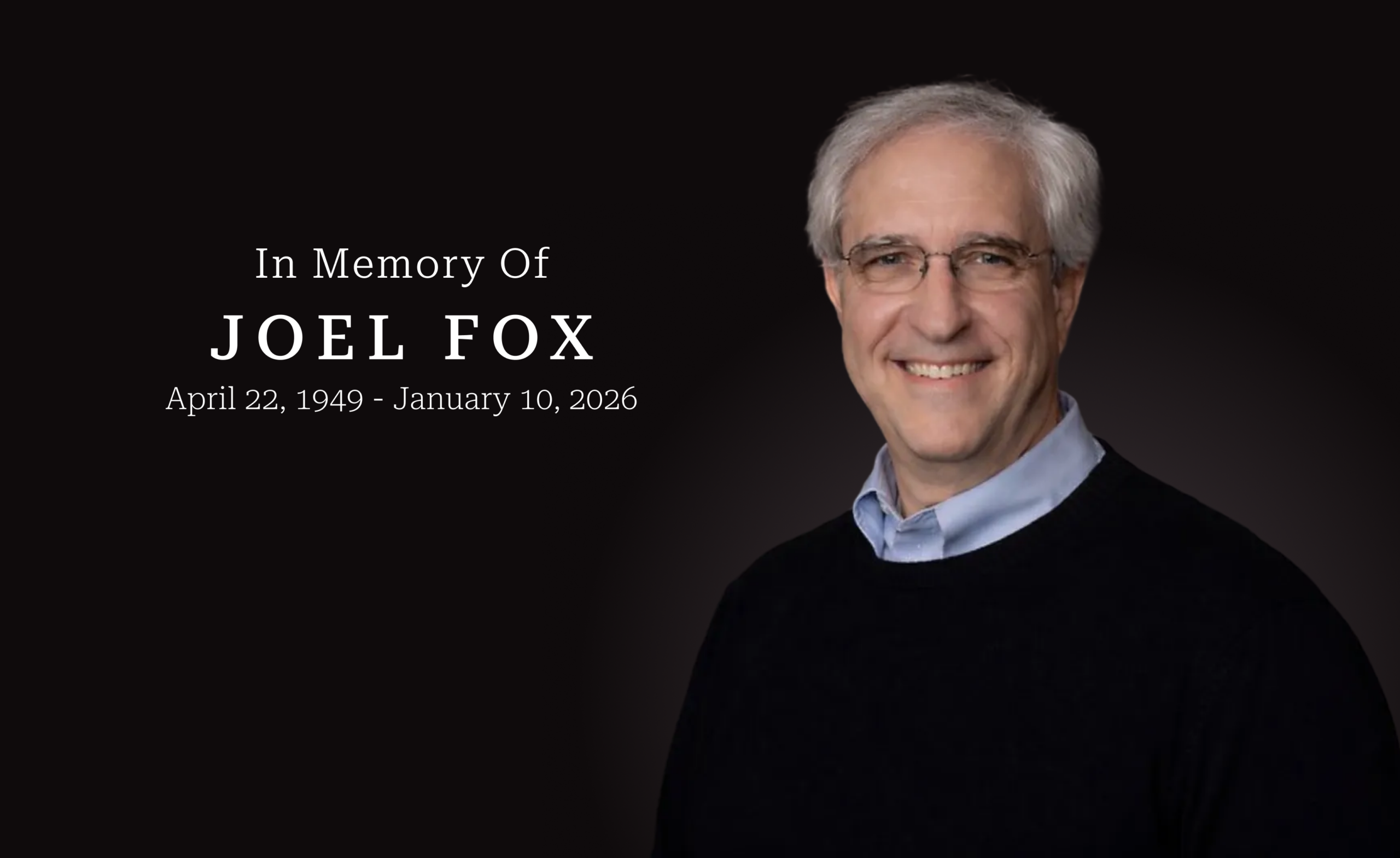
If political differences are destined to leave us divided and friendless, how do you explain the life of Joel Fox?

Fox died on January 10 after more than a decade of living with cancer. He was California’s most prominent taxpayer advocate since Howard Jarvis, for whom he worked, and whose anti-tax organization he led from 1986 to 1998. Fox, a Republican, advanced conservative ideas on TV and op-ed pages. He advised the campaigns of Gov. Arnold Schwarzenegger, Mayor Richard Riordan, and U.S. Sen. John McCain.

That profile, in our polarized times, might make you think Fox was one of those political ideologues who are driving the country apart. But the opposite is true.

Fox, more than any person in California politics, built deep relationships with people across the political spectrum. And he did not do this through consensus or compromise. Instead, Fox built friendships on disagreement itself—a warm, open, and curious style of disagreement.

Read More »

Small Business Gains from Supreme Court Decision

The United States Supreme Court decision which President Obama attacked during his State of the Union speech has changed the political landscape in this country.

Amidst the spin by those who say this will remove the shackles from big business and labor, and those who say this is a victory for free speech, there is one group that is overlooked who gained in this decision – small business.

Here’s what changed and didn’t change as a result of this decision.

Corporate contributions to federal candidates are still illegal. Corporate contributions to political party organizations are still governed by state law.

The Supreme Court decision lifted the ban on businesses being able to spend money directly on the support or defeat of individual candidates by name. These actions have to be ‘independent expenditures” that cannot be coordinated with the campaign, however the Court does not define what the threshold is for “independent” from the campaign.

Read More »

Whitman’s Primary Lead Bad News for Brown

Meg Whitman’s growing lead in the Republican primary for governor is worse news for Jerry Brown than it is for Steve Poizner.

The former eBay CEO has jumped out to a huge 41 percent to 11 percent lead over Poizner, the state insurance commissioner, in a poll released last night by the Public Policy Institute of California.

The survey gives Brown an increasingly narrow 41 percent to 36 percent lead over Whitman in a November match-up, but those numbers aren’t nearly as worrisome to the attorney general as Poizner’s weak showing.

Whitman has spent around $20 million, much of it going for months of radio advertising. She’s already put $39 million of her own money into the campaign and is primed to spend more.

Read More »

Poll Indicates Some Education Funds Should be Spent on Voters

The newly released PPIC poll shows not only do respondents support education funding, but also some of that education money should be spent on voters.
Delving into the poll reveals the decision-making by the voters on education funding is made on false assumptions.

The poll reveals voters are willing by a two-to-one margin to raise taxes for the purpose of maintaining school funding at current levels. At the same time, by 56% to 40% voters said that they did not think taxes should be part of the budget plan. That seeming dichotomy is not as glaring as first supposed when you look at the questions that prompted the responses.

The question, which rejected taxes as part of the budget plan, was related to the governor’s proposals expressed in his State of the State address. In that speech, the governor said he would not cut education. If voters believe from the speech that education is to be maintained, then those same voters who said they would vote a tax increase to maintain education might not feel the need.

Read More »

Impossible Task for Jobs Czar

Austin Beutner is probably doomed in his new high-profile task to make the city of Los Angeles business friendly.

For one thing, he’s got only three years before Antonio Villaraigosa is termed out as mayor and Beutner will likely lose his position. Three years? That’s barely enough time to get paddling in the molasses stream that is Los Angeles city government.

(By the way, why would Villaraigosa wait nearly five years into his mayoralty before he finally appointed someone to be a jobs czar? Does that tell you this new position is truly important for Villaraigosa, or is it just the usual window-dressing political answer to the uncomfortable question about what he plans to do to combat L.A.’s 13 percent unemployment rate?)

Read More »

Putting Northrop in Perspective

On the
first business day of 2010, Los Angeles received its strongest wake-up call yet
that its days as a center of the corporate universe may be coming to a close. That’s
when new CEO Wesley G. Bush announced that Northrop Grumman would move its headquarters
to the Washington, D.C., area to be closer to the Pentagon.

Northrop was
one of the few top companies still headquartered in the city of Los Angeles. In
1985, Los Angeles was the headquarters for 16 Fortune 1000 companies. Today,
just nine call Los Angeles home. The nagging question is why?

In many
ways, the move seems logical:

Read More »

Is The Con Con Petition Being ‘Blacklisted?’

The answer: it’s not clear.

Here’s the scoop.

John Grubb of Repair California, the committee that’s
seeking to qualify ballot initiatives to call a constitutional convention for
the state, recently explained to me his group’s unconventional strategy for
signature gathering.

Instead of doing a conventional signature gathering drive,
with one of the big California firms and paid gatherers, Repair California is
trying to use the signature gathering process to help build an organization.
The effort combines social networking functions on the Internet and a volunteer
signature drive. Repair California is supplementing these efforts with some
paid signature gatherers.

Read More »

Single-Payer Plan Is Politics, Not Policy

If you ever wonder why the Legislature’s popularity with California voters is at 16 percent and falling, you only have to know that state Sen. Mark Leno has reintroduced a plan to bring single-payer health care to the state.

Here’s all anyone needs to know about the chances of passing single-payer health insurance in California this year:

1. A Senate analysis of the bill, SB 810, found that it would cost the state $200 billion the first year.

2. Gov. Arnold Schwarzenegger has vetoed nearly identical measures twice before and promises to do it again.

Read More »

Colleges, prisons and crime

The Governor proposed in his State of the State address a constitutional amendment that would, beginning in 2014-15, limit prison spending to seven percent of the General Fund and guarantee higher education a minimum of ten percent of General Fund spending. The Legislative Analyst recently released a brief criticizing this proposal because it would “unwisely constrain” the ability of the state to set priorities, and is unnecessary because the Legislature can already shift funding among state programs.

The Governor made his proposal because of the disturbing and superficially symmetrical trends over the past twenty-five years: the share of the budget devoted to higher education (University of California and California State University) has declined from about 11 percent to 5.7 percent. Meanwhile, the share devoted to prisons has increased over the same period from about four percent to 9.5 percent.

Read More »

Bob Marr and the Future of State Employment

I miss Bob Marr, and I think about him during the current discussions of state public sector employees.

Bob worked at the state Employment Development Department (EDD) from 1964 until a few months before his death in May 2005. Bob was a state employee for over 40 years.

I met Bob in 1982 when I was heading a community job training agency, the San Francisco Renaissance Center. Bob worked with then-Director Kaye Kiddoo on job training initiatives. Bob and I corresponded on job training issues over the next 16 years, until I became EDD Director in early 1999.

Bob was the opposite of a nine-to-five man. You could find him in the Department at all hours. For many years he worked on a manual typewriter, and only in the late 1990s converted to a computer. Bob knew every job training and job creation program since 1964, and the lessons they could yield for practitioners and policy makers.

Read More »