

Featured Post

A Fox, A Hound, and a Friendship

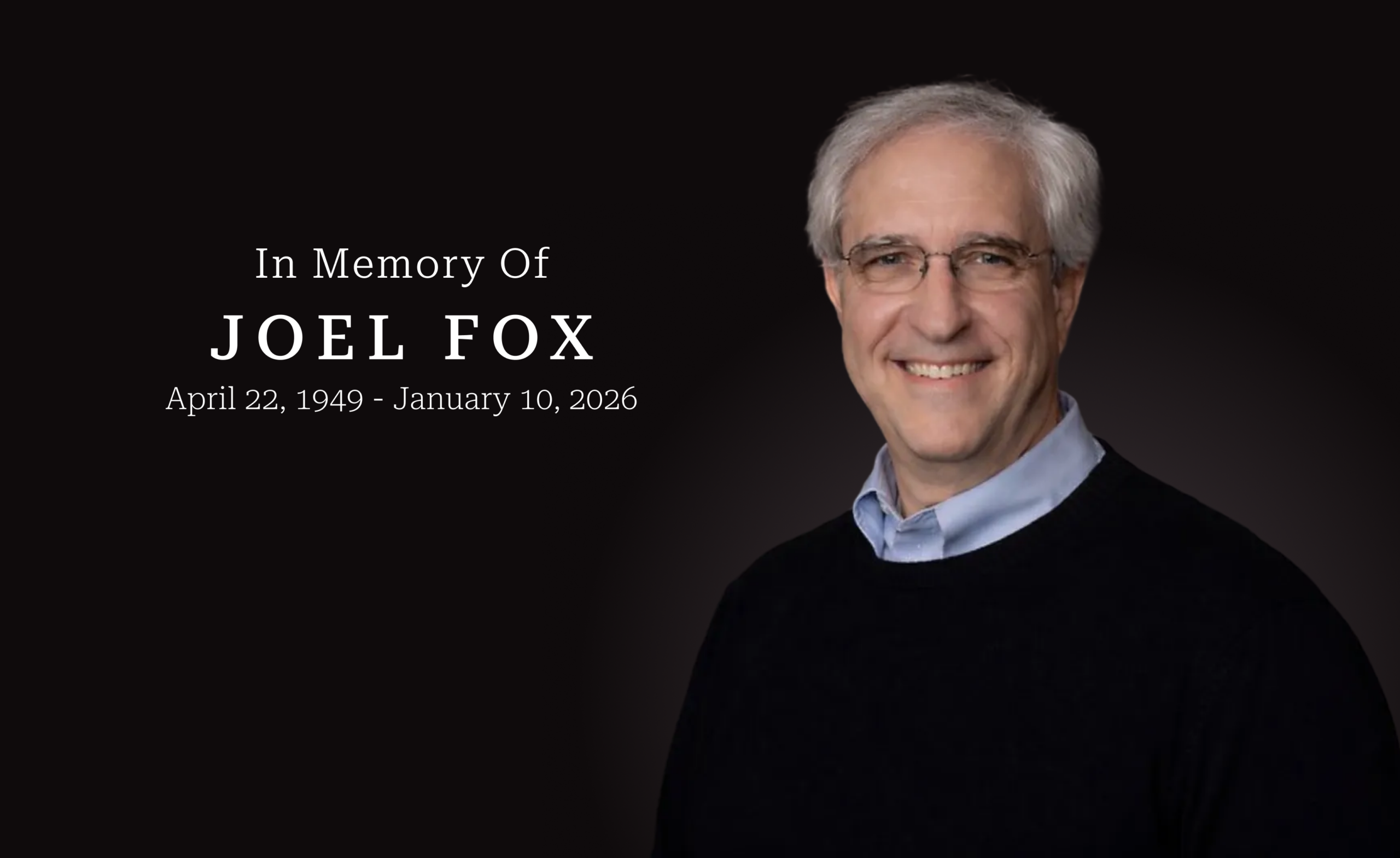
If political differences are destined to leave us divided and friendless, how do you explain the life of Joel Fox?

Fox died on January 10 after more than a decade of living with cancer. He was California’s most prominent taxpayer advocate since Howard Jarvis, for whom he worked, and whose anti-tax organization he led from 1986 to 1998. Fox, a Republican, advanced conservative ideas on TV and op-ed pages. He advised the campaigns of Gov. Arnold Schwarzenegger, Mayor Richard Riordan, and U.S. Sen. John McCain.

That profile, in our polarized times, might make you think Fox was one of those political ideologues who are driving the country apart. But the opposite is true.

Fox, more than any person in California politics, built deep relationships with people across the political spectrum. And he did not do this through consensus or compromise. Instead, Fox built friendships on disagreement itself—a warm, open, and curious style of disagreement.

Read More »

Plan B: Parsky’s plan would keep $24 Billion from Washington Bureaucrats

Last
week, Governor Schwarzenegger set as one of the highest priorities for his last
year in office the elimination of California’s status as a "donor state." That
is, the Governor intends to end the current practice of California getting back
only 78 cents for every dollar it pays in federal taxes.

Without question, Schwarzenegger’s goal is important.
According to the Tax Foundation, between 1981 and 2005 California’s donor
status has led to a cumulative donor deficit of almost $490 billion. But as
Joel Fox and John Wildermuth pointed out in their commentaries last week, getting
the federal government to fork over more money isn’t going to be easy. The
federal government is facing its own budget problems and – as Nancy Pelosi confirmed
recently – isn’t inclined to help Californians solve ours.

What we need is a Plan B.

Read More »

Paycheck Protection Measure is Back

"To compel a man to furnish contributions of money for the propagation of opinions which he disbelieves is sinful and tyrannical."

This sentiment, written over two centuries ago by Thomas Jefferson, is more applicable than ever today in the case of public -sector unions which collect mandatory dues from their membership to engage in liberal, big-spending, highly partisan politics antipathetical to many of their members who foot the bill.

In 2005 we spearheaded Proposition 75, the "Paycheck Protection Initiative," to require written consent of public employee union members before union dues could be taken from their salaries for political purposes. The unions outspent us 10-1 and only narrowly defeated Proposition 75.
In 2010 the outcome can be different — for several reasons:

Read More »

NOT ANOTHER “TAKE THE BS OUT OF THE BCS” RANT!

Remember last year when incoming president Barack Obama said on national TV that he would like to use some of his political capital to push for a college football playoff system?

I don’t see the tea party activists holding him accountable to this promise, but perhaps they should, especially those who live in Boise, ID.

The only thing more complicated than the health care reforms passed by the Senate and the House is the formula used to determine which top two football teams get to play for the Bowl Championship Series game at the end of the season. In this case, the BCS system seems a little more transparent than the health care reform process in Congress, but not by much.

On the topic of health care reform, maybe if we fed the age, weight, and physical condition of every American into the BCS computer, it would spit out a better health care plan?

Read More »

Optimism (and employment) wanes for California’s future

California plunged again last month in high wage manufacturing employment by 2,300 jobs.  The national media continues to single out California, using it as a narrative blueprint for how to overwhelm a once-thriving state economy, and almost dares anyone to bet on California’s recovery.

For these and many other reasons this legislative session could be the most important year of decisions in the state’s 160-year history.  Policymakers are no doubt giving lip service to ground zero — growing jobs and the economy —  but there is little precedent in California for climbing out of such a monumental hole.

Read More »

Governor’s Speech More Hope than Realism

Talk, even when it comes to California’s budget, is cheap. Making good on that talk, however, is a great deal pricier, not to mention a whole lot more politically problematic.

When Gov. Arnold Schwarzenegger gave his final State of the State address Wednesday morning, he had a whole list of things he wants to add to California’s already rickety budget, including a $500 million jobs program and another $200 million or so for homebuyer credits.

Although the governor said that the words were bitter in his mouth, he admitted "we face additional cuts … we know the pain it entails. I mean, what can we say at this point except the truth, that we have no choice?"

Yet Schwarzenegger spent more time talking about what wasn’t going to get cut than suggesting any places where the budget ax would fall. Education funding would be protected, he said, and "we can no longer afford to cut higher education."

Read More »

“Lynch Mob” Controversy

The California Federation of Teachers set off a fuss when complaining about provisions of the Race to the Top education reform signed by Governor Schwarzenegger yesterday. The teachers union used the term "lynch mob provision" in updates to members referring to a proviso in the legislation that allows parents to force changes in school governance by collecting signatures from fifty percent of the student’s parents or guardians.

While civil rights organizations objected to the use of the term as conjuring up violent images that are racially offensive, there is another concern about the comment. That is: the people are considered a mob and cannot be trusted to know what’s good for them.

Read More »

Government reform? How about setting priorities?

State government is broken.  Just about everybody agrees – including an apparently
growing number of Californians.  Poll
after poll shows a large majority of voters believe the state on the "wrong
track" and nearly as many suspect dysfunction in Sacramento is to blame.

So, lawmakers, business leaders, think tanks, local elected
officials and other organized interests are actively advancing some kind of "fix
it" plan – or plans for a plan.  Special committees of the Legislature have been formed, calls
for a constitutional convention are being made and political pundits are
endlessly speculating on a basketful of ideas.

Primary attention is focused on the Legislature and its
myriad "processes" although a strong case can and should be made for closely
examining the excesses, overlap and accountability of state bureaucracies.  (Remember the "boxes" to be blown up a
few years back?) 

Read More »

Yodeling in California

Washington politicians heard Governor Arnold Schwarzenegger yodeling all the way across the country during his State of the State speech yesterday. As a noted advocate for health care reform, his strong appeal to the California congressional delegation to reject the current federal health care plan if the measure is not improved made members of the Washington power elite squirm as quotes gathered by the New York Times reveal.

Schwarzenegger advised the legislature to take risks in seeking major reform this legislative session. He commented that if he had not taken any risks he would still be yodeling in Austria. Instead, he was yodeling loud and clear in California.

Schwarzenegger called out Nebraska U. S. Senator Ben Nelson and his “sweetheart” deal for the Cornhusker state over the health care plan. The governor demanded that California be taken care of as well. The unfairness of treatment between Nebraska and California set the stage for Schwarzenegger’s appeal that California be treated fairly with other states when it comes to receiving money from Washington.

Read More »

A Glimmer of Hope for Legal Reform?

Is there hope?

A year ago, CJAC urged legislators to focus in the area of civil justice on making changes to hold down litigation costs and send a message that California was improving its legal climate and was becoming a more attractive place to do business.

Little or nothing happened on that score.

But this year the Legislature got off to a better start, as far as civil litigation goes. Faced with likely defeat, Assembly Member Marty Block pulled without a vote a bill (AB 989) before the Assembly Insurance Committee that would have let private lawyers become self-deputized vigilantes and go after insurance companies to get damages and – no surprise – attorney’s fees. It would allow lawsuits against insurers by anyone alleging to be harmed – including people who aren’t even policyholders.

Read More »