

Featured Post

A Fox, A Hound, and a Friendship

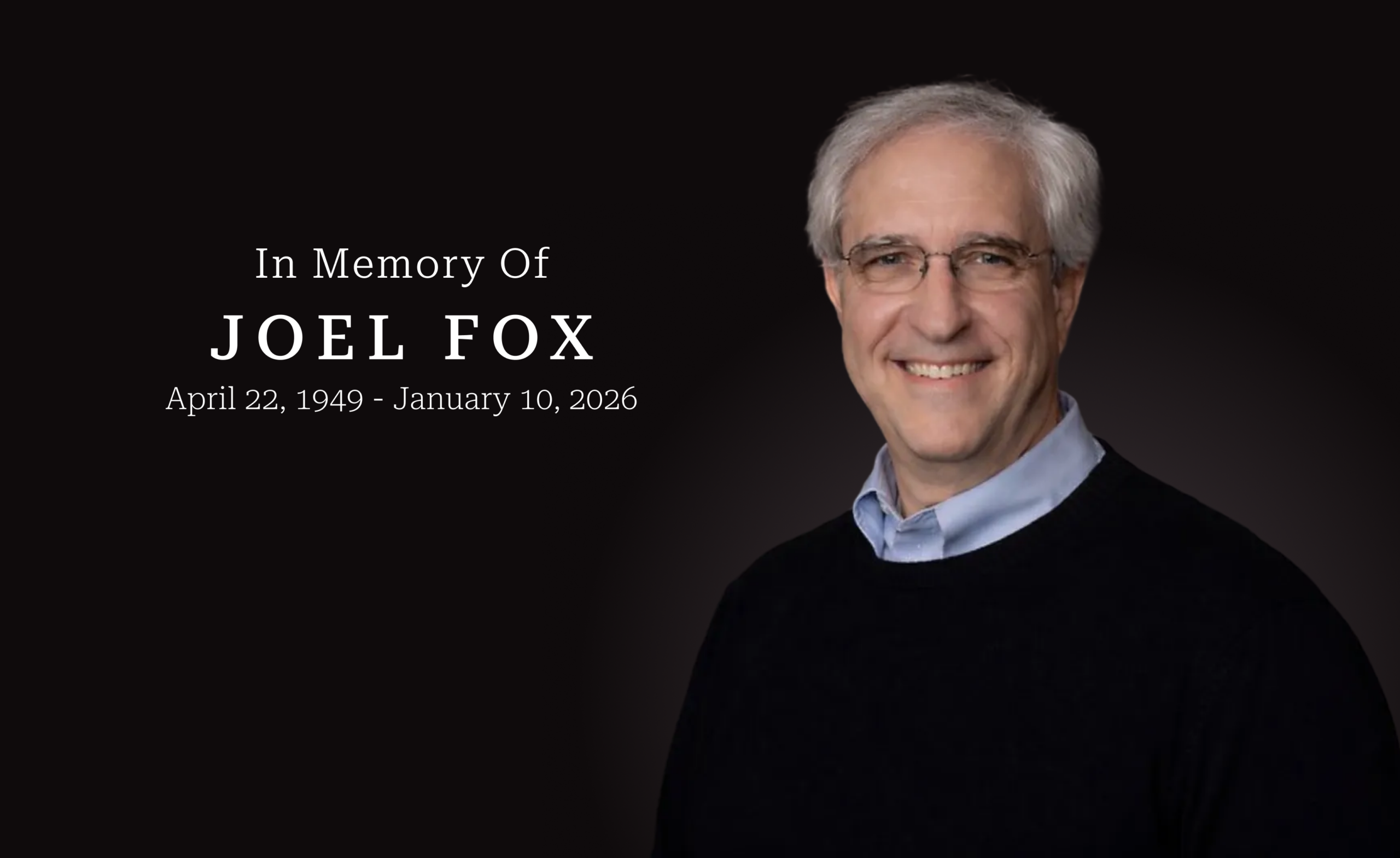
If political differences are destined to leave us divided and friendless, how do you explain the life of Joel Fox?

Fox died on January 10 after more than a decade of living with cancer. He was California’s most prominent taxpayer advocate since Howard Jarvis, for whom he worked, and whose anti-tax organization he led from 1986 to 1998. Fox, a Republican, advanced conservative ideas on TV and op-ed pages. He advised the campaigns of Gov. Arnold Schwarzenegger, Mayor Richard Riordan, and U.S. Sen. John McCain.

That profile, in our polarized times, might make you think Fox was one of those political ideologues who are driving the country apart. But the opposite is true.

Fox, more than any person in California politics, built deep relationships with people across the political spectrum. And he did not do this through consensus or compromise. Instead, Fox built friendships on disagreement itself—a warm, open, and curious style of disagreement.

Read More »

Is Arnold Asking the Feds for Enough Money?

Over the next few months, I have to do something I’m dreading, something I’ve never done before in my life: raise money (for a global conference on direct democracy in San Francisco this coming summer).
My instinct, as a thrifty person (my wife would say cheapskate), is to ask for very small amounts of money for very specific costs. But when I talked to friends who raise money for a living, their advice is just the opposite: I should ask for more than I think I can get. They argue that people won’t take you seriously unless you ask for a ton of money.

Which brings me to Gov. Schwarzenegger. He hasn’t unveiled his budget yet, but recent reports suggest his administration is seeking $8 billion to forestall cuts in important human services programs and perhaps to cover additional costs the state may incur as a result of federal health insurance legislation.
Given the state’s budget troubles and the need for such programs, Schwarzenegger’s request is appropriate. But the question is: is it enough?

The answer here is: No.

Read More »

Limiting a Convention to Two-Thirds of Prop. 13

Few topics related to California’s state government are as sensitive as Proposition 13. Which is why it is so important for Californians to clearly understand what impact a state constitutional convention could have on the landmark initiative. So let’s be clear: The constitutional convention proposal currently under circulation would be legally prohibited from proposing any tax increase whatsoever, including those taxes related to Proposition 13.

The reason is simple. Californians have made up their minds: they are unwilling to increase their property taxes to make up for Sacramento’s shortfall. Limiting the Convention from this issue would allow it to sidestep a poison pill and focus on the critical changes our state needs to end farcical budgeting, a bloated bureaucracy, the over-concentration of power in Sacramento, and a host of other problems.

But how can we be sure that these limits aren’t simply ignored? Can a state constitutional convention be limited? The answer is a resounding yes.

Read More »

The Pig and the Pony Speech

Gov. Schwarzenegger’s state of the state speech was many things – funny, frank and a thorough summing up of California’s major challenges, few of which will be addressed in his last year in office.

But this valedictory may be best remembered for a terrific metaphor at its heart: the Pig and the Pony.

Schwarzenegger, in describing the “menagerie” of people and pets at his home (so many that I wondered if animal control should be spending more time in Brentwood), talked about how his family’s miniature pony and potbellied pig (whose names, I’m told, are Whiskey and Bacon) work together to break into and eat the dog’s food.

Read More »

Donor State Problem Not Easy to Solve

When Gov. Arnold Schwarzenegger makes his angry “donor state” argument, as he has regularly since 2003, it sounds both outrageous and easy to fix:

1. California only gets 78-cents back for every dollar state taxpayers send to Washington.

2. The feds should return the rest of our money. Right now.

As the Fox of this blog pointed out Tuesday, the governor is expected to argue in his State of the State address this morning that it’s past time for Washington to play fair with California. The budget he will unveil Friday is expected to use a chunk of new federal dollars to help balance the state’s books.

Put aside for a minute the California-first, “I got mine, Jack” attitude behind Schwarzenegger’s demand and forget all that “E Pluribus Unum,” “one nation, indivisible” stuff you learned in high school civics.

Read More »

Fortune 500’s Flee California

California has been afflicted by the curse of the runaway
corporation for sometime now. With the announcement on Monday that aerospace
giant, Northrop Grumman Corp., will be moving its headquarters from Los Angeles
to Washington D.C., we lose the last major aerospace firm in the state.

Northrop, California’s 3rd largest Fortune 500
Company, is the most recent departure in a long list of top companies to leave
the state.  As reported in the Los
Angeles Times
, Northrop’s relocation means only 19 Fortune 500’s remain in
California, when in 2006 there were 23. 
Though the company will still be one of the state’s largest private
employers, the loss is a blow to California, the birthplace of the aerospace
industry.

Northrop’s CEO, Wes Bush, says the company is moving its
headquarters to be closer to its biggest client: the U.S. Government.  But the move makes a bigger impact when
we look at other industries that have been fleeing California. Hilton
Hotels Corp
. recently relocated to Fairfax, Virginia, to lower its cost of
doing business. EBay,
the online auction website with deep roots in San Jose, recently announced it
will be creating 450 new jobs at a $334 million complex in Utah, in return for
$30 million in tax breaks from the state. 
And there’s much more….

Read More »

Rebuilding California’s Auto Industry

It seems like a lifetime ago, but in the not-too-distant past, California was a thriving center of auto manufacturing, home to three different GM assembly plants and two Ford factories.

But by 1992, four of these plants had been shuttered. More than 10,000 jobs with good wages and solid benefits evaporated, making it that much tougher for working-class Californians to enjoy a secure middle-class lifestyle. Today the last vestige of traditional, big-name auto manufacturing is about to disappear: The lone remaining GM plant, which had become a GM-Toyota joint venture, will shut down in 2010, taking with it another 4,500 jobs in the Fremont area.

The state’s golden era of manufacturing may be over, but nevertheless, California remains at the vanguard of auto design. Today there is an opportunity to build on that strength. If we move quickly and decisively, we can reclaim a leading role in car-making—one that looks toward the future rather than trying to recreate what we’ve lost in the past. By actively courting not just the design operations but also the building of alternative-fuel and electric vehicles, California can become a hub of green manufacturing.

Read More »

The Truth: California is in a Great Depression

Jack Nicholson had his most memorable statement in a movie, "A Few Good Men":

Kaffee: I want the truth!
Col. Jessep: [shouts] You can’t handle the truth!

Kaffee is really the people of California and the Colonel, played by Nicholson, are our Sacramento politicians.

Those in charge do not believe the people can handle the truth.

Here is the truth:

California unemployment (those unemployed, underemployed and have given up looking for employment) is NOT 12.3%, but north of 20%.

Read More »

California’s Employment Growth in 2010

In the depths of any major recession, it appears to job seekers and others concerned about unemployment, that the economic malaise will never lift, that hiring will never pick up, that job openings will never materialize. But hiring does pick up, as it did in our previous major California recessions in the early 1980s and early 1990s, and as it will in this Great Recession, beginning in 2010.

Read More »

Donor State Plan Needs Backup

Plan A to help reduce the projected $20-plus billion state budget deficit appears to be asking the Feds to send tax money that comes from California taxpayers back to the state. It is a justifiable request but there better be a Plan B.

Leaks prior to the release of the state budget indicate a big piece of the budget fix will be a request for the Feds to waive rules requiring matching state funds to acquire federal dollars for certain programs. Governor Arnold Schwarzenegger will argue that California is a donor state, meaning the Golden State continually sends more money to Washington in tax revenue than it receives back in federal program grants. Now is the time to balance that inequity, the governor will argue, and at the same time help balance the state’s books.

Reports claim California receives only 78-cents for every dollar that the state’s taxpayers send off to Washington. California has been a donor state for quite some time. One website indicates that over the past two decades California ranked as the number one donor state in the nation.

Read More »