

Featured Post

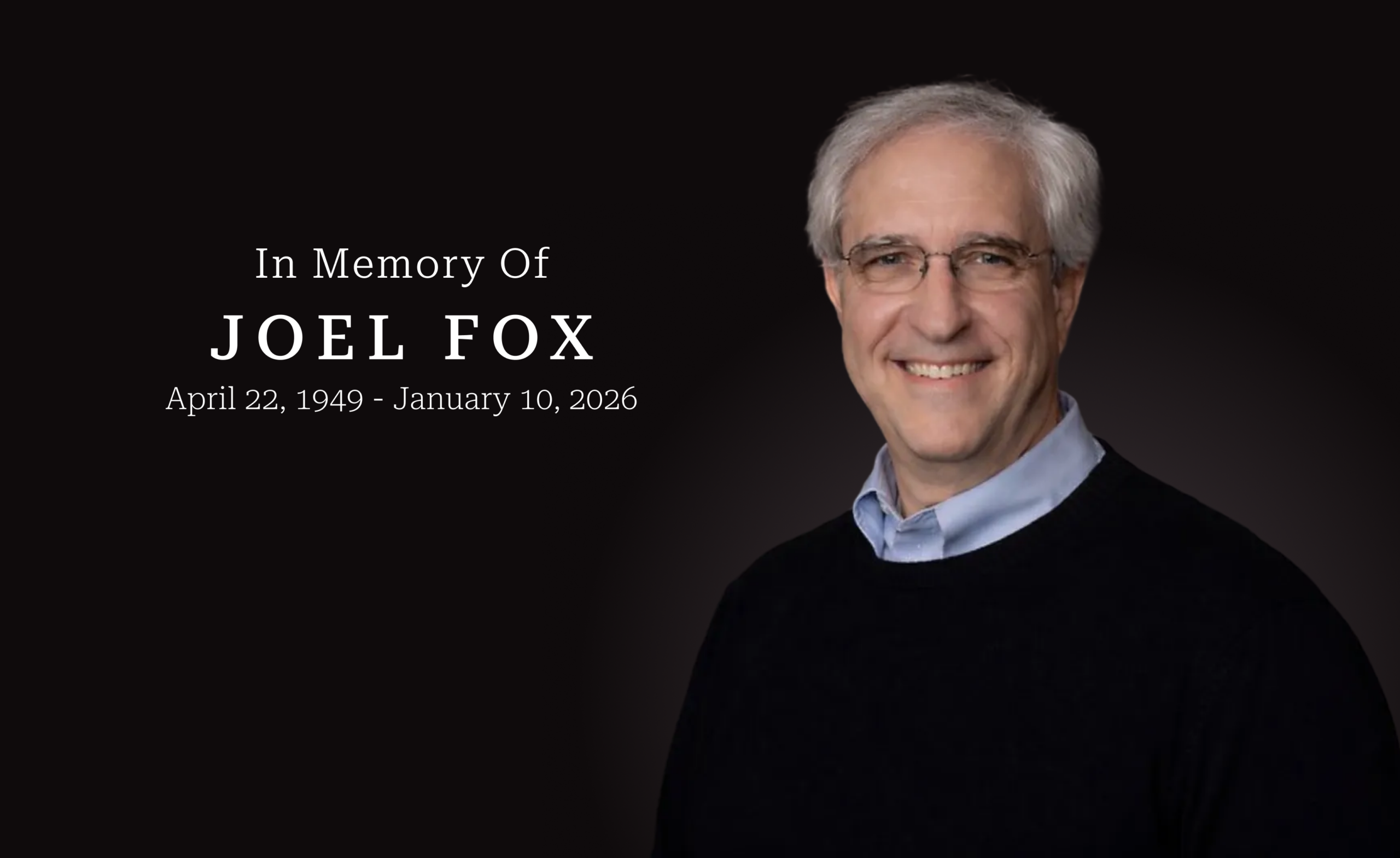
A Fox, A Hound, and a Friendship

If political differences are destined to leave us divided and friendless, how do you explain the life of Joel Fox?

Fox died on January 10 after more than a decade of living with cancer. He was California’s most prominent taxpayer advocate since Howard Jarvis, for whom he worked, and whose anti-tax organization he led from 1986 to 1998. Fox, a Republican, advanced conservative ideas on TV and op-ed pages. He advised the campaigns of Gov. Arnold Schwarzenegger, Mayor Richard Riordan, and U.S. Sen. John McCain.

That profile, in our polarized times, might make you think Fox was one of those political ideologues who are driving the country apart. But the opposite is true.

Fox, more than any person in California politics, built deep relationships with people across the political spectrum. And he did not do this through consensus or compromise. Instead, Fox built friendships on disagreement itself—a warm, open, and curious style of disagreement.


Read More »

Giving Thanks in Our Community

This is a special week in America. It is a time to pause and do something we never do frequently enough, which is to say thank you. Thank you for our blessings. Thank you to our families for their love. Thank you to our friends for their support. And thank you to the community that has stepped forward to offer their help to those who are unemployed during our most difficult economy since the Great Depression.

Last week, our nation celebrated Veterans Day to commemorate a group of citizens who have protected us day and night, even though we seldom think about them unless we are in a time of war. Now is one of those times, and we join together in saying thank you to our men and women in uniform, both past and present.

At the Plymouth Colony in 1621, the Pilgrims thanked God for the fruits of their first harvest in the new world. They also thanked their new friends, Native Americans from the Wampanoag tribe for enabling them to survive the bitter winter of 1620-21. The Native American community that surrounded the Pilgrims literally saved their lives.

Read More »

Legislature Now Holds Maldonado’s Fate

Gov. Arnold Schwarzenegger may finally have figured out how to unite California’s squabbling Democrats and Republicans: appoint Abel Maldonado as lieutenant governor.

When he announced Monday on the Jay Leno show that the state senator was his choice for California’s Number Two job, the governor may have convinced both sides to go to war against the Santa Maria legislator.

Republicans still haven’t forgiven Maldonado for his calculated decision last February to join Democrats as the deciding vote for a budget that hit Californians with billions in new taxes.

Democrats aren’t happy Schwarzenegger picked a Republican to replace uber-Democrat John Garamendi, who resigned as lieutenant governor earlier this month to take a seat in Congress.

Read More »

HJTA Questions Legality of New $143 Billion AB 32 Tax

Last week the Howard Jarvis Taxpayers Association sent the AB 32 Economic and Allocation Advisory Committee (EAAC) a letter spelling out the reasons why we believe that the state has no legal authority to impose a new AB 32 auction tax on California companies and consumers. The California Air Resources Board (CARB) and the Governor have asked the EAAC to provide advice to CARB on how to spend up to $143 billion in new government revenue. We thought it would be wise for the EAAC to consider whether CARB actually has the authority to raise this revenue in the first place.

The idea of an auction tax has long been promoted by environmental organizations and is being considered by CARB as a way to impose a California-only cap-and trade system that would ration conventional energy use as a way to reduce greenhouse gas emissions under AB 32, our state’s Global Warming Solutions Act.

Beyond the fact that imposing a new $143 billion or more tax on California’s already struggling companies would destroy thousands of jobs and force more employers to leave the state, CARB has no legal authority to initiate a cap and trade auction, as the Legislature did not grant any such authority under AB 32. Should lawmakers attempt to bestow this taxing power on CARB retroactively, it will require a two-thirds vote of both houses because imposing government costs through a cap and trade auction is clearly a tax.

Read More »

Quiz: What Disqualifies You from the Redistricting Commission?

The authors of Prop 11, which creates a new commission to draw lines for state legislative and board of equalization districts, wanted to keep politics out of the process. How far did they go?

Below is a list. Some of the items on the list, if they were true statements about you, would disqualify you from serving on the new redistricting commission. Other statements on the list, if true, would not disqualify you.

You can apply on-line to be a member of the commission beginning December 15.

First is a statement. Then an explanation of whether it’s disqualifying:

            "You were an independent voter who changed her registration
in 2007 so you could vote for your friend Mitt Romney in the Republican
presidential primary."

Read More »

Putting Price on Prosecutions

I have no idea if Donald T. Sterling discriminated against minorities in renting apartments he owns in the Koreatown area of Los Angeles. The Justice Department said he did, and a couple of weeks ago it got him to pay $2.73 million – a record – to settle allegations. Sterling’s lawyer said he didn’t, adding the prosecutors “could not identify a single individual” who was wronged. (Since Sterling has had similar allegations made against him in the past, it does make you wonder, though.)

But we’ll never know. The issues won’t get aired out in court because the matter was settled in a nice, quiet back-room deal.

I hate that. We have a perverse system in which prosecutors’ targets – often conspicuous business figures like Sterling, who, besides his real estate empire owns the Los Angeles Clippers – have zero financial incentive to fight any allegation against them. If they lose, they lose big. If they win, they lose a huge amount of money for legal bills and a couple of otherwise productive years. It’s your classic lose-lose situation, and it’s why insurance companies typically force business people to settle, which is what happened in Sterling’s case, his lawyer reportedly said.

Read More »

Will California’s Assembly Say “No Thank You” to Federal Education Dollars?

The deadline for states to apply for federal “Race to the Top” (RTTT) education funding is fast approaching and while other states have their applications ready to go, the California Assembly has not yet passed the measures needed to make sure California is even able to apply for the much-needed money.

Every child has a right to a quality public education. Today, school officials across California are wondering, not about quality education, but about whether they will even be able to keep schools open due to Sacramento’s chronic fiscal crises, deferred education payments and huge cuts (over half a billion dollars lost in Orange County alone). Luckily for California, the Obama administration has offered federal funding opportunities, but with strings attached. In order to qualify for these funds, California must agree to allow the use of specified accountability and measurement tools and develop new reform strategies with a focus on achieving higher academic standards.

California must move to increase skilled teachers and promise to turn around struggling schools. The California Senate has agreed to these rules, stepped up to the challenge and passed SBX5 1 to meet eligibility requirements for RTTT federal funding. The Governor has expressed support for this bill as well. The legislation would make California schools eligible for a share of the $4.3 billion in federal funding allocated for education.

Read More »

Searching for Meaning in the Failed Adams Recall

The first question asked about the failed attempt to qualify the recall of Assemblyman Anthony Adams for the ballot is: How could that happen?!

Given the money raised to support the effort, the professional signature gatherers involved, constant agitation from Southern California talk radio hosts, and anger from many in the electorate to the tax increases Adams supported after signing a no-tax increase pledge, many experts are puzzled over the failure to secure the necessary signatures in Adams district, which spans Los Angeles and San Bernardino Counties.

Secretary of State Debra Bowen revealed on Friday that less than fifty percent of the randomly selected signatures were valid. The test results indicated the measure would not qualify and no full count was required.

Flashreport’s Jon Fleischman speculated on what might have happened in his weekend column. Could fraud be involved? Or an unlucky draw of random signatures?

Read More »

State Feels Heat of Local Budget Woes

California’s upcoming budget battle will be as much about politics as money and San Francisco’s property tax woes show why.

If San Francisco and other cities and counties are hurting worse than ever this year, they’re going to howl at any budget solutions that even hint at dumping more state obligations on local government. And when local mayors and supervisors speak, smart politicians in Sacramento – those who want to stay in Sacramento – typically listen.

Owners of some of San Francisco’s best-known properties are seeking huge cuts in their tax payments, according to a story in Sunday’s San Francisco Chronicle. If the claims stand, the already cash-strapped city could lose more than $115 million in property taxes.

San Francisco isn’t alone. For the 2009-10 fiscal year, the state’s total assessed value dropped by $107 billion, or 2.4 percent. That’s the first decline since the state Board of Equalization began keeping record in 1933.

Read More »

The Mac Taylor Rule

As I’ve written here before, I’m against supermajorities, and for that matter supermen, superbanks, super-centers, and supermodels (too skinny).

But if you’re going to have super-majorities for spending, budgets and taxes, as we do in California, you need to align those super-majorities with the best interests of the next generation. Our system fails to do that.

The best example: Raising taxes is politically difficult and forces us to pay for our current needs, instead of off-loading them onto the future. So California’s system makes it even more difficult with a 2/3 vote. But if you want to cut taxes (politically popular) even if it means pushing costs into the future, that’s much easier—it requires only a simple majority.

A super-majority system should recognize this reality by applying 2/3 votes to the easier options. If you want super-majorities (I’d get rid of them all together), super-majorities should be applied to two cases. 1. It should take a two-thirds vote of the legislature to cut taxes, a politically easy thing to do. 2. It should take a 2/3 vote to spend money (which is essentially the rule we have now).

Read More »