

Featured Post

A Fox, A Hound, and a Friendship

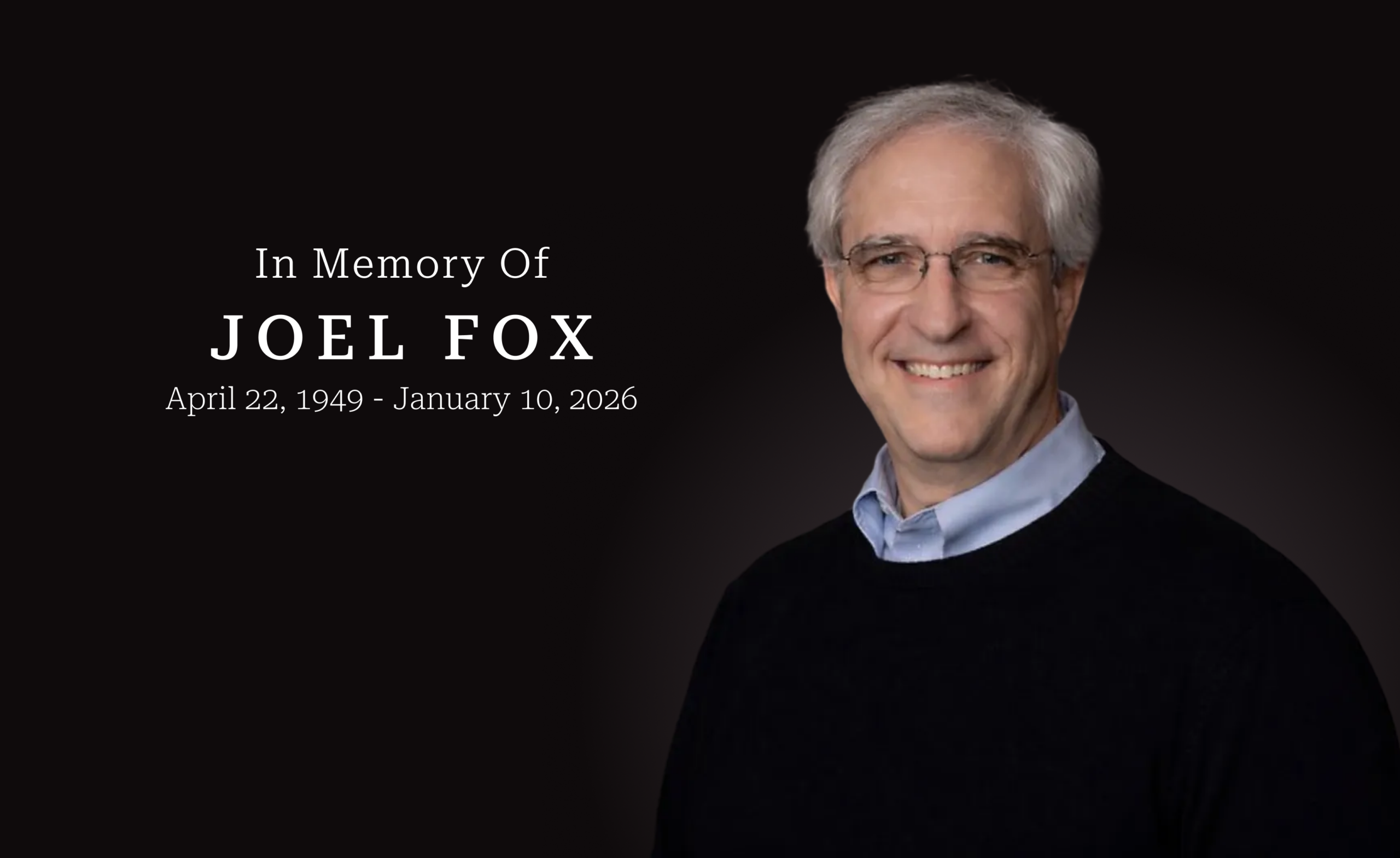
If political differences are destined to leave us divided and friendless, how do you explain the life of Joel Fox?

Fox died on January 10 after more than a decade of living with cancer. He was California’s most prominent taxpayer advocate since Howard Jarvis, for whom he worked, and whose anti-tax organization he led from 1986 to 1998. Fox, a Republican, advanced conservative ideas on TV and op-ed pages. He advised the campaigns of Gov. Arnold Schwarzenegger, Mayor Richard Riordan, and U.S. Sen. John McCain.

That profile, in our polarized times, might make you think Fox was one of those political ideologues who are driving the country apart. But the opposite is true.

Fox, more than any person in California politics, built deep relationships with people across the political spectrum. And he did not do this through consensus or compromise. Instead, Fox built friendships on disagreement itself—a warm, open, and curious style of disagreement.

Read More »

No Happy Ending in LAO Budget Report

It’s discouraging to know that California is looking at a $20.7 billion budget deficit next year.

It’s disheartening to realize that the deficit numbers are expected to be even higher in the following two years.

But the hands-down most depressing, sinking-feeling-in-the-pit-of-the-stomach realization from the new budget report by the Legislative Analyst’s Office is that there is absolutely no chance this will end well.

Wednesday’s report suggests eliminating most state pay hikes until at least 2014-15. Think the Democrats, with their allies in the public employee unions, are going to agree to that?

What about the report’s suggestion that the Legislature end business-friendly tax credits and extend the vehicle license fee increase? Are there a lot of GOP votes for that?

Read More »

Anti-Capitalist Policies Mean Anti-Job and Anti-Recovery

Amidst polls showing flagging public support, the Obama Administration has decided to address the one poll, among all others, that will determine Obama’s political future: the unemployment rate. As Scott Rasmussen points out, the unemployment rate has a lot to say in deciding a President’s popularity rating and election results – which is probably why Obama announced he would hold a jobs summit with small business representatives among others.

Speeches and photo-ops, however, won’t change the fact that Obama’s policies are anti-capitalist and therefore anti-job and anti-recovery.

It’s important to note that the secret to capitalism is not all that secret. It’s right there in the name CAPITALism. Our system relies on:

Step 1. The ability of some to aggregate enough capital, i.e. save money, so that they can . . .

Step 2. Invest in productive enterprises, i.e. start or grow businesses which . . .

Step 3. Employ people – people who . . .

Read More »

California’s Next Governor Faces Four Years of Fiscal Hell

The first term of California’s next governor will be a fiscal nightmare with a cumulative budget shortfall over four years of nearly $83 billion, according to the fiscal forecast released November 18 by the Legislative Analyst. 

During his last year in office, Gov. Arnold Schwarzenegger and the Democratic majority Legislature face a $21 billion gap between revenues and spending commitments, a problem whose solution is made more difficult by the political timidness that usually marks election years.

The GOP governor said on November 9 he expected a budget hole of some $14 billion between now and July 1, 2011, absent any action by himself and lawmakers. 

A spokesman for Schwarzenegger’s Department of Finance said “there isn’t a great deal of difference” between the administration and the analyst’s revenue estimates but added some the unrealized budget savings cited in the report as causes for the increased shortfall will materialize. 

Read More »

An Open Letter To My Children….

To my wonderful, bright and beautiful daughters, I feel I owe you an apology. It is actually an apology from my generation to yours. Because we have lost the willingness to honestly look at the reality before us, my generation has created a California with very limited opportunities for you.

I want to be optimistic. I want you to have choices. I want you to be able to dream and reach for what could be. But instead my generation has accepted a governance process that takes pride in mediocrity. It is reflected in a state budget that only gets bleaker, a function of years of political deal-making that is anything but a “Profile in Courage.” As a result, opportunities enjoyed by my generation will be nothing more than unfulfilled dreams for your generation. We have created an accelerating downward spiral of limited educational and job opportunities.

There is a lot of talk and multiple proposals to change our political system, ranging from a constitutional convention to instituting a part time Legislature. Ironically, the dozens upon dozens of competing and conflicting ballot measures that propose to “fix” California’s problems are actually a continuation of the dysfunctional politics in the state. What is missing from all of these proposals is one key requirement for success – leadership.

Read More »

Two Reasons Whitman Needs Another Democrat

If another Democrat were to get into the governor’s race, the most logical question to ask him or her would be: Are you in league with Meg Whitman?

The best thing that could happen for Whitman would be for Jerry Brown to get some competition.

There are two reasons for this, one obvious and one not so obvious.

1. The obvious. If Brown sails to the Democratic nomination without facing competition, he can avoid damaging attacks and save his money for what it is certain to be an expensive and brutal general election campaign. In fact, Whitman’s bottomless pit of money is a much greater advantage if Brown has to spend millions in a contested primary.

2. The not so obvious. As Steve Poizner fails to gain traction, it’s become clear that Whitman’s real competition for the Republican nomination is Tom Campbell. And Campbell, more than anyone besides Brown, benefits from the absence of real competition on the Democratic side.

Read More »

Club California Spends Our Dues Poorly

Before Californians rush off and try to fix what’s wrong with the state’s governance by calling for a new constitution, they ought to consider the simple solution of getting a bigger bang for the taxpayers’ dollar.

William Voegeli, a contributing editor to The Claremont Review of Books and a visiting scholar at Claremont McKenna College’s Salvatori Center, argues that California government has shortchanged its citizens by not providing good services for the amount of tax dollars the citizens provide.

In a lengthy comparison of government efficiency between the states of California and Texas in a City Journal article, Voegeli shows California’s government model fails to deliver for its citizens and overcharges dearly for that failure. Quoting the New Geography’s (and occasional Fox and Hounds contributor) Joel Kotkin, to make the point: “Twenty years ago, you could go to Texas, where they had very low taxes, and you would see the difference between there and California. Today, you go to Texas, the roads are no worse, the public schools are not great but are better than or equal to ours, and their universities are good.”

Read More »

A Firebell in the Night

“A firebell in the night”: that’s how Ken Auletta described the growing class of persons on welfare in America’s inner cities in his 1982 book, The Underclass.

Auletta’s view, held by many policymakers in California at the time, was that a new class of poor people was emerging, different from the poor of the past. This new group, which Auletta termed the underclass, was becoming more and more entrenched in antisocial behaviors—crime, teen pregnancy, drug addition, and most of all welfare dependency. Auletta saw the underclass as “the most momentous story in America”, and quoted Thomas Jefferson’s description of the Missouri Compromise (“like a firebell in the night”).

In a post two months ago on the San Francisco Renaissance Center, I discussed the job training and antipoverty world of the 1980s in California, and briefly mentioned the ways that conditions have improved since 1979. Among these is the work-orientation of the welfare system and drop in the state’s welfare rolls. It is worth saying a word more on this change, and what its meaning for state government.

Read More »

Public Service or Public Disdain?

When did being appointed to a local board or commission become socially unacceptable? Why should be elected to a school board make a person politically unacceptable? According to some recent initiatives, these actions of civic engagement are enough to turn someone into a pariah, unfit for redistricting commissions or constitutional conventions. But this disdain toward anyone whose sense of community service leads them into an official position, is wrong, arrogant and ultimately undemocratic.

Examples of this antagonism are common. Proposition 11, approved last November, created a much-needed independent redistricting commission. But the proponents went over-board in their efforts to keep the commission safe from anyone with actual political experience. Not many would argue against excluding current or former legislators but was it really necessary to exclude someone because their father, who now lives with them,  gave $2,000 to the Schwarzenegger campaign in 2003 or because they once served on the State Arts Commission?

The sorry fact is that Proposition 11 regards many ordinary and traditionally esteemed civic activities as unacceptable “conflicts of interest”. Indeed, these activities were deemed so heinous that the protective cocoon of Prop 11 extends ten years back.

Read More »

Nuance Not a Big Part of Campaign Rhetoric

Political campaigns don’t do nuance.

Take, for example, a story in the San Jose Mercury-News this weekend that questioned claims Insurance Commissioner Steve Poizner has been making at nearly every stop during his run for governor.

The story noted that nearly half the $1.81 billion in insurance rate cuts Poizner touts on the campaign trail resulted from regulations written by his predecessor, Democrat John Garamendi. It also reported that a third of the budget cuts he talks about were imposed by the governor and the Legislature because of the state’s budget woes.

Newspapers being newspapers, with all that old-school MSM commitment to fairness, balance and the like, the story also reported that Poizner actually had to approve Garamendi’s regulations before they took effect and repeated the commissioner’s argument that cuts are cuts, regardless of how they come about.

Read More »