

Featured Post

A Fox, A Hound, and a Friendship

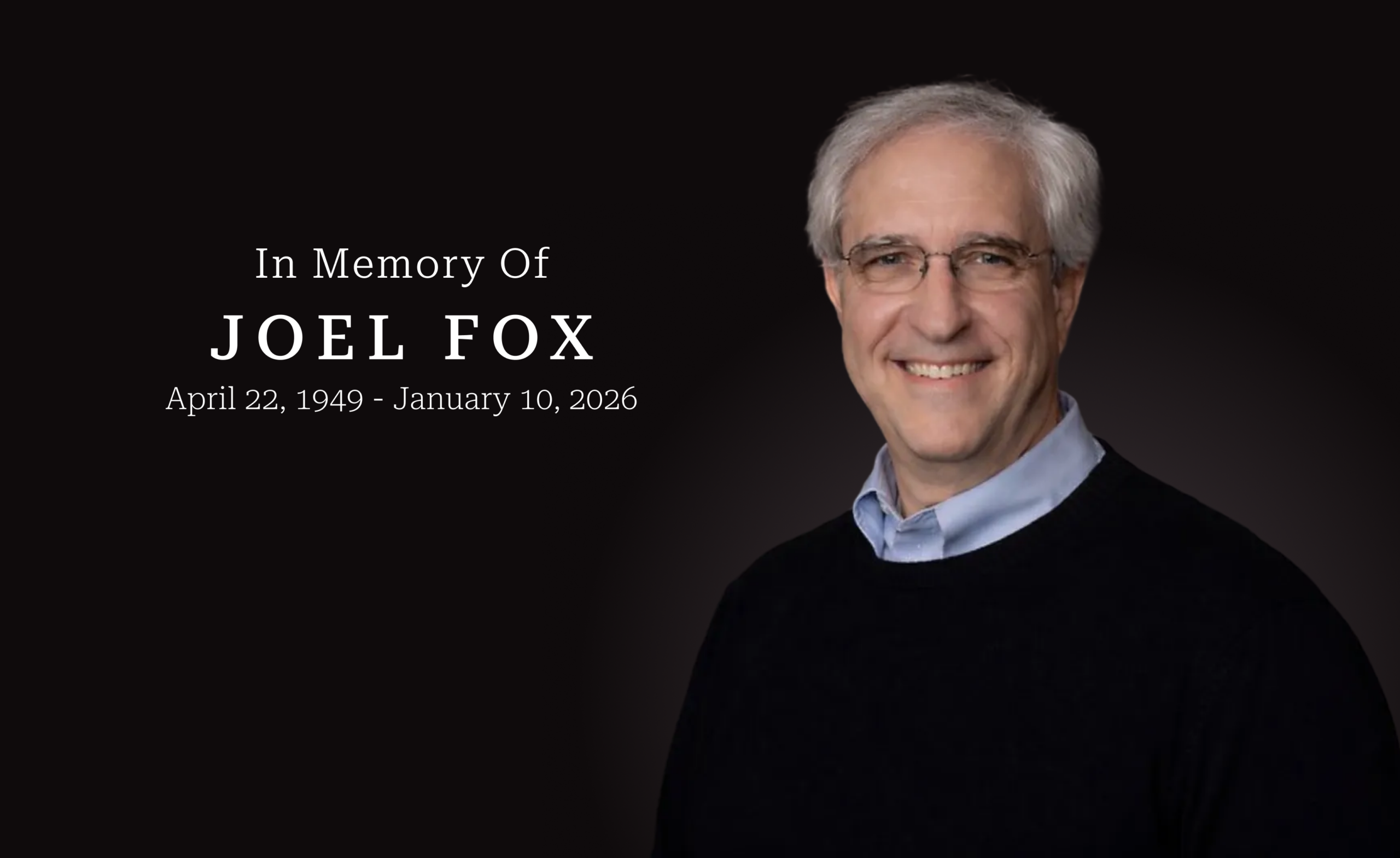
If political differences are destined to leave us divided and friendless, how do you explain the life of Joel Fox?

Fox died on January 10 after more than a decade of living with cancer. He was California’s most prominent taxpayer advocate since Howard Jarvis, for whom he worked, and whose anti-tax organization he led from 1986 to 1998. Fox, a Republican, advanced conservative ideas on TV and op-ed pages. He advised the campaigns of Gov. Arnold Schwarzenegger, Mayor Richard Riordan, and U.S. Sen. John McCain.

That profile, in our polarized times, might make you think Fox was one of those political ideologues who are driving the country apart. But the opposite is true.

Fox, more than any person in California politics, built deep relationships with people across the political spectrum. And he did not do this through consensus or compromise. Instead, Fox built friendships on disagreement itself—a warm, open, and curious style of disagreement.

Read More »

Helping Nancy — Projections for Congressional Redistricting

Redistricting is still a year and half off, but the first solid numbers indicating what to expect have now appeared. At a conference on 2011 district drawing, researchers at the Rose Institute at Claremont McKenna College unveiled population projections for all 53 California congressional districts.

The Rose researchers relied on data developed by Caliper, the nation’s leading redistricting software company, the US Census Bureau, and the state Department of Finance. The Census Bureau currently projects the 2010 California population at 36.8 million; Caliper at 37.4 million; and Department of Finance at 38 million. The Rose analysis used the middle number and disaggregated the figures to the census block level – and then combined the blocks into existing congressional districts.

The figures are obviously not exact – the actually census will not be taken until April 2010 – but Caliper’s population models take into account housing patterns and county projections, and so they provide a remarkably reliable projection of what the actual count will show.

Read More »

Campaign Finance Laws Giving Government Excuse to Regulate Online Content

Thankfully, Internet content remains largely free of government intrusion and regulation. Americans are increasingly going online for news, to plan their travel, and perform other everyday tasks like banking and keeping up with relatives. They’re also going online for the information they need to determine how they will vote. As candidates and parties consequently step up their online presence, outdated campaign finance laws are giving the bureaucrats a new opening to impose restrictions and regulations on Internet content.

Consider Scott Wagner, the candidate for St. Petersburg mayor whom the Florida Elections Commission ordered to take down an online ad because it didn’t include a “Paid for by” disclaimer. Wagner argued the “paid for by” disclaimer should not have been required because it was only “paid for” by someone once it was clicked on, not before.

Read More »

Legislature Takes A Mulligan on Water Bill

About that water vote this week …

Last Sunday, the governor and legislative leaders announced that amazing progress had been made on the water bill and suggested a magic agreement that would leave everyone happy was just days, or even hours, away.

Still, as Gov. Arnold Schwarzenegger admitted, the negotiators “still have a few remaining issues to work out.”

Remaining issues like, well, everything.

State Sen. President Pro Tem Darrell Steinberg, who had talked confidently of having both a bill and a vote by this week, decided Thursday to take a mulligan. Not only won’t there be a vote this week, he announced, but the state Senate – and the Assembly, for that matter – won’t even be in session. But next week everyone will be back in Sacramento for a vote on that pesky water bill. Maybe.

Read More »

A Grim Statistic

Since the state’s employment peak in July, 2007, California has lost over a million jobs. Don’t lose sight of that grim statistic as we hear some qualified, “it’s-getting-worse-more-slowly-and-maybe-we’re-seeing-the-bottom-down-there-somewhere” news.

California’s latest unemployment rate, released last Friday, remained steady this month at 12.2%. Part of the reason is that the actual number of unemployed blipped down, and the labor force also shrank. Month-to-month changes should be viewed with caution: California’s unemployment rate is double what it was just 20 months ago, and is the fourth-highest in the country, behind Michigan, Nevada and Rhode Island. Inland rural California is suffering even worse; its 14.7% unemployment would be second-worst nationally.

Overall employment dropped again this month, but only by a hope-stirring 39,000 jobs. (This is about half the average monthly job loss from last November through June.) Major sectoral losses were in construction, information, manufacturing (durables), and private education. Job losses are also beginning to appear in the government sector. There may be some initial good news in some low wage industries, such as retail trade and tourism, but again, one-month changes should be viewed skeptically.

Read More »

UC Furlough Study is Economics, Not Politics

There’s a lot less than meets the eye in that UC study that found the furlough days ordered by Gov. Arnold Schwarzenegger aren’t saving as much money as originally advertised.

The numbers may be right, although it’s likely to be a battle of dueling economists as the governor’s finance folks put on the green eyeshades and go over the numbers from the Berkeley Center for Labor Research and Education.

But even if the three-a-month furlough days from 193,000 state workers are only saving around half the anticipated $1.3 billion, as well as boosting California’s costs in future years, the governor is still a political winner.

Whatever the actual dollar figures are, $1.3 billion is the number that was used to balance the budget Schwarzenegger signed in July. And while there may be added costs or less savings in future years, hey, that’s the future.

Read More »

Prop 13 and a Constitutional Convention

The following are my comments before the “Getting to Reform” conference held in Sacramento this week:

I have been asked if Proposition 13 should be taken “off the table” if and when a constitutional convention is called. My answer is: Absolutely not.

How can it be taken off the table when it is the central piece of the whole fiscal discussion? How many times in this conference was Proposition 13 mentioned as part of the mix. Many believe it must be reformed. How can you have a constitutional convention and simply ignore Proposition 13?

However, I would suggest that those who want to include Proposition 13 in a constitutional convention do so at their own risk. Proposition 13 did something revolutionary. For the first time in history, it gave certainty in taxation to the taxpayer instead of the tax collector. Why would the people ever surrender that certainty?

Read More »

Rushed Judgments on Limbaugh Buying Rams

As someone who dislikes the current ownership of the St. Louis Rams as much as I dislike Rush Limbaugh, I was not disappointed that the self-appointed head of the GOP was dropped from a bid to purchase what used to be my favorite football team.

Limbaugh’s politics don’t offend me; I just don’t like him, and neither do many of the NFL’s owners and players who objected to his potential ownership of an NFL team.

I agree that his conflicts with leaders in the African American community would be bad for business, so the NFL owners had every right to vote against his bid just as they could vote against Howard Stern owning a team or anyone else who would be a lightening rod of undesired publicity.

Yet, I am amused that the reasons why they objected to Limbaugh owning an NFL team had to do with his past criticisms of black athletes and politicians.

Read More »

Dow Crosses 10,000; Why Happy Days Aren’t Here Again

Wall Street had something to cheer
about Wednesday, other than JP Morgan Chase’s reported record $3.6 Billion
profit.  After flirting with the
prized, five-figure psychological threshold a bit, the Dow finally crossed
10,000 once again, closing at 10,015.86, up 144.8 points or 1.5 percent gain,
closing above 10,000 for the first time in a bit shy of a year and a fortnight
– since Oct. 3, 2008.

Are we rich beyond dreams of
avarice again?  Hardly.  Will the well scrubbed, unemployment
figure now cross 10% nationally – juxtaposing two entirely different worlds
(the second of which is not celebrating today)?  Likely, say our brightest economic minds.

President Obama gave a speech at a
construction site joining two highways that ran out of money to complete their
construction decades ago, fresh from his dubious Nobel Laureate-hood, touting
how well we have done in this recovery since the dark days of last Winter.  Some $60 million of recovery funds gave
jobs to hard-hatted construction workers smiling behind the President while he
spoke. 

Read More »

California Is Governable. Really!

Here’s something you don’t hear everyday: No question about it, California is governable.

So said Bill Hauck, president of the California Business Roundtable, relaying his own views to the “Getting to Reform” conference hosted by Cal State Sacramento, UC Berkeley and Stanford in Sacramento yesterday. Hauck’s been through these reform efforts many times before. He chaired the state’s Constitution Revision Commission, was co-chair of the California Performance Review Commission, and recently was a member of the Commission on the 21st Century Economy. Inside the capitol building, Hauck served as deputy chief of staff to a governor, and chief of staff to two Assembly speakers.

Many have claimed that California’s size, diversity, and political structure make it impossible to govern. Hauck is convinced that the state can be governed with strong leadership and a change in priorities.

Read More »