

Featured Post

A Fox, A Hound, and a Friendship

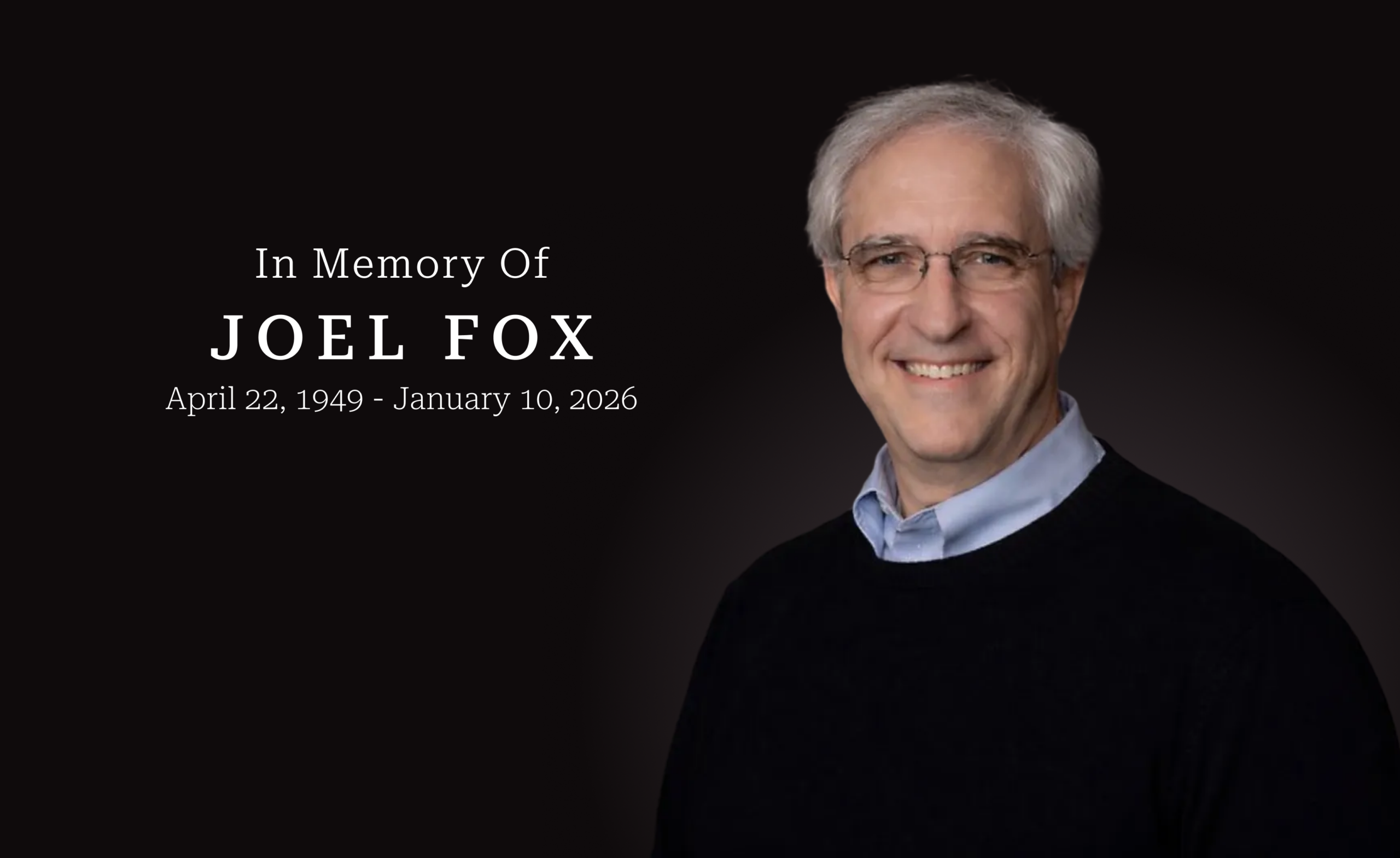
If political differences are destined to leave us divided and friendless, how do you explain the life of Joel Fox?

Fox died on January 10 after more than a decade of living with cancer. He was California’s most prominent taxpayer advocate since Howard Jarvis, for whom he worked, and whose anti-tax organization he led from 1986 to 1998. Fox, a Republican, advanced conservative ideas on TV and op-ed pages. He advised the campaigns of Gov. Arnold Schwarzenegger, Mayor Richard Riordan, and U.S. Sen. John McCain.

That profile, in our polarized times, might make you think Fox was one of those political ideologues who are driving the country apart. But the opposite is true.

Fox, more than any person in California politics, built deep relationships with people across the political spectrum. And he did not do this through consensus or compromise. Instead, Fox built friendships on disagreement itself—a warm, open, and curious style of disagreement.

Read More »

Getting California Off The Revenue Rollercoaster

The people elected me to fix what was broken in Sacramento. Together, we have tackled the big issues, whether it is workers’ compensation, infrastructure, redistricting or the budget.

Now, we have a historic opportunity to reform another broken system and help unleash a new wave of prosperity across our state.

California’s tax system was created nearly 100 years ago, before the Great Depression. It is outdated and antiquated, and no longer works in our technology and information-based economy.

That’s why last October, I joined Democrat and Republican leaders to form a bipartisan Commission on the 21st Century Economy.

Composed of economic experts from all political stripes, its mission was to study California’s tax code and propose reforms to make the system more stable, more fair, more simple and more conducive to economic growth.

Read More »

No Sympathy for State Union on Columbus Day

It’s Columbus Day morning and members of the SEIU Local 1000 have threatened not to come to work today. Whether they do or not, the mere threat is another poke in the eye of the typical California private sector worker, whether a private union member or not.

The public union members seem to have placed themselves above other workers in demands that they cannot be furloughed or laid off during a recession that has seen California unemployment reach more than 12%. There are rallies even today at Cal State Universities protesting public cuts while private workers suffer silently or scramble for new work.

Then of course there is the pension debacle. State and local governments are headed toward bankruptcy if the pension promises demanded by the public sector workers are not reformed. Imagine how the private sector worker feels, many of whom don’t have a pension or have difficulty contributing to one, when they will have to pay out of their own pockets to cover comfortable or even outrageous pensions for public workers who retire relatively early.

Read More »

The George Retention

It appears California will have an election next year that turns on the big questions of constitutional change, the budget, and the problems of the initiative process.

Which election is that? Not the governor’s race, which is unlikely to produce a debate of real substance. Ballot initiative reforms? It’s far from clear that the constitutional convention or any of the things produced by California Forward will make the ballot.

No, the election most likely to focus on the big questions is the retention election for California Supreme Court Justice Ronald George.

California Supreme Court justices are appointed to the bench. But every 12 years, they have to face voters, who decide whether to retain them. A justice facing retention is usually advised to be cautious and keep his head down. But George seems to be courting opposition.

Read More »

Governor Backs Off Veto Threat

Well, the governor didn’t get the water deal he wanted – at least not yet – but he decided to declare victory anyway and sign the bills on his desk by the midnight deadline.

Some of them, anyway. Although Gov. Arnold Schwarzenegger finally announced around 9:30 p.m. Sunday that he would “weigh all the bills on their merits,” plenty of them came up short on his scales. Of the 685 bills released by 3 a.m. this morning, the governor signed 456 and vetoed 229. That’s less than last year’s record rejection rate of 36 percent.

Although you’ll never hear it from Team Schwarzenegger, the threat to veto virtually every bill passed by the Legislature last month ultimately turned out to be little more than bluff and bluster. Or, to put it more delicately, a negotiating ploy. By the end of the evening, his loud demand for a complete, signed and sealed water deal had morphed into a vague statement that “we have made enough progress in our negotiations … while we still have a few remaining issues to work out.”

Read More »

Field Poll suggests trouble ahead for Boxer

The latest Field Poll is out, and Senator Barbara Boxer has cause for great concern.

The word in Washington is already that Boxer, a 17-year incumbent, is among the most vulnerable Democrat Senators seeking re-election next year. Despite being a Democrat incumbent in a blue state that that voted strongly for Obama, Boxer consistently polls well below her colleague Sen. Dianne Feinstein (D) and evokes much stronger negative responses from voters in polls than her fellow California senator.

After last week’s Field Poll, the state’s junior senator can be expected to step up her re-election efforts. She needs to.

Boxer is a three term incumbent, and well known to Californians. Yet she only earns the support of 51% of registered voters. Because incumbents are inherently better known among voters than challengers, the rule of thumb is that any incumbent who scores at or below 50% of likely voters has cause for concern.

Read More »

For Newsom, It’s Get Nasty or Lose

For San Francisco Mayor Gavin Newsom, the choice is now a simple one: either he does something to turn Democrats against Attorney General Jerry Brown or he loses next June’s primary for governor.

Whatever slim chance there was that the Democratic campaign for California’s top job wouldn’t turn into the usual mud bath likely vanished Thursday when a new Field Poll showed Newsom running 20 points behind Brown.

That’s double the 10-point lead Brown held last March. The new poll also showed the former governor smoking the three likely GOP challengers in head-to-head trial heats for the November 2010 election. Combine that with Brown’s nearly $6 million dollar lead in the money race and Newsom can see his chances of moving to Sacramento slipping rapidly away.

Since the new poll numbers make it even more unlikely that Brown is going to hit the campaign trail anytime soon, it’s up to Newsom to start making political life miserable for the attorney general.

Read More »

Tax Climate Leaves Businesses Out in the Cold

As Governor Schwarzenegger’s Commission on the 21st Century Economy considers a proposed overhaul of the state’s tax system, two reports released last month reinforce what many of us already knew – that California’s tax and regulatory burdens are driving businesses out of the state. The Tax Foundation, a non-profit, non-partisan think tank, unveiled its 2010 State Business Tax Climate Index (SBTCI) which had California ranked 48th out of 50 in business tax climate.

Another study, commissioned in a 2007 bill by Assemblyman Juan Arambula (I-Fresno), found that the total cost of regulation to the State of California is nearly $500 billion and 3.8 million lost jobs annually. To put that cost in perspective, the general fund budget for the state is around $100 billion each year.

While other states are attracting new investment, creating jobs and generating economic growth, the anti-business majority in California continues to operate in a vacuum. They seem to ignore the pleas from California companies, large and small, and operate with no regard for how additional regulations and increased taxes impact our revenue base, along with our standing among other states.

Read More »

“What Ails California” and “Getting to Reform”: Two Conferences

Reforming California’s dysfunctional government has become a boom industry. The legislature, foundations, activists, and reformers of all stripes are trying to find the golden key to set California straight. Now academic institutions are offering symposiums to study the problem and perhaps move toward solutions.

Two conferences are set in the coming weeks. Both are free to the public. Academics will join interest group leaders and policymakers to explore the state of the state. (I’ll be a panelist at both events.)

On Wednesday, October 14 the conference at the Sacramento Convention Center is titled: Getting to Reform: Avenues to Constitutional Change in California. Sponsored by UC Berkeley’s Robert T. Matsui Center for Politics & Public Service; Center for California Studies at Cal State Sacramento; and Stanford’s Bill Lane Center for the Study of the American West, the one-day conference will examine the advantages and drawbacks of alternative paths to constitutional change, including a look at a potential constitutional convention. See the conference agenda here.

Read More »

State can’t handle Assembly Bill 32

This week marks the third birthday of Assembly Bill 32, the controversial measure known as the Global Warming Solutions Act of 2006. Gov. Schwarzenegger, still resolute in his desire to remain an environmental leader, held a media event to celebrate it.

Many in California’s business community, however, see no reason to celebrate. They worry that implementing this law will be more than our fragile economy can handle.

Like every resident in California, I want clean air to breathe, fresh water to drink and gorgeous beaches to enjoy, but there must be a balance between our environmental and economic needs. In 2006, when the California economy was going strong, the Legislature passed AB 32. The bill promised to slash California’s level of greenhouse gas emissions 25% by 2020. At the time, skeptics worried about the feasibility and the impact on business. It seems the skeptics were right.

Read More »