


Featured Post

A Fox, A Hound, and a Friendship

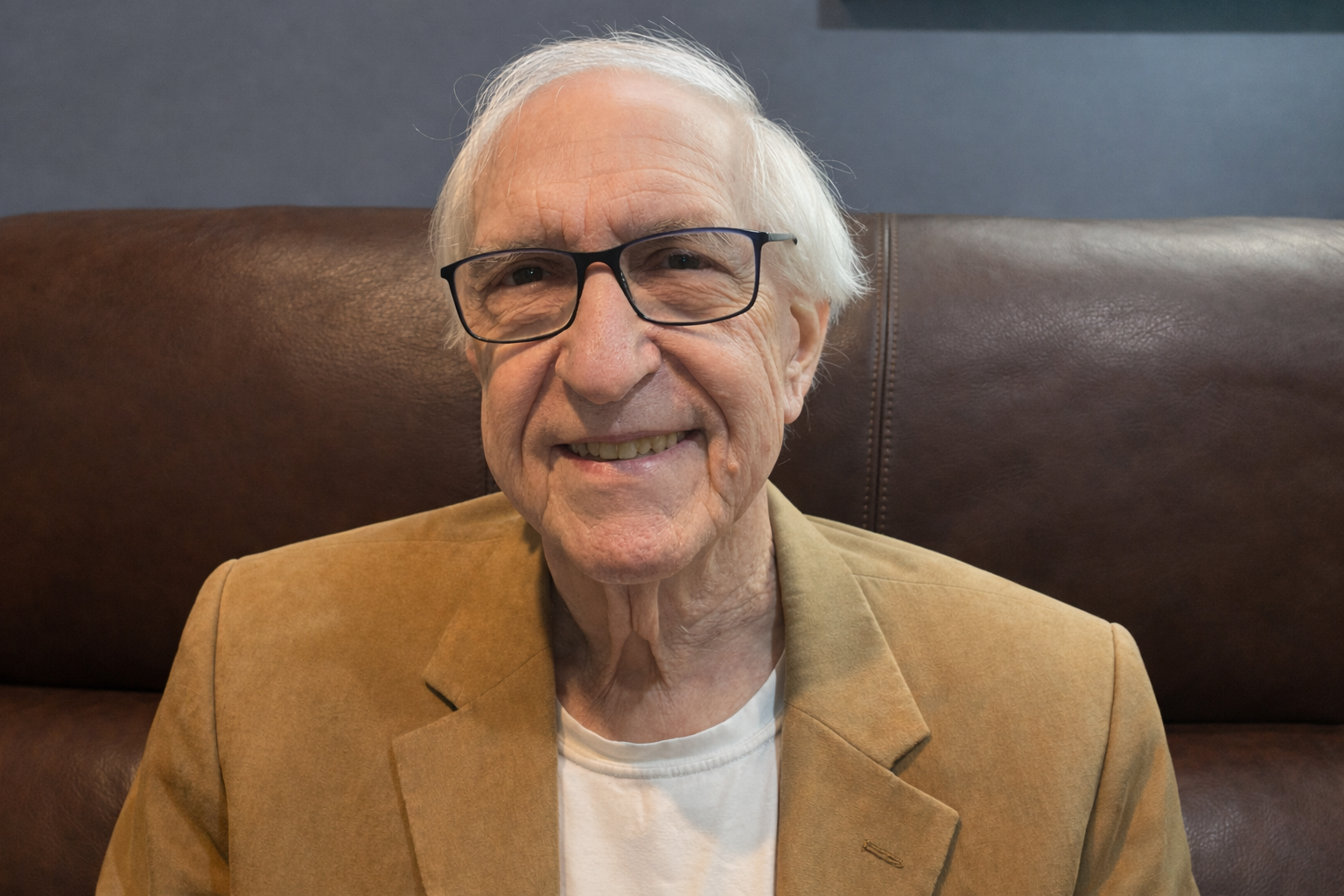
If political differences are destined to leave us divided and friendless, how do you explain the life of Joel Fox?

Fox died on January 10 after more than a decade of living with cancer. He was California’s most prominent taxpayer advocate since Howard Jarvis, for whom he worked, and whose anti-tax organization he led from 1986 to 1998. Fox, a Republican, advanced conservative ideas on TV and op-ed pages. He advised the campaigns of Gov. Arnold Schwarzenegger, Mayor Richard Riordan, and U.S. Sen. John McCain.

That profile, in our polarized times, might make you think Fox was one of those political ideologues who are driving the country apart. But the opposite is true.

Fox, more than any person in California politics, built deep relationships with people across the political spectrum. And he did not do this through consensus or compromise. Instead, Fox built friendships on disagreement itself—a warm, open, and curious style of disagreement.

Read More »

Wrong Way on Olvera Street

Watching the city of Los Angeles try to manage a business is kind of like watching Tom DeLay dance. Man, it sure hurts the eyes.

The latest evidence is the city’s handling of the retail tenants on Olvera Street. It’s painful to see.

Olvera Street, where Los Angeles was born, was a little state historic park that was turned over to the city of Los Angeles 20 years ago. The few score of retail tenants have been there for years, many for decades, serving as kind of an anchor for the touristy street between downtown and Chinatown. Many of the businesses sell Mexican tchotchkes, enchiladas and stuff, and they claim they don’t make much money. But they don’t pay much rent, either.

Until now. The city has decided that it’s time to double the average rent and boost the common-area maintenance fees. As reported in last week’s issue of the Los Angeles Business Journal, merchants that have fallen behind in their rents are being kicked out, such as a glass-blowing shop that had been there for three decades.

Read More »

Reflections from the Right Coast – Olympics, Health Care, and Women Dominate in Washington, D.C.

I’ve always viewed Washington, D.C. and Silicon Valley in a similar way. Both places are more a state of mind than an actual region. The area on the left coast is focused on innovation and making money. The one on the right coast is focused on power and spending money.

Last week, I spent four days in Washington, D.C. with Women Impacting Public Policy, a national organization of more than half a million women business owners. I arrived on Wednesday for two conferences and Capitol Hill briefings aimed to increase awareness of women-owned businesses and their impact on the U.S. economy.

Statistics released in a study commissioned by WIPP, the National Women’s Business Council, the Center for Women’s Business Research and Wal-Mart showed women-owned businesses produce employment for more than 23 million people in the United States. If women-owned businesses were their own country, they would have a greater GDP than Canada, India, and Vietnam combined – the 5th largest GDP in the world – ahead of France, the U.K. and Italy.

Read More »

Clinton is Newsom’s Big Hope

Gavin Newsom’s day in the sun with former President Bill Clinton today in Los Angeles needs to be a turning point in the San Francisco mayor’s run for governor.

Sure, the June Democratic primary is still eight months away and about the only people paying any attention at all to the 2010 race are either running in it or writing about it.

But Attorney General Jerry Brown is working to build a look of inevitability around his purposeful non-campaign and Newsom has to do something quick to convince the opinion-makers inside and outside the party that he’s the real deal, a guy who realistically could be California’s next governor.

What he needs is an event, something that can grab public attention, swing his dismal poll numbers and convince Brown that he actually has to come out and play if he wants to win next June.

Enter Bill Clinton.

Read More »

Soda Tax: It’s About the Revenue

The push is on for a soda tax. Supporters say it’s a way to improve health problems, and oh, by the way, you could close those messy government budget gaps. Well, which is it? If raising taxes on sugary drinks is supposed to cut down on the use of those products why expect a declining revenue source to deal with a budget problem?

This is the same argument often made to support tobacco tax increases. While raising taxes would cut consumption that means that any tax revenue attached to a product would likely fall over time. Such taxes will not be the answer to solving the budget crisis.

Yet, according to a Los Angeles Times article, the Center for Science in the Public Interest, said billions of dollars can be raised to offset budget problems with a soda tax increase. Yale University has a calculator on a website to determine how much a state or city could raise with a tax on sugary drinks.

Read More »

Serious Issue, Dubious Report

An official state report on the cost of regulations on small businesses in California was released last week, and it sure had some eye-popping numbers. The total cost of regulation was $134,122.48 per small business in California in 2007, the report said, and indirect business taxes not generated or lost were $57,260.15 per small business.

My first reaction: Wow! My second reaction: Wait a minute.

Those numbers – the ones that ended with 48 cents, etc. – stopped me. After all, this is the kind of report based on all manner of broad assumptions and multipliers, so to somberly report figures so exact, so down-to-the-cent picky, implies a precision that simply doesn’t exist and shouldn’t be pretended. It’s an immediate red flag.

And if you read the report, what stands out is that it relies on data that Forbes magazine gathers to make its many lists, the ones that compare cities and states in terms of their business friendliness.

A scholarly report based on Forbes’ rankings? There’s another red flag.

Read More »

Stormy Friday

In Chicago on business this week
where the City has just been stunned by the announcement from the Olympic Committee
a minute ago – the 2016 Games will not
be here in Chicago.  And the wind
blows and the rain falls . . .

This mid-morning news has crowded
out Media coverage of the bad employment statistics announced earlier this
morning – US National Unemployment now stands at a scary 9.8%, above estimates,
further clouding this stormy Friday here.

By the time you read this, it will
be next week.  Media Talking Heads
& Wagging Tongues will have chattered endlessly over this past weekend
(which you can still, faintly, remember) and beyond:

Read More »

Whitman’s Silent Majority

Meg Whitman badly bungled her handling of her voting record — by not addressing it at the beginning of her campaign and by putting out inaccurate information about her registration history.

But it’s not at all clear that the facts of the record – she was a non-voter before the age of 46, and a fairly low propensity voter after that – will hurt her very much. As a low propensity voter, Whitman isn’t an outlier. She’s very much in the California mainstream.

I live in Los Angeles, where more than 80 percent of registered voters regularly fail to turn out in local elections. The state legislators with whom a Gov. Whitman would be negotiating are often elected with support of 10 percent of adults eligible to vote – or less.

Read More »

No Hurry for Leaders to Debate

Break out another chicken suit. The campaign silly season has moved over to include the Democrats.

No sooner had Attorney General Jerry Brown announced he was opening an account to collect money for a likely run for governor than San Francisco Mayor Gavin Newsom, the other guy in the Democratic primary, was out with a plan for 11 debates, one in each of the state’s media markets – Hello, Eureka – starting, well, right now.

“Now that there are two candidates for governor, we owe the Democratic voters of California an opportunity to compare our visions and platforms side-by-side,’’ Newsom said in a press release.

Nice idea. Nice try. Never happen.

Read More »

Notes from the California Target Book Conference

The California Target Book, published by Fox and Hounds Daily contributor Allan Hoffenblum, tracks the state’s political races. The Target Book sponsored a conference yesterday to peer into the crystal ball at the 2010 races; the attitude of California voters; and a look at the dysfunction of California governance. Some notes jotted down at the conference:

  • Democratic Pollster David Binder says its wrong to think voters are against all taxes. They are opposed to taxes on themselves but are willing to approve taxes on corporations and businesses. But, Binder admits, a counter argument that raising taxes on business could affect jobs in the state has some effect.

  • Binder says Decline to State voters (DTS) are becoming disenchanted with the Republican Party. DTS voters make up 20% of the electorate, and as Republican pollster, Steve Kinney, commented, the independents decide elections.

  • State Treasurer Bill Lockyer, in trying to explain the discord in the legislature, said he believes Republicans who serve in the legislature have changed since his day. They are less pragmatic.

Read More »