

Featured Post

A Fox, A Hound, and a Friendship

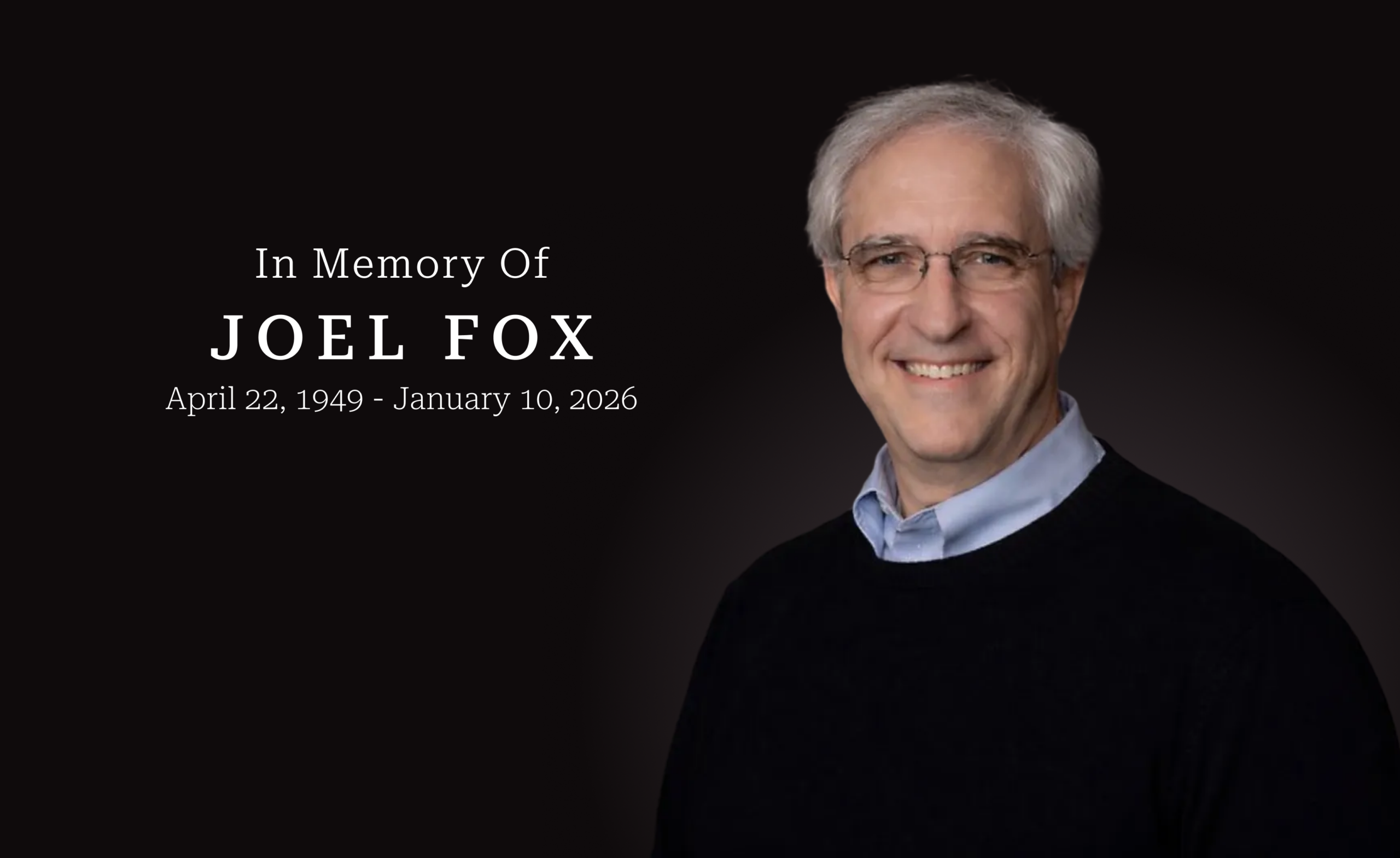
If political differences are destined to leave us divided and friendless, how do you explain the life of Joel Fox?

Fox died on January 10 after more than a decade of living with cancer. He was California’s most prominent taxpayer advocate since Howard Jarvis, for whom he worked, and whose anti-tax organization he led from 1986 to 1998. Fox, a Republican, advanced conservative ideas on TV and op-ed pages. He advised the campaigns of Gov. Arnold Schwarzenegger, Mayor Richard Riordan, and U.S. Sen. John McCain.

That profile, in our polarized times, might make you think Fox was one of those political ideologues who are driving the country apart. But the opposite is true.

Fox, more than any person in California politics, built deep relationships with people across the political spectrum. And he did not do this through consensus or compromise. Instead, Fox built friendships on disagreement itself—a warm, open, and curious style of disagreement.


Read More »

The Unnamed Victims

I walked into the courtroom and felt immediately out of
place.  An odd sensation, especially for
a public prosecutor, someone who has made his life’s work fighting for victims
within the walls of courthouses throughout Los Angeles County.  But those were my courtrooms.  This was
not. 

The Second Appellate Division for the California Court of Appeals
conducts its business in beautiful environs. 
Dark wood walls accent expensive-looking green marble.  A meticulously
crafted bench carved in a semi-circle provides a dignified stage for the appellate
justices who occupy its space.  Thick
carpet quiets the almost serene tone of the room.  But the elegance of the courtroom stands in
stark contrast to the horrors described within it. 

On April 12, those descriptions were of a beautiful woman being
shot to death through the mouth by an egocentric music producer whose persona
was marked by money, fame and violence.  The
case being heard that day was the appeal by Phil Spector of his conviction for
murdering Lana Clarkson.

Read More »

Does California’s ranking on national business climate surveys matter?

If you’re like me, your instinctive reaction to a
business climate (or quality of life or innovation) state-by-state ranking will
be to laud the ones with which you agree, and find fault with the ones that
don’t match your preconceptions. Sort of like your first-blush response to the
latest survey research.

But just like solid methodology can overcome your
skepticism about a poll, a better understanding of state-by-state business
climate rankings can shed light on what is useful for public policy and what is
merely entertaining. The Public Policy Institute of California (PPIC) has
recently released a study that provides a useful template
for applying state rankings to policy problems.

The PPIC authors, Jed Kolko, David Neumark and
Marisol Cuellar Mejia, posed a puzzle: why does California rank so poorly on
many business climate indexes even though our economy over time tends to equal
or occasionally outperform the national economy?

Read More »

Texas Trip Confirms: California Needs a Plan to Create Jobs

California has an unemployment rate of 12 percent, lost 11,600 jobs
last month and has no plan for creating jobs for the more than two
million California workers who are looking for work.  Texas has an
unemployment rate of 8.1 percent, created 37,200 jobs last month and
has an aggressive plan for investment and job creation. 

Last week provided an eye-opening look at some of the important
differences between California and Texas for a delegation of
California legislators, Lt. Governor Gavin Newsom and business
association leaders who traveled to Austin, Texas on an economic
development fact finding mission.

The mission was conceived by Assemblyman Dan Logue who arranged for
ten legislators to spend two days in Austin talking to California
companies who had recently moved or expanded operations in Texas. 
The group also met with Governor Rick Perry, officials from his
administration and members of the Texas Legislature.

Read More »

Caesar’s Wife and the Redistricting Commission

In 62 B.C., Julius Caesar divorced his wife, Pompeia, after rumors circulated that she was romantically linked with Publius Clodius, a notorious philanderer. Caesar himself reportedly did not believe the rumors, but made it clear when demanding the divorce that “Caesar’s wife must be above suspicion.”

Caesar took dramatic steps to ensure the integrity of his office. California’s Redistricting Commission does not appear to hold the same high standards.

The controversy stems from their hiring of Q2 Data and Research, a Berkeley firm chosen to draw “fair and impartial” district lines through a series of thinly veiled steps.

Keep in mind that the Commission nearly hired Q2 on a “no-bid’ contract until they were embarrassed by public criticism for that patently unfair practice. Forced to issue a public bid notice, the notice contained three key components: bidders should (1) disclose prior redistricting experience at the Metropolitan Statistical Area level – with minimum populations of about 1.5 million and up; (2) disclose potential “conflicts” relating to the partisan backgrounds of persons involved with the bidders’ proposals; and (3) disclose financial supporters with partisan backgrounds that might cause disqualification.

Read More »

Teachers’ Union Strong Arm Tactics

California’s most powerful public employee union, the California Teachers Association (CTA), has budgeted $1 million for a May campaign to browbeat and coerce lawmakers and taxpayers into providing more money, through higher taxes, for teachers.

The action items proposed by the CTA range from the silly — convincing the Ben and Jerry’s ice cream company to add a labor-union flavor to their line — to the outright threatening — demonstrations that could create major traffic jams in towns and cities.

Apparently, the union representing the second highest paid teachers in the nation – New York pays several hundred dollars a year more – thinks nothing of creating potentially dangerous traffic hazards and making thousands of those who still have jobs in California, late for work.

Read More »

Tax Chatter on Tax Day

There is a lot of conversation about taxes lately, perhaps
not strange since taxes are due to both the federal and state governments
today. But, the tax chatter is about potential new taxes that some or all citizens
will have to pay if certain politicians or interest groups have their way.

President Barack Obama last week called for a tax on the
wealthy, which he described as tax filers making over $250,000 a year. Governor
Jerry Brown continues his campaign to re-start the state income, sales, and car
taxes the legislature and Governor Schwarzenegger put in place in 2009. And, as
noted by Steve Harmon in yesterday’s Contra
Costa Times
, labor unions are organizing a number of approaches to tax
increases in California, including ballot measures to tax such products as oil
and tobacco.

One tax that received attention in Harmon’s article is the
California Federation of Teachers’ proposal to tax the wealthy. The president’s
proposal on taxing upper end taxpayers could put a crimp in that approach here
in California. On the other hand, should congress stall the president’s plan, the
debate to tax the rich would move front and center here if the union qualifies
a ballot measure.

Read More »

Make Vernon a Special District

Peter Corselli, official of a long-established Vernon industry, is right
to worry about the effect that passage of AB 46, the bill to
disincorporate Vernon, will have on businesses located there. The
vultures, in the form of annexationists, are already drooling. If the
end result of dissolving the city must be annexation, the bill would be
a disaster.

But there is another option. Disincorporate Vernon and simultaneously
turn it into the Vernon Industrial Special District. That special
district will provide Vernon with a government that gives business
owners and labor the security, stability and certainty that they
currently enjoy without the rule of a self-perpetuating cabal that has
run that city for over a century.

California has thousands of special districts for mosquito abatement,
flood control, libraries and dozens of other services. Surely it would
be common sense for the legislature to establish a Vernon Industrial
Special District, dedicated to promoting industry, as the city is
disincorporated.

Read More »

Pension Debt – Is it real?

The Orange County appeal of the pension benefits for
Deputies was denied by the California Supreme Court.  In a careful review of the decision made by
the Appeals Court, we find the same self-serving protection that judges always
give to government employee pensions.

The issue arose because exuberant promises of high
investment returns in 1999 made pension grants look very affordable.  The OC Supervisors in 2001 approved the
changes, and affirmed them in renewals of the bargaining agreement in 2003,
2005 and 2007.  But in 2008, the new OC board
looked at the issue as one granting a huge benefit that was not properly funded,
a $100 million unfunded grant of deferred compensation for services already
provided.

Read More »

Fear Tactics Dominate Budget Hearing

“Cuts to the California dream” are coming, California Superintendent of Schools Tom Torlakson warned the Senate Budget and Fiscal Review Committee on Thursday. If an all-cuts budget is adopted by the Legislature, also coming are pink slips for teachers and school closures, he said.

“We are here because there are no options. Smoke and mirrors have been used,” said Committee Chairman Sen. Mark Leno, D-San Francisco, as he described the dire condition of the state’s education system.

But Republican Sen. Bob Huff of Diamond Bar provided a different take on California’s education system and where spending increases have brought us. “Since 1970 through 2010, the number of students in California has increased by 9 percent, while school employees have increased by 98 percent,” he said. “The cost per student is up 275 percent, but test scores — there has been zero increase in test scores.”

The hearing appeared at times to be a staged exchange between Torlakson, himself a former state Senator and Assemblyman, and his fellow Democrats on the committee. Torlakson said that 19,000 teachers have already received pink slips, with more to come, and 110 school districts are facing insolvency.

Read More »