

Featured Post

A Fox, A Hound, and a Friendship

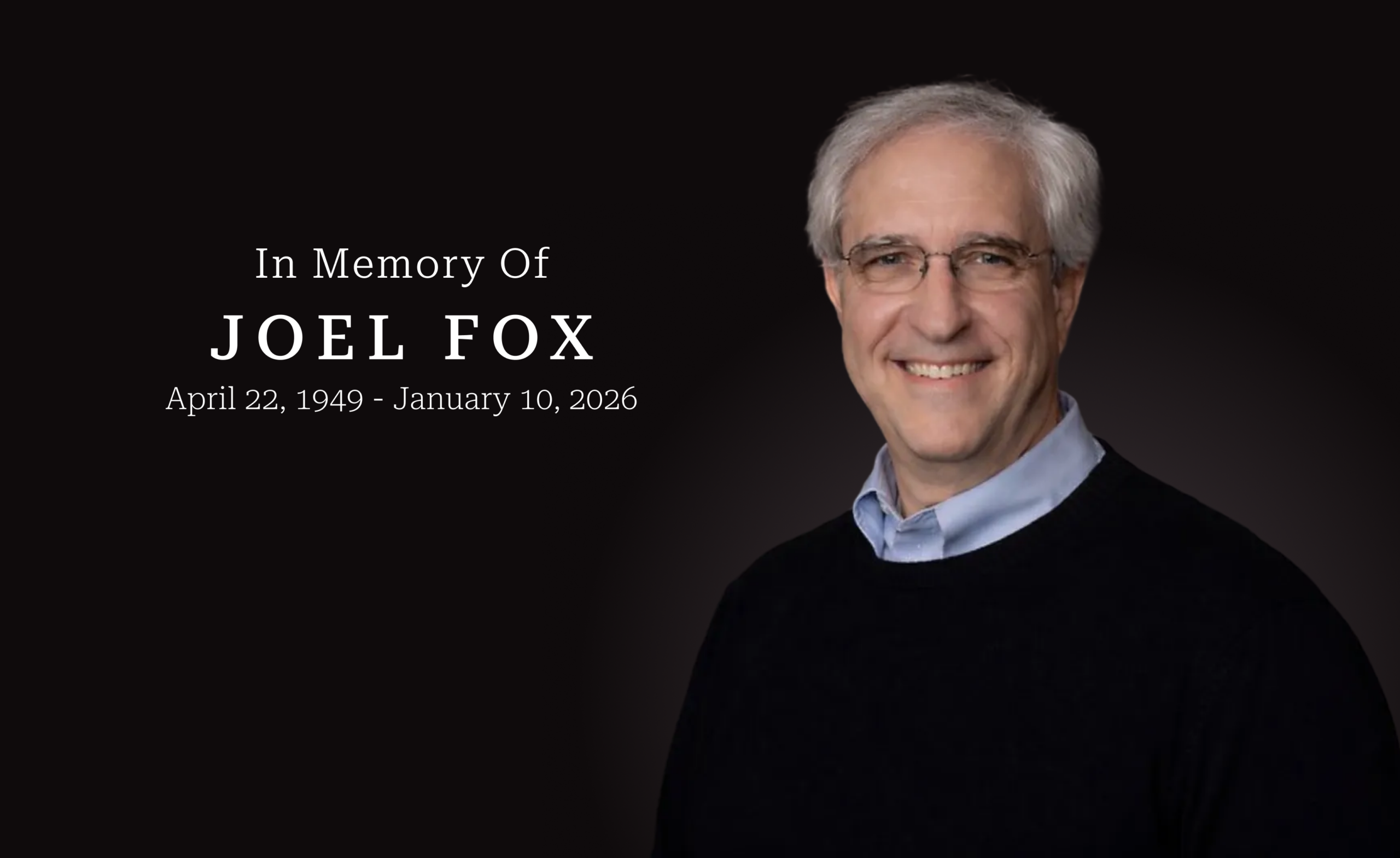
If political differences are destined to leave us divided and friendless, how do you explain the life of Joel Fox?

Fox died on January 10 after more than a decade of living with cancer. He was California’s most prominent taxpayer advocate since Howard Jarvis, for whom he worked, and whose anti-tax organization he led from 1986 to 1998. Fox, a Republican, advanced conservative ideas on TV and op-ed pages. He advised the campaigns of Gov. Arnold Schwarzenegger, Mayor Richard Riordan, and U.S. Sen. John McCain.

That profile, in our polarized times, might make you think Fox was one of those political ideologues who are driving the country apart. But the opposite is true.

Fox, more than any person in California politics, built deep relationships with people across the political spectrum. And he did not do this through consensus or compromise. Instead, Fox built friendships on disagreement itself—a warm, open, and curious style of disagreement.

Read More »

Urban Plight: Vanishing Upward Mobility

Since the beginnings of civilization, cities have been crucibles of
progress both for societies and individuals. A great city, wrote Rene
Descartes in the seventeenth century, represented "an inventory of the
possible," a place where people could create their own futures and lift
up their families.

What characterized great cities such as Amsterdam-and, later, places
such as London, New York , Chicago, and Tokyo-was the size of their
property-owning middle class. This was a class whose roots, for the
most part, lay in the peasantry or artisan class, and later among
industrial workers. Their ascension into the ranks of the bourgeoisie, petit or haute, epitomized the opportunities for social advancement created uniquely by cities.

In the twenty-first century-the first in which the majority of
people will live in cities-this unique link between urbanism and upward
mobility is under threat. Urban boosters still maintain that big cities
remain unique centers for social uplift, but evidence suggests this is
increasingly no longer the case.

Read More »

Bill Clinton Tangled in Another CA Governor’s Race

Bill Clinton finds himself in the middle of a California gubernatorial election again and I was there the last time it occurred.

In the 2002 Republican gubernatorial primary, I was an advisor to former Los Angeles Mayor Richard Riordan. Riordan squared off with eventual Republican nominee, businessman Bill Simon, and former California Secretary of State, Bill Jones.

A day or so following Riordan’s defeat, I was in the car with the former mayor when his secretary patched through a call from the former president.

Read More »

Howard Jarvis Was Crazy

The passage of Proposition 13 in 1978 changed the political landscape
both within California and nationally.  Thirty-two years after its
passage, candidates for governor still vie to convince voters that they
are the strongest supporters of this landmark law.  Undoubtedly, this
would make Prop 13 author Howard Jarvis very happy.

Ironically, 1978 was also the last time Jerry Brown ran for governor.  
The "boy governor" was running for a second term against then Attorney
General Evelle Younger.  The overwhelming 65% vote for Proposition 13
in the primary election spurred both candidates to scramble to be
identified with this big winner.

Brown, who had originally opposed the measure, and Younger, who had
given only lukewarm support, both approached Howard Jarvis asking him
to cut television spots on their behalf.

Read More »

Able Abel and the Role of Acting Governor

Acting governor Abel Maldonado stands tall in the San Bruno gas line fire tragedy. Filling in for Governor Arnold Schwarzenegger who is on an Asian tour generating business for the Golden State, Maldonado has taken over the controls of the California ship and proved a hands-on leader directing resources to the sight of the crisis. Importantly, he is available to explain to the people suffering from the crisis and the public at large what the government knows and what it is doing.

Over the years, many observers of California government have suggested that the state constitution be changed to keep power with the elected governor, even when he or she is out of state. The argument goes that with modern communication systems, a governor traveling far away would still be informed and aware of any situation and the traveling governor can still direct the bureaucracy to respond in a crisis.

However, it is clear from the current crisis that some one on the ground has a better understanding of on-going problems and possible solutions to confront them. Maldonado has proven that.

Read More »

City of Limits: A Generation After LA’s Myth and Reality Clashed

The City of Angels has become a city of limits, facing major
environmental decisions that will determine the political agenda until
the end of the century and the quality of life for decades.

Loosely controlled growth in the postwar years has outpaced efforts to
protect Los Angeles’ air, water and soil from pollution. Studies by
local, state and federal agencies warn that deterioration of the city’s
environment will reach critical levels as the population soars by an
expected 20 percent in the next 13 years.

Cleaning up the environment will cost billions of dollars and force
drastic changes in lifestyle, with such measures as trash separation,
water conservation and mandatory car pooling, according to interviews
with politicians, community leaders, educators, environmentalists and
consumers.

Read More »

Small Businesses Need Certainty from Sacramento to Start Hiring Again

Many
California employers are currently struggling through what has been
dubbed, "The Great Recession."  As a small businessman, I know first
hand just how hard government has made it to hire new workers.
Businesses large and small are trying to avoid layoffs. 

The latest
reports show very few are hiring, which is not a good sign in a time of
record unemployment.  The economy, stock market, and consumer spending
are all on a roller coaster.

What businesses need from Sacramento is certainty.  They need to know
that they’re not going to be saddled with new government mandates that
they can’t afford.  And they need assurance that their taxes won’t keep
going up if they start hiring new employees.  Small businesses are in
the Capitol every day pleading for relief from regulations. And they’re
fighting plans to impose new taxes and extend "temporary" tax hikes
passed last year.

Read More »

Prediction: A Brown Win Means Special Election May 17

Conversation is getting louder that there will be a special election next year if Jerry Brown wins the governorship as reported by KQED’s Jon Myers. Brown’s meeting with the San Francisco Chronicle editorial board in which he mentioned the possibility of a special election increased the speculation.

I think it’s a sure thing and have for some time. I’ll even predict the date: May 17, 2011.

Brown said he plans to work on the next budget immediately after getting elected. If he can’t get past the hurdles his predecessor couldn’t jump in the polls-apart legislature, he will take his solution to the voters. Since Brown’s mantra is that he will not support taxes unless the people approve, his solution will probably include tax increases on the ballot.

Read More »

The Consultants at Armageddon

Have you come across a California voter – a civilian, not
someone professionally involved in politics — who profoundly, deeply,
truly cares who wins the contest for governor?

Me neither.

The longer this lesser-of-two-evils campaign of meaningless
attacks and pointless policy proposals goes on, the more it seems that
the only people truly invested in this campaign are the political
consultants. Talk to one-they show more passion about the thing than
anybody else.

Read More »