

Featured Post

A Fox, A Hound, and a Friendship

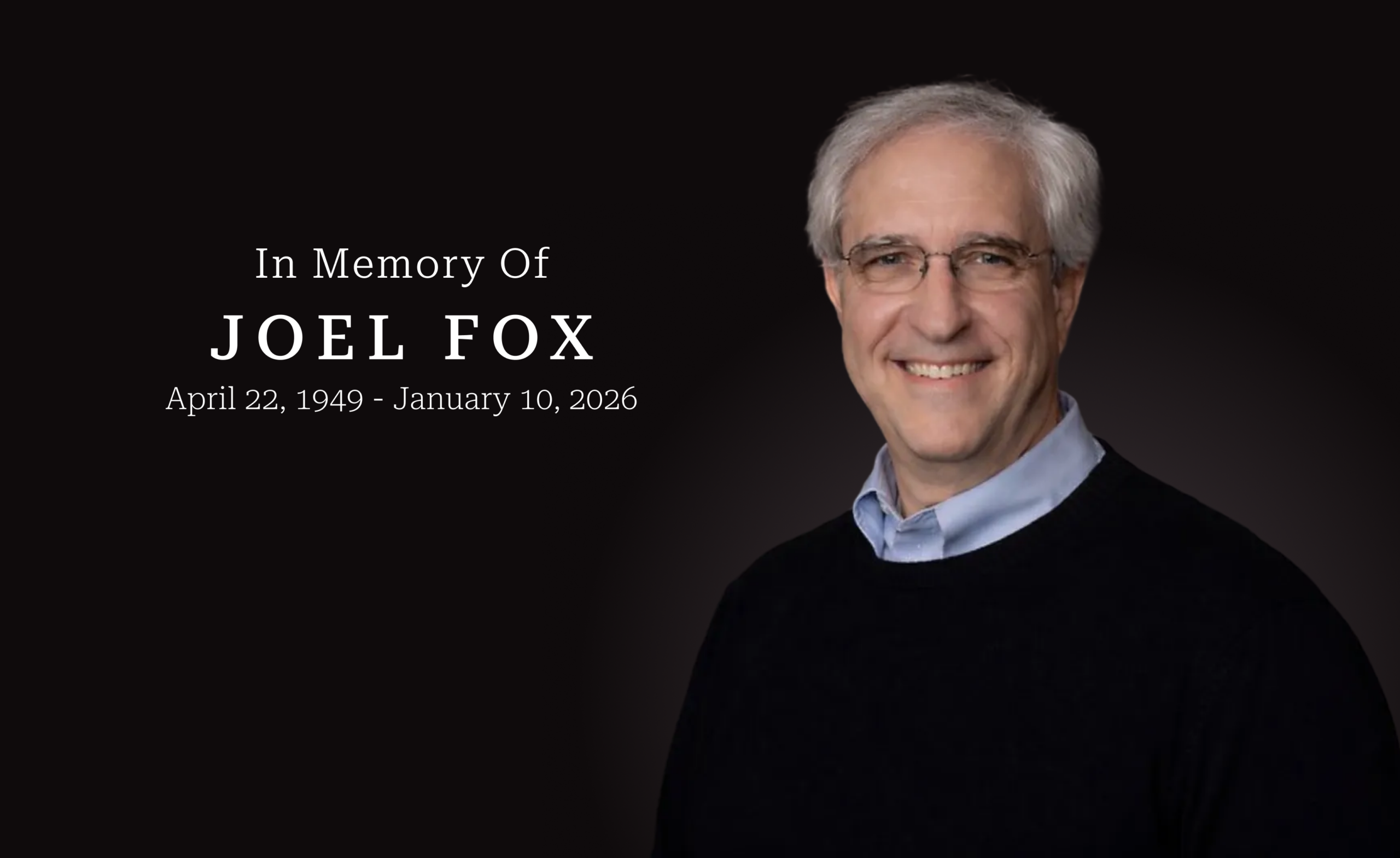
If political differences are destined to leave us divided and friendless, how do you explain the life of Joel Fox?

Fox died on January 10 after more than a decade of living with cancer. He was California’s most prominent taxpayer advocate since Howard Jarvis, for whom he worked, and whose anti-tax organization he led from 1986 to 1998. Fox, a Republican, advanced conservative ideas on TV and op-ed pages. He advised the campaigns of Gov. Arnold Schwarzenegger, Mayor Richard Riordan, and U.S. Sen. John McCain.

That profile, in our polarized times, might make you think Fox was one of those political ideologues who are driving the country apart. But the opposite is true.

Fox, more than any person in California politics, built deep relationships with people across the political spectrum. And he did not do this through consensus or compromise. Instead, Fox built friendships on disagreement itself—a warm, open, and curious style of disagreement.

Read More »

P3 Job Creation vs. Campaign Dollars

In 1992, the United Kingdom
passed the Private Finance Initiative, which provided legal authority for
government to pursue the use of Public-Private Partnerships ("PPPs" or "P3s")
in the funding and delivery of much needed social infrastructure.  Since then, 450 schools, 130 hospitals, numerous
prisons, transportation systems, office buildings, museums, prisons, and
courthouses have been constructed in the UK through P3s.  The UK National Audit Office recently
released an audit showing that these projects are three times more likely to be
delivered within budget and on schedule when compared to the traditional
governmental delivery process, and with so many successes they have sparked a
wave of P3 development across the globe. 

In 2009 a survey of state and
local government officials conducted here in the U.S. by McGraw-Hill
Construction revealed that 92% of government decision-makers experienced with
P3 projects had a positive outlook on P3s and would embrace an opportunity for
utilizing them again.  Yet despite the
success history of P3s the U.S. lags the rest of the world in their embrace.    Those
that persevered in the UK’s 1992 groundbreaking P3 initiative now have a sense
of déjà vu as they watch the U.S. and particularly California as we fight the
same battles they conquered almost two decades ago.  They certainly understand the economic crises
of an under-funded government facing ever increasing needs for infrastructure
while organized labor vehemently fights to kill any usage of P3s. 

Read More »

Bill Language to Undermine People’s Initiative Released

SB
202
by Senator Loni Hancock designed to play games with the initiative
process to satisfy public employee unions finally shows itself just 15 hours
before the designated end of the legislative session. The bill states that any
initiative or referendum that qualifies after July 1, 2011 has to appear on a
November General Election ballot.

One argument put forth for the reason the bill exists is
that a larger turn out of voters should make decisions on initiative measures.
Funny that this motivation didn’t arise over the last four of five decades but
only now when some legislators are opposed to what is headed to the ballot by
initiative petitions.

Read More »

Special Session for Overall Tax Reform is a Good Idea

In response to Governor Jerry Brown’s announcement that he reached
a deal
with Assembly Democrats and a couple of Republicans to pass a tax
plan involving the single sales factor for multistate corporations and tax
reductions or incentives for personal income taxpayers and small business,
Republican Senate leader Bob Dutton made a good suggestion. Examine overall tax
reform in a special session.

Dutton did not want the complex deal to be announced at noon
on one day and be passed by both houses of the legislature the next day without
adequate time for study and debate. As Dutton put it, "There
is nothing more complex than tax reform, and trying to jam through a proposal
on the last day of session without transparency or input from the public and
tax experts is irresponsible."

Using the deal as
impetus, the idea of discussing the deal with a broader goal of looking at tax
reform is worth consideration by the governor. Many experts believe the
California tax system was built for another era. Changes could be made that
would encourage business and entrepreneurship, which in turn, would produce
revenue for the treasury.

Read More »

Main Street Tax Cut Comes at the Right Time

Yesterday the Governor and a bipartisan coalition of
legislative leaders announced an agreement on the Governor’s jobs plan. The
agreement closes a tax loophole on out-of-state corporations and provides real
tax relief to small businesses in California.

Specifically, the measure will provide $1 billion in permanent income tax
relief for small business owners by cutting personal income tax, the business
tax and the minimum tax. The bill also provides a permanent sales tax reduction
on manufacturing goods for all industries. The tax relief comes from closing a
tax loophole that allows out-of-state corporations to elect their tax code and
rewards keeping jobs in other states. The loophole is a perverse piece of
policy.

The revenue-neutral proposal passed the Assembly and will be taken up by the
Senate today. It is critically important that Republican and Democrat lawmakers
come together and pass this badly-needed tax reform without delay.

Read More »

Would California Tax Hike Be Rick Perry’s Fault?

If Gov. Jerry
Brown succeeds in eliminating the optional single-sales factor as the method
for calculating corporate taxes (thus raising taxes on companies with out of
state operations, and using the money for tax incentives for hiring and
manufacturing in California), he may have someone unusual to thank: Texas Gov.
Rick Perry, the Republican presidential frontrunner.

Supporters of this change in tax law
have repeatedly invoked Perry’s name – most recently at a gubernatorial press
conference on Thursday. Brown himself has said that if a single-sales-factor
only formula is good enough for Perry and Texas, it ought to be good enough for
California.

This is perfectly fair. Texas
doesn’t give companies the choice of how to calculate its taxes, as California
does. It instead uses a single-sales factor formula that, Texas officials
believe, creates more of an incentive to place facilities and jobs in
Texas. 

Read More »

September 11, 2001, Lest We Forget

It is said “Time heals all.” I beg to differ. The vast wounds inflicted on America and Americans just ten years ago will never completely heal. Usually, celebrations or anniversaries are happy times. Not this one! Yet, I find it important and even pertinent to who we are and who we want to become as a nation, to remember the day of September 11th, 2001.

This was a somber day in American history when more than 3,000 Americans lost their lives in the most egregious act of terrorism to ever hit the shores of our great nation. As we approach the 10th anniversary of that dark day, California remembers those who have fallen and the heroic efforts to keep this country safe from that terrorist act and from further attacks.

Death, terror, desperation, loss of those dear to us, loss of sense of security and peace of mind—none of these are pleasant memories of that day that has changed America forever. Yet, we have used and can still use these painful experiences to make us stronger and more committed to maintaining a strong nation. We have a history of building on hardships from the inception of our nation. Out of hard times such as 9/11 America became a beacon unto the world.

Read More »

Union ‘Gut and Amend’ Bills Slice Open CA

It’s “gut and amend” season in the California Legislature. More like shuck and jive and obfuscate.

Last week, I received information that another bill had been gutted of its original intent, and new language added to greatly benefit labor unions. By the end of the day, two additional bills were uncovered that had also been grossly amended on behalf of labor unions.

Sure enough, three bills are all about union Project Labor AgreementsSB 922, originally authored by Sen. Gloria Negrete McLeod, D-Chino. AB 436 by Assemblyman Jose Solorio, D-Santa Ana. And SB 790 by Sen. Mark Leno, D-San Francisco, are

Why should we care?

Because PLAs inflate the cost of construction significantly, and cost taxpayers more money on public projects. Critics say that the extra funds help beef up the coffers of the highly politicized labor unions in the state.

Read More »

Governor Takes Surprise Shot at Nanny State

In a Nixon-to-China moment, Democratic Gov. Jerry Brown
reminded voters – and his party leaders – that they voted in a different type
of Democrat last November.

In a message vetoing SB105, a bill by Democratic state Sen.
Leland Yee that would have required helmets for all skiers and snowboarders
under 18, Brown took dead aim at his party’s long-standing belief that the
Legislature always knows best.

"I’m concerned about the continuing and seemingly inexorable
transfer of authority from parents to the state," the governor wrote. "Not
every human problem deserves a law."

Let’s look at that last line again: "Not every human
problem deserves a law."

Read More »

Panel: The Key to CA Politics is Latino Vote

A panel at the Ronald Reagan Presidential Library prior to the Republican presidential debate focused on the problem for Republican candidates in California — the Latino vote.

Dan Schnur, head of USC’s Unruh Institute and the USC Dornsife/LA Times poll called the Latino vote President Barack Obama’s “life preserver” in the state. Referring to the recent poll he oversaw, Schnur said while Obama leads amongst white voters in California by a point or two, he holds more than a 2-1 lead with Latino voters giving the president a 15-point overall lead over a generic Republican opponent in the Golden State.

While Schnur argued that Republicans positioning on the immigration issue is hurting the party with Latinos, California Field Poll director Mark DiCamillo suggested Republicans face another challenge to capture the Latino vote — a difference in political philosophy. DiCamillo said Latinos look more favorably on government for help in securing education and health care. DiCamillo said Latinos generally share Obama’s vision of a more expansive government.

Read More »