Featured Post

A Fox, A Hound, and a Friendship

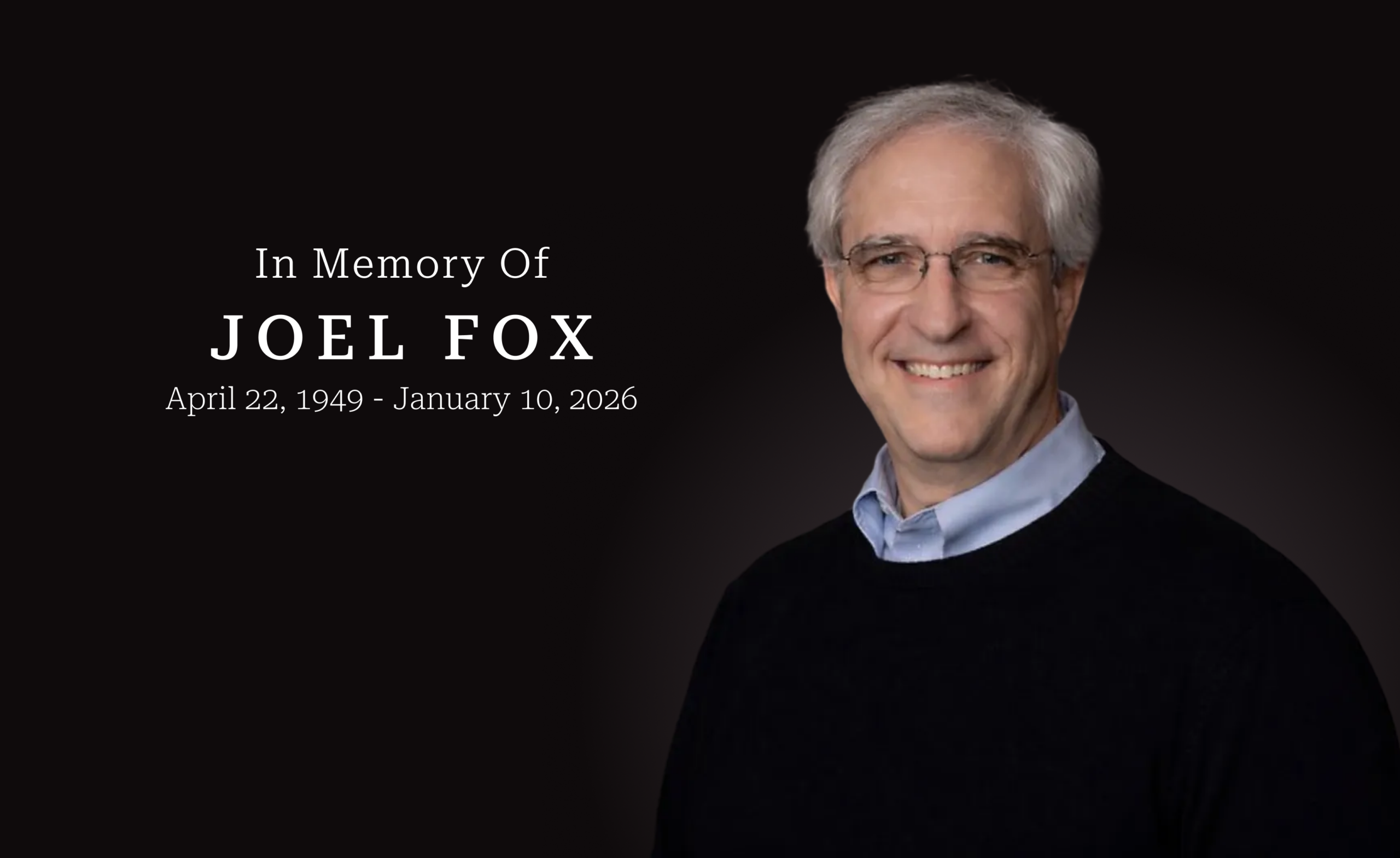
If political differences are destined to leave us divided and friendless, how do you explain the life of Joel Fox?

Fox died on January 10 after more than a decade of living with cancer. He was California’s most prominent taxpayer advocate since Howard Jarvis, for whom he worked, and whose anti-tax organization he led from 1986 to 1998. Fox, a Republican, advanced conservative ideas on TV and op-ed pages. He advised the campaigns of Gov. Arnold Schwarzenegger, Mayor Richard Riordan, and U.S. Sen. John McCain.

That profile, in our polarized times, might make you think Fox was one of those political ideologues who are driving the country apart. But the opposite is true.

Fox, more than any person in California politics, built deep relationships with people across the political spectrum. And he did not do this through consensus or compromise. Instead, Fox built friendships on disagreement itself—a warm, open, and curious style of disagreement.


Read More »

Voters Should Transform The L.A. City Council Into A Part-Time Council

Los Angeles City Council members are the
nation’s highest paid at $178,789 per year. 
The part-time Washington, D.C. council is next at $130,538.  New York’s part-time council makes $121,725
per year.

The L.A. Council costs the most per seat, $1.7
million, employs staff of over 300, and each receives a car (with parking meter
immunity) and a $100,000 yearly taxpayer-financed slush fund.

A part-time council would benefit city
governance.  In addition to savings, a
part-time council provides access to a more diverse field of
professionals.  Candidates would not have
to leave their private or public sector careers to serve.  A part-time council takes advantage of talent
and experience from outside City Hall – members that create jobs and balance
budgets on a regular basis.  City Hall
could use a daily dose of the real world. 

Read More »

Controlling costs must be paramount in health care reform

This is a critical time for the Affordable Care Act, the health care reform law passed by Congress last year. There is much at stake – for businesses, for consumers and for our economy. At the Bay Area Council, we believe the entire business community can and must play an active and vocal role in keeping cost control at the center of the health care reform bull’s-eye.

Rising health care costs continue to be a scourge on our economy, sapping resources and capital, and hampering our efforts to put the Great Recession behind us and start creating jobs. While the current economic malaise has reduced the rate at which costs are increasing, spending on health care nationwide continues to outpace the economy. Projecting from the latest figures from the California HealthCare Foundation, California health care spending has risen by 225 percent over the past two decades.

Read More »

One Small Good Seed, Buried By Democrats’ Bad Initiative Deed

If Democrats want to win 2/3 of the legislature, they should start acting like a party you might trust with 2/3 of the legislature.

If they ever want to fix the governing system of California to restore majority accountability, they should start acting like people you would trust to reform the governing system.

It’s not going to be enough to point out that the other guys are nuts.

In this context, the public consideration by Democrats (pushed by their tactically acute but strategically silly labor allies) of a last-minute bill to push initiatives Democrats don’t like from the June to November ballots is doubly dangerous.

The move won’t get very far. And it’s guaranteed to sow doubts about Democrats – specifically about whether they respect the people’s will. And this is the lesser of the dangers – because doubts about Democrats are merely the party’s problem.

Read More »

Initiatives All Belong on November Ballot

The Democrats’ plan to jam through a late-session bill blocking future initiatives from appearing on primary election ballots is a sneaky, baldly partisan, pro-union measure.

Having said that, it’s not a bad idea.

Darrell Steinberg, the Democratic leader in the state Senate, admitted Monday that the party is “considering” a bill that would limit all initiative measures to future November general election ballots, beginning, not coincidentally, next year.

It isn’t meant as a good-government plan.

You see, pro-GOP types already are collecting signatures for an initiative that would ban unions from using members’ dues for political purposes and barring direct contributions from unions. Let’s call it “Son of Paycheck Protection,” a similar measure that as Prop. 75 failed in then-Gov. Arnold Schwarzenegger’s disastrous November 2005 special election.

Read More »

Charge: Assembly ‘Cooks The Books’

Cross-posted at CalWatchdog.

Assemblyman Anthony Portantino, D-Pasadena, today presented independent research he says proves the California Assembly has manipulated budget numbers and spending patterns to mislead the public.

The battle between Democratic leadership and Portantino heated up last week over Portantino’s accusations of secretive bookkeeping practices by the Assembly. Thursday, Portantino introduced AB 1129 to force the Assembly to comply with the California Public Records Act, making access to Assembly financial and administrative records much easier.

Read More »

Why the Green Jobs Movement Failed

Cross-posted at NewGeography.

“Federal and state efforts to stimulate creation of green jobs have largely failed,” the New York Times reported last week, drawing similar conclusions to the ones we drew in our essay for The New Republic last October. Silicon Valley, home to the green jobs movement, actually saw the number of green jobs decline from 2003 – 2010.

The signature green jobs program was retrofitting homes and buildings to become more energy efficient, which boosters thought would create “millions” of jobs in the inner-city. In 2009 the Center for American Progress claimed that $5 billion in stimulus funding for weatherization and a price on carbon would lead to the retrofitting of every building in America in ten years, generating 900,000 jobs. In reality, we noted in TNR, the weatherization program had created just 13,000 jobs. “Two years after it was awarded $186 million in federal stimulus money to weatherize drafty homes,” the Times reported, “California has spent only a little over half that sum and has so far created the equivalent of just 538 full-time jobs in the last quarter… the program never really caught on as homeowners balked at the upfront costs.”

Read More »

Attacks on the People’s “Precious” Right of Initiative and Referendum Continue

On the top of a legislative effort by Democrats in the legislature to undermine the people’s referendum power, which I wrote about Friday, more skullduggery is rumored that could alter the outcome of specific initiative and referendum proposals by changing the ballot on which the measures would appear before voters.

Given the recent effort to pass a new tax bill on Internet retailers so as to thwart a referendum on a similar tax measure, it is not hard to believe the story circulating in Sacramento that altering election laws could force two measures to a different ballot for political gain. Besides the Internet tax referendum (if the first scheme to undermine it doesn’t get the necessary two-thirds vote to pass a new urgent Internet tax measure), an initiative to limit public employee union and corporation political donations could be pushed to the November 2012 general election ballot instead of the June primary ballot.

The latter measure would require that union committees and other employers obtain authorization in writing from employees who wish to contribute to the organization’s political campaign spending. It also bans unions and corporations from giving to candidates and candidate-controlled committees.

Read More »

California: A Season of Reform?


Cross-posted on Hoover Institution’s Advancing a Free Society.

Until the California economy (and tax revenues) begins to recover, a window of opportunity remains open for fiscal and governance reforms in the state. Slow, quietly, such reforms have begun, first with the enactment of redistricting reform and then the open primary. This week the California Assembly has before it SB 14, which calls for performance-based budgeting, and SB 15, which requires a multi-year budget.

This summer, several California organizations joined together to set the stage for additional reforms by convening the first statewide California Deliberative Poll. We brought together a scientific random sample of 412 Californians to spend a weekend deliberating over additional reforms that might help get the state moving again. The results of these deliberations were announced this week: www.nextca.org.

Read More »

All Vital Projects Deserve Relief From Restrictive Regulation, Not Just A Stadium

State legislation providing legal protections for a proposed football stadium in downtown Los Angeles should be opposed unless provisions are made to provide similar protection for critical public and non-profit facilities.


State legislators should put vital projects like hospitals, libraries, schools and transportation projects on equal footing with football stadiums giving them the same protection from legal exposure. The argument that a stadium needs special treatment because it will create jobs and spur local economic growth applies equally to other projects crucial for the public and funded by their tax dollars.

Read More »