

Featured Post

A Fox, A Hound, and a Friendship

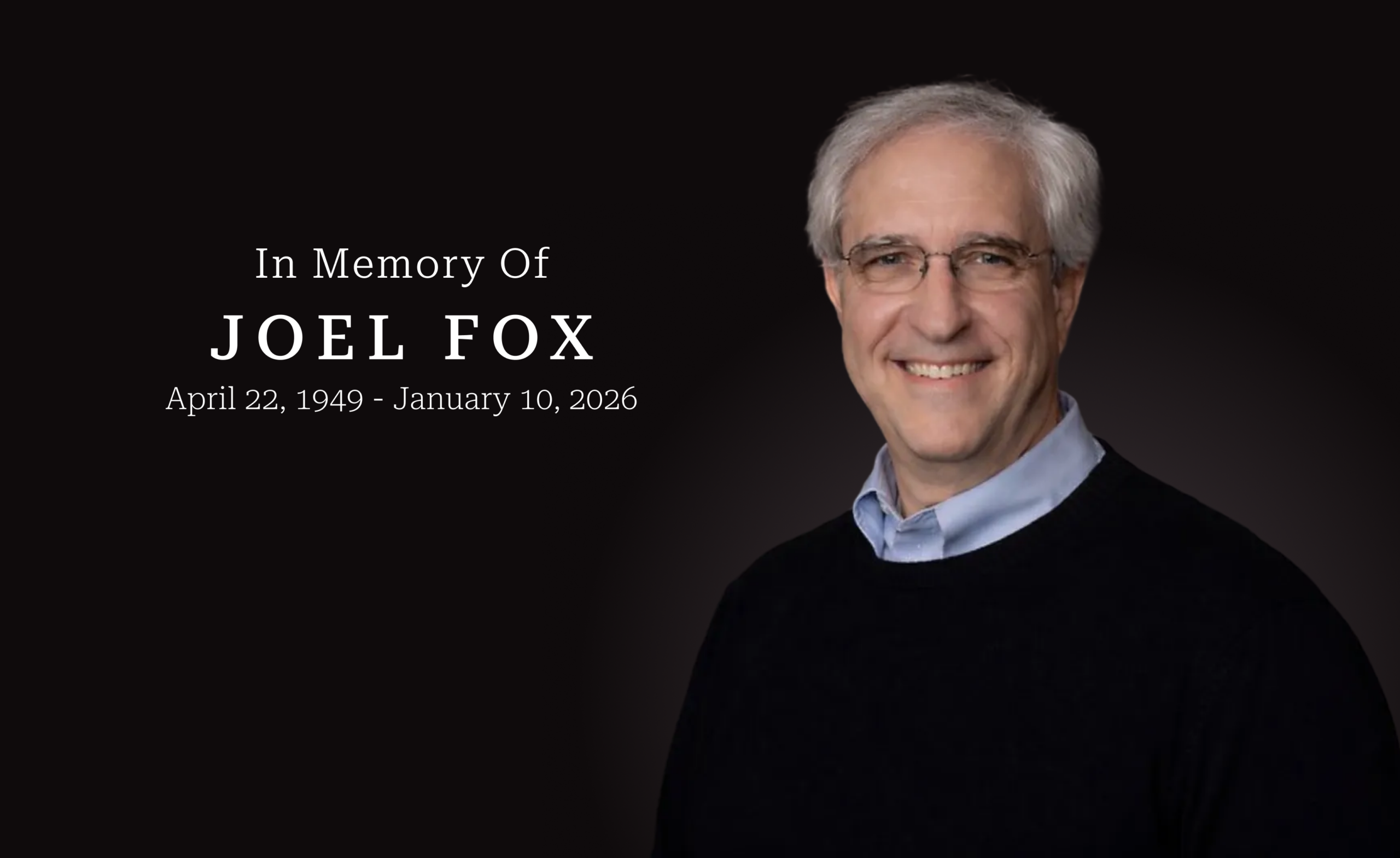
If political differences are destined to leave us divided and friendless, how do you explain the life of Joel Fox?

Fox died on January 10 after more than a decade of living with cancer. He was California’s most prominent taxpayer advocate since Howard Jarvis, for whom he worked, and whose anti-tax organization he led from 1986 to 1998. Fox, a Republican, advanced conservative ideas on TV and op-ed pages. He advised the campaigns of Gov. Arnold Schwarzenegger, Mayor Richard Riordan, and U.S. Sen. John McCain.

That profile, in our polarized times, might make you think Fox was one of those political ideologues who are driving the country apart. But the opposite is true.

Fox, more than any person in California politics, built deep relationships with people across the political spectrum. And he did not do this through consensus or compromise. Instead, Fox built friendships on disagreement itself—a warm, open, and curious style of disagreement.

Read More »

Brown’s Supreme Court Appointment of Goodwin Liu – Another Bird of a Feather?

Jerry Brown’s political past was clouded for many reasons.  Chief among them was his appointment of Rose Bird as Chief Justice of the California Supreme Court.  She was not reconfirmed to a new term by voters. In essence, she was kicked out of office. She earned that distinction because she literally refused to follow the law.  By appointing the unqualified Goodwin Liu to the Supreme Court, Jerry Brown now has one more Bird of a feather.

Brown believes Liu is qualified to sit on the highest Court in the state because he is “a distinguished legal scholar and teacher. He is a nationally recognized expert on constitutional law and has experience in private practice, government service and in the academic community.”  Notice what’s missing?  He has never been a judge.

Would you put someone in charge of a hospital’s surgery department to operate on you who has never practiced surgery – even for a day?  I wouldn’t and I also wouldn’t appoint someone to the highest Court in the state ahead of others who are far, far more qualified.  Indeed, Liu is not qualified for the highest Court in the state – maybe a County Superior Court – but not the Supreme Court.

Read More »

Trial lawyers defend taxpayers – no, really!

Here’s a case that could make a proper conservative’s
head explode.

Conservatives loathe trial lawyers who pursue class
action cases that shake down businesses and stifle innovation.

Conservatives also despise politicians and
bureaucrats who increase taxes without regard to fairness, impact or even
legality.

On Monday, matter and anti-matter met at the
California Supreme Court, when the justices – led by Ming Chin – ruled that taxpayers could aggregate into classes
to fight illegal taxes levied by local governments. The Court stated that where
state law does not spell out procedures for seeking individual refunds of an
illegal tax, then a class action remedy is appropriate. Such was the case with
the contested Los Angeles telephone tax.

Read More »

SB 168: An Expensive Signature

Meet
Claudia McKinney: paid-by-the-hour signature gatherer in Washington state.
Ostensibly, Claudia is the kind of person, Sen. Ellen Corbett’s (D-San Leandro)
SB 168 is meant to
support here in California. A fair judge of human nature, Sen. Corbett believes
that the current "payment per signature" system in California (and most states)
incentivizes the submission of fraudulent signings. The claim is one of those
that makes sense, but is not backed up by national data.

Supported
by Secretary of State Debra Bowen and a number of unions, SB 168 sits on
Governor Brown’s desk awaiting his signature. Please Governor Brown, don’t sign
it. Or at least before you do, call up Washington’s Secretary of State, Sam
Reed, and your old buddy, Joe Trippi.

Just four months ago in Olympia, Washington,
McKinney, was convicted of "felony initiative fraud" and
ordered to serve 160 hours of community service and pay fines. Last fall,
McKinney – paid by the hour – was getting signatures for an income tax proposition,
which Washingtonians turned down at the ballot box in November.  After submitting her signature sheets,
elections officials quickly noticed that hundreds of signings were in the same
pen, in the same style. Investigations by Secretary Reed’s office and the
Washington State Patrol confirmed that McKinney had, in fact, submitted over
300 fraudulent signatures.

Read More »

California Wages War On Single-Family Homes

Cross-posted at NewGeography.

In recent years, homeowners have been made to feel a bit like villains rather than the victims of hard times, Wall Street shenanigans and inept regulators. Instead of being praised for braving the elements, suburban homeowners have been made to feel responsible for everything from the Great Recession to obesity to global warming.

In California, the assault on the house has gained official sanction. Once the heartland of the American dream, the Golden State has begun implementing new planning laws designed to combat global warming. These draconian measures could lead to a ban on the construction of private residences, particularly on the suburban fringe. The new legislation’s goal is to cram future generations of Californians into multi-family apartment buildings, turning them from car-driving suburbanites into strap-hanging urbanistas.

Read More »

The Debt Crisis

Imagine a family that earns $50,000 a year but is spending more than $88,000 with a credit card balance of $330,000. The discussions around the kitchen table are likely to be a little tense.

Proportionally, that’s where Washington’s finances are today, and that’s why the national discussion is a little tense, too.

Even these figures belie the magnitude of the fiscal crisis. Shutting down the entire federal government and firing every federal employee is no longer enough to balance the budget. Mandatory spending – mainly entitlements – consumes more than the government takes in.

Fortunately, revenues vastly exceed debt payments, so threats of an actual default are so much flimflam. The President has both the legal authority and Constitutional obligation to prioritize payments to prevent a default. The problem is that a lot of other bills would go unpaid, causing a downgrade to the nation’s triple-A credit, forcing up interest costs, wiping out all of the savings now on the table and jacking up everything from mortgage interest costs to family credit card rates.

Read More »

Voters Should Reconsider High Speed Rail

California’s high speed rail program was in danger before
the debt ceiling debate in Washington. Given the desire to cut trillions of
dollars from federal spending that both sides of the debate advocate, seeing a
$20 billion payment to California’s questionable high speed rail system is
doubtful.

If the federal money fails to appear, private investors are
unlikely to kick in with their expected share of the project. That leaves
Californians on the hook. Voters authorized $10-billion dollars in bond revenue
for the project when they passed Proposition1A in 2008 (Disclosure: I was a
member of the No campaign.)

Since that time, reviews and studies on the proposed rail
system have criticized the project. 
Projected ridership numbers that were attacked during the campaign have
been continually challenged many times since the measure passed. The lack of a
business plan has been cited.  Costs
estimates have grown — no surprise there.

Proponents of the plan say, "Don’t worry," money is not
always lined up immediately for big infrastructure projects that have become a
reality. The plan is needed, they say, because California’s projected
population growth will demand alternative transportation systems.

Read More »

Double Majority is a Fair Comprise on Taxes

Dear Joel,

Thank you for calling me out  for my mention of "Taxpayer Right to
Vote"  at our encounter  at the Deliberative Poll/PBS event last month.  When I described it, I noticed that you were
at a loss for words at the common sense of allowing a majority of the
legislature to take a tax vote to a majority of the people.  Joel, from our hundred-plus joint appearances
and debates, I know how quick of mind you are, so I took your silence as
recognition of the natural good sense of the idea.

Think of it:  the majority
party of the legislature would be forced to develop a relationship with the
voters about issues of taxing and spending.  
The voters are not ideologically opposed to taxes-they vote for them
regularly–but they sure as hell don’t want their taxes going to waste.    Only if the state is taking care of its
budgetary business can the legislature justify going to the people for their
assent in taxation.  That’s what Jerry Brown
and the legislature did in their March austerity budget, prior to the tax vote
which never happened.   

Read More »

Clicked Off Over Internet Taxes

The California Legislature’s decision a few weeks ago to make Internet retailers collect sales taxes may have seemed a simple and straightforward way to raise $200 million or more in tax revenue. But it’s already become a contentious mess that promises to get expensive for the state.


Oh, and one other thing: The state may get little or no additional tax revenue from it.


Why? Because it’s easy for out-of-state online retailers to sidestep the sales tax. All they have to do is end their so-called affiliate relationships. Those are the in-state companies or even individuals who get a commission when a visitor to their website clicks on an out-of-state retailer’s link and buys something. Without those in-state affiliates, most online retailers have no official, legal presence in the state, and therefore aren’t obligated to collect sales taxes for the state.


In the past couple of weeks, affiliate relationships have been dropping faster than European sovereign debt ratings. Think about that for a moment. That means the affiliates – who are in-state folks – will lose commissions. That’s a loss of income, which could result in a loss of income taxes for the state.

Read More »