

Featured Post

A Fox, A Hound, and a Friendship

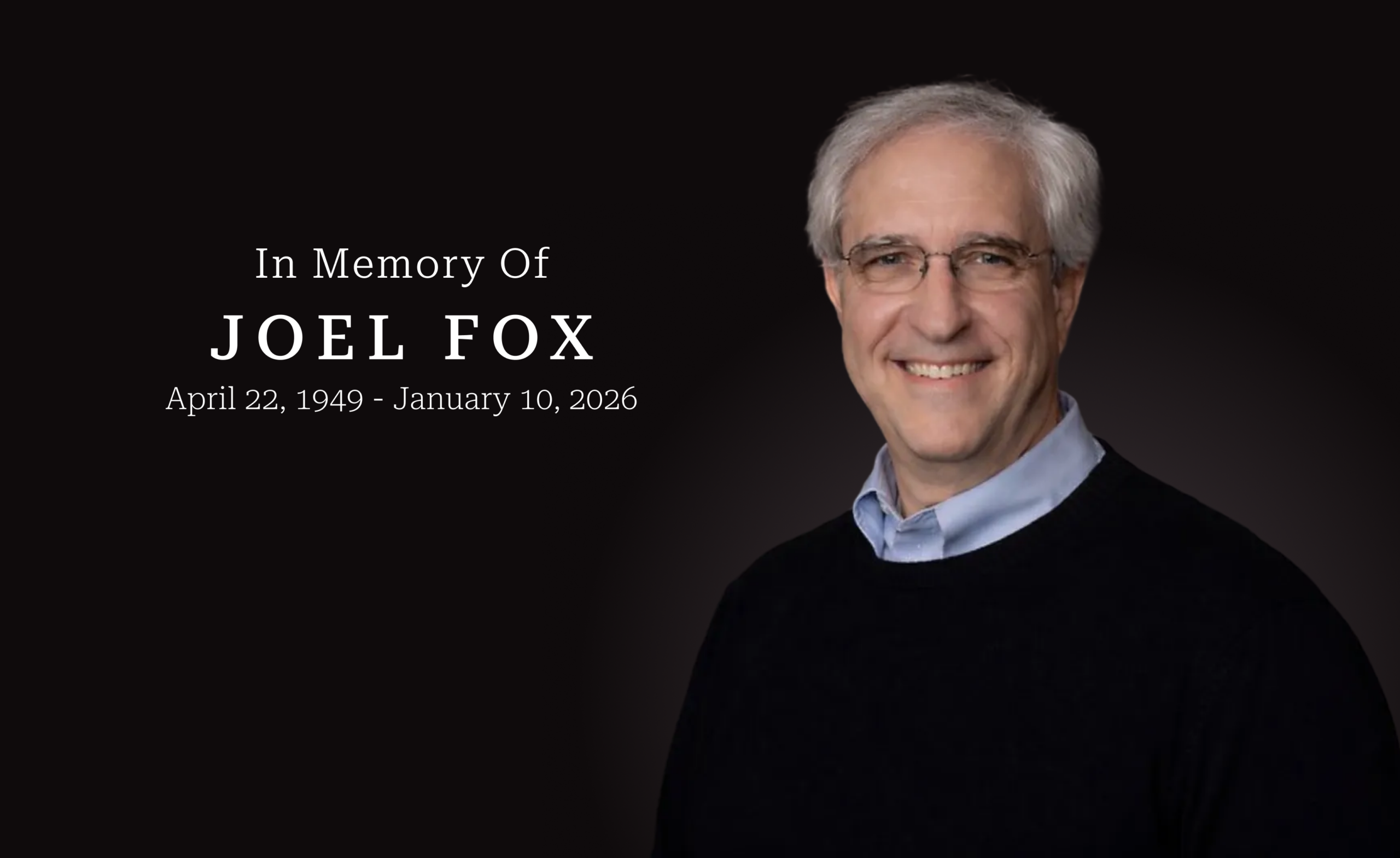
If political differences are destined to leave us divided and friendless, how do you explain the life of Joel Fox?

Fox died on January 10 after more than a decade of living with cancer. He was California’s most prominent taxpayer advocate since Howard Jarvis, for whom he worked, and whose anti-tax organization he led from 1986 to 1998. Fox, a Republican, advanced conservative ideas on TV and op-ed pages. He advised the campaigns of Gov. Arnold Schwarzenegger, Mayor Richard Riordan, and U.S. Sen. John McCain.

That profile, in our polarized times, might make you think Fox was one of those political ideologues who are driving the country apart. But the opposite is true.

Fox, more than any person in California politics, built deep relationships with people across the political spectrum. And he did not do this through consensus or compromise. Instead, Fox built friendships on disagreement itself—a warm, open, and curious style of disagreement.


Read More »

On the Budget: “We’re All Supply-Siders Now”

In another time of economic distress, President Richard Nixon famously said, "We’re all Keynesians now," referring to his turn toward the government stimulus policies espoused by economist John Maynard Keynes, usually rejected by Republicans like Nixon. Given the budget plan put forth by Governor Jerry Brown and the Democrats in the legislature you would think we are all supply-siders now. Or we better be if this budget is to succeed.

Supply-side economics suggests that tax cuts will stimulate the economy through increased consumer spending, resulting in increased revenue to government.

The Democrats new budget estimates $4 billion in new revenue. The failsafe is a trigger to cut education and other services if the revenue does not live up to projections.

Is this real money or more gimmickry to claim a balanced budget? Indications are that revenue is above projection for May and June so the prognosticators may be on to something.

Read More »

Budget Balancing Done Easy

Gee, if Gov. Jerry Brown knew it was this simple, we could have had a budget last January.

Instead of months of boring meetings, angry phone calls and furious finger-pointing, he just could have announced during his budget statement that state revenues are going to increase by, oh, let’s say $20 billion over the next year, and that California’s financial problems are over. At least on paper.

Problem is, the state has to pay its bills not on paper but with the cash money that only exists in the real world, not the sort of blue sky guesstimates that are good enough to "balance" next year’s budget.

But what does that matter if the new agreement means legislators will start collecting their paychecks again?

Read More »

What I Saw at the Deliberative Poll

This past weekend, more than 300 Californians – chosen at random, as part of an audience shaped to reflect the views and demographics of the state’s registered voters – gathered at a Torrance hotel for California’s first-ever Deliberative Poll.

They spent a few hours each talking in small groups – and then asking questions of experts together in one large room – about possible changes in California policy on four topics: the initiative process, legislature and representation, state-local government relations, and taxation.

I closely observed two different sub-groups during the poll. These groups may or may not be representative of the larger whole, and I don’t have poll results. The first preliminary results are due to be issued this Wednesday during a lunchtime event at the Commonwealth Club in San Francisco. But here, based on my own observation, are a few impressions:

-No ideological bias.

Read More »

The Fight for Jobs in Salinas

There may be tough economic times, but that can serve as the impetus for local governments to make tough choices. Some find ways cuts; others find ways of growing revenues, and that doesn’t always mean raise taxes.

In Salinas, unemployment remains a pervasive problem. So when once of the area’s major employers began strategically reviewing its assets and portfolios that made Mayor Dennis Donohue wonder how that could impact Salinas. On Thursday, he launched Salinas for Jobs, a business retention and attraction campaign. As part of his drive for economic development, Salinas for Jobs, working with companies like HSBC and others, hopes to create thousands of jobs in the private industry, and thereby increase the city’s tax base by tens of millions of dollars.

Read More »

California’s Future Depends on the Skills and Creativity of Its Citizens

Californians have thrived both economically and socially
because of the creativity and skills people have developed in our higher
education systems. But California is losing ground, with other states and
nations surpassing us in terms of both traditional four-year degrees and
focused technical training beyond high school. 
This lack of a skilled workforce is already beginning to undermine the
potential for a strong economic recovery in California.

Sixteen respected business leaders and mayors from across
California have joined together to form the California Competes Council, a
nonpartisan effort to ensure that the state has college graduates with the
skills needed to drive the future California economy.  I am serving as the lead staff person for the
Council.

The Council’s task is to analyze the well-documented gap
between emerging human capital demands and the projected number and quality of
graduates of California’s college and occupational training programs. By
bringing together leaders from both industry and government, the California
Competes Council will develop recommendations for improvement of the state’s
higher education systems to reinvigorate our pool of human talent and restore
it once again to be the envy of the nation.

Read More »

Realignment: A Trojan Horse for Local Governments

Democrat and Republican governors across the country are working to cut costs and lower taxes, but Governor Brown’s plan to level California’s $26 billion deficit – the result of several years of out of control government spending – is a “realignment” proposal that not only extends the previous administration’s ineffective tax hikes, but also irresponsibly shrugs the state’s financial burden onto the shoulders of cash-strapped county and municipal governments, creating a real threat to California’s economic recovery and public safety.

In April, Brown signed into law AB 109 – the public safety realignment bill – essentially launching a Trojan horse style attack on local governments and ensuring catastrophic consequences for Los Angeles County’s criminal justice system.

Set to take effect October 1st, this would shift responsibility for convicted felons and parolee supervision from the state prison system to county resources, transferring the state’s legal obligation to already overcrowded local jails and stressed law enforcement agencies — without fully paying for the increased burden.

Read More »

How to bungle dismantling Vernon

A few weeks ago, I published a piece in Fox and Hounds that not only called for the disincorporation of Vernon but outlined a future for that area. The proposal offered a resolution to the uncertainty and fear that both business and labor have regarding life after dissolution of the city. Shortly after the article appeared
here, Assembly Speaker John Perez introduced a companion bill to his AB 46, the disincorporation bill. The new bill, AB 781, would create – guess what! – a Vernon Community Services District, the special district advocated in that article here.

My proposal placed the governance of the CSD in the
hands of a board elected by business owners and workers. As it now stands, the city of Vernon is governed by a self-perpetuating city council elected by 67 voters, nearly all of whom owe their jobs, their cheap rent and their right to live in Vernon to the little clique that has run Vernon for over a century. The people who have the greatest stake in Vernon, the 1800 business owners and the 50,000 workers who commute into town each day, have no voice whatsoever in Vernon’s governance.

In the proposal, the CSD would continue to provide all of
the same services that business now receives from the city. That’s important because one of the main objections to disincorporation is about the loss of city services. Among the complaints are the fears that they will lose their cheap power rates, that the fire department they laud as one that couldn’t be better will be disbanded, and that police protection will deteriorate if the city is dismantled. Under my proposal, all those services would be provided by the CSD. There would be no change.

Read More »

Over 2 Million Retail Employees Will Benefit From AB 28X – E-Fairness Legislation

It is important to correct several claims made by Bill LaMarr in his post on this website. He argued that small businesses will be harmed by e-fairness; actually, small businesses have been harmed by the lack of e-fairness.

E-fairness means that all retail sales are treated the same. Whether a product is sold in a store or online, tax collection is treated the same way. Unfortunately, online-only retailers don’t collect the sales taxes, while their competition is required to do so. As a result, they are able to offer a much cheaper price than brick-and-mortar stores for the exact same product. For over a decade, small and large businesses have been asking for e-fairness at the federal level. More recently, e-fairness has been pursued at the state level. As e-commerce continues to grow, it is important to update our laws so they are consistent with 21st Century commerce.

Without it, small businesses that create jobs, pay their taxes and invest in the community will be forced to close their doors. More and more often, California employers are treated like showrooms where customers come and test out their products and then purchase online from an out-of-state, online-only retailer in order to avoid paying sales tax. Customers are actually required to remit the sales tax from these purchases to the state tax board, but most do not.

Read More »

Can Deliberative Poll Solve California’s Girlfriend Problems?

If you look
for a path to fixing California’s governance crisis in traditional public
opinion polls, you’ll look in vain. California voters are frustrated but don’t
understand the basics of state finance and governance enough to identify a way
to reform. In this way, the California electorate is like the worst girlfriend
(or boyfriend) you’ve ever had: she is angry about just about everything, but
can’t give you any clear instruction about what you can do to make her happy.

What if
California voters learned how the governance system really worked, through some
sort of educational process? Would they be able to point to a coherent way
forward?

Read More »