

Featured Post

A Fox, A Hound, and a Friendship

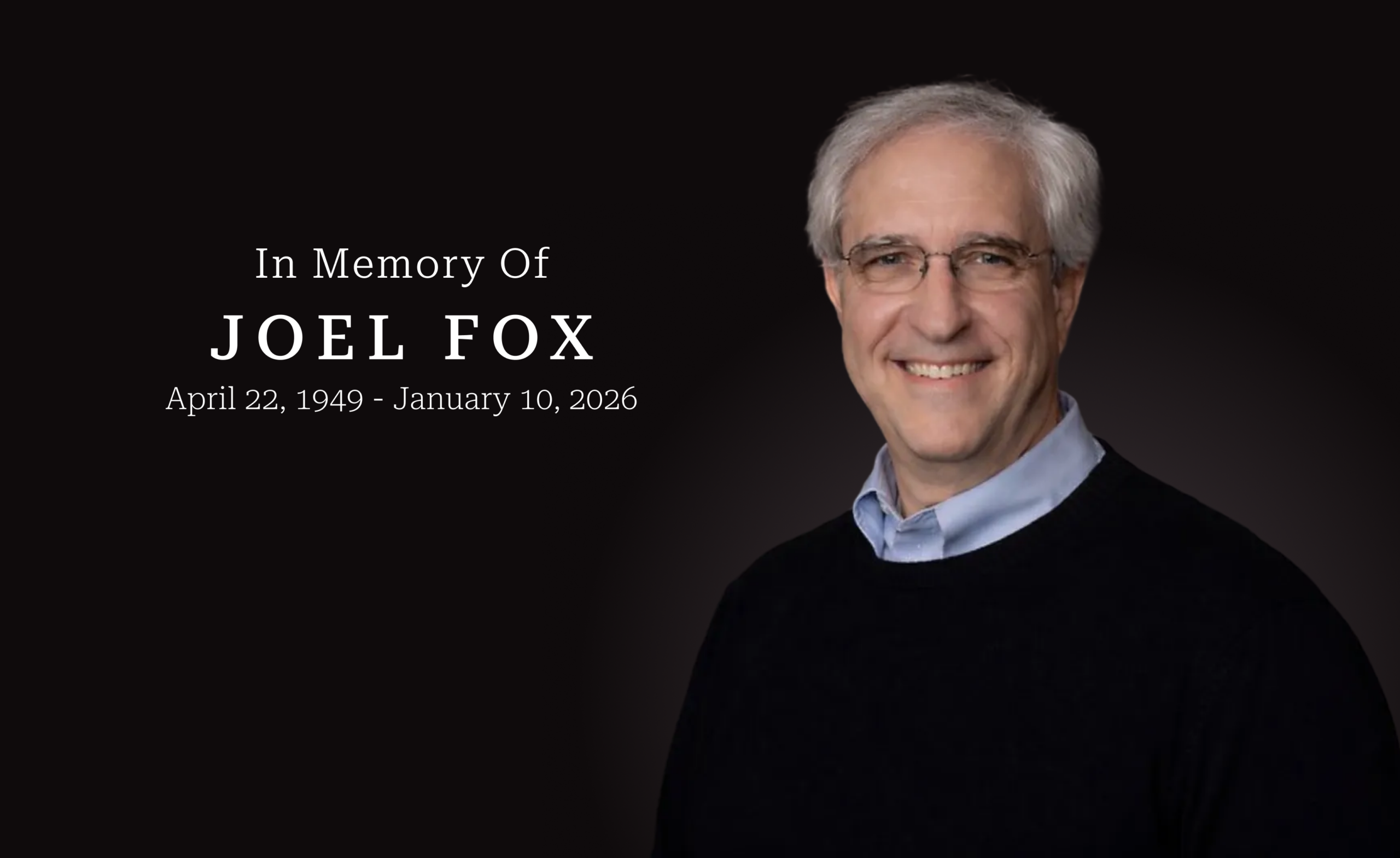
If political differences are destined to leave us divided and friendless, how do you explain the life of Joel Fox?

Fox died on January 10 after more than a decade of living with cancer. He was California’s most prominent taxpayer advocate since Howard Jarvis, for whom he worked, and whose anti-tax organization he led from 1986 to 1998. Fox, a Republican, advanced conservative ideas on TV and op-ed pages. He advised the campaigns of Gov. Arnold Schwarzenegger, Mayor Richard Riordan, and U.S. Sen. John McCain.

That profile, in our polarized times, might make you think Fox was one of those political ideologues who are driving the country apart. But the opposite is true.

Fox, more than any person in California politics, built deep relationships with people across the political spectrum. And he did not do this through consensus or compromise. Instead, Fox built friendships on disagreement itself—a warm, open, and curious style of disagreement.


Read More »

A Reckless Threat Against Prop 13

Governor Jerry Brown told an audience in San Francisco
yesterday that if he doesn’t get his tax plan on the ballot he expects labor
groups will file an initiative to change Prop 13 to raise property taxes on
business. Brown is trying to scare the business community into pressuring
Republicans to support his tax plan. But, many in the business community are
tired of the so-called "split roll" threat. They are preparing for battle.

In a business environment with the value of commercial
properties down about forty-percent and unemployment hovering around the
12-percent mark, an increased property tax is about the worst formula one can
imagine. Not only would business owners probably cut jobs to pay the tax, or
not hire the next employee to pay the new obligation, but small and minority
owned businesses, the very engine to drive the economy forward, would be hurt
and stalled because of the property tax increase.

Ironically, Brown made the statement at a meeting of 250
apartment owners and developers. The question authors of a split roll
initiative have to face is do they include apartments on the commercial side of
the roll or are apartments residential? Excluding apartments from the tax
increase cuts dramatically the revenue proponents of the split roll hope to
take in. Including apartments means a rent hike for renters. 

Read More »

Budget Judge

Controller John Chiang took a victory lap this week,
enjoying accolades from an unusual quarter – legislative Republicans and conservatives. But while Chiang has made
political hay by slamming shut the pay window, he has actually added to the
fiscal irresponsibility surrounding the budget.

If the Controller’s action is left unanswered, the
Legislature and Governor will effectively no longer have the final word on the
state’s budget. The Controller will be able to second-guess – and only after
the fact – whether a budget passed by the Legislature is a bona fide budget,
for purposes of deciding whether legislators will continue to be paid. The
criteria the Controller uses to determine "balance" is of his own devise. He
may change it from year-to-year as he pleases. He may even halt legislative pay
after the Governor signs and enacts a budget. 

One can envision future Big Five negotiating sessions
becoming a Big Six, with appropriate consideration given to the Controller’s
priorities.

Read More »

“Community Revitalization Trust” Bill Needs Revitalizing

One of the frustrating aspects of politics is that the right
hand doesn’t always seem to know what the left hand is doing, often to the
detriment of the very citizens that lawmakers and public agencies are
attempting to serve. A classic example of this is SB 535 (DeLeon), a bill
currently working its way through the Legislature.

SB 535 proposes to allocate a portion of greenhouse gas
(GHG) emitter fees collected as part of the cap-and-trade program under AB 32,
the state’s global warming law, to a trust intended to offset the impacts of
climate change on disadvantaged communities. 
On the surface this sounds like a good idea, and it would be but for the
fine print.  SB 535 does nothing to
address the impact on small and minority-owned businesses and the communities
they serve of the significantly higher electricity and natural gas rates
associated with cap-and-trade.  These
costs have recently been estimated at hundreds of millions of dollars.

Read More »

Outlawing New Houses in California

Cross-posted at NewGeography.

UCLA’s most recent Anderson Forecast indicates that there has been a significant shift in demand in California toward condominiums and apartments. The Anderson Forecast concludes that this will cause problems, such as slower growth in construction employment because building multi-unit dwellings creates less employment than building the detached houses that predominate throughout California and most of the nation. The Anderson Forecast says that this will hurt inland areas (such as the Riverside-San Bernardino area and the San Joaquin Valley) because their economies are more dependent on construction than coastal areas, such as Los Angeles, the San Francisco Bay Area and San Diego.

Detached Housing Permits Remain Strong in the Historic Context: The Anderson Forecast reports that multi-unit building permits have recovered more quickly than building permits for detached housing. However, any such shift is likely to be highly volatile. Since the peak of the bubble, the distribution of building permits between detached and multi-unit in California has been on a roller coaster. Indeed the Anderson Forecast characterizes the “2010 US Census” as “showing a significant shift in demand toward condominiums and apartments.” Actually, the 2010 US Census asked no question from which such a conclusion about housing types or any question from which such a conclusion could be drawn.

Read More »

Cutting Lawmakers’ Pay is Good Politics

Quick quiz: What two things does John Chiang have in common
with Alan Cranston, Houston Flournoy, Gray Davis and Steve Westly?

Well, like the others, he’s state controller and, as his
decision Tuesday to cut off pay to the Legislature showed, Chiang also doesn’t
plan to end his political career as California’s bookkeeper-in-chief.

Right or wrong – and you’ll find people on both sides –
Chiang’s decision to jump into the middle of the state’s annual budget brawl
was as much a political choice as an economic one.

You won’t hear that from Chiang, of course.

"My job is not to substitute my policy judgment for that of
the Legislature and the Governor, rather it is to be the honest broker of the
numbers," Chiang said
in announcing that the budget Gov. Brown vetoed last week wasn’t balanced, so
lawmakers won’t get paid.

Read More »

The All Powerful Controller

Congressman Tom McClintock ran for the state
controller’s job twice when he served in the California legislature. Both times
the vote count went past election night to discover he had lost. The reason he
wanted to gain the controller’s office, McClintock once told me, was that he
believed there was a lot of power in the office that wasn’t being utilized to
direct the fortunes of the state budget.

That suggestion seemed overblown until John
Chiang started flexing the muscles of that office.

A state controller McClintock undoubtedly would
be tackling budget issues differently than Controller Chiang – but it is clear
that Chiang, as the chief fiscal watchdog for the state government, is
enlarging the scope and power of the once relatively obscure office.

One year ago, Chiang battled
Governor Arnold Schwarzenegger
toe-to-toe over Schwarzenegger’s effort to
limit most state workers to a federal minimum wage during the last state budget
crisis.

Read More »

Emergency Docs Fear Being Sued

A recent poll from the American College of Emergency Physicians (ACEP) shows that emergency doctors are seriously concerned about being sued. More than half of the 1,768 physicians surveyed said that such concerns drive them to order more tests, and 44 percent said that fear of lawsuits is the biggest challenge to reducing emergency department costs. Even the President of ACEP, Sandra Schneider, MD., has said, “Medical liability reform is essential to meaningful healthcare reform. Without it, healthcare costs will continue to rise.”

What’s more fascinating is that these concerns have not been alleviated by last year’s passage of the health care reform. Sixty-eight percent of respondents said the law has not made specialists more willing to treat emergency patients. And while there are bills moving through the House of Representatives dealing with tort reform, they must overcome stiff opposition.

To me, question 12 of the survey is the biggest eye opener. The question asked, what is the reason you conduct the number of tests you do? More than 50 percent stated it was due to fear of lawsuits.

Read More »

Grading the Teachers

Cross-posted at CityJournal.

California’s public school teachers are the highest paid in the country, earning about $63,000 a year on average, along with generous health-insurance and pension plans. Their salaries and benefits are funded with taxes paid by all of us—workers, consumers, homeowners, and businesses large and small. It’s useful to think of taxpayers as owners of our troubled public education franchise, which has a statewide high school dropout rate of about 30 percent. And for many of those who do graduate from high school and go on to college, remediation is essential. Value-added teacher evaluation—a method that estimates the contribution teachers make to student’s test-score gains—is a concept whose time has most definitely come. Californians are entitled to know precisely who is and isn’t delivering the goods for their children.

The Los Angeles Times last month published a much-anticipated follow-up to its path-breaking 2010 investigation, which ranked 6,000 third-, fourth-, and fifth-grade teachers based on their students’ progress on standardized tests year after year. The updated rankings include data for more than 11,500 teachers. Using the California Public Records Act, Times reporters Jason Felch, Jason Song, and Doug Smith obtained student math and language arts scores for the Los Angeles Unified School District from 2003 through 2009. The newspaper commissioned Richard Budden, a senior economist and education researcher with the Santa Monica–based RAND Corporation, to analyze the data. Using the value-added technique, he converted the scores into percentile ratings, and then divided them into five equal categories from “least effective” to “most effective.”

Read More »

Chiang’s legislative pay freeze is a sideshow

As the most outspoken, if not prettiest, opponent of Proposition 25 on these pages, I take smug
satisfaction in how the measure has exploded in its champions’ faces.

Last November, Senate Leader Darryl Steinberg said, "(T)here is no reason
for a late budget again with the passage of Prop. 25… (it’s) a real game changer."
Yes, the Democrats on a virtually party line, simple majority vote passed and
sent to the Governor a budget, which he promptly vetoed. Boom!

Well, at least (they thought) by passing a budget on
June 15 they avoided the pay penalty included in the measure. Boom! Controller
John Chiang has stopped their salary and expenses because the on-time budget
wasn’t balanced budget.

Read More »