

Featured Post

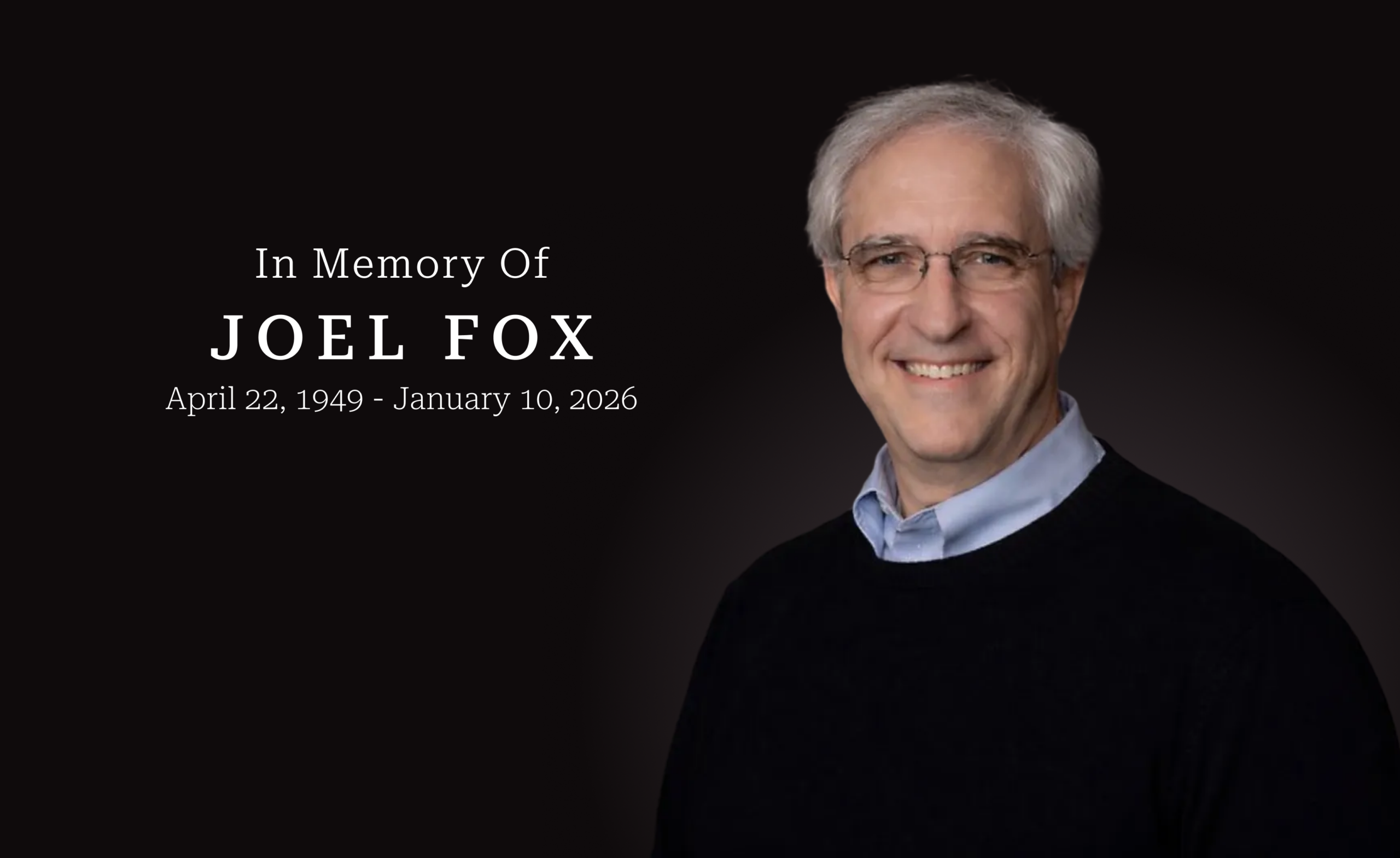
A Fox, A Hound, and a Friendship

If political differences are destined to leave us divided and friendless, how do you explain the life of Joel Fox?

Fox died on January 10 after more than a decade of living with cancer. He was California’s most prominent taxpayer advocate since Howard Jarvis, for whom he worked, and whose anti-tax organization he led from 1986 to 1998. Fox, a Republican, advanced conservative ideas on TV and op-ed pages. He advised the campaigns of Gov. Arnold Schwarzenegger, Mayor Richard Riordan, and U.S. Sen. John McCain.

That profile, in our polarized times, might make you think Fox was one of those political ideologues who are driving the country apart. But the opposite is true.

Fox, more than any person in California politics, built deep relationships with people across the political spectrum. And he did not do this through consensus or compromise. Instead, Fox built friendships on disagreement itself—a warm, open, and curious style of disagreement.


Read More »

Controller becomes deputy to new sheriff in town

When California Controller John Chiang decided on Tuesday that
legislators would not be paid, he did so by connecting two provisions in the
Constitution – one approved in 2004 (Proposition 58) that required budgets
to be balanced –  and the other approved
last year (Proposition 25) that prohibited legislative pay if the budget
is not passed by June 15.

Many lawmakers have taken issue with the controller’s decision,
and some have threatened to sue to get their pay reinstated. 

The dispute over what constitutes "fiscal balance" has been with
us for a long time, even before Prop 58. California’s state budgeting
process has always been based on an agreement between the legislature
and the governor about what fiscal balance means in a given year, with the Legislative Analyst’s Office (LAO) providing commentary.

That LAO commentary often deals with identifying
"threats" to fiscal health – sometimes through the courts – and the
ability of the administration to achieve savings in the adopted budget.

Read More »

Who’s Really Sandbagging the Budget Deal?

On Monday, I recapped in short snippets how we got to this point in the budget debate. Today, more depth on the sad story of the state budget.

While legislative Republicans have been widely blamed for sandbagging the Governor’s January proposal to ask voters to extend taxes, there has been scant attention paid to the fact that the most significant opposition to the Governor’s plan has not been from Republicans or business, but rather from the public employee unions – particularly SEIU and CTA.

When the Governor initially suggested a June special election to extend the sales, income and VLF taxes enacted as part of the 2009 budget compromise (supported by many businesses), many in the business community – and even some legislative Republicans – indicated support for the extensions and vote, if they were part of a comprehensive, bi-partisan solution that included fiscal reforms. While labor publicly indicated vague support for the Governor’s plan, behind closed doors the public employee unions were, by most accounts, aggressively pushing back against the Governor’s special election.

Read More »

17,000 Small Businesses Oppose E-Taxation

In
the mad scramble to deal with the state’s budget deficit our Legislature would
have you believe that taxing internet sales is the equivalent of the goose that
laid the golden egg – that it will produce revenue for the state without a cost
to anyone in California.

And
if you believe that, perhaps we can get the tooth fairy to take care of the
rest of the budget.

AB
28X – now headed to the Governor’s desk – would place new tax burdens on
Internet sales and is a direct threat to small business and Internet
entrepreneurship. The California Small Business Alliance is a member of the
Coalition to Protect Small Business Jobs, calling upon Governor Brown to veto
the e-taxation bill approved by the California Legislature.

If AB
28X is signed, similar bills across the country will follow, and this would be
an accounting nightmare for small business owners. Unlike larger retail chains
with large accounting staffs and in-house legal counsel, small businesses
simply do not have the resources to contend with calculating, collecting and
remitting taxes to thousands upon thousands of tax jurisdictions across the
country. It would be a competitive disadvantage for small retailers and would
force many of them to close their doors.

Read More »

The Counterlife in California Employment

The Counterlife, published in 1986, is the fourth in
the series of Philip Roth’s novels that focus on the novelist Nathan Zuckerman.
The book includes a number of the familiar Roth themes: midlife doubts and
reconsiderations, marital fidelity and infidelity, Jewish identity in America
and Israel. It differs from other Zuckerman books (and most novels) in its use
of counter-narratives; sections of the book jump across time, across
characters, across chronologies, across facts, so that by the end of the book
there are no clear storylines.

We’ve reached that point of multiple, sometimes
contradictory, storylines in the matter of California’s job creation and
structure. The most recent California monthly employment numbers, released last
Friday, show an economy that continues to struggle to generate jobs. The state
unemployment rate fell from 11.8% to 11.7%, but as most commentators pointed
out, this was due to a drop in the civilian labor force, from 18,028,000 in
April to 17,993,000 in May. The state lost a net of 29,200 payroll jobs.

Read More »

Politicians Writing History

Legislators are making themselves into history professors
again and that is probably not a good thing. Days before the Assembly Education
Committee meets on SB 48, which would require school textbooks to include the
role and contributions of lesbian, gay, bisexual, transgender Americans, and
persons with disabilities, the Department of Education released the 2010
National Assessment of Educational Progress, which reported that only 12% of
high school seniors have a firm grasp of the nation’s history.

How are the two issues connected? As eminent historian,
David McCullough recently told the Wall
Street Journal
, one of the problems resulting in the poor understanding of
history is that, "History is often taught in categories – women’s history, African
American history, environmental history…."

The categories come from political meddling. California law
provides a long list of groups required to be treated in textbooks. The Los
Angeles Times editorialized
against SB 48
, stating, "Years ago, California made the wise
decision to have experts draw up a balanced social studies curriculum that
became a model for schools nationwide. Legislators aren’t improving education
in the state by stuffing the curriculum with new politically correct
requirements…."

Read More »

I Told You So, Part 2: The Failure of Prop 25

Last
October, before California voters adopted the majority vote measure Prop 25, a
brilliant, devastatingly handsome young pundit warned
in this very space
that the measure, whatever its merits, would make things
worse.

Wrote the pundit: "Prop 25 might make deficits worse and force
the state to do even more borrowing. To the extent Prop 25 were to have any
practical effect, it would threaten to deepen deficits. Consider this scenario:
the removal of the supermajority on budget bills makes it a little bit easier
for Democrats to support spending that they otherwise couldn’t get Republicans
to agree to by two-thirds vote. But Republicans still block tax increases to
pay for the additional Democratic spending."

Concluded the pundit: "The
result: more deficits, more gimmicks, more borrowing."

Last
week, with Republicans blocking taxes, Democrats passed a budget so full of
borrowing and gimmicks that Gov. Brown vetoed it.

Read More »

State Water Resources Control Board Needs to Exert Some Self-Control

Earlier this year, many of my colleagues from the
Legislature from both parties joined me in signing a letter protesting the
State Water Resources Control Board’s (SWRCB) draft Industrial Storm Water
permit.

The SWRCB has proposed a revised storm water permit that
would require that businesses and public agencies comply with several new
requirements that are over and above what the US Environmental Protection
Agency (EPA) mandates and will result in hundreds of millions of dollars in
additional costs with no proven environmental benefits.

Many California industries and many public agencies have
warned the costs of these proposed storm water requirements would be huge, with
no proven benefits. In addition, the SWRCB has not been willing to conduct any
cost/benefit analysis or to look at less costly alternative methods for
controlling storm water runoff.

We have urged the SWRCB to go back to the drawing board. We
requested they conduct a cost-benefit analysis of this action and substantively
engage with stakeholders.

Read More »

Prop. 13 Split Roll Would Be Ripoff

Co-authored by Charles B. Warren. Cross-posted at CalWatchdog.

Democrats in the California Legislature want to repeal the property tax reassessment protections of Proposition 13 for commercial properties under the dubious notion that there is a pot of California 49er gold at the end of the rainbow. Prop. 13?s existing protections for homeowners would remain the same.

If the commercial protections are removed, this would create what’s called a “split roll”: different tax rates would apply to home and commercial property.

The vehicle being used to create split roll is  AB 448. But Democrats, to twist a phrase from Mark Twain when he was in California, may find that “there’s no gold in them thar hills.”

The current system of property taxation in California under Prop. 13 is based on reassessing all properties in the state only when there is a valid sales transaction, just as capital gains taxes are paid only when stock is sold.

Read More »

Memo to Redistricting Commissioners: Beware of Those Who Protest Too Much!

On July 10, the Citizens Redistricting
Commission released their first draft of the newly drawn lines for
congressional, state legislative and Board of Equalizations districts.

Not surprisingly, several incumbents
weren’t too please, particularly those who found themselves located in a new
district where one or more fellow incumbents also resided or, in the extreme,
no district to run in at all.

But aside from them, the loudest cries
came from Latino and Republican leaders … two groups that seldom agree on
anything political.

To understand this, one has to first look
at the 2001 redistricting plan, a highly gerrymander plan drawn specifically to
protect the incumbents of both political parties.

Read More »