

Featured Post

A Fox, A Hound, and a Friendship

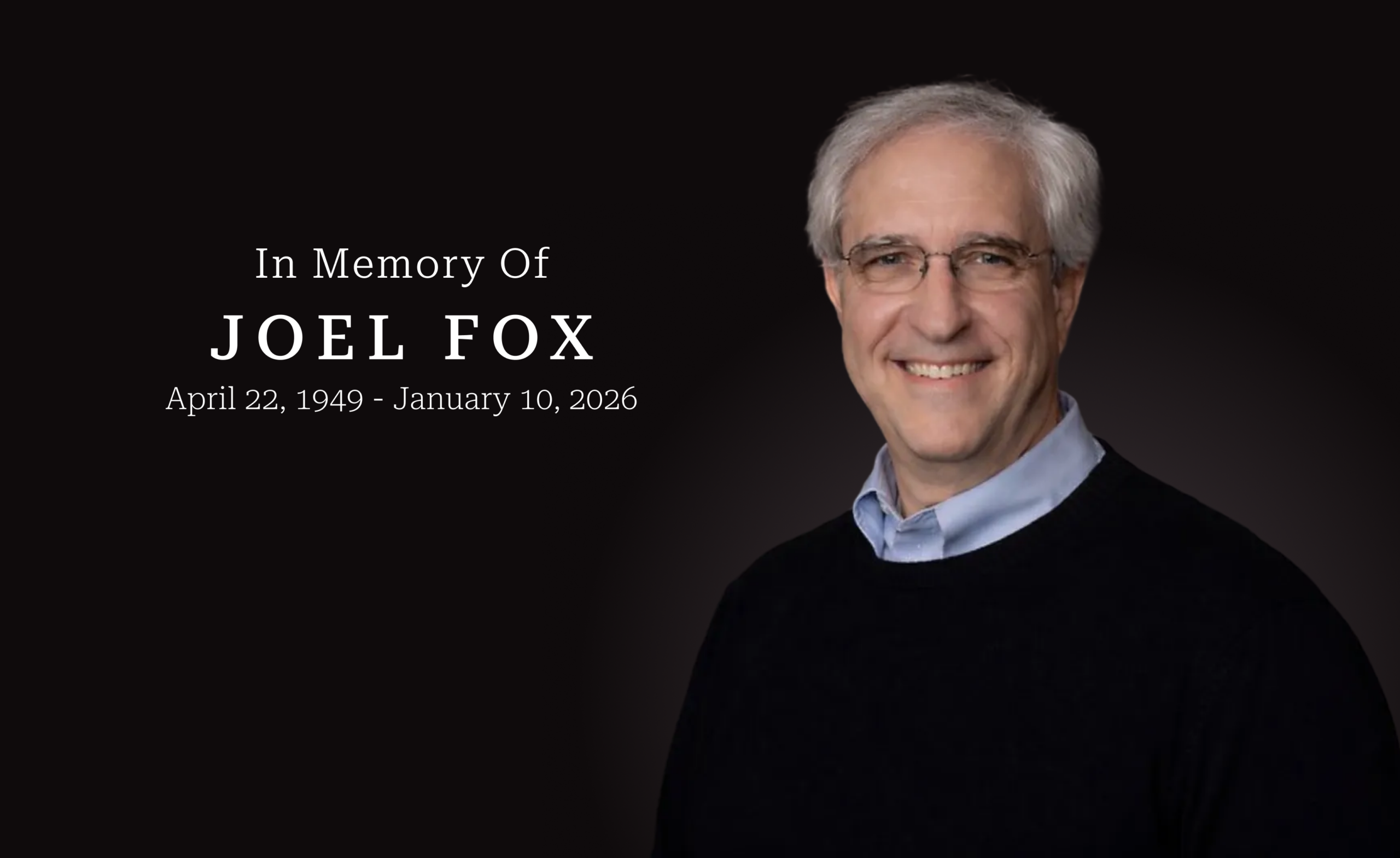
If political differences are destined to leave us divided and friendless, how do you explain the life of Joel Fox?

Fox died on January 10 after more than a decade of living with cancer. He was California’s most prominent taxpayer advocate since Howard Jarvis, for whom he worked, and whose anti-tax organization he led from 1986 to 1998. Fox, a Republican, advanced conservative ideas on TV and op-ed pages. He advised the campaigns of Gov. Arnold Schwarzenegger, Mayor Richard Riordan, and U.S. Sen. John McCain.

That profile, in our polarized times, might make you think Fox was one of those political ideologues who are driving the country apart. But the opposite is true.

Fox, more than any person in California politics, built deep relationships with people across the political spectrum. And he did not do this through consensus or compromise. Instead, Fox built friendships on disagreement itself—a warm, open, and curious style of disagreement.

Read More »

Education Committee Puts Union Interests First – Students Last

Education reform legislation I authored was voted down in the Senate Education Committee yesterday following an outburst of opposition from union interests that were bent on protecting the status quo. SB 355 would have allowed school districts in California to base layoffs on teacher performance rather than just teacher seniority. The measure is part of a broader, nationwide wave of school reform that will allow school districts to foster and retain quality teachers.

With our schools struggling to increase their education quality, I’m disappointed the Senate education committee chose the status quo related to which teachers we let go. Half of our state’s schools are experiencing declining enrollment. Regardless of this year’s difficult budget, layoffs are being made. The defeat of SB 355 means incompetent teachers are still given preference to better teachers because of the quality blind approach we currently use.

Union members with the California Teachers’ Association showed up in force during the committee hearing to oppose my reform efforts, and at the same time, defend the “Last in, First Out” (LIFO) hiring policy. This policy ensures that, no matter how proficient many teachers are, no matter how hard they work, no matter how well they teach, they will receive layoff notices solely based on the date they were hired.

Read More »

Main Street Menace of the Week: Assembly Bill 10 (Alejo)

While the legislature is in session, the National
Federation of Independent Business/California will be profiling anti-small
business bills and the adverse effect they would have on California’s job
creators.  This is the third column of
the 2011 series.

Anyone even remotely tuned in knows that the cost of doing
business in California is high, much higher than the rest of the nation.
California consistently ranks as one of the least business-friendly states in
America, and consequently is losing businesses, big and small, to states that
boast relocation incentives and pro-business regulations.

In order to make up for high taxes and a burdensome
regulatory process, California legislators have decided to… increase the cost
of labor.  Huh?

Read More »

Nigeria teaches us a lesson in democracy

We Americans can learn something about democracy from the people of Nigeria, where I recently joined a few hundred international observers to witness that nation’s presidential election. It was an extraordinarily moving experience to watch democracy being born, and a reminder of what we enjoy as Americans but increasingly take for granted.

Unlike Nigeria’s election in 2007, which was so violent and corrupt that observers called it “the worst they had ever seen anywhere in the world,” observers reported that this year’s presidential election was fair, transparent and mostly peaceful. For the Nigerians I talked to on election day, this was important for the world to know.

Read More »

Off the Tracks

The Legislative Analyst issued
a report yesterday
slamming California’s High Speed Rail project. The
analyst cited a number of problems including uncertain funding, conditions
attached to federal funds and poor management of the project. While the analyst
recommended some changes that might help the project, I wonder if the voters would
like a second crack at voting on high-speed rail. Cut their loses before things
get worse.

The huge $9-billion bond voters approved as Proposition 1A
in 2008 passed with 52.6% of the vote with pretty much all the money spent in
the campaign on the Yes side. (Full Disclosure: I participated in a number of
debates representing the No side.) Ultimately, the cost of the huge project is
pegged at $43-billion.

Read More »

The Pension Debate Is Small and Boring

People in Sacramento have a real talent for turning what
could be big, interesting debates into narrow, tit-for-tat snooze fests. The
latest example of this capital city myopia is the pension debate.

Each day,
that debate gets narrower, with very little discussion of the nature of
pensions themselves. On one side, those skeptical of pension benefits and their
costs accuse public workers and their unions of selfishness and trying to
bankrupt the state. The union side responds with its own ad hominem attacks,
questioning the financing and political ties of the groups that support the
pension skeptics.

This is
frustrating to watch, because the pension debate should be big. It touches on
virtually every significant economic debate in the world today, among them the
challenges of longer life spans, the nature of innovation and job creation, the
structure of the public sector, the regulation and performance of the financial
services business, and the welfare state.

Read More »

Kam Kuwata Award for Political Involvement Set Up at USC’s Unruh Institute

Anyone who’s reading this knows about Kam Kuwata, either by reputation or if you were lucky, by personal interaction and friendship. We know what an effective political operative he was, of course, and what a good and kind person he was as well. But one side of Kam you may not have seen was his willingness to be so helpful and encouraging to young people, and how devoted he was toward supporting them as they decided whether and how to involve themselves in public service.

He not only participated in our events at USC, but he would stay afterwards to talk individually with students who were considering careers in politics or government. He demonstrated to them that you could respect an opponent while still holding firm to your own principles and beliefs, and that you could fight fiercely on behalf of those beliefs without demonizing those with whom you disagreed.

As those of us who’ve known Kam for so many years begin to consider our own lives after politics, I can think of no greater tribute to him than to provide that same guidance and support to our next generation of political leaders. We at the USC Dornsife College of Letters, Arts and Sciences and at the Unruh Institute are committed to carrying on his name, his memory and his legacy. We hope you’ll join us.

Read More »

Taxed by the Mile

Americans pay lots of taxes but never before have taxes been judged by
distances traveled. That could soon change.

The Obama Administration is floating a Vehicle Miles Traveled Tax as part
of the Transportation Opportunities Act.

Drivers in the United States pay auto purchase and leasing taxes.
There are already biting federal and state gasoline and fuel usage taxes.
Drivers pay bridge and tunnel and toll booth charges, and trailers and
truckers and recreational vehicles often pay additional fees.

And of course we are taxed every time we fill up or repair, or get service or
maintenance on our cars.

Read More »

Will Brown Alter Tax Proposal Because of New Revenue?

Day one of the “State of Emergency” protests by the teachers’ union and others has come and gone and the earth didn’t move. Protests were moderate by capitol standards. The arrests amounted to a sideshow.

Where there was movement was a shift in the policy debate because of the unexpected $2.5 billion that now sits in the state treasury. Republicans in the legislature are proposing to use that revenue to offset proposed education cuts. I expect every teacher who visits a Republican legislator during the protest week will hear that refrain.

What is the teacher’s response? No thank you? Hard to imagine.

The real question about this revenue surge is does it continue? Tax experts I talked to yesterday think it very well could. Remember the deficit that the governor is trying to close is for this year and next year. If the revenues continue to uptick next year then the deficit shrinks further and the governor’s current proposal of $10 billion in yearly new (or, in the governor’s language: extended) taxes will be seen as overkill.

Read More »

Can we make growth a priority?

California’s budget, like the economy as a whole, may
be slowly slogging out of the Great Recession. Tax collectors have logged
better than anticipated receipts. The Legislative Analyst reports revenues for the
current fiscal year to be about $2.5 billion better than expected. 

Of course, only in Sacramento would more revenues
(without tax increases) be a mixed blessing. The Brown Administration is downplaying the revenue
bump, placing it in the context of overall pressures on the budget, while
Republicans are barely restraining themselves from singing "Happy
Days are Here Again." These reactions are proxies for the parties’ positioning
on the Governor’s proposal to temporarily extend the 2009 tax increases.

A $2.5 billion, or even a $5 billion improvement in
tax revenues is still a long way from closing the remaining $15 billion
deficit. Yet the least painful approach and most enduring solutions are still
conspicuously absent from the public policy agenda – improving the state’s
economic performance. After all, the $2.5 billion in higher revenues came about
because of economic growth. Imagine what would happen if growth could be
improved and quickened.

Read More »