

Featured Post

A Fox, A Hound, and a Friendship

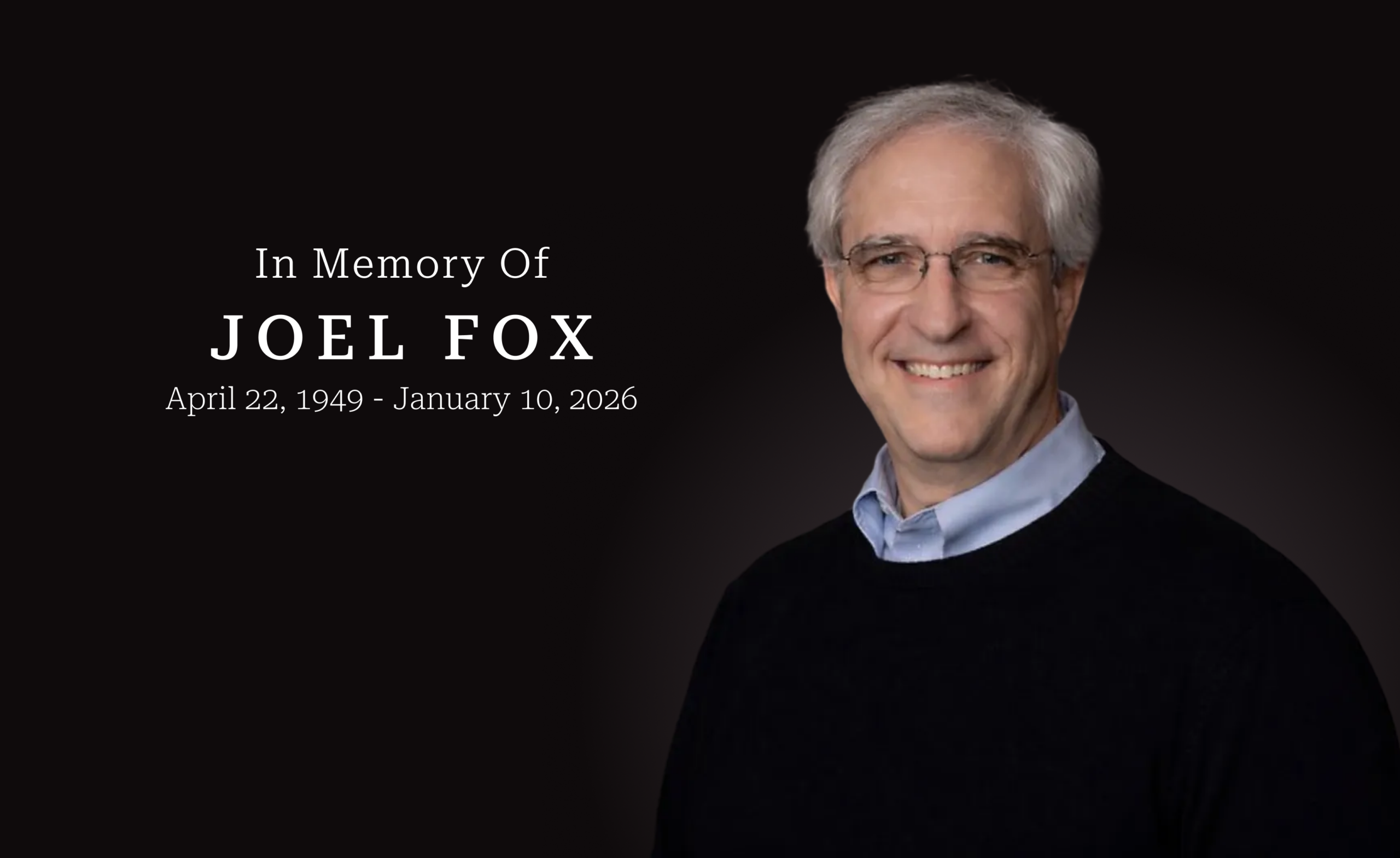
If political differences are destined to leave us divided and friendless, how do you explain the life of Joel Fox?

Fox died on January 10 after more than a decade of living with cancer. He was California’s most prominent taxpayer advocate since Howard Jarvis, for whom he worked, and whose anti-tax organization he led from 1986 to 1998. Fox, a Republican, advanced conservative ideas on TV and op-ed pages. He advised the campaigns of Gov. Arnold Schwarzenegger, Mayor Richard Riordan, and U.S. Sen. John McCain.

That profile, in our polarized times, might make you think Fox was one of those political ideologues who are driving the country apart. But the opposite is true.

Fox, more than any person in California politics, built deep relationships with people across the political spectrum. And he did not do this through consensus or compromise. Instead, Fox built friendships on disagreement itself—a warm, open, and curious style of disagreement.


Read More »

Are Harris and Newsom Really the Democratic Future?

Who will emerge as California’s most important Democratic
politicians over the next generation? I don’t know. But I’d be willing to bet
good money that Gavin Newsom and Kamala Harris are not the answers to that
question.

A Los
Angeles Times story
this weekend suggested the opposite: that Newsom and
Harris are leading a new generation of California politicians who will take
over from the trio of septuagenarians (people in their 70s)  – Jerry Brown, Dianne Feinstein and Barbara
Boxer – who preside over the state’s hardest political offices.

It isn’t hard to divine why such a
story was written. Each was just elected to statewide office. Both Newsom and
Harris are attractive and charismatic. Each is great at grabbing attention.
Both can lay claim to some policy innovations during their tenure as San
Francisco elected officials.

Read More »

Prop. 13 Still Left’s Bogeyman

Cross-posted at CalWatchdog.

California has become such a basket case that outsiders are starting to parachute in and report on the tales of woe from our deficit-racked, economically stagnant and politically dysfunctional state. It makes for good reading for a broader audience, and the reporters can enjoy themselves at the beach or at the mountains while they wag their finger at us foolish Californians.

Unfortunately, these critiques usually end up regurgitating conventional liberal wisdom, which certainly was the case in a ballyhooed recent story in the Economist.

The British publication’s cover story on California, “Where it all went wrong,” pins the state’s woes on direct democracy and on one initiative in particular – 1978?s tax-limiting Proposition 13. While the lengthy feature included incisive details and offered a handful of interesting ideas, it was one of the most intellectually dishonest investigations I’ve read in a while.

How does one look at California and its woes without mentioning the power of the state’s public employee unions, which control the Legislature and have driven spending on their members’ pay and benefits to unsustainable levels? How do you not focus on Democratic dominance of virtually every level of government?

Read More »

Think Twice About Suing Nursing Homes

Trial lawyers are always looking for targets. Whether it is ADA, wage and hour, Proposition 65 or class actions, they always seem to find an avenue for profit. One of those avenues has been nursing homes. The care of seniors is a critical function in our society and in these economic times it is becoming an even bigger issue. People are living longer and healthcare costs are constantly a challenge to American families.

A recent study found that high quality nursing homes get sued almost as often as low quality nursing homes, illustrating that litigation, or the threat of litigation, does not actually lead to improvements in patient care. Personal injury lawyers are constantly arguing that these lawsuits are necessary in order to deter bad patient care and promote better care. Well, this study suggests that this is not the case. The only thing these lawsuits are doing is adding to the cost of housing and caring for the elderly.

A recent class action in California saw a $671 million jury verdict against a nursing home (not including punitive damages) – even though the nursing home had never received a single complaint against it. Proof of harm was not necessary for the lawsuit. Thankfully, the verdict was later reduced to $62.8 million, but if the original verdict had stuck this company would have been forced to file for bankruptcy.

Read More »

New Obstacles Pop Up for Brown’s Tax Increase Plan

It was never going to be easy for Governor Jerry Brown to
get the legislative votes to get his tax proposals on the ballot, never mind
have them passed by the voters. But, new circumstances make the effort more
difficult: Increased revenue is flowing into California’s treasury and the
reported coming "occupation" of the Capitol by those who demand more tax
revenue.

The revenue surge of over $2.5 billion dollars brings with
it the question of how deep the deficit really is. Will the revenue surge
continue? Will tax increases undercut the economic growth that is behind the
surge? Legislators and voters considering the answers to these questions may
not be so eager to support new taxes.

On Friday, reporter and Fox and Hounds blogger Daniel
Weintraub co-authored
an article
with Michael Gardner on HealthyCal.org about the revenue
increase. While acknowledging that there was no certainty that the revenue
surge will continue, the authors pointed to hopeful signs that the economy is
rebounding.

Read More »

In the Redistricting Debate, Just the Facts, Please!

I’m hoping everyone is enjoying reading long-time Republican Tony Quinn and I battle it out here on Fox & Hounds and elsewhere on the relatively mundane subject of redistricting. In his last post, Mr. Quinn’s resorted to a personal attack on my character. But I’m not going there, and will keep this simple and factual.

There is an open legal question under Propositions 11 and 20 about how to achieve population equality. It is nothing new.

This issue has been raised as one that would need resolution throughout the Commission process. It was raised during the training for the three auditors who screened applicants. It was raised during the training for the first eight commissioners. And it was raised during training for the full commission.

There were new ambiguities in the law created by Propositions 11 and 20. First, they broadened other competing criteria. Second, they added the phrase “allowable by law” to the equal population standard. It is reasonable to read that as allowing more flexibility to maintain other criteria like minimizing city and county splits. It is reasonable to believe that was not the intent. It is certainly a reasonable discussion for the Citizens Redistricting Commission.

Read More »

Brown Tax Vote Critics need a Reality Check

It is hardly surprising that Gov. Jerry Brown is finding
rough going in herding all the cats required to make a real budget deal
happen-one that faces up to the realities and includes a bit of pain for
everyone.  Yes, he has done an admirable
PR job with the symbols-canceling the cell phones, taking back the state cars
and putting a lid on travel.  The cuts
achieved in health, welfare and other services have also gone through with
relatively little resistance.  But
finding something that will attract enough Republican votes for a tax measure without
throwing Democrats and their constituencies overboard has proven to be a lot
more elusive than he may have thought. 

There is a notion being promulgated by some pundit types
that Jerry Brown’s problem is that he never should have promised not to raise
taxes without a vote of the people. 
Those critics need to think about the reality of the campaign, the
reality of the legislative process and the reality of where we are as a
California state of mind.

The Walter Mondale strategy of promising to raise taxes
didn’t work in 1984, and it wouldn’t have worked in 2010.  Rather than evade the tax question or ask for
approval in a vacuum, Brown promised to give voters the chance to say YES or
NO-not a profile in courage, but a sensible, responsible way to address the
issue in a toxic campaign environment. 

Read More »

The Best Cities for Jobs 2011

Co-authored by Michael Shires. Cross-posted at NewGeography.

These may be far from the best of times, but they are no longer the worst. Last year’s annual “Best Cities for Jobs” list was by far the most dismal since we began compiling our rankings almost five years ago. Between 2009 and 2010, only 13 of 397 metropolitan areas experienced any growth at all. For this year’s list, which measured job growth in the period between January 2010 and January 2011, most of the best-performing areas experienced actual employment increases — even if they were modest.

For Forbes’ list of the best cities for jobs, we ranked all 398 current metropolitan statistical areas, based on employment data from the Bureau of Labor Statistics reported from November 1999 to January 2011. Rankings are based on recent growth trends, mid-term growth and long-term growth and momentum. We also broke down rankings by size — small, medium and large — since regional economies differ markedly due to their scale.

Reflecting the importance of the war effort in stimulating local economies, command of this year’s best place for jobs was handed to the Army from the Marines. Killeen-Temple-Fort Hood, Texas, shot up to No. 1 from No. 4, while Jacksonville, N.C., last year’s first-place winner and home to Camp Lejeune, dropped to 19th place.

Read More »

Steve Maviglio, You are Wrong on Redistricting

Steve Maviglio knows neither the history nor the law on redistricting. California law as to population deviations was settled 38 years ago by the State Supreme Court in the case known as Legislature v Reinecke. There the court laid down the standard in clear English: “Population of Senate and Assembly districts should be within one percent of the ideal excerpt in unusual circumstances, and in no event should a deviation greater than two percent be permitted.” Maviglio cites several federal cases that have no bearing on our state districts, while he ignores the clear mandate of state law. To follow Maviglio’s rule, Senate districts could deviate by 46,000 people. In no way could this be constitutional.

And he should know that. He worked for the legislature when they last did the districts 10 years ago. The deviation of State Senate districts is exactly TWO PEOPLE. For Assembly districts it is LESS THAN 20 PEOPLE. Maviglio contends that passage of Propositions 11 and 20 (that set up the Commission) changed all this. I worked on those initiatives and there is nothing at all in the measures nor their history that suggests anyone intended to change the district population standards. It is amusing that someone who opposed both measures suddenly finds meanings in them no one intended.

Read More »

Thinking Outside the Box: A Response to Economist Magazine’s Report on Democracy in California

The Economist Magazine’s report on direct democracy
in California is an excellent compendium of existing direct democracy’s
shortcomings. However, all those failures in California exist (and then some!)
at the federal level of American government — where no direct democracy
exists. The point being that failure of governance need not be associated with
direct democracy. The report relies on history grade-school knowledge to
interpret Madison’s role in our founding.

Who
are the Sovereigns of the Polity – the People or Government Officialdom?

On three
separate occasions in 1787 and 1789 James Madison pointed out that, "The people were, in fact, the fountain of
all power, and by resorting to them, all difficulties were got over. They could
alter their constitutions as they pleased."

That most of
the Founders believed that the people had every right to exercise their
sovereignty to make laws, amend constitutions and to alter their governments is
reflected in the following quotes:

Read More »