
Featured Post

A Fox, A Hound, and a Friendship

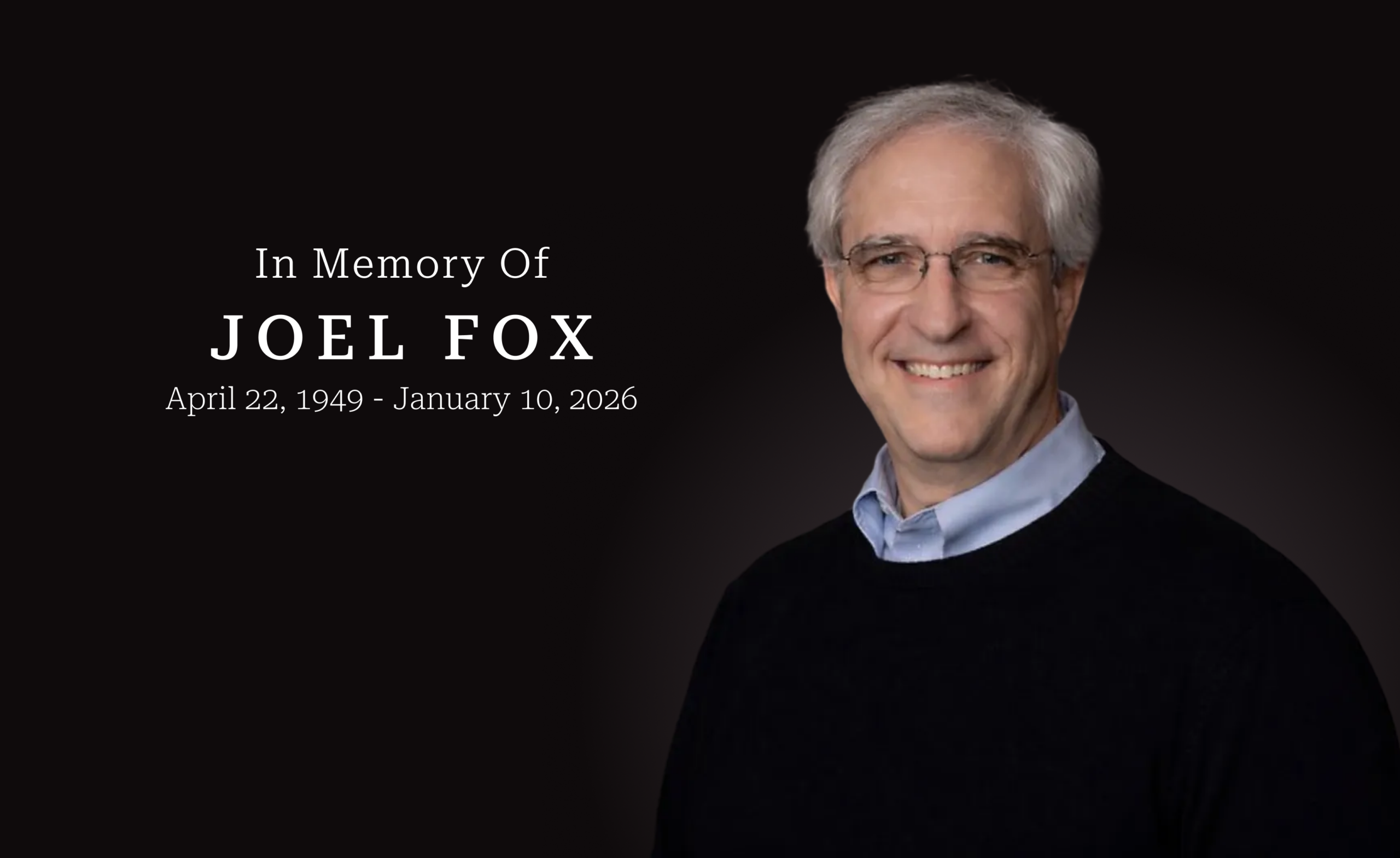
If political differences are destined to leave us divided and friendless, how do you explain the life of Joel Fox?

Fox died on January 10 after more than a decade of living with cancer. He was California’s most prominent taxpayer advocate since Howard Jarvis, for whom he worked, and whose anti-tax organization he led from 1986 to 1998. Fox, a Republican, advanced conservative ideas on TV and op-ed pages. He advised the campaigns of Gov. Arnold Schwarzenegger, Mayor Richard Riordan, and U.S. Sen. John McCain.

That profile, in our polarized times, might make you think Fox was one of those political ideologues who are driving the country apart. But the opposite is true.

Fox, more than any person in California politics, built deep relationships with people across the political spectrum. And he did not do this through consensus or compromise. Instead, Fox built friendships on disagreement itself—a warm, open, and curious style of disagreement.

Read More »

CEOs Rank CA Worst State for Business

Cross-posted at CalWatchdog.

Once again, California garners the booby prize for business climate:


For the seventh year in a row, CEOs rate Texas as the #1 state in which to do business and California as the worst. North Carolina maintained its #2 rank, while Florida rose three positions to the #3 spot.Tennessee fell one slot from last year to #4 while Georgia climbed two positions to claim the #5 rank.

Chief Executive magazine’s annual “Best & Worst States” survey takes the pulse of CEOs on business conditions around the nation. For the 2011 survey, 550 CEOs from across the country evaluated the states on a broad range of issues, including regulations, tax policies, workforce quality, education resources, quality of living and infrastructure.

“A handful of states have made business-friendly policies a priority,” says J.P. Donlon, Editor-in-Chief of Chief Executivemagazine and ChiefExecutive.net. “These forward-thinking states are the exception rather than the rule and include Utah,Arizona, Florida, Tennessee, Louisiana, Texas and Oklahoma.”

CEOs voted California as the worst state in 2011, with New York, Illinois, New Jersey and Michigan rounding out the bottom five.

Read More »

Shiver Me Timbers: Bar Pilots Want Gold-plated Deal

If the state gave you a monopoly for a job which paid $400,000 a year for six months of work, were driven to and from jobs in a town car or limo, had all of your business expenses paid for by someone else, and were on your way to earning a public pension of a quarter million dollars per year to which you didn’t contribute a dime of your own money, would you be demanding a raise in this economy? You might if you were a state-licensed Bar Pilot.

Most people never heard of the San Francisco Bar Pilots until the Cosco Busan oil spill, when a ship under the control of a state-mandated pilot hit the Bay Bridge. After the accident in 2007, several changes in the state pilot system were enacted by the Legislature and the State Board of Pilot Commissioners was put under the jurisdiction of the Business, Transportation & Housing Agency (BT & H). Since then, BT & H has made significant improvements in much of the oversight of the state pilot monopoly.

Read More »

Why We Can’t See Housing Recovery

If you’re looking for a recovery in the housing market, get a magnifying glass. It’s that hard to find.

Just look at last week’s Case/Shiller Home Price Index report. House prices in February nationwide were down 1.1 percent from the month before. And compared with the same month the year before, house prices were down 2.6 percent or 3.3 percent, depending on which index you look at.

Los Angeles didn’t fare much better. Prices in February were down 1 percent from the month before and down 2.1 percent from a year earlier.

Maybe it’s not a magnifying glass you’ll need. Maybe it’s a microscope.

In the official announcement, the chairman of the Case/Shiller index said, “There is very little, if any, good news about housing. Prices continue to weaken, trends in sales and construction are disappointing.”

Read More »

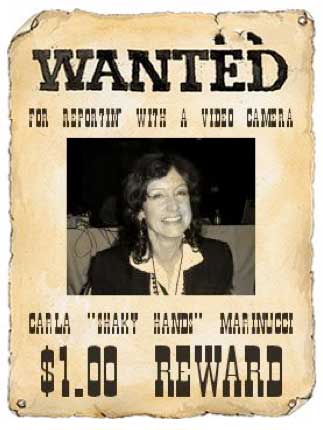
“Shaky Hands” Marinucci and Other Items I Missed

The White House wasn’t happy last week when ace San
Francisco Chronicle political reporter Carla Marinucci videotaped a protest at
the president’s San Francisco fundraiser. Marinucci was part of the reporter
"pool" that witnessed the fundraising event and was supposed to report back on
the proceedings to reporters who were not in the room.

Marinucci, who often videos political events and presents
them on the web under the title Shaky Hands Productions, caught supporters of the
accused provider of documents to Wikileaks, Bradley Manning, singing a protest
song to the president.

The White House insisted that only pen and paper
transcription of events was authorized for pool reporters. According to the Chronicle,
the White House threatened to end Marinucci’s privilege of covering presidential
events and even threatened to bar other Hearst newspaper reporters.

The White House denied the threats.

Read More »

Criticism of Redistricting Commission’s Progress is Unfounded

Another week, another blast at the Citizens Redistricting Commission from redistricting “expert” Tony Quinn. His latest article comes with the inflammatory headline, “Redistricting Commission tries to repeal One Person, One Vote.” You would think the Commission was trying to reinstate slavery or take away a woman’s right to vote. But no, all the Commission did was take a preliminary step to interpret an ambiguous area in redistricting law.

Here is the background. The U.S. Supreme Court has traditionally upheld state redistricting plans where the populations of districts are balanced within 10%. The Court added some additional complexity in the 2004 case Larios v. Cox saying such deviations needed to be justified by “legitimate state interests” and not “tainted by arbitrariness or discrimination” (more on this later).

A separate set of cases by the California State Supreme Court have found that under the state Constitution districts should be balanced within 2%. The hitch is that all those cases pre-date the passage of Propositions 11 and 20 which changed the California State Constitution. How will the Court interpret the population equality standards under the new rules? The Commission decided to give itself more flexibility and begin with the federal standard and then see how far they could tighten things down later.

Read More »

Me, The Radical

The Sacramento Bee called
me a "radical"
this past weekend. Or more precisely, a Bee writer described
my book California Crackup, co-authored with Mark Paul, as "a radical but well-
argued repair manual for state governance."

I was
delighted to be called a radical. Because it’s sort of sexy and interesting.
But as I chewed it over, I began to feel bad about it, because I’m not sure I
deserve such a compliment. (Though that doesn’t mean I’m not sexy, dammit).

That’s
because there’s nothing radical about what we suggest in the book. In fact, the
thesis of our book is that California needs reform because it is perversely and
radically governed. This state has a government unlike any other state.
Bizarrely, Californians have combined majoritarian elections, a consensus
governing system of so many fiscal rules that almost any minority or interest
can block any significant budget change, and the world’s most inflexible system
of initiative and referendum. The resulting governing system is unlike nothing
else on planet earth.

Read More »

Retirement Costs Inflate State, Local Budgets

State and local government employees in California earn similar salaries as their counterparts in the private sector, but generous retirement benefits push total compensation costs significantly higher than what California’s largest companies spend, according to a study released today.

California’s largest employers typically spend less than one-third what state taxpayers spend on employee pensions and retiree health benefits. A state employee earning $60,000 annually will accumulate pension and retiree health benefits valued at $19,000 a year. A comparably paid employee of a large California company will receive retirement benefits worth less than $6,000.

California’s 2011-12 state budget includes $6 billion for the major state retirement plans. The study compares only the employers’ cost of benefits; it does not include the value of contributions employees make to their retirement plans.

Read More »

Pakistan, ‘You’ve Got Some ‘Splainin’ To Do!’

Glued
to my Talking Heads TV programming last Sunday night, when news that OBL had finally
been hunted down and killed, fittingly, like
the dog he was
, one, only marginally relevant thought kept yelling inside
my head.  That great scene in the old ‘I
Love Lucy’ show, where Ricky comes home, and realizes the latest crazy thing
which Lucy did, and sputtering, returns with the immortal line: "Lucy, You’ve Got Some ‘Splainin’ to Do!"

But,
as I watched the unfolding story, one which became instantly immortal and will
go down in the annals of our country’s decades-long battles with terrorist attackers,
all I could think of was that it is Pakistan who has ‘some ‘splainin’ to do . .
. . BigTime!

According
to the Center for American Progress,
Pakistan has received in aid from the US since 9/11/2001, some $7.89 Billion in
military assistance (reimbursement, actually) for their ‘help’ in our efforts
to hunt down and kill the terrorists who attacked our country and killed nearly
3,000 ordinary people trying to live through another day in their lives, as
well as to protect the US from further such attacks.  During the same period, the US also gave
Pakistan some $3.1Billion in ‘economic and development assistance,’ including
food aid.  That’s not all; before the
Cold War interposed some barriers, the US also gave Pakistan nearly $2Billion
between 1953 and 1961, a quarter of which was ‘military assistance.’  That was back when a Billion was still an
incredibly large number, mind you. 
That’s a whole lotta love, of the green folding kind, that the US has
shown to Pakistan; and, in return . . . .?

Read More »

Minor Surgery Can Be Big Deal for Aging Politicians

You know Jerry Brown still has better than three years left
in his term as governor if he’s willing to take time off for surgery. And admit
it.

Sure, it was just a low-rent, low-risk skin cancer the
governor had removed from his nose last week. And there are plenty of people
who would rather undergo surgery than spend a weekend at the state Democratic
Convention.

But when you’re 73, the oldest man ever to hold California’s
top job and at least looking at the possibility of winning a second (or fourth)
term in office come 2014, you can be forgiven if you’d rather stay in seclusion
for a few days to avoid those inevitable photos of a man looking bandaged,
hurting and, just possibly, old.

Read More »