

Featured Post

A Fox, A Hound, and a Friendship

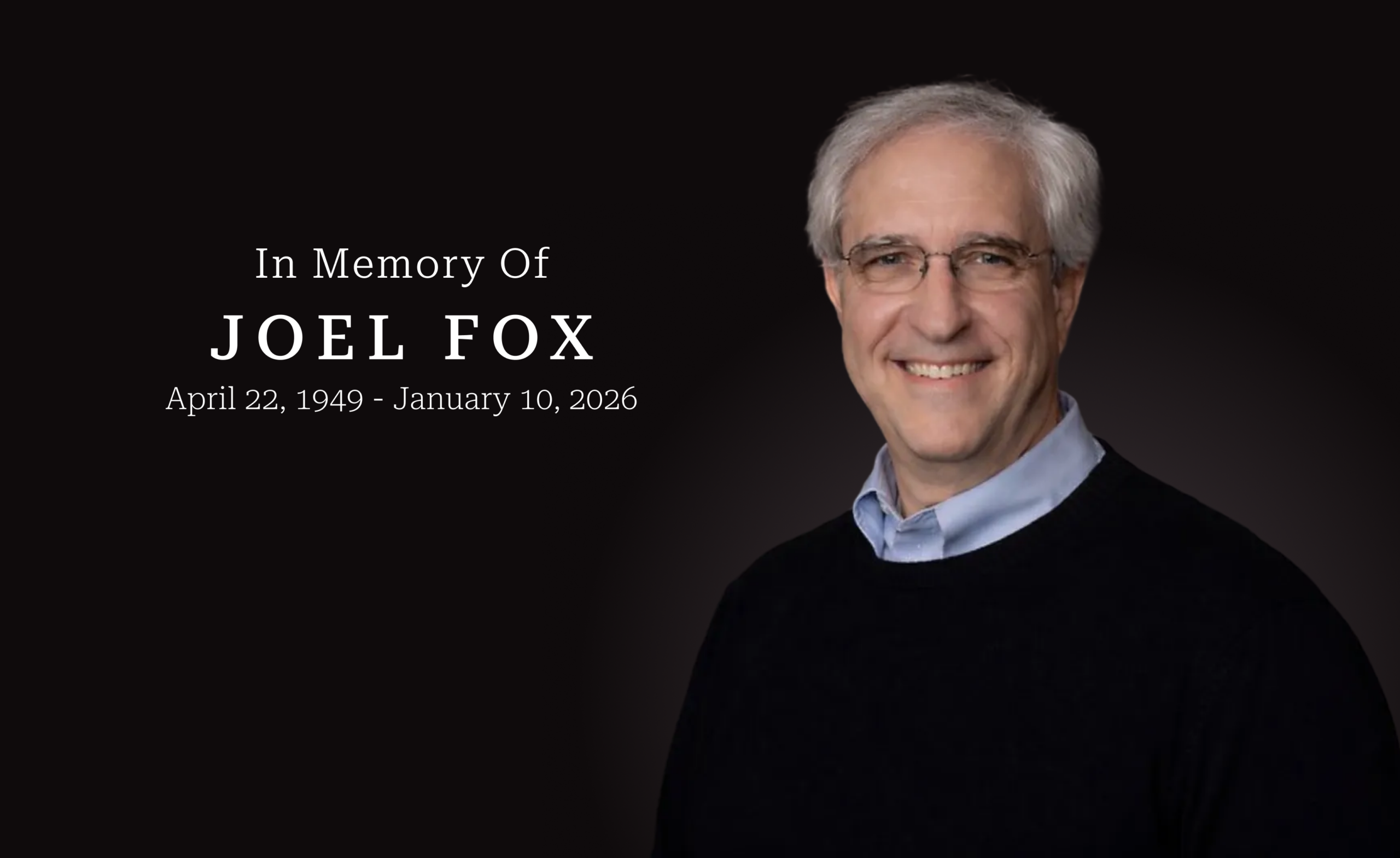
If political differences are destined to leave us divided and friendless, how do you explain the life of Joel Fox?

Fox died on January 10 after more than a decade of living with cancer. He was California’s most prominent taxpayer advocate since Howard Jarvis, for whom he worked, and whose anti-tax organization he led from 1986 to 1998. Fox, a Republican, advanced conservative ideas on TV and op-ed pages. He advised the campaigns of Gov. Arnold Schwarzenegger, Mayor Richard Riordan, and U.S. Sen. John McCain.

That profile, in our polarized times, might make you think Fox was one of those political ideologues who are driving the country apart. But the opposite is true.

Fox, more than any person in California politics, built deep relationships with people across the political spectrum. And he did not do this through consensus or compromise. Instead, Fox built friendships on disagreement itself—a warm, open, and curious style of disagreement.

Read More »

Plan B Starting to Come Together

News reports that Gov. Jerry Brown is considering a ballot initiative on taxes if he cannot secure Republican votes to put taxes on a June special election confirm whispers that have been circulating for a couple of weeks. Plan B for Brown’s budget would go directly to the people to raise taxes.

While there is still talk of Brown using a suspect alternative of seeking a majority vote in the legislature to amend older ballot measures to get his tax plan on the June ballot, a November special election would not face legal hurdles.

Taxes appearing on a November ballot would be classified as a tax increase rather than a tax extension for the taxes under consideration expire the end of June.

Of course, the income, sales and vehicle taxes that Brown wants to extend may or may not be the subject of an initiative effort.

Read More »

AT&T and T-Mobile Set to Merge – A Good Deal for Californians

AT&T recently announced plans to acquire T-Mobile. At the San Diego Regional Chamber of Commerce representing 3,000 members, we are excited about the new possibilities that this proposed acquisition will mean to our businesses and to our everyday lives.

Simply put, this proposed merger will mean increased service and better technology for California communities.

This merger will help us maintain our state’s competitiveness by giving us expanded and reliable access to high-speed wireless services. Not only will these enhancements to the network infrastructure support innovation, it will help our state continue to cultivate start-up companies that need the most competitive edge to succeed.

This merger will help improve service for customers as AT&T will increase its network infrastructure which would have normally taken approximately five years – and increase network density by about 30 percent in some regions.

Read More »

Corrupting the Redistricting Commission

The Citizens Redistricting Commission, built upon a hopeful ideal of enhancing political competition in legislative and congressional districts, has now descended into a cesspool of corruption, and the promise of fair new districts has been compromised by brutal partisan politics instigated by the commission itself.

At its Sacramento meeting last weekend, the commission was given a
chance to choose for the vital project of actually drawing the new districts
two firms, each of whom had ties to past partisan activities. Ignoring the
need for political balance in its line drawing, the commission chose a firm
with, in the words of Sacramento Bee political columnist Dan Walters,
"indirect but unmistakable ties to Democrats."

This firm is called Q2 Data and Research, based in Berkeley and
headed by Karin MacDonald, who also heads the Statewide Database, the census
and political data bank for use in redistricting. The political tie to the
Democrats comes from Professor Bruce Cain, an owner of Q2, who started the
database when he worked as chief consultant for Assembly Democrats in the
1981 redistricting.

Read More »

A Reality Check in California’s Pension Discussions

It is absolutely worthwhile to consider how to ensure that California’s public pension systems remain on a sound footing and able to provide a secure retirement for public workers.

But issues about the cost/benefit of public employee pensions have become a major point of contention in the heated debate on how to fix California’s state budget problems. Pension-spiking poster children, manufactured data supposedly showing huge unfunded liabilities and false charges of labor intransigence have cast a dark cloud over public pensions.

For instance, a common claim is that pension costs will bankrupt state government. In fact, the entire costs of pensions for state workers in 2011 will be $3.5 billion, barely 4% out of an $85 billion budget. Add CalSTRS and the total is not even 6% of the budget. If we paid zero into public employee pensions and eliminated them altogether, we would not come close to solving the budget deficit.

In fact, the state of California pays less as a percentage of payroll for pensions today than it did in 1980. Meanwhile CalPERS has earned back more than $70 billion since the financial crisis and the system’s funding status is estimated near 70 percent.

Read More »

Budget Transparency Will Make California Accountable

The next time you’re in the state capitol, come visit the Assembly
Chamber and look for the assembly motto. It declares: "Legislatorum est justas
leges condere," Latin for, "It is the duty of the legislature to enact just
laws."

This noble pronouncement, the guiding rule passed down from our
California forefathers, is a conclusion drawn from an inferred understanding of
the meaning of justice. What, then, is justice?

This question – What is justice? – is the driving question in the
history of politics. It is the purpose of government to answer this question correctly.
More importantly, it is government’s responsibility to see that justice is
rendered to each citizen.

Read More »

Unlicensed, Uninsured, Untraceable — Isn’t That a License to Kill?

Cross-posted at RonKayeLA.

Police
Chief Beck says it’s the only fair and humane thing to do.

The mayor
says it’s "justice"

But what
does the City Council or Police Commission say about the LAPD’s new policy, its
protocol, for allowing unlicensed drivers to walk away from the scene of their
crime.

Not just
walk away, actually, but ride away in the company of a licensed driver, not
even the car’s owner as required by law, when they’re stopped by police instead
of having the car impounded.

It’s like
putting a gun back in the hands of a violent suspect after he’s been subdued
and writing him a citation for an infraction.

Read More »

Republicans Can Change the Narrative

Republicans in the legislature have been tagged as the “Party of No” for not agreeing to put tax extensions on the ballot. However, they are not the only party that is practicing the art of saying no. Democrats are saying no to putting reforms on the ballot such as a spending cap, pension reform or regulation reform.

Read news accounts, editorials or listen to Democratic politicians and you will hear that the Republicans are the obstacle to a budget solution. Democratic consultant Darry Sragow questioned in the Sacramento Bee this weekend whether the Republicans were even committed to democracy because they have not allowed the people to vote on tax extensions.

The Republicans can change this narrative if they come together behind a move to put reforms on the ballot. Five GOP senators have been negotiating with the governor for reforms. They must take the next step and tell the world exactly what they want to see on the ballot.

Once that is done, the governor, the Democrats and their allies will be put on the spot. Do they want these important, long-term reforms to structurally fix the budget problem? Or will they say: No!

Read More »

GOP’s Mail Pre-Primary Is Good for Voters

California has the worst of both worlds politically: All the drawbacks of a highly partisan electorate and political elite, without the advantages that come with strong parties.

That California combination – strong partisanship, weak parties – is part of what makes civic engagement, and thus governing, such a challenge in this state. Everyone is angry and partisan, but parties – which offer ways for people to come together and advance an agenda – are too weak to do much of anything.

In this context, the news out of this weekend’s GOP convention is good. Republicans, faced with a new form of open primary designed to further weaken the parties, decided to launch their own pre-primary of sorts, conducted by mail, to judge the party favorites in races.

This move has been criticized by moderates and others outside the party as an attempt by conservatives to keep power and impose rule. That may well be the thinking of those who pushed it, but it’s a good idea nonetheless.

Why? Two reasons.

Read More »

Calling On Legislators To Stand With California Businesses & Support E-Fairness

As the President of the California Retailers Association, I represent businesses with more than 9,000 stores throughout California. These stores provide thousands of jobs, billions in revenue and countless products for the people of California.

That’s why we support e-fairness legislation, such as AB 153 (Skinner) and AB 155 (Calderon). Right now, retail businesses that have e-commerce sites are required to collect sales taxes. So if any one of our stores also sells its products at a physical store or online, they collect sales taxes, no exceptions.

But out-of-state, online-only retail companies like Amazon and Overstock don’t play by these rules. A loophole in the law has helped them avoid collecting and remitting these sales taxes. This gives them an unfair and artificial competitive advantage of nearly 10 percent over California retailers who operate e-commerce sites in addition to their brick-and-mortar stores.

Read More »